Sport on Earth › Features
Game Shows
The game show is television’s oldest contest — a game played under lights, for prizes, in front of an audience — and this page is Sport on Earth’s home for it. Two of its longest-running titles, Jeopardy! and Wheel of Fortune, anchor the page in depth. Around them sits a sourced history of the genre itself, from the radio pioneers of the 1930s to the formats that now circle the globe, and a directory of the types of game show the world has produced.
About the history below
The genre is nearly ninety years old, and thousands of titles have aired in well over a hundred television markets, many of them local, short-lived and poorly documented — no page can honestly carry all of them. What follows is a selected world history — the pioneers, the scandals, the long-runners and the formats that travelled — chosen because standard references treat them as the genre’s landmarks, and sourced claim by claim at the foot of the page.
Jeopardy! — the answer-and-question quiz
Jeopardy!: the television quiz where the answers are given and the players supply the questions.
Jeopardy! is an American television quiz created by Merv Griffin. Its original daytime version debuted on NBC on March 30, 1964 and ran to January 3, 1975, hosted by Art Fleming, who also hosted the 1978–79 revival, The All-New Jeopardy! The daily syndicated version familiar today premiered on September 10, 1984 with Alex Trebek as host — the format’s defining reversal, in which contestants are given clues phrased as answers and must respond in the form of a question, was Griffin’s answer to a post-scandal industry that distrusted quiz shows: give the contestants the answers openly, his wife suggested, and make them supply the questions. [1] [2]
Trebek hosted until his death in November 2020, his last episode airing January 8, 2021. The show’s most famous contestant, Ken Jennings — whose 74-game winning streak in 2004 remains the longest in the show’s history — guest-hosted after Trebek’s death, shared hosting with Mayim Bialik from 2021 to 2023, and has been the sole syndicated host since 2023. [1] [8]
The video record
Six of the 51 verified videos this entry’s census page carried — every one probed playable before listing, the site’s standing discipline.
Wheel of Fortune — the wheel and the puzzle
Wheel of Fortune: the television word game — a carnival wheel, a puzzle board, and letters bought and sold.
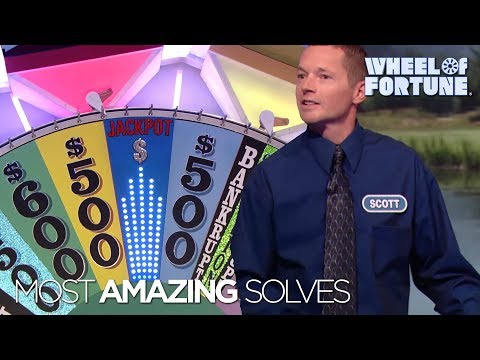
Wheel of Fortune is an American television game show created by Merv Griffin, aired continuously since its debut on NBC daytime on January 6, 1975: contestants spin a carnival wheel and call letters to solve a word puzzle. Chuck Woolery was the original host (1975–1981); Pat Sajak took over in December 1981, and Vanna White joined as co-host in 1982, succeeding Susan Stafford. The nightly syndicated version premiered on September 19, 1983, and Sajak and White hosted it together until Sajak’s retirement in June 2024. Ryan Seacrest succeeded him from September 2024, with White continuing alongside. [3] [4]
The video record
Six of the 49 verified videos this entry’s census page carried — every one probed playable before listing, the site’s standing discipline.
A selected world history of the game show
1938–1949: radio invents it, television borrows it
The genre begins on both sides of the Atlantic in the same year: the first radio game show, Information Please, debuted in the United States in 1938, and the first television game show, Spelling Bee, was broadcast in Britain on May 31, 1938. The first major success was the American radio quiz Dr. I.Q., from 1939. Truth or Consequences was the first game show to air on commercially licensed television, as an experimental broadcast in 1941, after its radio success. [6]
1950–1955: the panel shows and the first hits
Most early television game shows arrived from radio. Truth or Consequences moved to television in 1950 and became the first game show to win an Emmy Award; that same year CBS premiered What’s My Line?, the panel show that became the longest-running game show in nighttime network television of its era. Producers Mark Goodson and Bill Todman built the era’s defining catalogue — What’s My Line?, To Tell the Truth, The Price Is Right (original version, NBC, 1956), Family Feud and Match Game among them. [5] [6]
1955–1960: big money, then the scandals
The craze ignited in June 1955 with CBS’s The $64,000 Question, whose contestants doubled their winnings question by question to the jackpot. High-stakes quizzes such as Twenty-One followed — and were then exposed as rigged. Charles Van Doren, Twenty-One’s most famous champion, admitted to Congress in November 1959 that he had been given questions and answers in advance; congressional hearings followed, an amendment to the Communications Act made rigging a contest of knowledge a federal crime, and nearly all of television’s primetime game shows were cancelled by 1959. The panel shows, whose outcomes could not be fixed the same way, survived the purge. [5] [7]
1960s–1970s: the daytime settlement
The genre rebuilt itself in daytime, at lower stakes and under stricter standards. Jeopardy! arrived in 1964 (above). CBS revived The Price Is Right on September 4, 1972 with Bob Barker, who hosted until 2007, when Drew Carey succeeded him. Family Feud premiered on July 12, 1976 with Richard Dawson hosting two families guessing survey answers. In 1975 Wheel of Fortune joined them (above) — the trio that still anchors American game-show television. [13] [14]
France and Britain: the words-and-numbers line
France’s Des chiffres et des lettres (“Numbers and Letters”), created by Armand Jammot, has run on French television since 1965 — among the longest runs in the genre anywhere. Its British adaptation, Countdown, was the first program broadcast on Channel 4 when the channel launched on November 2, 1982, hosted by Richard Whiteley until his death in 2005. [9] [15]
Japan: the physical game show
Japan exported a different idea of the genre: the physical obstacle show. Takeshi’s Castle aired on the Tokyo Broadcasting System from May 2, 1986 to October 19, 1990, with comedian Takeshi Kitano as the count whose castle a volunteer army of contestants tried to storm through punishing challenges; it became a cult hit around the world and was revived in 2023. [10]
1998 onwards: the format goes global
The modern era is the era of the licensed format. Who Wants to Be a Millionaire?, created in Britain by David Briggs, Mike Whitehill and Steven Knight, debuted on ITV on September 4, 1998 hosted by Chris Tarrant; international versions have since aired in around 100 countries, and the franchise is described in its reference entry as the best-selling television format in history. India’s Hindi version, Kaun Banega Crorepati, premiered on July 3, 2000 hosted by Amitabh Bachchan — his first appearance on Indian television — and, one season hosted by Shah Rukh Khan apart, he has hosted it ever since. The two anchors of this page rode the same tide in reverse: Griffin’s formats, sold around the world from America, became fixtures far beyond it. [11] [12]
Game-show types — a formats directory
A directory of game-show TYPES and formats — what the form is, where it began, and the landmark programs that define it. It is a directory of formats, not a catalogue of every program: the full catalogue runs to thousands of titles in more than a hundred markets, and the page says so above. Entries are grouped by type; exemplar years are the start or landmark years given by the cited source.
Quiz show — United States, 1930s (radio, 1938) — television from the 1940s–50s
Contestants win by answering trivia / general-knowledge questions, usually head-to-head or against a ladder of increasing difficulty. The oldest and defining game-show form: a single-episode contest decided by objective correct answers, not votes or judges. [1]
- Information Please (United States) — 1938– (radio; first radio game show, 1938)

- Dr. I.Q. (United States) — 1939– (radio; the genre’s first major success)

- Jeopardy! (United States) — 1964– (original 1964–1975; syndicated version from 1984)

- University Challenge (United Kingdom) — 1962–1987; revived 1994–

- Mastermind (United Kingdom) — 1972–1997; revived 2003–

Panel show / panel game — United States, 1950s
A fixed or rotating panel of celebrities plays the game — guessing a guest’s secret or occupation, answering comic questions, or bluffing — with points kept loosely and comedy carrying the show. The form survived the 1950s quiz scandals because its outcomes could not be rigged the same way, and in Britain it evolved into a primetime showcase for stand-up comedians.
- What’s My Line? (United States) — 1950–1967

- To Tell the Truth (United States) — 1956– (Goodson–Todman panel format)

- Match Game (United States) — 1962– (original; comedy-driven 1970s version)

- Have I Got News for You (United Kingdom) — 1990–

- Would I Lie to You? (United Kingdom) — 2007–

Big-money quiz — United States (1950s form); United Kingdom (1998 global-format revival), 1950s; global era from 1998
A quiz rebuilt around a life-changing jackpot: escalating prize ladders, lifelines or doubling stakes, and a single contestant’s run as the drama. Born in 1950s America, killed by the rigging scandals, then revived in Britain in 1998 as the licensed global format — the model modern primetime game shows still follow. [14] [15]
- The $64,000 Question (United States) — 1955–1958

- Twenty-One (United States) — 1956–1958 (central to the quiz-show scandals)

- Who Wants to Be a Millionaire? (United Kingdom) — 1998– (debuted on ITV 4 September 1998; versions in around 100 countries)

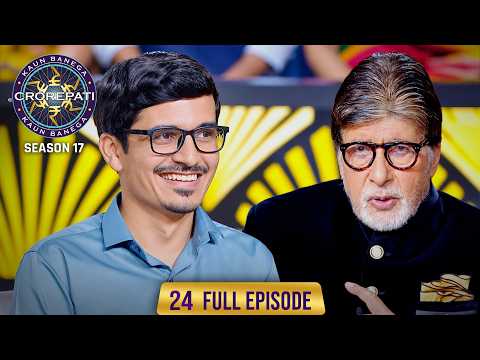
- Kaun Banega Crorepati (India) — 2000– (Hindi Millionaire; premiered 3 July 2000, hosted by Amitabh Bachchan)
Physical / endurance game show — the Japanese tradition and its exports — Japan, 1980s–1990s
Contestants are eliminated by their bodies, not their knowledge: obstacle courses, endurance and strength trials, and slapstick physical challenges, usually with failure played for comedy. Japan industrialised the form in the 1980s–90s — a mass volunteer army storming a castle, then a 100-strong field against a four-stage athletic course — and the format was exported worldwide as Ninja Warrior and its imitators. [13]
- Takeshi’s Castle (Japan) — 1986–1990 (TBS; revived 2023)

- Kinniku Banzuke (Muscle Ranking / Unbeatable Banzuke) (Japan) — 1995–2002 (the strand Sasuke spun out of)
- Sasuke (exported as Ninja Warrior) (Japan) — 1997– (TBS; 100 competitors, four-stage course; about 20 local versions worldwide)
- Wipeout (United States) — 2008– (ABC; the American slapstick-obstacle export of the Japanese model)

Dating / marriage game show — United States, 1960s
The prize is a date, not cash: a chooser questions unseen suitors from behind a screen and picks one, or newly married couples are tested on how well they know each other. Created by Chuck Barris in 1960s America, it is the acknowledged forerunner of modern dating reality television.
- The Dating Game (United States) — 1965–1973 (ABC; syndicated revivals to 1999)

- The Newlywed Game (United States) — 1966– (paired with The Dating Game from 1966)

- Blind Date (United States) — 1999– (syndicated filmed-date format; the UK Blind Date is the format’s British counterpart) No verified video yet.
Puzzle / word-and-numbers game — France, 1960s (1965)
Contestants solve language and arithmetic puzzles against the clock — anagrams, letter selections, number targets, hangman-style word boards — rather than recalling facts. Its longest line runs from France: a letters-and-numbers duel on air since 1965, adapted in Britain as the first program ever shown on Channel 4. [9] [12] [3]
- Des chiffres et des lettres (France) — 1965– (created by Armand Jammot)

- Countdown (United Kingdom) — 1982– (first program broadcast on Channel 4, 2 November 1982)

- Wheel of Fortune (United States) — 1975– (debuted 6 January 1975; syndicated version from 1983)
Talent-competition boundary cases — United States, 1970s (hinge format); modern franchises 2000s
NOT a game show under the strict definition used by the reference literature — and included here precisely to mark that boundary. Judged or audience-voted talent contests (singing, variety, amateur acts) run a season-long arc decided by judges and votes, whereas a game show is won in a single episode by objectively completing tasks. The Gong Show is the hinge: a Barris amateur-talent show played as a game, and the direct ancestor of the modern talent franchise.
- The Gong Show (United States) — 1970s (Chuck Barris; amateur acts cut off by a celebrity gong)

- American Idol (United States) — 2000s– (named in the reference definition as a reality/voting show, not a game show)

- The X Factor (United Kingdom) — 2000s– (judged/voted singing franchise; boundary case)

- America’s Got Talent (United States) — 2000s– (judged/voted variety franchise; boundary case)

Children’s game show — United States, 1980s (children’s cable era)
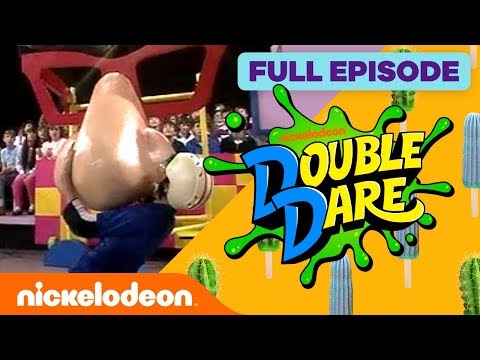
The adult formats rebuilt for child contestants: short trivia rounds mixed with messy physical challenges and obstacle-course finales, prizes pitched at children, and (from 1986) a dedicated children’s cable channel as its home. Nickelodeon’s Double Dare — answer, dare, or take the physical challenge — set the template on both sides of the Atlantic.
- Double Dare (United States) — 1986–1993 (Nickelodeon; first game show on the channel)
- Fun House (United States) — 1988– (syndicated debut 5 September 1988)

- Get Your Own Back (United Kingdom) — 1991–2004 (CBBC)

- Nickelodeon GUTS (United States) — 1991–1994 (Nickelodeon children’s sports game show)

Lottery / chance game show — Netherlands, 2000s (case-game form, 2002); chance formats in the US from 1963
Knowledge is removed and nerve replaces it: the contestant’s outcome turns on hidden values, random cases or a banker’s buy-out offer, often tied directly to a national lottery. The defining modern form is Dutch — a postcode-lottery studio show whose 2002 case-opening endgame was exported worldwide as Deal or No Deal, adapted in more than 80 countries.
- Let’s Make a Deal (United States) — 1963– (costumed contestants trade prizes against unknown values behind doors/curtains)

- Die Chance deines Lebens (Germany) — 2000–2002 (the German format Miljoenenjacht was based on)
- Miljoenenjacht (exported as Deal or No Deal) (Netherlands) — 2000– (case game introduced 2002; up to €5,000,000)
Talk-game hybrid — United States, 1940s–1950s (radio 1947; television 1950)
The game is the excuse; the talk is the program. A celebrity host interviews guests at length while a light quiz, bet or stunt structure holds the show together — from Groucho Marx’s 1950s quiz-as-chat vehicle to Germany’s Wetten, dass..?, a 2–3 hour live Saturday-night mix of celebrity bets, interviews and music that became Europe’s biggest entertainment show and spawned Britain’s You Bet!.
- You Bet Your Life (United States) — 1950–1961 (television; radio 1947–1960; hosted by Groucho Marx)
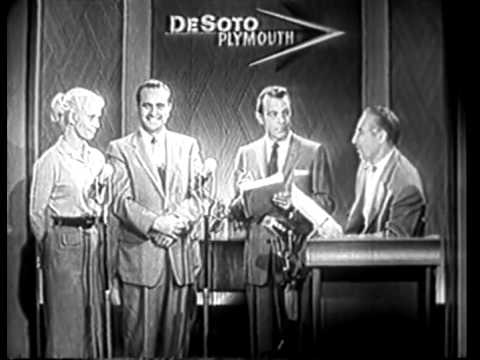
- Wetten, dass..? (Germany / Austria / Switzerland) — 1981–2014 (plus 2021–2023 specials; created by Frank Elstner)

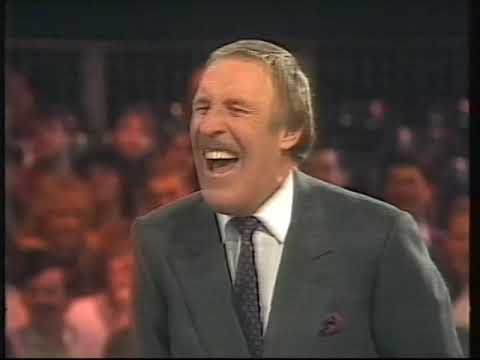
- You Bet! (United Kingdom) — 1988–1997 (ITV; the British format descendant of Wetten, dass..?)
Video notes — shows carried in the history above
- Kinniku Banzuke

- Sasuke

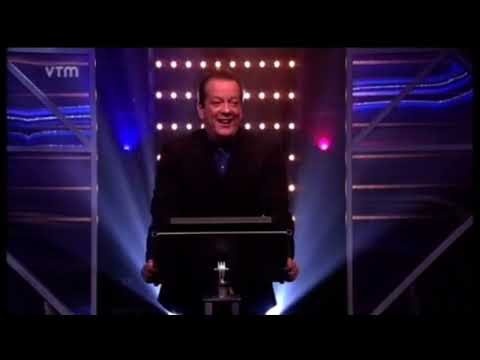
- Miljoenenjacht
- Spelling Bee No verified video yet.
- Truth or Consequences

- The Price Is Right

- Family Feud

Sources
- Jeopardy! — Wikipedia
- Jeopardy! — Encyclopaedia Britannica
- Wheel of Fortune (American game show) — Wikipedia
- Wheel of Fortune — Britannica
- Television game shows begin — EBSCO Research Starters
- A Brief History of Game Shows — Everything Everywhere
- Truth or Consequence: How the 1950s Quiz Show Scandal Shaped American Audiences — St Andrews Law Journal
- Ken Jennings — Wikipedia
- Countdown — UKGameshows
- The Top 10 Game Shows Boomers Love to Watch — Boomer Memories (Price Is Right / Family Feud premiere and host dates)
- Bob Barker, Alex Trebek, Regis Philbin: Game show icons — Newport Daily Express (Barker 1972–2007, Carey succeeds)
- Countdown — all80s.co.uk (French original running since 1965)
- Takeshi’s Castle — Wikipedia
- Who Wants to Be a Millionaire? — Wikipedia
- Kaun Banega Crorepati — Wikipedia
- Game show — Wikipedia
- Sasuke (TV series) — Wikipedia
- Miljoenenjacht — Wikipedia
- International versions of Deal or No Deal — Wikipedia
- Have I Got News for You — Wikipedia
- Would I Lie to You? — Wikipedia
- Wetten, dass..? — Wikipedia
- University Challenge — history (blanchflower.org)
- Mastermind — TellyMix
- The Dating Game — Mental Floss
- Dating game show — Free Dictionary encyclopedia summary of Wikipedia
- Double Dare / Fun House — Saturday Mornings Forever
- Double Dare revival history — T Dog Media
- Get Your Own Back / Nickelodeon GUTS — Similarama series notes
- You Bet Your Life — TV Tropes series page
Every claim above is an own-words summary of the cited source, verified Nov 6, 2026. The history section is a selection of landmark shows and moments, not a complete catalogue — see “About the history below”.