Motivational Sports Hub
Speeches, lines and moments that have carried athletes through — carried here only where the wording and the attribution check out against a source this site actually read. Lines that tradition hands to a famous name without documentary support are labelled as tradition, and the famous lines that failed the check are not carried at all.
This hub carries 18 quotations (13 verified, 5 attributed by tradition), 6 speeches, 9 moments and 8 verified videos. Use the menu below to go straight to any of them.
Words that hold up
Thirteen lines whose wording and attribution were checked against a source this site actually read — a transcript, a contemporary report, the speaker’s own book, or a named witness. Each one prints its source under it.
“For the past two weeks you have been reading about a bad break. Yet today I consider myself the luckiest man on the face of the earth.”
Sources: National Baseball Hall of Fame — Luckiest Man — https://baseballhall.org/discover-more/stories/baseball-history/lou-gehrig-luckiest-man
“Don’t give up, don’t ever give up.”
Sources: American Rhetoric — Jim Valvano ESPY address, authenticity certified transcript — http://www.americanrhetoric.com/speeches/jimvalvanoespyaward.htm; Sports Illustrated — Jimmy V’s ’Don’t Ever Give Up’ speech transcript — https://www.si.com/college/ncstate/basketball/jimmy-v-espy-speech
“Cancer can take away all my physical abilities. It cannot touch my mind, it cannot touch my heart and it cannot touch my soul.”
Sources: American Rhetoric — Jim Valvano ESPY address, authenticity certified transcript — http://www.americanrhetoric.com/speeches/jimvalvanoespyaward.htm; Sports Illustrated — Jimmy V’s ’Don’t Ever Give Up’ speech transcript — https://www.si.com/college/ncstate/basketball/jimmy-v-espy-speech
“When you die, it does not mean that you lose to cancer. You beat cancer by how you live, why you live and in the manner in which you live.”
Sources: NPR via KWIT — ESPN Sportscaster Stuart Scott Dies At 49, with speech transcript — https://www.kwit.org/featured-programs/2015-01-04/espn-sportscaster-stuart-scott-dies-at-49
“Do you believe in miracles? Yes!”
Sources: Encyclopaedia Britannica — Miracle on Ice — https://www.britannica.com/topic/Miracle-on-Ice
“Float like a butterfly, sting like a bee. The hands can’t hit what the eyes can’t see.”
Sources: Bustle — The Origin Of ’Float Like A Butterfly, Sting Like A Bee’ — https://www.bustle.com/articles/164846-the-origin-of-float-like-a-butterfly-sting-like-a-bee-proved-muhammad-alis-greatness-early; Bonhams — Muhammad Ali lot notes, on the 1964 origin of the phrase — https://www.bonhams.com/auction/27079/lot/36/muhammad-ali-1942-2016/
“Service to others is the rent you pay for your room here on earth.”
Sources: FixQuotes — Ali quote page citing TIME, People, March 27, 1978 as verified source — https://fixquotes.com/quotes/service-to-others-is-the-rent-you-pay-for-your-22331/
“I’ve missed more than 9,000 shots in my career. I’ve lost almost 300 games. 26 times I’ve been trusted to take the game-winning shot and missed. I’ve failed over and over and over again in my life. And that is why I succeed.”
Sources: Quotle — Jordan ’Failure’ quote, documented in Nike Culture: The Sign of the Swoosh (1998), p. 49 — https://quotle.info/who-said/ive-failed-over-and-over-and-over-again-in-my-life-and-that/
“Success is peace of mind which is a direct result of self-satisfaction in knowing you did your best to become the best that you are capable of becoming.”
Sources: SuperSummary — Coach Wooden’s Pyramid of Success summary, quoting p. 12 — https://www.supersummary.com/coach-woodens-pyramid-of-success/summary/
“Pressure is a privilege, and champions adjust.”
Sources: US Open (USTA) — Billie Jean King reveals origin of iconic quote: ’Pressure is a privilege’ — https://www.usopen.org/en_US/news/articles/2024-07-19/billie_jean_king_reveals_origin_of_iconic_quote_pressure_is_a_privilege.html?promo=rss
“Left foot, right foot, breathe, repeat.”
Sources: People — Robin Roberts reflects on Pat Summitt helping her through illness — https://people.com/robin-roberts-tearfully-reflects-pat-summitt-able-help-each-other-through-their-health-battles-exclusive-11933457; NiteCast Media — Candace Parker and L.A. Sparks honor Pat Summitt — https://nitecastmedia.com/candace-parker-and-l-a-sparks-honor-pat-summitt-video/
“A life is not important except in the impact it has on other lives.”
Sources: Wikiquote — Jackie Robinson, sourced quotes citing I Never Had It Made (1972) — https://en.wikiquote.org/wiki/Jackie_Robinson; Lead With Quotes — sourced serving quotes, on Robinson’s gravestone inscription — https://www.leadwithquotes.com/desk/quotes-about-serving-others
“We want to be able to look back and say to all concerned that we did what we had to do, when we had to do it, and with all the resources required.”
Sources: Arthur Ashe biography page (Wikipedia mirror) — UN General Assembly speech, December 1, 1992 — https://www.dejavu.org/cgi-bin/get.cgi?ver=95&url=http://web.archive.org%2Fweb%2F20211019010131%2Fhttps%3A%2F%2Fen.wikipedia.org%2Fwiki%2FArthur_Ashe
Attributed by tradition
Five famous lines this hub carries honestly labelled: the wording or the attribution rests on retelling rather than on a document this site could read. Each entry says what the trail actually is — who really originated the line where that is known, and what the earliest evidence is. They are kept because they are part of the game’s folklore, and labelled so nobody mistakes folklore for a transcript.
“It ain’t over ’til it’s over.”
Attributed by tradition — the wording or the attribution rests on retelling, not on a document this site could read.
Sources: Grammarphobia — It’s Yogi all over again, on the Yale Book of Quotations research — https://grammarphobia.com/blog/2009/03/its-yogi-all-over-again.html; Pitcher List — It Ain’t Over: One of Baseball’s Favorite Sayings Was Never Said (investigation) — https://pitcherlist.com/it-aint-over-one-of-baseballs-favorite-sayings-was-never-said/
“Winning isn’t everything; it’s the only thing.”
Attributed by tradition — the wording or the attribution rests on retelling, not on a document this site could read.
Sources: PLANSPONSOR — Trivial Pursuits: who actually coined ’Winning isn’t everything. It’s the only thing.’ — https://www.plansponsor.com/trivial-pursuits-sports-personality-actually-coined-phrase-winning-isnt-everything-thing/?layout=print
“Perfection is not attainable, but if we chase perfection we can catch excellence.”
Attributed by tradition — the wording or the attribution rests on retelling, not on a document this site could read.
Sources: Barry Popik — ’Perfection is not attainable, but if we chase perfection we can catch excellence’ — https://barrypopik.com/blog/perfection_is_not_attainable_but_if_we_chase_perfection_we_can_catch_excell
“You miss 100% of the shots you don’t take.”
Attributed by tradition — the wording or the attribution rests on retelling, not on a document this site could read.
Sources: Hockey Skills Training — Origin of Popular Hockey Sayings — https://www.hockeyskillstraining.com/origin-of-popular-hockey-sayings/
“You were born to be a player. You were meant to be here. This moment is yours.”
Attributed by tradition — the wording or the attribution rests on retelling, not on a document this site could read.
Sources: HockeyGods — Herb Brooks Miracle on Ice quote to the 1980 USA team — https://hockeygods.com/images/11628-Herb_Brooks_Miracle_on_Ice_Quote_to_1980_USA_Ice_Hockey_Team; Encyclopaedia Britannica — Miracle on Ice, on Brooks’s pre-game line — https://www.britannica.com/topic/Miracle-on-Ice
Speeches
Six speeches, each summarised in this site’s own words from a sourced account or transcript. Where no recording or transcript of the real talk exists — the 1928 Gipper talk is the standing example — the entry says so instead of dressing a film script up as history.
Luckiest Man — Lou Gehrig’s farewell
Two weeks after retiring with a fatal diagnosis, Gehrig thanked fans, teammates, rivals and family and called himself the luckiest man on the face of the earth, closing that he might have been given a bad break but had an awful lot to live for. No complete recording survives; sportswriters transcribed the speech and surviving newsreel audio matches its opening and closing, which is the text the Hall of Fame prints.
Sources: National Baseball Hall of Fame — Luckiest Man — https://baseballhall.org/discover-more/stories/baseball-history/lou-gehrig-luckiest-man
Don’t Give Up, Don’t Ever Give Up — the Jimmy V speech
Gravely ill with cancer, Valvano urged the audience to laugh, think and be moved to tears every day, announced the Jimmy V Foundation for Cancer Research with the motto ’Don’t give up, don’t ever give up’, and closed that cancer could take his physical abilities but could not touch his mind, heart or soul. He died less than two months later. The American Rhetoric transcript is certified as transcribed directly from the audio.
Sources: American Rhetoric — Jim Valvano ESPY address, authenticity certified transcript — http://www.americanrhetoric.com/speeches/jimvalvanoespyaward.htm; Sports Illustrated — Jimmy V’s ’Don’t Ever Give Up’ speech transcript — https://www.si.com/college/ncstate/basketball/jimmy-v-espy-speech
You Beat Cancer By How You Live — Stuart Scott at the ESPYs
Days out of hospital after four surgeries in seven days, Scott said he had listened to Valvano’s seven words 21 years earlier and now had a responsibility not to give up. He amended his own fighting talk: dying does not mean losing to cancer, because you beat cancer by how you live, why you live and the manner in which you live — and when you get too tired to fight, you let somebody else fight for you. He died on January 4, 2015.
Sources: NPR via KWIT — ESPN Sportscaster Stuart Scott Dies At 49, with speech transcript — https://www.kwit.org/featured-programs/2015-01-04/espn-sportscaster-stuart-scott-dies-at-49
Herb Brooks’s pre-game statement to the 1980 U.S. Olympic hockey team
There were no cameras in the locker room and no transcript exists. What is documented by participants is narrower than the film: Brooks read from a statement he had written on paper whose remembered core is that his players were born to be players, were meant to be there, and that the moment was theirs, after weeks of trying to humanise the Soviet opponents for a team that had been in awe of them. Players later disagreed on other famous lines — Jack O’Callahan, asked in a WBUR ’Only A Game’ segment whether Brooks said ’Great moments are born from great opportunity’, answered that he did not know whether those were Brooks’s words or his own. The soaring full text most people know is the 2004 film Miracle’s script, and this hub labels it as film, not history.
Sources: HockeyGods — Herb Brooks Miracle on Ice quote to the 1980 USA team — https://hockeygods.com/images/11628-Herb_Brooks_Miracle_on_Ice_Quote_to_1980_USA_Ice_Hockey_Team; Encyclopaedia Britannica — Miracle on Ice, on Brooks’s pre-game line — https://www.britannica.com/topic/Miracle-on-Ice
Win One for the Gipper — Knute Rockne’s halftime talk
Rockne told his trailing team that the dying Gipp had asked him someday to tell a team in trouble to go in with all they had and win just one for the Gipper; Notre Dame came back to win 12-6. Handle with care: Notre Dame Magazine’s quotation research notes Rockne apparently did invoke Gipp in 1928 (a November 12, 1928 New York Daily News version differs), that the famous long wording comes from Rockne’s 1930 Collier’s article, probably ghostwritten, and that there is much evidence against Gipp ever having made the request. The phrase was immortalised by the 1940 film Knute Rockne All American.
Sources: Notre Dame Magazine — Words of Notre Dame (Fred Shapiro on the Gipper quotation) — https://magazine.nd.edu/stories/words-of-notre-dame/
Arthur Ashe addresses the United Nations on World AIDS Day
Eight months after announcing he had contracted HIV through a 1983 blood transfusion, Ashe used the UN platform to press for AIDS awareness and increased research funding, saying the test would be whether the world could look back and say it did what it had to do, when it had to do it, with all the resources required. He had founded the Arthur Ashe Foundation for the Defeat of AIDS that year and finished his memoir Days of Grace less than a week before his death on February 6, 1993.
Sources: Arthur Ashe biography page (Wikipedia mirror) — UN General Assembly speech, December 1, 1992 — https://www.dejavu.org/cgi-bin/get.cgi?ver=95&url=http://web.archive.org%2Fweb%2F20211019010131%2Fhttps%3A%2F%2Fen.wikipedia.org%2Fwiki%2FArthur_Ashe
Moments
Nine moments, each told from the sourced record this site carries — including the corrections the popular retelling leaves out. The Miracle on Ice was a medal-round game, not the final; the United States would have won the 1996 team gold even without Kerri Strug’s second vault. The moments lose nothing by being told straight.
The Miracle on Ice
At Lake Placid on February 22, 1980, a United States team of college players faced a Soviet team of professionals that had won the previous four Olympic gold medals and beaten them 10-3 in an exhibition days earlier. The Americans fell behind three times, tied the game in the third period and took a 4-3 lead on captain Mike Eruzione’s goal with ten minutes left, then held on behind goalie Jim Craig as Al Michaels asked, ’Do you believe in miracles? Yes!’ It was a medal-round game, not the final: two days later the U.S. beat Finland 4-2 to take gold. Sports Illustrated later ranked it the top sports moment of the 20th century.
Sources: Encyclopaedia Britannica — Miracle on Ice — https://www.britannica.com/topic/Miracle-on-Ice
Jesse Owens wins four gold medals in Berlin
At the 1936 Berlin Olympics, staged by Nazi Germany to display its regime, American sprinter and jumper Jesse Owens won four gold medals in nine days: the 100 metres on August 3, the long jump on August 4 — where German rival Luz Long famously advised him after qualifying-round fouls — the 200 metres on August 5, and the 4x100-metre relay on August 9. He was the first American track and field athlete to win four golds at a single Games, a feat no one matched until Carl Lewis won the same four events in 1984. Owens received the Presidential Medal of Freedom only in 1976, forty years later.
Sources: Smithsonian National Postal Museum — Jesse Owens at the 1936 Summer Olympics — https://postalmuseum.si.edu/exhibition/playing-to-win-the-olympics/jesse-owens-at-the-1936-summer-olympics
Wilma Rudolph, from leg brace to three gold medals
Wilma Rudolph contracted polio as a small child in Tennessee, along with pneumonia and scarlet fever, and wore a brace on her weakened left leg until she was about twelve, travelling with her mother to Nashville for treatment. At sixteen she won relay bronze at the 1956 Melbourne Olympics. In Rome in 1960 she won the 100 metres, the 200 metres and the 4x100-metre relay, becoming the first American woman to win three track and field gold medals at a single Olympics. Back home, she refused to take part in a welcome-home parade in Clarksville unless Black and white residents could attend it together.
Sources: Wikipedia — Wilma Rudolph, sourced biography and medal record — https://en.wikipedia.org/wiki/Wilma_Rudolph
Derek Redmond finishes the lap with his father
British 400-metre runner Derek Redmond had run the fastest first-round time at the Barcelona Olympics and won his quarter-final. In the semi-final on August 3, 1992, his hamstring tore on the back straight, roughly 250 metres from the finish. He got up, waved off stretcher bearers and began hobbling toward the line. His father Jim barged past security, first told him he did not have to do it, then — in Derek’s later telling — said they would finish together, and supported him around the rest of the lap to a standing ovation from 65,000 people. Because of the outside help Redmond was disqualified and recorded as Did Not Finish. It was the last 400-metre race of his career.
Sources: NBC Sports — Jim Redmond, who helped son Derek finish 1992 Olympic race, dies — https://www.nbcsports.com/olympics/news/jim-redmond-dies-derek; Encyclopaedia Britannica — Derek Redmond: Between a Father and His Son — https://www.britannica.com/topic/Derek-Redmond-Between-a-Father-and-His-Son-1795665
Kerri Strug’s second vault
In the team final at Atlanta on July 23, 1996, 18-year-old Kerri Strug was the last American to vault, with the U.S. lead over Russia suddenly in doubt after falls ahead of her. She fell on her first vault and badly injured her left ankle. Asked coach Bela Karolyi, ’Do we need this?’, was told the team needed her one more time for the gold, limped back and landed her second vault, holding the salute on essentially one foot before collapsing. It scored 9.712 and she was carried to the podium as the U.S. won its first Olympic team gold. Honest footnote: Olympedia notes the Americans would still have won by 0.309 points without that vault.
Sources: Mental Floss — When Kerri Strug Made Olympic History In 1996 — https://www.mentalfloss.com/sports/olympics/1996-kerri-strug-makes-olympic-history; Olympedia — Kerri Strug — https://www.olympedia.org/athletes/29291
Michael Phelps goes eight for eight in Beijing
Michael Phelps arrived at the 2008 Beijing Olympics chasing Mark Spitz’s 1972 record of seven gold medals at one Games, having fallen short with six golds and two bronzes in Athens in 2004. This time he entered eight events and won all eight: five individual titles and three relays, setting world records in seven of them. The closest call was the 100-metre butterfly, won by one hundredth of a second. The eighth gold, in the 4x100-metre medley relay on August 17, broke Spitz’s record. Phelps finished his career as the most decorated Olympian ever, with 28 medals, 23 of them gold.
Sources: Encyclopaedia Britannica — Michael Phelps biography — https://www.britannica.com/biography/Michael-Phelps?utm_campaign=35252&utm_medium=inverse&utm_source=newsletter&utm_session=024cfe3d-65ed-4a7d-923d-6538f2414d1d
Usain Bolt’s 9.69 in Beijing
Usain Bolt had exited the 2004 Olympics in the 200-metre heats and had broken the 100-metre world record only that May. In the Beijing final on August 16, 2008, the 21-year-old Jamaican started slowly, took control by halfway, and was so far clear that he spread his arms and eased off well before the line — and still clocked 9.69 seconds, a new world record, with an untied shoelace. Days later he broke Michael Johnson’s 200-metre world record with 19.30. Bolt went on to win the Olympic 100 and 200 metres at three consecutive Games, 2008, 2012 and 2016, something no other sprinter has done.
Sources: Wikipedia — Athletics at the 2008 Summer Olympics, Men’s 100 metres (official results and records) — https://en.wikipedia.org/wiki/Athletics_at_the_2008_Summer_Olympics_%E2%80%93_Men%27s_100_metres
Leicester City, the 5,000-1 champions
Leicester City had been bottom of the Premier League, seven points from safety, late in the 2014-15 season before a late run kept them up. Bookmakers priced them at 5,000-1 to win the title in 2015-16 under new manager Claudio Ranieri — a manager who had never won a top-flight league title, with a squad built cheaply around players such as Jamie Vardy and Riyad Mahrez. Leicester instead led the league for much of the season and clinched the club’s first top-flight championship, in its 132-year history, with two games to spare on May 2, 2016, when second-placed Tottenham drew 2-2 at Chelsea. They finished ten points clear.
Sources: WAMC / Associated Press — Longshot Leicester City Wins English Premier League Title — https://www.wamc.org/2016-05-02/longshot-leicester-city-win-english-premiere-league-title?_amp=true; Sky Sports — Premier League 2015/16: How odds changed as Leicester claimed title — http://skysports.com/football/news/11712/10261535/premier-league-2015-16-how-the-odds-changed-as-leicester-claimed-the-title
The Cubs end 108 years in Game 7
The Chicago Cubs had not won a World Series since 1908, the longest championship drought in North American professional sport, and trailed Cleveland three games to one in the 2016 series. They won Games 5 and 6 to force a decider in Cleveland on November 2. Game 7 swung repeatedly: Chicago led 6-3, Cleveland tied it 6-6 in the eighth, and a 17-minute rain delay separated the ninth inning from the tenth. In the tenth, World Series MVP Ben Zobrist’s RBI double and Miguel Montero’s single made it 8-6, and the Cubs held on to win 8-7, ending the 108-year wait shortly after midnight.
Sources: Society for American Baseball Research — November 2, 2016: Cubs end World Series curse with thrilling Game 7 victory — https://sabr.org/gamesproj/game/november-2-2016-cubs-end-world-series-curse-with-thrilling-game-7-victory/
Four ways into this hub
The same verified material, grouped by what a reader might need from it. Every link below goes to an entry carried above — nothing here adds a fact, a quotation or a claim of its own.
When the opponent is illness
Four of this hub’s speeches were given by people who knew they were seriously ill, and they do not talk about sport for long — they talk about how to spend the time that is left. Gehrig, told he had ALS, counted what he still had rather than what he was losing. Valvano, weeks from death, used his last platform to start a research foundation and to insist on laughter, thought and tears as a full day. Stuart Scott, accepting the award named for Valvano, moved the contest itself: the measure was not survival but how, why and in what manner a life is lived. Ashe, speaking to the United Nations on World AIDS Day, asked to be judged by whether he had done what had to be done with the resources required. Read together, in this site’s reading, they are less about beating anything than about refusing to let a diagnosis set the terms.
In this hub: Gehrig’s farewell (1939) · Valvano’s Jimmy V speech (1993) · Stuart Scott at the ESPYs (2014) · Ashe at the United Nations (1992) · Pat Summitt’s mantra, as her witnesses tell it
Defining success before anyone else does
A second thread running through the verified words is athletes and coaches refusing the scoreboard’s definition of success and supplying their own. Wooden’s definition — written in 1934, decades before his championships — makes success peace of mind from knowing you did your best, something no opponent can take away. Billie Jean King treats the pressure of a big point as a privilege earned, not a burden imposed. Jackie Robinson measures a life by its impact on other lives, and Muhammad Ali, in a line he used rather than coined, makes service the rent paid for a place on earth. None of these lines promises a win. Each one moves the target somewhere effort, rather than outcome, decides it.
In this hub: Wooden’s definition of success · King: pressure is a privilege · Robinson: a life’s impact · Ali: service as rent
Finishing, whatever finishing means now
The moments in this hub are not all victories. Derek Redmond’s 1992 semi-final ended in disqualification and last place, and it is remembered because he and his father completed the lap anyway. Wilma Rudolph’s three gold medals in Rome came after a childhood in a leg brace. Kerri Strug’s second vault is carried here with its correction attached — the team would have won without it — because the honest version is the better story: she could not have known that when she ran down the runway on a damaged ankle. The thread is not that finishing guarantees anything. It is that the finish these athletes chose was the part still in their control.
In this hub: Redmond finishes the lap (1992) · Rudolph, from leg brace to three golds (1960) · Strug’s second vault (1996) · The Jordan voiceover on failure
The long wait and the impossible odds
The newest moments in the hub are about waits measured in generations. Leicester City began the 2015-16 season priced at 5,000-1 and finished ten points clear. The Chicago Cubs ended a 108-year drought in a Game 7 that went to extra innings after a rain delay, having trailed the series three games to one. The 1980 United States hockey team — college players against four-time defending champions — belongs in the same company, with the correction this hub always prints: the famous win was the medal-round game, and gold still had to be earned against Finland two days later. What these stories actually document is not that the impossible happens on request. It is that somebody still has to be playing, at full effort, on the day it does.
In this hub: Leicester City, the 5,000-1 champions (2016) · The Cubs end 108 years (2016) · The Miracle on Ice (1980) · Berra, as tradition tells it
The check behind this hub — and what it keeps out
Every quotation on this page had to survive the same test: the exact wording and the attribution must come from a source this site actually fetched and read — a certified transcript, a contemporary newspaper or broadcast account, the speaker’s own book, or a named first-hand witness. Quote-aggregator sites were never accepted as sole evidence. Lines that failed were either left out entirely or carried only under the label attributed by tradition, with the real state of the evidence written into the entry.
That test keeps famous lines out. A much-repeated line about success, failure and the courage to continue, credited to Winston Churchill, is not here: the quotation investigator this site read found no evidence Churchill ever said it, and the closest early match is a 1938 beer advertisement. A line about yesterday’s home runs, credited to Babe Ruth, is not here either: it circulates as unattributed folk wisdom from 1959, and the Ruth attribution only appears decades after his death. A dressing-room slogan about hard work beating talent was left out because its supposed author’s claim is undocumented and the line was already circulating anonymously.
Film is not evidence. The long, stirring locker-room speech from the 2004 film about the 1980 hockey team is a screenwriter’s work performed by an actor; no recording or transcript of the real talk exists, and a player who was in the room could not confirm its most famous line was ever said. This hub carries only the short core that participants themselves documented, labelled as tradition. The same rule kept a celebrated college coach’s line about the will to prepare on the shelf: every source found for it was an aggregator or a book note, the primary text was never read, and a near-identical line circulates under another coach’s name.
Where a line is advertising copy, the hub says so. The most famous failure speech in sport was written by a copywriter for a 1997 shoe commercial and spoken by the athlete in voiceover — it is carried here credited exactly that way, because the honest credit makes it more interesting, not less. And where tradition has simply handed a line to the wrong person, the hub re-credits it: the most famous winning line in American sport was originated by a UCLA coach named Red Sanders and only popularised by the Green Bay coach who later qualified what he had meant by it.
Watch — verified video
Every video below passed the site’s standing check on 15 November 2026: it is not on the site’s video blocklist, YouTube’s oEmbed record confirms it is the speech or moment its title claims, and the embed itself reported playable from this site. Videos load only when tapped — nothing plays, or even loads, on its own. Subjects with no video that passed the check carry no video, and the hub says so rather than embedding a near-miss.
The hub entry: Gehrig’s farewell speech
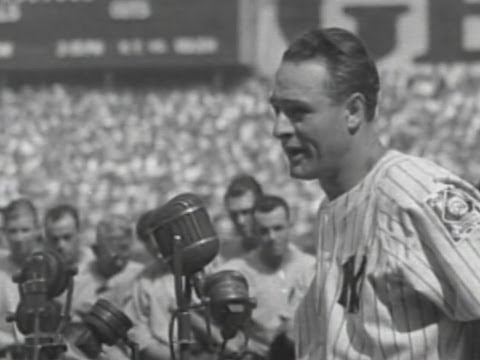
Lou Gehrig delivers his farewell speech, Yankee Stadium, 1939
Only fragments of the 1939 newsreel survive; this is the surviving footage of the speech itself, not the film version.
YouTube record: “Gehrig delivers his famous speech at Yankee Stadium” — MLB · playability checked 2026-11-15 with this site as referer.
The hub entry: Valvano’s Jimmy V speech

Jim Valvano’s 1993 ESPY speech — don’t give up, don’t ever give up
Carried on the channel of the V Foundation for Cancer Research, the foundation Valvano announced in this speech.
YouTube record: “Jim’s 1993 ESPY Speech” — The V Foundation for Cancer Research · playability checked 2026-11-15 with this site as referer.
The hub entry: Stuart Scott at the ESPYs

Stuart Scott’s 2014 ESPY acceptance speech
Scott accepting the Jimmy V Perseverance Award, 2014 — the speech this hub’s Scott entries quote.
YouTube record: “Stuart Scott ESPY speech” — TampaBlunt · playability checked 2026-11-15 with this site as referer.
The hub entry: The Jordan failure voiceover

The 1997 Nike ’Failure’ commercial, in full
Thirty seconds: advertising copy written by Jamie Barrett of Wieden+Kennedy, spoken by Michael Jordan — credited that way in this hub’s quotation entry too.
YouTube record: “Michael Jordan "Failure" Nike Commercial” — JayMJ23 · playability checked 2026-11-15 with this site as referer.
The hub entry: The Miracle on Ice

The final seconds of the Miracle on Ice, with Al Michaels’ call
The closing countdown of the 1980 medal-round game and the most famous call in American broadcasting.
YouTube record: “Do you believe in miracles? Yes! On this day 1980, Al Michaels called the Miracle on Ice.” — STAA - Sportscasters Talent Agency of America · playability checked 2026-11-15 with this site as referer.
The hub entry: Redmond finishes the lap
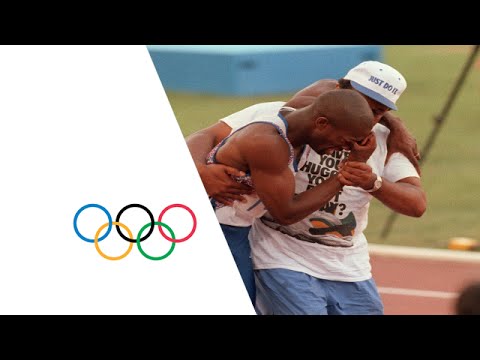
Derek Redmond’s 1992 Olympic semi-final, finished with his father
From the Olympics’ own channel: the torn hamstring, and Jim Redmond coming down from the stands.
YouTube record: “Derek Redmond’s Emotional Olympic Story - Injury Mid-Race | Barcelona 1992 Olympics” — Olympic Games · playability checked 2026-11-15 with this site as referer.
The hub entry: Strug’s second vault

Kerri Strug’s vaults at Atlanta 1996
From the Olympics’ own channel. The hub’s written entry carries the correction: the team would have won even without the second vault.
YouTube record: “Kerri Strug Vaults at Atlanta 1996 | Epic Olympic Moments” — Olympic Games · playability checked 2026-11-15 with this site as referer.
The hub entry: Bolt’s 9.69 in Beijing
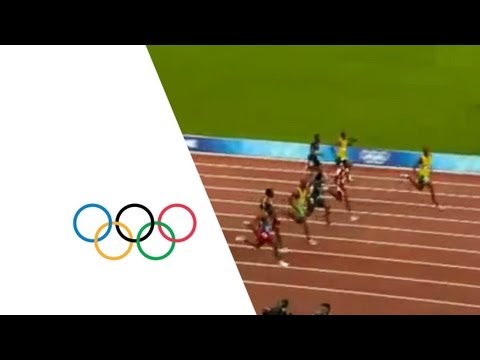
Usain Bolt’s 9.69 world record, Beijing 2008
From the Olympics’ own channel: the 100 metres final, arms spread before the line, shoelace undone.
YouTube record: “Usain Bolt Breaks 100m World Record In 9.69 Seconds - Beijing 2008 Olympics” — Olympic Games · playability checked 2026-11-15 with this site as referer.