Sport on Earth › Sports
Sport on Earth · Sport
Badminton
How it’s played
Players rally a shuttlecock over a high net. Matches are best of three games to 21.
History
Derived from Indian and English games in the 19th century; BWF governs; Olympic since 1992.
The pro scene
Professional: BWF World Tour, Thomas and Uber Cups, national leagues in Asia and Europe.
College and school: School and university tournaments are widespread in China, Indonesia, India, and Malaysia.
Grassroots and other: Community halls, clubs, and backyard play.
Season calendar
All England in March; BWF World Championships annually in summer or autumn.
Dates above are recurring patterns, not confirmed fixtures.
League histories
- BWF World Tour — founded 1934. Badminton’s global elite circuit, run by the BWF, the sport’s world governing body since 1934.
Leagues
BWF World Tour Desk
BWF World Tour
21 team views · 21 pieces · 12 videos
News Desk
News stories from around the world, gathered and sourced by the Sport on Earth desk.
Badminton on the program for Los Angeles 2028 Olympic Games
Badminton is carried on the program for Los Angeles 2028 Olympic Games, 14 – 30 July 2028, in Los Angeles, USA. Players rally a shuttlecock over a high net. Matches are best of three games to 21. The desk carries the sport’s full record — guide, calendar and history — on its own page.
LA28 / IOC · Nov 2026
Columns & Stories
Written by Sport on Earth’s journalists — columns, features and interviews from the desk.
BWF World Tour Desk · Column
Rally Scoring Made Every Rally a Verdict
Badminton’s rules dossier on this site has exactly one entry, and it is enough: rally scoring to 21, adopted by the BWF in 2006. Before it, you could win a rally and win nothing; the score moved only on serve, and matches carried dead time the way old houses carry spare rooms. Rally scoring abolished the dead time. Every rally is now a verdict — a point for somebody — and the modern game’s speed, the thing casual viewers always remark on, is not just athletic evolution. It is arithmetic. The law made every exchange count, so every exchange got contested like it counts.
November 1, 2026
BWF World Tour Desk · Column
The Roll Is the Argument: What Thomas Cup finals Really Tells Us
Here is the column’s position, stated plainly: the thomas cup finals roll — 34 editions, 1949 to 2026, counted from the record this site carries — is a better historian than any panel of experts. Panels argue about eras. The roll just keeps score, and its score says Indonesia won 14 of those editions. 41.2% of a competition’s entire history is not a hot streak; it is a structural fact.
November 2, 2026
BWF World Tour Desk · Column
The Roll Is the Argument: What Uber Cup finals Really Tells Us
Here is the column’s position, stated plainly: the uber cup finals roll — 31 editions, 1957 to 2026, counted from the record this site carries — is a better historian than any panel of experts. Panels argue about eras. The roll just keeps score, and its score says China won 16 of those editions. 51.6% of a competition’s entire history is not a hot streak; it is a structural fact.
November 2, 2026
BWF World Tour Desk · Column
Who Gets In, Who Waits: The BWF Hall of Fame Standard
The BWF Hall of Fame roll this site carries holds 81 names, inducted from 1996 to 2024. Every hall of fame is really two institutions: the one that inducts, and the one that makes the inducted argue about the standard. This column is about the second one.
November 2, 2026
BWF World Tour Desk · Column
Institutions Outlive Seasons: A Column on the BWF World Tour
A column about a league should begin where the league began: Badminton World Federation founded 5 July 1934 in London as the International Badminton Federation; BWF World Tour launched in 2018 replacing the Superseries.. The BWF World Tour — Badminton’s global elite circuit, run by the BWF, the sport’s world governing body since 1934. — has since been many things, but it has never stopped being that founding decision, renewed every season.
November 2, 2026
BWF World Tour Desk · Column
The BWF World Tour Notebook: A League in Its Own Image
Every league desk keeps a notebook that is not really about results. This is ours for the BWF World Tour. The census record this site carries describes its sport in one line — Players rally a shuttlecock over a high net. Matches are best of three games to 21. — and files it under Bat, stick & racket, in the racket family of sports. One line is a discipline: before the desk argues about a league, it has to say what the league is.
November 2, 2026
BWF World Tour Desk · Column
What the BWF World Tour Record Asks of Its Next Season
A new season of the BWF World Tour makes three quiet demands, and the record — not the hype — names them. It asks about the roll’s next line: China won the 2026 edition of the thomas cup finals, and Malaya’s 71-year wait is the roll’s longest open one; the hall’s next class: the BWF Hall of Fame roll stands at 81 names, its most recent from 2024; the institution’s next chapter: a league founded in 1934 that has already survived every previous version of this argument.
November 2, 2026
BWF World Tour Desk · Column
The Whole File: A Column on Badminton
A column about an entire sport, which is an immodest assignment, so begin with the file: this desk covers Badminton through 1 league desks, 7 news items and the rolls, halls and histories this site carries for it. The file is the column’s subject — what a sport looks like when you keep all of it in one place.
November 2, 2026
BWF World Tour Desk · Feature
The Long Roll: Thomas Cup finals and the Weight of Indonesia
Count the thomas cup finals roll the way this site carries it — 34 editions, 1949 to 2026 — and one name does the heavy lifting: Indonesia, champions 14 times. That is 41.2% of the roll’s whole history, a share no argument about eras can explain away.
November 2, 2026
BWF World Tour Desk · Feature
The Long Roll: Uber Cup finals and the Weight of China
Every roll of honor is an argument about time, and the uber cup finals roll — 31 editions counted from the record this site carries, running from 1957 to 2026 — argues louder than most. At the top of it sits China with 16 titles, 51.6% of every edition ever decided. The rest of the roll is the story of everyone who ever tried to move them.
November 2, 2026
BWF World Tour Desk · Feature
The First Class: BWF Hall of Fame and the 1996 Inductees
Every hall of fame is founded twice: once when the building opens, and once when the first class walks in. For the BWF Hall of Fame in Administered by the Badminton World Federation, that moment came in 1996, when 4 names were inducted together: George Thomas, Betty Uber, Dolby, Seymour Sackville Carew, Scheele, Herbert. The roll this site carries now runs to 81 inductees — and it still begins with them.
November 2, 2026
BWF World Tour Desk · Feature
50 Years On: The 1976 Thomas Cup finals Final
This year marks 50 years since the 1976 edition of the thomas cup finals — a line the roll this site carries (34 editions, 1949 to 2026) records plainly: Indonesia won it, beating Malaysia (9–0).
November 6, 2026
BWF World Tour Desk · Feature
By the Decade: Who Owned the Thomas Cup finals, Ten Years at a Time
Read the thomas cup finals roll by decade instead of by champion and a different history appears. The roll this site carries runs 34 editions from 1949 to 2026, across 9 decades with a clear leader — and the decade table’s most frequent owner is China, who led 4 of those decades.
November 14, 2026
BWF World Tour Desk · Feature
Counting from 1934: The BWF World Tour at 92
The BWF World Tour file this site carries opens with a single line: Badminton World Federation founded 5 July 1934 in London as the International Badminton Federation; BWF World Tour launched in 2018 replacing the Superseries. In 2026 that founding sits 92 years back — 92 years of seasons, champions and arguments, all of them interest on one decision.
November 21, 2026
BWF World Tour Desk · Interview — the Sport on Earth desk, in its own words
Five Questions With the BWF World Tour Desk
The Sport on Earth BWF World Tour desk takes questions on the rankings and the Paris week. The desk answers in its own words — no player is quoted, and nothing here is presented as anyone else’s statement.
BWF World Tour Desk · Interview — the Sport on Earth desk, in its own words
Five Questions With the BWF World Tour Desk: The Thomas Cup finals Roll
The Sport on Earth BWF World Tour Desk takes questions on the thomas cup finals roll. The desk answers in its own words — no player, coach or official is quoted, and nothing here is presented as anyone else’s statement. 34 editions, 1949–2026; most titles Indonesia (14); 7 distinct winners.
BWF World Tour Desk · Interview — the Sport on Earth desk, in its own words
Five Questions With the BWF World Tour Desk: The Uber Cup finals Roll
The Sport on Earth BWF World Tour Desk takes questions on the uber cup finals roll. The desk answers in its own words — no player, coach or official is quoted, and nothing here is presented as anyone else’s statement. 31 editions, 1957–2026; most titles China (16); 5 distinct winners.
BWF World Tour Desk · Interview — the Sport on Earth desk, in its own words
Five Questions With the BWF World Tour Desk: Inside the BWF Hall of Fame
The Sport on Earth BWF World Tour Desk takes questions on the BWF Hall of Fame. The desk answers in its own words — no player, coach or official is quoted, and nothing here is presented as anyone else’s statement. Every figure below is counted from the hall’s own roll as this site carries it.
BWF World Tour Desk · Interview — the Sport on Earth desk, in its own words
Five Questions With the BWF World Tour Desk: The BWF World Tour File
The Sport on Earth BWF World Tour Desk takes questions on the BWF World Tour file. The desk answers in its own words — no player, coach or official is quoted, and nothing here is presented as anyone else’s statement. The answers draw on the league history this site carries.
BWF World Tour Desk · Interview — the Sport on Earth desk, in its own words
Five Questions With the BWF World Tour Desk: The BWF World Tour Briefing
The Sport on Earth BWF World Tour Desk takes questions on the BWF World Tour. The desk answers in its own words — no player, coach or official is quoted, and nothing here is presented as anyone else’s statement. A standing briefing, refreshed from the files this site carries.
BWF World Tour Desk · Interview — the Sport on Earth desk, in its own words
Five Questions With the BWF World Tour Desk: BWF World Tour by the Numbers
The Sport on Earth BWF World Tour Desk takes questions on the BWF World Tour in numbers. The desk answers in its own words — no player, coach or official is quoted, and nothing here is presented as anyone else’s statement. Every answer below is a count taken from the site’s own files.
Writing Desk
Everything the desk has published for Badminton, organised by section.
News
From the News Desk · all news, every sport →
Stories
- The Long Roll: Thomas Cup finals and the Weight of Indonesia BWF World Tour Desk · November 2, 2026
- The Long Roll: Uber Cup finals and the Weight of China BWF World Tour Desk · November 2, 2026
- The First Class: BWF Hall of Fame and the 1996 Inductees BWF World Tour Desk · November 2, 2026
- 50 Years On: The 1976 Thomas Cup finals Final BWF World Tour Desk · November 6, 2026
- By the Decade: Who Owned the Thomas Cup finals, Ten Years at a Time BWF World Tour Desk · November 14, 2026
- Counting from 1934: The BWF World Tour at 92 BWF World Tour Desk · November 21, 2026
All stories across every sport →
Columns
- Rally Scoring Made Every Rally a Verdict BWF World Tour Desk · November 1, 2026
- The Roll Is the Argument: What Thomas Cup finals Really Tells Us BWF World Tour Desk · November 2, 2026
- The Roll Is the Argument: What Uber Cup finals Really Tells Us BWF World Tour Desk · November 2, 2026
- Who Gets In, Who Waits: The BWF Hall of Fame Standard BWF World Tour Desk · November 2, 2026
- Institutions Outlive Seasons: A Column on the BWF World Tour BWF World Tour Desk · November 2, 2026
- The BWF World Tour Notebook: A League in Its Own Image BWF World Tour Desk · November 2, 2026
- What the BWF World Tour Record Asks of Its Next Season BWF World Tour Desk · November 2, 2026
- The Whole File: A Column on Badminton BWF World Tour Desk · November 2, 2026
All columns across every sport →
Interviews
- Five Questions With the BWF World Tour Desk BWF World Tour Desk
- Five Questions With the BWF World Tour Desk: The Thomas Cup finals Roll BWF World Tour Desk
- Five Questions With the BWF World Tour Desk: The Uber Cup finals Roll BWF World Tour Desk
- Five Questions With the BWF World Tour Desk: Inside the BWF Hall of Fame BWF World Tour Desk
- Five Questions With the BWF World Tour Desk: The BWF World Tour File BWF World Tour Desk
- Five Questions With the BWF World Tour Desk: The BWF World Tour Briefing BWF World Tour Desk
- Five Questions With the BWF World Tour Desk: BWF World Tour by the Numbers BWF World Tour Desk
Shows
Sport on Earth’s daily and weekly video shows for Badminton — every episode, newest first.
Badminton A Day Daily show
Episode 10 — Tanvi Sharma fights back in 68 minutes — top seeds Jason Teh and Kapila-Crasto fall in Lucknow’s round of 16
Ep. 10 — Thursday, November 26, 2026 · 5:18
Episode 9 — Treesa and Gayatri open their hat-trick bid 21-8, 21-7 — Prannoy falls in round one and Patri retires in Lucknow
Ep. 9 — Wednesday, November 25, 2026 · 5:33
Episode 8 — Syed Modi opens in Lucknow — 15-year-old Tanvi Patri qualifies in 22 minutes, and the Hangzhou Finals field is locked in
Ep. 8 — Tuesday, November 24, 2026 · 5:09
Episode 7 — Antonsen wins Hong Kong without playing the final — and Malaysia’s doubles pairs end a 27-year wait
Ep. 7 — Sunday, November 22, 2026 · 4:32
Episode 6 — Evergreen Intanon books a record 11th trip to the Finals — and Antonsen survives an 88-minute thriller in Hong Kong
Ep. 6 — Saturday, November 21, 2026 · 4:48
Episode 5 — Rakshitha stuns Chen Yufei — the 19-year-old’s week of giant-killing rolls on
Ep. 5 — Friday, November 20, 2026 · 4:07
Episode 4 — Sen survives 25-23 in the decider — and Srikanth sends him to Hangzhou
Ep. 4 — Thursday, November 19, 2026 · 4:00
Episode 3 — Satwik and Chirag save four match points — Hong Kong’s first day goes the distance
Ep. 3 — Wednesday, November 18, 2026 · 3:07
Episode 2 — Hong Kong opens today — Sen’s Finals fate hangs on one week at Kai Tak
Ep. 2 — Tuesday, November 17, 2026 · 2:56
Episode 1 — Sen’s Kumamoto comeback — and a first Japan Masters crown for Malaysia’s pair
Ep. 1 — Monday, November 16, 2026 · 1:45
Videos
Every embed below was verified playable before listing — the network’s standing rule.
Akane Yamaguchi
【激闘】山口茜が魅せた驚異の粘り!Mia Blichfeldt vs Akane Yamaguchi | Highlights
#2 on the board · Women’s Singles · Japan
Chou Tien-chen
【Nice Angle】Chou Tien Chen (TPE) vs. Yudai Okimoto (JPN) Arctic Open 2026 Badminton #choutienchen
#5 on the board · Men’s Singles · Chinese Taipei
Kunlavut Vitidsarn
Men’s Singles | Shi Yu Qi (CHN) vs. Kunlavut Vitidsarn (THA) | Badminton Highlight 2026
#8 on the board · Men’s Singles · Thailand
Alwi Farhan
Men’s Singles | Cholan KAYAN (ENG) vs Alwi FARHAN (INA) | Badminton Highlight 2026
#9 on the board · Men’s Singles · Indonesia
Victor Lai
Victor Lai v Joshua Nguyen MS Final Highlights - 2024 CAN Nationals
#10 on the board · Men’s Singles · Canada
View all videos (13)Show fewer videos
Tomoka Miyazaki
World No.1 An Se Young faces off against Tomoka Miyazaki
#12 on the board · Women’s Singles · Japan
Ratchanok Intanon
Women’s Singles | Chen Yu Fei (CHN) vs Ratchanok Intanon (THA) | Badminton Highlight 2026
#13 on the board · Women’s Singles · Thailand
Shi Yuqi
30 times SHI YUQI proved that he’s built different
#16 on the board · Men’s Singles · China
Men’s Singles | Alwi Farhan (INA) vs Li Shi Feng (CHN) | Badminton Highlight 2026
YouTube · Badminton Men
Men’s Singles | Shi Yu Qi (CHN) vs Alex Lanier (FRA) | Badminton Highlight 2026
YouTube · Badminton Men
Men’s Singles | Shi Yu Qi (CHN) vs Christo Popov (FRA) | Badminton Highlight 2026
YouTube · Badminton Men
Men’s Singles | Lee Zii Jia (MAS) vs Anders Antonsen (DEN) | Badminton Highlight 2026
YouTube · Badminton Men
When Elite Badminton Players Go Funny
YouTube · Shuttle Strong
Everything for Badminton
Pages
On this page
- How it’s played
- History
- The pro scene
- Season calendar
- League histories
- Leagues
- News Desk
- Columns & Stories
- Writing Desk
- Videos
- Reader comments
- Games, Lab & Calendar
- Story extras
- Season Calendar
- The Physics Lab
- The Record Lab
- Sponsorship History
- How to Play Badminton
- Equipment Through Time — Badminton
- Analytics — Badminton
- Rule Changes & Named Rules
- Results & Fixtures
- History & Records
- Review Room — in-game and post-game review & analysis
- Badminton in pictures & numbers
- Hall of Fame
- Stories from the Record
- On screen
- Tools for Badminton
- Player & referee associations
- Badminton — Tactics & Strategy
- Behind the Play
Games, Lab & Calendar
Games for this sport
No game on this site is made specifically for Badminton yet. The games below are the site's all-sport games, which honestly cover every sport — nothing from another sport has been dressed up as this sport's game.
Daily Trivia
A new set of questions every day, across every sport this site covers.
Top Sport on Earth
Real-athlete Top Sport on Earth decks built from the site’s verified board data.
The Lab
Badminton's lab is the Physics Lab section on this page — the applied physics of its sport family, with a computed interactive where one honestly fits.
Physics Arena — the general biomechanics & physics teaching sandbox, shared by every sport.
The homepage sport explorer also carries a general Lab tab of small interactive experiments.
Season calendar
Calendar data not yet carried for Badminton — this site does not yet hold schedule data for it, so no dates are shown rather than invented.
Story extras
Fan poll
Which desk story should we follow up?
Votes are counted on the Sport on Earth server and the totals shown are every reader’s votes; your own choice is remembered in this browser.
Key numbers — The Long Roll: Thomas Cup finals and the Weight of Indonesia
Bars use only the metrics in the desk's summary data whose values are purely numeric; labels and values are shown verbatim.
How this story developed
Dated news entries for Badminton, newest first, dates exactly as carried in the site’s news data.
- Nov 2026 — Badminton on the program for Los Angeles 2028 Olympic Games (LA28 / IOC)
Season Calendar
Flagship dates — verified
The flagship competitions on the calendar, with the dates for the current/upcoming cycle. Every date below was verified against the named source on 1 November 2026; dates change, and the source is the authority.
| Event | Dates | Where | Source |
|---|---|---|---|
| Los Angeles 2028 Olympic Games | 14 – 30 July 2028 | Los Angeles, USA | LA28 / IOC — Games dates |
The season in words
All England in March; BWF World Championships annually in summer or autumn.
The Physics Lab
Spin, drag and the geometry of the court
Racket sports are projectile physics with extreme drag: a shuttlecock is the most drag-dominated projectile in sport, a table-tennis ball the lightest — and every ball between is steered by topspin and slice through the Magnus effect, which is why a heavy topspin shot dives late and a slice floats. The calculator below is the core flight model, with assumptions printed: no air resistance, no spin, flat ground — use it to see what gravity alone does, then credit drag and spin for the difference you see on court.
String-bed physics matters too: dwell time, string tension and racket flex set how much energy and spin a stroke can impart.
From this sport's own record: Players rally a shuttlecock over a high net. Matches are best of three games to 21. The lab above treats the physics of the sport's family; no measurement specific to this sport is printed, because the site's verified record for it carries none — parameters are never invented to fill a lab.
Try it: projectile flight calculator
Model: R = v²·sin(2θ)/g, flight time T = 2·v·sin(θ)/g, apex H = (v·sin θ)²/(2g), g = 9.81 m/s². Assumptions: no air resistance, no spin, flat ground, launch and landing at the same height. Real balls and shuttles fly shorter and curve — drag and spin are exactly what this model leaves out, so treat the output as the gravity-only ceiling, not a prediction.
The general teaching sandbox for every sport is the Physics Arena on the Games page — the same printed models, with a defender added.
The Record Lab
The hands-on lab for Badminton, built entirely from the record this site carries for it — its documented rolls, its halls, its venues, its calendar and its census family. Every figure below is computed from that carried record at build time; nothing is estimated and nothing is pulled live. The companion Physics Lab on this page works the family's physics; this lab works the record.
Hall of Fame explorer
Badminton carries 1 hall in the site’s record — BWF Hall of Fame — with 81 inductees carried, 68 of them with a full verified profile on this site.
Inductions by decade (computed from the carried induction years):
1990s33
2000s27
2010s8
2020s9
Basis: the Hall of Fame record carried on this site — the same rolls and verified profiles the Hall of Fame books print. Inductees a hall lists but the site has not verified stay list-only, exactly as the books state.
Venue explorer
The carried global venue dataset holds 125 venues for Badminton across 44 countries. The largest capacity the dataset records for this sport is 60,000 — Moi International Sports Centre, Nairobi.
Basis: the global venue dataset carried on this site (6,438 venues with coordinates; the venue explorer on the sports index and the stadium sun table work the same data). Countries beyond the 25 largest are counted in the totals above but not listed here.
The carried calendar
- Los Angeles 2028 Olympic Games — 14 – 30 July 2028, Los Angeles, USA
Basis: the dated events this entry’s own record carries, as announced by the bodies named in the record. A sport whose record carries no fixed dated calendar says so on its calendar page rather than inventing one.
The family lab — Racket sports
Computed from the site census: the Racket sports family holds 18 entries on this site. Across the family, the carried record includes documented rolls for 1 of them, Hall of Fame data for 3, venue sets for 7, and dated calendars for 4.
Every other entry in the family: 360ball · Crossminton · Frescobol · Gaelic Handball · Hanetsuki · Matkot · Padbol · Padel · Pelota and Jai Alai · Pickleball · Racketlon · Racquetball · Real Tennis · Squash · Table Tennis · Tamburello · Tennis
Basis: the Sport on Earth census itself — the same 460-entry register the census page prints.
Sponsorship History
The sponsorship record of Badminton — title sponsors, jersey and kit deals, venue naming rights, firsts and record deals — from published sources only. Current deals are tracked on the Money Desk sponsorship page.
HSBC becomes Principal Global Partner and World Tour title sponsor 2018-2026
When the BWF replaced its Superseries circuit with the World Tour, HSBC came in as Principal Global Partner, title-sponsoring the HSBC BWF World Tour and HSBC BWF World Tour Finals for the first four years from 2018, as well as becoming Premier Sponsor for BWF Major Championships. The arrangement was later extended until end-2026.
HSBC BWF World Tour structure 2018-
The HSBC BWF World Tour is a circuit of 30 tournaments in five levels - Super 1000, Super 750, Super 500 and Super 300 - culminating in the HSBC BWF World Tour Finals in December for the top eight in each discipline. Hangzhou hosts the Finals for the 2023-2026 cycle.
Sponsorship sources: BWF World Tour Finals - History · BWF Corporate
How to Play Badminton
How this game is played, gathered from the record Sport on Earth already carries for Badminton, with the positions taken from the sourced chart cited in that section.
The game in brief
Players rally a shuttlecock over a high net. Matches are best of three games to 21.
Core rules
Badminton’s scoring was the last of the racket sports’ old-world systems — and it fell to the same television logic as volleyball’s.
The current rules, as the site's rule-change dossier records them:
- Rally Scoring to 21 (BWF, 2006): From 2006, rally scoring: every rally wins a point, games to 21 (cap at 30), best of three games, service passing to the rally winner. The BWF trialled a 7-point system earlier in the decade and rejected it before settling on 21.
The full dossier — every dated change and named rule, with its source basis — is in this page’s Rule Changes & Named Rules section.
Positions & basic plays
Badminton has no fixed positions — its format designates no positional roles.
Format as carried in hidden_files/batchB-nov1/batchb_data.json: "Players rally a shuttlecock over a high net. Matches are best of three games to 21." The format carries no designated positional roles. (Source: Sport on Earth carried sport record.)
Its Tactics & Strategy book — its opening entries, the basic plays, are:
- Depth Before Width — The family’s first law: a shot hit deep pins the opponent to his back line and buys the court in front of him; width attempted from a short ball is a donation. Build the rally deep, then widen it. When it’s used: Every rally’s foundation, in every racket code.
- The Weaker Wing Doctrine — Most players own one wing that defends worse, returns shorter, and breaks down third in long exchanges: the book says to live there — not exclusively, but as the rally’s home address. When it’s used: The oldest tactic in the family, and still the default at every level.
- The Change of Direction — The rally is a rhythm until someone breaks it: the player who changes the ball’s direction first, from balance, wins the exchange’s geometry — changing it off balance is how errors are manufactured. When it’s used: Direction changes are earned by footwork, never by hope.
- Serve and Return as First Plays — The family’s only closed skills are its first plays: the serve is hit to a called target with a called second shot behind it, and the return is positioned and aimed with the same deliberation — rallies are won before they are rallies. When it’s used: Treat the first two shots as called plays, because they are the only ones you fully control.
The full book carries 12 entries — in this page’s Playbook / Tactics & Strategy section, and at the Playbooks hub.
Equipment Through Time — Badminton
How this sport's equipment actually changed, entry by entry, from the sources named under each one. Dates a source gives only approximately are printed as c. or as an era, with the reason stated — never sharpened into a precision the record does not support.
1873 — Codified game, wooden rackets
The modern game was launched at Badminton House in 1873 and the Bath Badminton Club formalised rules the same decade; rackets were carved/laminated wood with natural-gut strings, kept in a press against warping, and the shuttle was 16 feathers in a cork base — the construction still used at the top level.
Why it changed: Codification; equipment was wood, gut, feather and cork.
Source: ST Badminton Academy, ’Badminton Gear Evolution: From Wooden Rackets to Carbon Fibre’ (search result; the guide itself declines to invent launch dates, so metal/carbon transitions are era-dated) — https://stbadmintonacademy.my/the-evolution-of-badminton-gear-from-wooden-rackets-to-high-tech-equipment/
c. mid-20th century — Racket — steel, then aluminium
Metal entered through the shaft (steel: thinner, straighter, warp-free), then aluminium heads made the whole frame metal — lighter and, crucially, consistent from racket to racket in a way wood never was. No single launch date is claimed: the academy history used here explicitly declines to invent brand launch dates, so this transition is era-dated.
Why it changed: Materials transition, era-dated because open sources do not support a single year.
Dating note: Approximate: sources give a range or differ on the exact year; see source.
Source: ST Badminton Academy, ’Badminton Gear Evolution: From Wooden Rackets to Carbon Fibre’ (search result; the guide itself declines to invent launch dates, so metal/carbon transitions are era-dated) — https://stbadmintonacademy.my/the-evolution-of-badminton-gear-from-wooden-rackets-to-high-tech-equipment/
c. late 20th century — Racket — carbon fibre / graphite
Carbon-fibre composite frames (head, T-joint and shaft in one engineered material) ended the metal years; modern rackets print weight classes on the shaft (3U = 85–89 g, 4U = 80–84 g, 5U = 75–79 g before grip and strings), and synthetic nylon-based strings displaced natural gut.
Why it changed: Materials: strength precisely because it is light.
Dating note: Approximate: sources give a range or differ on the exact year; see source.
Source: ST Badminton Academy, ’Badminton Gear Evolution: From Wooden Rackets to Carbon Fibre’ (search result; the guide itself declines to invent launch dates, so metal/carbon transitions are era-dated) — https://stbadmintonacademy.my/the-evolution-of-badminton-gear-from-wooden-rackets-to-high-tech-equipment/
c. mid-20th century — Shuttle — nylon alternative
Nylon shuttlecocks were introduced as a durable, cheaper alternative for recreational and some competitive play; they fly differently from feather shuttles, which is why the feather shuttle (16 goose feathers from the left wing in the standard account, cork base, leather cover) remains the tournament standard.
Why it changed: Cost/durability vs. flight fidelity — the rare case where the old material was never displaced at the top.
Dating note: Approximate: sources give a range or differ on the exact year; see source.
Source: ST Badminton Academy, ’Badminton Gear Evolution: From Wooden Rackets to Carbon Fibre’ (search result; the guide itself declines to invent launch dates, so metal/carbon transitions are era-dated) — https://stbadmintonacademy.my/the-evolution-of-badminton-gear-from-wooden-rackets-to-high-tech-equipment/
Companion tool: the Equipment Size Visualiser draws today's balls for eight sports at true relative scale — this section is how they got that way.
Analytics — Badminton
Sport on Earth's own analytics: every figure in this panel is computed at build time from the record this site itself carries, with the source named. No outside data is used, and no betting figures of any kind.
Champions-roll concentration
- Uber Cup finals: 31 carried editions (1957–2026), 5 different champions; most successful China — 16 (51.6%); concentration HHI 0.3319, effective champions 3.01.
- Thomas Cup finals: 34 carried editions (1949–2026), 7 different champions; most successful Indonesia — 14 (41.2%); concentration HHI 0.3080, effective champions 3.25.
Computed from the site's documented champions datasets — the same rolls behind the Parity Tracker.
Hall of Fame record carried: 81 inductees across 1 hall(s); inductions span 1996–2024; the largest induction decade is the 1990s (33 inductees).
Source: the site's carried hall-of-fame record (historical-players.json).
Venues carried: 125 in 44 countries; the largest carried capacity is 60,000 (Moi International Sports Centre).
Source: the site's global venue record (venues-global.json); a capacity is printed only where the record carries a verified one.
Census arithmetic: Badminton sits in the racket sports family — 18 census sports, of which 2 carry a qualifying champions roll in the site's record.
Rule Changes & Named Rules
Badminton’s scoring was the last of the racket sports’ old-world systems — and it fell to the same television logic as volleyball’s.
Rally Scoring to 21
Before: Badminton used side-out scoring to 15 (11 for women’s singles): only the server scored, matches sprawled unpredictably, and a player could dominate rallies without moving the scoreboard.
The change: From 2006, rally scoring: every rally wins a point, games to 21 (cap at 30), best of three games, service passing to the rally winner. The BWF trialled a 7-point system earlier in the decade and rejected it before settling on 21.
Why it happened: Broadcast duration was the driver, as across the racket-and-court family in those years; the federation also wanted every rally televised to matter. The rejected 5x7 experiment (2002) shows the destination was certain before the route was.
In practice today: Badminton’s modern intensity — no dead rallies, a set’s whole story in twenty minutes — is the 2006 system’s yield; the 15-point era survives in club halls and veterans’ events only.
Source basis: BWF rule-change records (2006 rally scoring adoption).
Results & Fixtures
Sport on Earth carries no results feed for Badminton: no scores or fixtures are published here, rather than inventing them. The sport's documented record is in its history page and the History & Records section of this page.
History & Records
The historical record for Badminton — past standings, champions, title history and all-time leaders, as deep as verifiable public records go.
Thomas Cup finals — 34 entries
| Year | Champions | Score | Runners-up |
|---|---|---|---|
| 1949 | Malaya | 8–1 | Denmark |
| 1952 | Malaya | 7–2 | United States |
| 1955 | Malaya | 8–1 | Denmark |
| 1958 | Indonesia | 6–3 | Malaya |
| 1961 | Indonesia | 6–3 | Thailand |
| 1964 | Indonesia | 5–4 | Denmark |
| 1967 | Malaysia | 6–3 | Indonesia |
| 1970 | Indonesia | 7–2 | Malaysia |
| 1973 | Indonesia | 8–1 | Denmark |
| 1976 | Indonesia | 9–0 | Malaysia |
| 1979 | Indonesia | 9–0 | Denmark |
| 1982 | China | 5–4 | Indonesia |
| 1984 | Indonesia | 3–2 | China |
| 1986 | China | 3–2 | Indonesia |
| 1988 | China | 4–1 | Malaysia |
| 1990 | China | 4–1 | Malaysia |
| 1992 | Malaysia | 3–2 | Indonesia |
| 1994 | Indonesia | 3–0 | Malaysia |
| 1996 | Indonesia | 5–0 | Denmark |
| 1998 | Indonesia | 3–2 | Malaysia |
| 2000 | Indonesia | 3–0 | China |
| 2002 | Indonesia | 3–2 | Malaysia |
| 2004 | China | 3–1 | Denmark |
| 2006 | China | 3–0 | Denmark |
| 2008 | China | 3–1 | South Korea |
| 2010 | China | 3–0 | Indonesia |
| 2012 | China | 3–0 | South Korea |
| 2014 | Japan | 3–2 | Malaysia |
| 2016 | Denmark | 3–2 | Indonesia |
| 2018 | China | 3–1 | Japan |
| 2020 | Indonesia | 3–0 | China |
| 2022 | India | 3–0 | Indonesia |
| 2024 | China | 3–1 | Indonesia |
| 2026 | China | 3–1 | France |
Source basis: Wikipedia — “Thomas Cup” (accessed Nov 1, 2026); parsed mechanically from the article’s published table. Material from Wikipedia is used under CC BY-SA 4.0..
Uber Cup finals — 31 entries
| Year | Champions | Score | Runners-up |
|---|---|---|---|
| 1957 | United States | 6–1 | Denmark |
| 1960 | United States | 5–2 | Denmark |
| 1963 | United States | 4–3 | England |
| 1966 | Japan | 5–2 | United States |
| 1969 | Japan | 6–1 | Indonesia |
| 1972 | Japan | 6–1 | Indonesia |
| 1975 | Indonesia | 5–2 | Japan |
| 1978 | Japan | 5–2 | Indonesia |
| 1981 | Japan | 6–3 | Indonesia |
| 1984 | China | 5–0 | England |
| 1986 | China | 3–2 | Indonesia |
| 1988 | China | 5–0 | South Korea |
| 1990 | China | 3–2 | South Korea |
| 1992 | China | 3–2 | South Korea |
| 1994 | Indonesia | 3–2 | China |
| 1996 | Indonesia | 4–1 | China |
| 1998 | China | 4–1 | Indonesia |
| 2000 | China | 3–0 | Denmark |
| 2002 | China | 3–1 | South Korea |
| 2004 | China | 3–1 | South Korea |
| 2006 | China | 3–0 | Netherlands |
| 2008 | China | 3–0 | Indonesia |
| 2010 | South Korea | 3–1 | China |
| 2012 | China | 3–0 | South Korea |
| 2014 | China | 3–1 | Japan |
| 2016 | China | 3–1 | South Korea |
| 2018 | Japan | 3–0 | Thailand |
| 2020 | China | 3–1 | Japan |
| 2022 | South Korea | 3–2 | China |
| 2024 | China | 3–0 | Indonesia |
| 2026 | South Korea | 3–1 | China |
Source basis: Wikipedia — “Uber Cup” (accessed Nov 1, 2026); parsed mechanically from the article’s published table. Material from Wikipedia is used under CC BY-SA 4.0..
Review Room — in-game and post-game review & analysis
The review and analysis videos from Badminton’s verified video pool — every embed below was identity-checked and probed playable before listing, the site’s standing rule. Nothing here is a show Sport on Earth produces; these are the review, post-game and breakdown videos the pool already carries for this sport.
No verified review-show video is carried for this sport yet.
Badminton in pictures & numbers
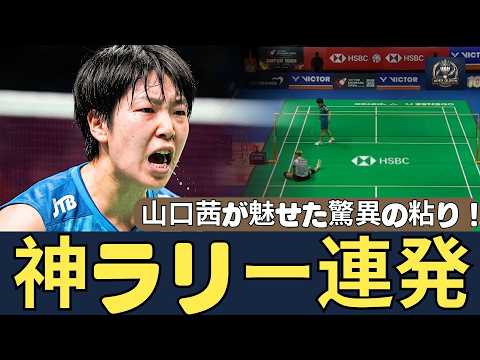
【激闘】山口茜が魅せた驚異の粘り!Mia Blichfeldt vs Akane Yamaguchi | Highlights
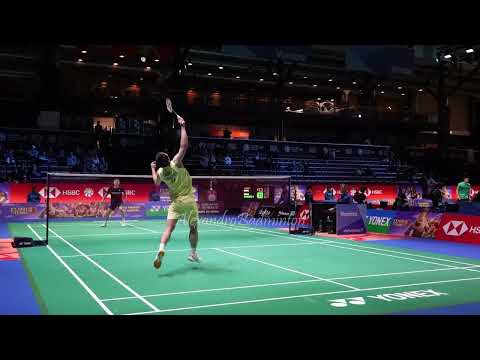
【Nice Angle】Chou Tien Chen (TPE) vs. Yudai Okimoto (JPN) Arctic Open 2026 Badminton #choutienchen
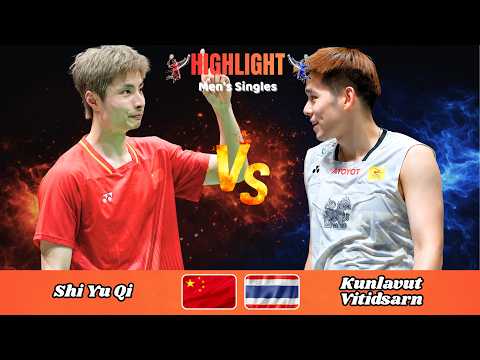
Men’s Singles | Shi Yu Qi (CHN) vs. Kunlavut Vitidsarn (THA) | Badminton Highlight 2026
Chart basis: counts from Sport on Earth’s own carried data files at build time — verified videos carried for this sport (the verified pool: sport-videos.json + the desk league pools), news items carried (news.json), and league pages carried (desk.json). No external or estimated figures.
The filter sorts the Review Room embeds and the picture cards above by the keywords in their carried titles (review / analysis / recap and similar, or highlights). It runs entirely in your browser — nothing is sent anywhere.
Hall of Fame
BWF Hall of Fame
Administered by the Badminton World Federation
81 inductees — every name on the hall's published list, grouped by class year.
All 81 inductees by class year
1996 — George Thomas (.mw-parser-output .hlist dl,.mw-parser-output .hlist ol,.mw-parser-output .hlist ul{margin:0;padding:0}.mw-parser-output .hlist dd,.mw-parser-output .hlist dt,.mw-parser-output .hlist li{margin:0;display:inline}.mw-parser-output .hlist.inline,.mw-parser-output .hlist.inline dl,.mw-parser-output .hlist.inline ol,.mw-parser-output .hlist.inline ul,.mw-parser-output .hlist dl dl,.mw-parser-output .hlist dl ol,.mw-parser-output .hlist dl ul,.mw-parser-output .hlist ol dl,.mw-parser-output .hlist ol ol,.mw-parser-output .hlist ol ul,.mw-parser-output .hlist ul dl,.mw-parser-output .hlist ul ol,.mw-parser-output .hlist ul ul{display:inline}.mw-parser-output .hlist .mw-empty-li{display:none}.mw-parser-output .hlist dt::after{content:": "}.mw-parser-output .hlist dd::after,.mw-parser-output .hlist li::after{content:"\a0 · ";font-weight:bold}.mw-parser-output .hlist dd:last-child::after,.mw-parser-output .hlist dt:last-child::after,.mw-parser-output .hlist li:last-child::after{content:none}.mw-parser-output .hlist dd dd:first-child::before,.mw-parser-output .hlist dd dt:first-child::before,.mw-parser-output .hlist dd li:first-child::before,.mw-parser-output .hlist dt dd:first-child::before,.mw-parser-output .hlist dt dt:first-child::before,.mw-parser-output .hlist dt li:first-child::before,.mw-parser-output .hlist li dd:first-child::before,.mw-parser-output .hlist li dt:first-child::before,.mw-parser-output .hlist li li:first-child::before{content:" (";font-weight:normal}.mw-parser-output .hlist dd dd:last-child::after,.mw-parser-output .hlist dd dt:last-child::after,.mw-parser-output .hlist dd li:last-child::after,.mw-parser-output .hlist dt dd:last-child::after,.mw-parser-output .hlist dt dt:last-child::after,.mw-parser-output .hlist dt li:last-child::after,.mw-parser-output .hlist li dd:last-child::after,.mw-parser-output .hlist li dt:last-child::after,.mw-parser-output .hlist li li:last-child::after{content:")";font-weight:normal}.mw-parser-output .hlist ol{counter-reset:listitem}.mw-parser-output .hlist ol>li{counter-increment:listitem}.mw-parser-output .hlist ol>li::before{content:" "counter(listitem)"\a0 "}.mw-parser-output .hlist dd ol>li:first-child::before,.mw-parser-output .hlist dt ol>li:first-child::before,.mw-parser-output .hlist li ol>li:first-child::before{content:" ("counter(listitem)"\a0 "} MS MD XD) · Betty Uber (WS WD XD) · Dolby, Seymour Sackville Carew · Scheele, Herbert
1997 — Ralph Nichols (MS MD XD) · Eddy Choong (MS MD XD) · Tonny Ahm (WS WD XD) · Frank Devlin (MS MD XD) · David Guthrie Freeman (MS MD XD ||) · Rudy Hartono (MS) · Judy Devlin (WS WD XD) · Finn Kobberø (MS MD XD) · Erland Kops (MS MD) · McCallum, John Dunwoodie Martin · Mohlin, Stellan · Reedie, Craig Collins · Sudirman, Dick
1998 — David E. L. Choong (MS MD XD) · Morten Frost (MS MD) · Jørgen Hammergaard Hansen (MS MD XD) · Han Aiping (WS WD) · Lene Køppen (WS WD XD) · Li Lingwei (WS WD) · Meriel Lucas (WS WD XD) · Ng Boon Bee (MD XD) · Ong Poh Lim (MS MD) · Tan Yee Khan (MS MD XD)
1999 — Gillian Gilks (WS WD XD) · Nora Perry (WD XD) · Ulla Strand (WS WD XD) · Margaret Tragett (WS WD XD) · Margaret Varner Bloss (WS WD) · Wong Peng Soon (MS MD)
2000 — Kirsten Thorndahl (WS WD XD) · Charoen Wattanasin (MS MD XD)
2001 — Christian Hadinata (MS MD XD) · Park Joo-bong (MS MD XD)
2002 — Chen Yuniang (WS WD XD) · Hiroe Yuki (WS WD) · Hou Jiachang (MS MD ||) · Kim Moon-soo (MD XD) · Liem Swie King (MS MD) · Tang Xianhu (MS MD XD)
2003 — Chung Myung-hee (WD XD) · Chung So-young (WD XD)
2004 — Susi Susanti (WS WD XD)
2008 — Ge Fei (WS WD XD) · Gu Jun (WS WD XD) · Ethel Thomson Larcombe (WS WD XD) · Thomas Lund (MD XD) · Lü, Shengrong
2009 — Gil Young-ah (WD XD) · Tjun Tjun (MS MD XD) · Johan Wahjudi (MD XD) · Susan Whetnall (WS WD XD) · Ye Zhaoying (WS WD) · Kim Dong-moon (MD XD) · Rexy Mainaky (MD XD) · Ra Kyung-min (WS WD XD) · Ricky Subagja (MD XD)
2011 — Gao Ling (WD XD) · Huang Sui (WD XD) · Li Yongbo (MD) · Tian Bingyi (MS MD) · Zhang Jun (MD XD) · Gong Zhichao (WS)
2012 — Ha Tae-kwon (MD XD)
2019 — Bang Soo-hyun (WS)
2021 — Cai Yun (MD) · Fu Haifeng (MD) · Zhang Ning (WS)
2022 — Liliyana Natsir (WD XD) · Zhao Yunlei (WD XD)
2023 — Lee Chong Wei (MS) · Lin Dan (MS)
2024 — Chen Long (MS) · Lee Yong-dae (MD XD)
Year not stated in the published list — 12 A · 7 B · 3 A · 2 B
Source basis: Wikipedia — "Badminton Hall of Fame" (accessed Nov 1, 2026); parsed mechanically from the article’s published table. Material from Wikipedia is used under CC BY-SA 4.0..
Full inductee profiles → 68 of the 81 inductees above carry a full verified profile — biography, induction record and verified video where one exists. The rest are list-only until a biography can be verified the same way.
📖 Badminton — Tactics & Strategy — every entry, plus the arcade strategy, at the foot of this page.
Badminton Arcade — Clear and Drop
An arcade take on Badminton: set the angle, set the power, and land the shuttle in the far court. Five attempts; the closer to the middle, the more it scores. Arcade distances and a training arc — a game in the spirit of the sport, not a simulation of it.
More ways to play Badminton
This page’s own game is the arcade above. Everything else on the site that fits this sport is listed here — and anything borrowed from a similar sport is labelled as that sport’s game, never passed off as this one’s.
- Top Sport on Earth — Badminton is one of the 455 sport cards in the SPORTS deck: play Top Sport on Earth.
- More in this family — Table Tennis Arcade — Clear and Drop: the game of Table Tennis, a similar sport in Badminton’s family.
- Everything else the site runs lives on the Games hub.
On screen
3 verified documentaries, films and series about this sport are listed in the site's screen guide: Sport on Screen — Badminton.
Tools for Badminton
The tools on this site that honestly run on Badminton — its own record first, then the site-wide general tools that apply. The full Badminton toolkit prints the ones that do not apply, with the data reason why.
Tools that run on Badminton’s own record
- You Are the Referee — Branching decision trees built from this sport’s own rule-changes dossier, each ruling cited to its rule.
- Signals in the Record — The officials’ signals extracted from the rule dossiers, this sport’s included where its dossier documents them.
- Field Blueprints — A scale diagram of this sport’s playing surface, dimensions as published in the governing laws its dossier cites.
- Venue Profiles — The venue directories the site carries name 125 venues for this sport, with the flagship grounds documented from the structured record.
General tools that also apply
Site-wide tools, not built for Badminton alone: Tournament Planner · My Notebook · The Labs · Design Studio · The Makers’ Bench · Match Day Desk · Play It Near You · Myth-Check Desk · Governing Bodies · Heat & Safety Calculator (WBGT) · Hydration Calculator · Training-Load Planner · Game Clock & Timer · Custom Rulebook Generator · Scout Notes Parser.
Player & referee associations
Officials: BWF Technical Officials (Umpires) (federation arm) — The Badminton World Federation runs a single level of BWF Umpires who officiate under the tournament referee’s authority, with training, assessment and mentoring organised by the BWF and its continental confederations.
Verified associations for this sport, from the sources listed on the players' associations and referees' associations pages.
Badminton — Tactics & Strategy
Tactics & Strategy — this sport’s book
the racket family’s shared tactics book — the rally-construction craft common to tennis, badminton, table tennis, squash, padel, pickleball and their cousins: depth, width, and the attack on the weaker wing. Each sport’s own signature entries follow the shared book on its page.
12 entries, plus the arcade strategy below. All wording is original coaching-vocabulary prose; nothing is copied from any proprietary playbook.
Depth Before Width
The family’s first law: a shot hit deep pins the opponent to his back line and buys the court in front of him; width attempted from a short ball is a donation. Build the rally deep, then widen it.
When it’s used: Every rally’s foundation, in every racket code.
The sequence
- The first three shots of a neutral rally are hit for depth, at the opponent’s weaker side.
- Width is spent only on a ball that has already pushed him back.
- A short ball received is an invitation: step in and take the court’s front half as your fee.
The Weaker Wing Doctrine
Most players own one wing that defends worse, returns shorter, and breaks down third in long exchanges: the book says to live there — not exclusively, but as the rally’s home address.
When it’s used: The oldest tactic in the family, and still the default at every level.
The sequence
- Probe both wings early and honestly: the scoreboard of the first games is scouting data.
- Four balls to the weaker wing, one to the strong — the ratio keeps the strong side honest.
- When the weaker wing starts camping to protect itself, the strong side is suddenly open: the doctrine’s dividend.
The Change of Direction
The rally is a rhythm until someone breaks it: the player who changes the ball’s direction first, from balance, wins the exchange’s geometry — changing it off balance is how errors are manufactured.
When it’s used: Direction changes are earned by footwork, never by hope.
The sequence
- Change direction off balls you are set for; take the ball early to make the change cheap.
- The first change should move the opponent laterally, not yourself.
- Two changes in a rally is a pattern: the opponent’s feet are now playing your game.
Serve and Return as First Plays
The family’s only closed skills are its first plays: the serve is hit to a called target with a called second shot behind it, and the return is positioned and aimed with the same deliberation — rallies are won before they are rallies.
When it’s used: Treat the first two shots as called plays, because they are the only ones you fully control.
The sequence
- The server’s target is chosen by the returner’s stance, not by habit.
- The returner’s position is an argument: stand where your return’s intention lives.
- The server’s first step after the serve belongs to the called second shot.
The Approach and the Net (Where the Code Has One)
In the net codes (tennis, badminton’s front court, padel, pickleball’s kitchen line), the approach shot is a play: hit deep and down the line, close behind it, and make the passer hit the shot the volleyer has already covered.
When it’s used: Net play is a contract: the approach buys the volley its terms.
The sequence
- Approach down the line so the court’s geometry shrinks for the passer.
- Split-step as the pass is struck — the volleyer’s stillness at contact is his range.
- The first volley is played deep and safe; the second is the kill. Patience at the net is a system.
The Lob and the Drop (the Front-Back Seesaw)
The drop pulls the opponent forward; the lob sends him back; played in alternation they saw the opponent’s legs apart — the family’s gentlest and cruellest combination.
When it’s used: Every racket code has its version because every court’s geometry does.
The sequence
- The drop is disguised by the same preparation as the deep shot until the last instant.
- The lob answers the net-rusher who has crept too close — its height is its safety.
- After two seesaws, the next deep ball is suddenly a winner: the legs remember.
Spin and Pace as Deception
The ball’s flight is information you may falsify: heavy spin that looks flat, the slice that floats and skids, the change of pace that arrives a half-beat off the swing’s promise.
When it’s used: Deception in the family is physical, not theatrical — it lives in the ball.
The sequence
- Vary spin on the same trajectory: the opponent’s feet are set by the ball’s look.
- The change of pace is aimed at the opponent’s rhythm, usually after three fast balls.
- Your own errors price the deception: a falsified ball you cannot control is a rumour about yourself.
The Body Shot (at the Hip)
A ball driven at the opponent’s hip or dominant-side elbow jams both wings at once: he must choose a side in the time the ball needs to arrive, and either choice is late.
When it’s used: The family’s equaliser against bigger, faster opponents.
The sequence
- The body ball is aimed at the space the racket must cross, not at the player.
- At the net it is the percentage answer to a close volleyer.
- Follow it forward: the jammed reply is short by construction.
Defending from the Corners (the Recovery System)
Defence is a system of anticipation and recovery position: after every shot, recover toward the bisector of the opponent’s possible angles — the geometry of his next shot draws your home position.
When it’s used: The recovery step is the rally’s invisible shot; champions take it, club players admire the ball instead.
The sequence
- Recover to the bisector, not to the centre mark: the ball’s position writes the map.
- From full stretch, the reply is played high and deep — defence buys time with height.
- One neutral ball resets the rally: defence’s whole ambition is that one ball.
The Tiebreak and the Big Points
Scoreboard points are not equal: the family’s closing craft is pattern discipline — your best patterns, served and returned to the scouting you did in the first games, with nothing new attempted at 6-6.
When it’s used: Big points are played from the book’s first pages, not its last.
The sequence
- Serve to the weaker wing on the points that carry games; the exotic serve is for 4-1.
- Return position tightens on break point: the percentages move, the doctrine doesn’t.
- The player who changes his patterns when ahead has misunderstood what got him ahead.
The Clear-Drop-Smash Rotation
Badminton’s singles geometry: the high clear pins the opponent to the rear court, the drop draws him to the net, and the smash arrives when his base is between the two — the rotation is the rally’s engine.
When it’s used: The shuttle’s flight times are the court’s true dimensions.
The sequence
- All three shots share one preparation: the rally’s deception is in the sameness.
- The smash is rationed by its cost — a smashed shuttle returned is a rally lost from a winning shape.
- Net kills answer the loose drop: the front court punishes the drop that floats.
The Flick Serve (doubles)
In doubles, the low serve rules — and its partner is the flick serve, lobbed over the receiver who creeps too close: the pair of serves is one play with a trap inside it.
When it’s used: Doubles serving is a duel of inches at the net tape.
The sequence
- The receiver’s creep is measured across the first games and priced.
- The flick goes to the backhand corner the creep has vacated.
- After one flick, the low serve is safe for a set — the trap pays rent long after it springs.
Playing the Game
Playing the Game — Clear and Drop
The arcade cell · strategy
This page’s arcade cell: launch the shuttle at the far court from the back tramline · 44 m (arcade scale). Angle, power, launch — five attempts, and the cell keeps your best.
When it’s used: On this page, in the Play section — and its strategy is the same craft as the book above it, miniaturised.
The sequence
- Set the angle first. The target is the far court, the back tramline · 44 m (arcade scale) — the angle is chosen for where the shuttle must finish, not where it starts.
- Set the power second, on the sweeping meter: the scoring zone is a band, not a point, so aim for the middle of the band you can repeat, not the edge you can imagine.
- Launch, and read the result like a rangefinder: every attempt tells you the cell’s wind — there is none, so a miss is a measurement error, and it is yours to correct on the next attempt.
- You have 5 attempts. Treat it like a rally ball: the winning launch is the one placed where a return would be hardest, deep and wide.
- The cell’s own honesty line applies: arcade distances; a game, not a simulation.
Part of the Sport on Earth Playbooks — a book for every sport and every game on the site.
Behind the Play
Behind the Play · Full treatment — from this sport’s own record
Players rally a shuttlecock over a high net. Matches are best of three games to 21.
Behind the Play takes the decisive actions of Badminton apart: how the scoring play is built, which patterns the players are really running, and which rules remade the play into its modern shape.
The shape of the play
Badminton’s scoring was the last of the racket sports’ old-world systems — and it fell to the same television logic as volleyball’s.
The patterns behind the play
- Depth beats power: a deep ball pins the opponent back and opens the court; short balls invite attack.
- Hit to the open court — then recover to the middle: every shot changes where the next one should go.
- Serve plus one: the first two shots are rehearsed as a pair, not improvised one at a time.
- Error management: most points at most levels end in errors, so consistency is a strategy, not a lack of ambition.
- Take the ball early: meeting the ball on the rise steals the opponent’s recovery time and shortens their swing.
- Patterns over winners: rallies are built in rehearsed sequences — serve wide, next ball open court — that manufacture the short ball rather than hoping for it.
Rules that remade the play
Rally Scoring to 21 (2006). From 2006, rally scoring: every rally wins a point, games to 21 (cap at 30), best of three games, service passing to the rally winner. The BWF trialled a 7-point system earlier in the decade and rejected it before settling on 21.
Badminton’s modern intensity — no dead rallies, a set’s whole story in twenty minutes — is the 2006 system’s yield; the 15-point era survives in club halls and veterans’ events only.
From this page’s Rule Changes & Named Rules dossier, where every entry names its source.
The moves in the book
- Rally
- A continuous exchange of shots from the serve until the point is decided.
- Serve
- The shot that starts each point, delivered under code-specific rules from a set position.
- Return
- The receiver’s first shot answering the serve.
- Forehand
- A shot struck on the dominant side of the body, palm leading for most grips.
- Backhand
- A shot struck on the non-dominant side of the body, back of the hand leading.
Source basis: this sport’s carried record on this page (verified record, rule-changes dossier, history datasets) and the play patterns of its family as written in the site’s guides. Nothing here is invented.