Malaysia 2 - 0 India | Team Regu 2 - Semi Final 1 | ASTAF Sepak Takraw Piala Asia 2025
YouTube · Astro Arena
Pages
On this page
Sport on Earth › Sports
Sport on Earth · Sport
Southeast Asian kick volleyball with a rattan ball.
Sport on Earth’s daily and weekly video shows for Sepak Takraw — every episode, newest first.
The first episode is in production and lands here the morning it is produced — no episode is listed until it exists.
Every embed below was verified playable before listing — the network’s standing rule.
YouTube · Astro Arena
YouTube · Astro Arena
YouTube · We Are Sepaktakraw
Pages
On this page
No game on this site is made specifically for Sepak Takraw yet. The games below are the site's all-sport games, which honestly cover every sport — nothing from another sport has been dressed up as this sport's game.
A new set of questions every day, across every sport this site covers.
Real-athlete Top Sport on Earth decks built from the site’s verified board data.
Sepak Takraw's lab is the Physics Lab section on this page — the applied physics of its sport family, with a computed interactive where one honestly fits.
Physics Arena — the general biomechanics & physics teaching sandbox, shared by every sport.
The homepage sport explorer also carries a general Lab tab of small interactive experiments.
Calendar data not yet carried for Sepak Takraw — this site does not yet hold schedule data for it, so no dates are shown rather than invented.
Which section of this page should we expand first?
Votes are counted on the Sport on Earth server and the totals shown are every reader’s votes; your own choice is remembered in this browser.
Sport on Earth does not yet hold verified dated events for Sepak Takraw, and its carried record does not state the season's timing in words — so no calendar is shown rather than an invented one. What the site does carry for this sport is on this page: its verified record, its rules record and its history.
A serve or spike in a net game is a projectile launched from the highest reachable point — which is exactly why jump serves and high contact points win: launching higher and flatter keeps the ball above the net and still brings it down inside the court, a geometry problem gravity solves for you. The calculator below runs the core model — no air resistance, no spin, flat ground — so you can explore launch speed and angle.
Float serves exploit the other end of the physics: a non-spinning ball at certain speeds has an unstable, knuckling flight as its boundary layer trips unevenly — the same effect as baseball’s knuckleball.
From this sport's own record: Southeast Asian kick volleyball with a rattan ball. The lab above treats the physics of the sport's family; no measurement specific to this sport is printed, because the site's verified record for it carries none — parameters are never invented to fill a lab.
Model: R = v²·sin(2θ)/g, flight time T = 2·v·sin(θ)/g, apex H = (v·sin θ)²/(2g), g = 9.81 m/s². Assumptions: no air resistance, no spin, flat ground, launch and landing at the same height. Real balls and shuttles fly shorter and curve — drag and spin are exactly what this model leaves out, so treat the output as the gravity-only ceiling, not a prediction.
The general teaching sandbox for every sport is the Physics Arena on the Games page — the same printed models, with a defender added.
The hands-on lab for Sepak Takraw, built entirely from the record this site carries for it — its documented rolls, its halls, its venues, its calendar and its census family. Every figure below is computed from that carried record at build time; nothing is estimated and nothing is pulled live. The companion Physics Lab on this page works the family's physics; this lab works the record.
The honest position: the record this site carries for Sepak Takraw is thin — no documented roll, hall, venue set or dated calendar is carried for it yet — so this entry’s lab is its family lab: the computed census of the family it belongs to. When the record grows, the lab grows with it; nothing here is estimated to fill the space.
Computed from the site census: the Net games family holds 21 entries on this site. Across the family, the carried record includes documented rolls for 0 of them, Hall of Fame data for 3, venue sets for 4, and dated calendars for 2.
Every other entry in the family: Beach Volleyball · Biribol · Bossaball · Fistball · Footvolley · Jianzi · Jokgu · Kin-Ball · Korfball · Netball · Peteca · Ringball · Sipa · Sitting Volleyball · Spikeball · Tchoukball · Tennikoit · Teqball · Throwball · Volleyball
Basis: the Sport on Earth census itself — the same 460-entry register the census page prints.
The desk has not verified a sponsorship record for Sepak Takraw from published sources, so none is printed. Sponsorship history is added only when a real published source supports it — sponsor by sponsor, deal by deal. Current sponsorship deals across sport are tracked on the Money Desk sponsorship page.
How this game is played, gathered from the record Sport on Earth already carries for Sepak Takraw, with the positions taken from the sourced chart cited in that section.
Sepak takraw modernised the way volleyball did — rally scoring, shrinking sets — but it did so in one stroke: ISTAF’s Laws of the Game dated 1 January 2024 rewrote both how many points a set takes and whose turn it is to serve, and the new code debuted at that year’s World Cup.
The current rules, as the site's rule-change dossier records them:
The full dossier — every dated change and named rule, with its source basis — is in this page’s Rule Changes & Named Rules section.
The positions for Sepak Takraw, as carried from the source cited below:
Positions source: International Sepaktakraw Federation (ISTAF) — Laws of Sepaktakraw, ’The Players’: a regu of three - the tekong at the back and the two inside players (left feeder, right striker).
Its Playbook — its opening entries, the basic plays, are:
The full book carries 10 entries — in this page’s Playbook / Tactics & Strategy section, and at the Playbooks hub.
Sport on Earth's own analytics: every figure in this panel is computed at build time from the record this site itself carries, with the source named. No outside data is used, and no betting figures of any kind.
Census arithmetic: Sepak Takraw sits in the net games family — 21 census sports, of which 2 carry a qualifying champions roll in the site's record.
The carried record for Sepak Takraw is too thin for computed panels: no champions roll, hall-of-fame list or venue record is carried for it. This panel therefore prints the census arithmetic only — the honest answer rather than a manufactured figure.
Sepak takraw modernised the way volleyball did — rally scoring, shrinking sets — but it did so in one stroke: ISTAF’s Laws of the Game dated 1 January 2024 rewrote both how many points a set takes and whose turn it is to serve, and the new code debuted at that year’s World Cup.
Before: A set of sepak takraw was a 21-point contest — volleyball’s old distance — and a team match, three regus playing best-of-three sets each, could sprawl across a tournament day. At 14-all in a deciding set the old book already had a mercy device (’setting up’ toward a cap), but it rescued only the longest sets.
The change: ISTAF’s Laws of the Game dated 1 January 2024 cut the set to 15 points. If the score reaches 14–14, the referee announces ’setting up to seventeen points’: the set is won by the first regu to 17, with no two-point margin required at the cap. The new scoring debuted at the top level at the ISTAF World Cup in Kuala Lumpur in May 2024, after national squads had rehearsed it at Bangkok’s Princess Cup that spring.
Why it happened: ISTAF’s stated purpose was tournament mathematics: shorter matches in the team event, where three regus per nation multiply every minute saved, and — as Malaysia’s national coach put it while preparing for the World Cup — a faster game, with the tekong’s serve carrying even more weight in a set that can be lost in a blink.
In practice today: The 15-point set is now the international standard, and it changed the sport’s tactics at a stroke: there is no room in fifteen points for the slow feeling-out of an opponent that 21 allowed, and slow-starting regus — a takraw archetype — are an endangered species.
Before: Service in takraw was a tenancy: the side serving first served for three consecutive points, then the other side served its three, and so on regardless of who won the rallies — with alternation only at deuce. A dominant tekong could hold the ball for a whole block and build a set’s momentum from one end.
The change: The same 1 January 2024 laws abolished the blocks: service now alternates after every single point, whichever side won it (the regu that received first in one set serves first in the next). At 14–14 the alternation simply continues, point by point, to the 17-point cap.
Why it happened: The change was the scoring reform’s other half: in a 15-point set, three-serve blocks would have given one tekong a fifth of the set in a single tenancy. Alternating every point distributes the sport’s most powerful weapon evenly and makes every rally a change of server — there is no longer a ’service game’ to protect or to break.
In practice today: Serve strategy was rebuilt around rotation rather than tenancy: all three players’ service games matter in every set, return formations face a new tekong after each point, and the rhythm of the modern game — point, change, point — dates from this law.
Source basis: ISTAF Laws of the Game (edition signed by the ISTAF Secretary-General and dated 1 January 2024: service alternation and the setting-up-to-17 provision); BERNAMA reporting carried by Scoop and Malaysian outlets on the 15-point system trialled at the Princess Cup and used at the ISTAF World Cup, Kuala Lumpur, May 2024.
Sport on Earth carries no results feed for Sepak Takraw: no scores or fixtures are published here, rather than inventing them. The sport's documented record is in its history page and the History & Records section of this page.
The historical record for Sepak Takraw — past standings, champions, title history and all-time leaders, as deep as verifiable public records go.
Season-by-season standings, historical player statistics and title rolls are not carried for Sepak Takraw: no public archive publishes them in a form Sport on Earth can verify, and this site does not invent history. What is carried for this sport is its verified record, its rule-change history and its league history — elsewhere on this page.
The review and analysis videos from Sepak Takraw’s verified video pool — every embed below was identity-checked and probed playable before listing, the site’s standing rule. Nothing here is a show Sport on Earth produces; these are the review, post-game and breakdown videos the pool already carries for this sport.
No verified review-show video is carried for this sport yet.
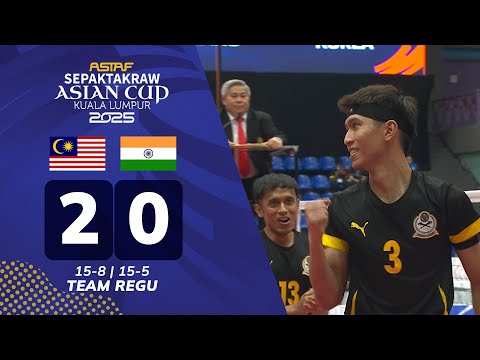
The filter sorts the Review Room embeds and the picture cards above by the keywords in their carried titles (review / analysis / recap and similar, or highlights). It runs entirely in your browser — nothing is sent anywhere.
No hall of fame with a published inductee list is carried for Sepak Takraw. Sport on Earth does not invent halls or inductees: where a recognised hall publishes its list in a form this site can carry, the full list will appear here with its source named.
Southeast Asian kick volleyball with a rattan ball.
In the wider net family of sports — serving trajectories and the high contact point, the game turns on: Three contacts, one plan: in codes with limited touches, the first organises, the second chooses, the third finishes.; Serve to a weakness: serving is the only fully controlled action — aim it at the receiver or seam that breaks the opponent’s system.; Block and defence are one system: the block takes away part of the court so the defenders can guard what is left.; Side-out first: matches are usually decided by which receiving team converts more rallies, not by serving runs.; Reception is the ceiling: no attack system outruns its first contact — a team’s passing quality caps everything built on it.; Serve receive formations are choices: the number of passers and their lanes trade coverage against attacking options, and opponents scout them..
Sport on Earth carries no team or player directory for this sport, because no structured public feed publishes a verifiable one. What is carried is the documented record on this page — history, rules, honours and the calendar — each with its source named.
The Sepak Takraw record book is still thin: beyond the standings, rules and calendar layers on this page, no verified winners roll or honours list is carried yet. The desk adds record material only when a published source can be named for it — never from memory or invention.
More from the desk: the expert guide to Sepak Takraw · the site-wide Writing Desk · every sport on Earth.
📖 The Sepak Takraw Playbook — every entry, plus the arcade strategy, at the foot of this page.
An arcade take on Sepak Takraw: set the angle, set the power, and land the ball in the far court. Five attempts; the closer to the middle, the more it scores. Arcade distances and a training arc — a game in the spirit of the sport, not a simulation of it.
This page’s own game is the arcade above. Everything else on the site that fits this sport is listed here — and anything borrowed from a similar sport is labelled as that sport’s game, never passed off as this one’s.
The tools on this site that honestly run on Sepak Takraw — its own record first, then the site-wide general tools that apply. The full Sepak Takraw toolkit prints the ones that do not apply, with the data reason why.
No bench tool yet computes from Sepak Takraw’s own carried record — the general tools below are the ones that honestly apply.
Site-wide tools, not built for Sepak Takraw alone: Tournament Planner · My Notebook · The Labs · Design Studio · The Makers’ Bench · Match Day Desk · Play It Near You · Myth-Check Desk · Governing Bodies · Heat & Safety Calculator (WBGT) · Hydration Calculator · Training-Load Planner · Game Clock & Timer · Custom Rulebook Generator · Scout Notes Parser.
The Playbook · set plays, systems & situations
the net-court family’s shared book — korfball, cestoball, sepak takraw, tchoukball, spikeball, fistball, throwball and their cousins: games divided by a net or a line, sharing one vocabulary of serves, spikes and seams.
10 entries, plus the arcade strategy below. All wording is original coaching-vocabulary prose; nothing is copied from any proprietary playbook.
Every net game’s first play is a choice of victim: the serve is aimed at the receiver whose first contact is least trusted, and it is aimed there until he proves otherwise.
When it’s used: The serve is the only unopposed play in the family — spend it on evidence.
The sequence
At the net in the family’s spiking games — takraw’s bicycle-kick spike above all — the duel is timing: the spiker’s acrobatic finish against the blocker’s raised sole or hands, each reading the setter’s ball.
When it’s used: Sepak takraw raised this duel to gymnastics; every net cousin plays its own version.
The sequence
Spikeball has no sides after the serve: a team has three touches to return the ball onto the net so it caroms away from the defenders, who may stand anywhere — the play is the carom’s geometry.
When it’s used: The only net game where the whole court is always in play.
The sequence
Tchoukball forbids interception and scores by rebound: the shot is struck at the trampoline frame so the rebound lands beyond the forbidden zone with no defender able to catch it.
When it’s used: A playbook written by its rulebook: you do not beat defenders, you beat the geometry they may stand in.
The sequence
Korfball’s rules forbid scoring from a defended position — the defender within arm’s length, facing, arms up — so offences manufacture the free shooter with screens, feints and the ’assisted’ pass that moves the defender’s attention a half-second too long.
When it’s used: The only major game where being guarded makes the shot illegal: the playbook is an escape manual.
The sequence
Korfball’s second classic finish: the attacker drives past the post at speed, taking the lay-up-style running-in shot as his defender trails — awarded also as a penalty when the drive is fouled.
When it’s used: The drive beats the set defence by arriving from its blind side.
The sequence
Where the rules allow one bounce or a catch, rallies are built in two-touch structure: the first contact absorbs and directs, the second attacks — rushing the first contact is the family’s universal error.
When it’s used: From fistball’s fields to throwball’s courts, the rhythm is the same: absorb, then attack.
The sequence
In the family’s net games, the defence owns what the block concedes: the block takes the cross or the line by declaration, and the diggers fill the shadow the declaration leaves.
When it’s used: As in volleyball, the block and the floor defence are one promise in two parts.
The sequence
The fastest attack in the family runs through the middle: a first-tempo set to the central attacker before the block forms — cestoball’s centre play and takraw’s middle feeder both live on it.
When it’s used: Speed through the middle is the family’s answer to set defences everywhere.
The sequence
Servers in the net family hunt runs: the same target, the same seam, until the reception breaks or rotates — the serve is a siege engine aimed at one player’s confidence.
When it’s used: From beach volleyball’s sand to korfball’s hall, the arithmetic never changes.
The sequence
The arcade cell · strategy
This page’s arcade cell: launch the ball at the far court from over the net · 42 m (arcade scale). Angle, power, launch — five attempts, and the cell keeps your best.
When it’s used: On this page, in the Play section — and its strategy is the same craft as the book above it, miniaturised.
The sequence
Part of the Sport on Earth Playbooks — a book for every sport and every game on the site.
Behind the Play · From the carried record
Southeast Asian kick volleyball with a rattan ball.
Behind the Play takes the decisive actions of Sepak Takraw apart: how the scoring play is built, which patterns the players are really running, and which rules remade the play into its modern shape.
Source basis: this sport’s carried record on this page (verified record, rule-changes dossier, history datasets) and the play patterns of its family as written in the site’s guides. Nothing here is invented.