Sport on Earth › Sports
Sport on Earth · Sport
Basketball
How it’s played
Five players per side shoot a ball through a hoop 3.05 m high. Players dribble or pass; points are worth 1, 2, or 3.
History
Invented by James Naismith in Massachusetts in 1891; FIBA formed in 1932; the NBA began in 1946.
The pro scene
Professional: NBA and WNBA in North America; EuroLeague and national leagues in Europe; CBA in China; NBL in Australia; G League and EuroCup as developmental tiers.
College and school: NCAA Division I to III and NAIA, plus high school systems in the US; a growing pipeline in Europe through clubs.
Grassroots and other: Pickup, 3x3, streetball, rec leagues, and wheelchair basketball.
Season calendar
NBA season from October to June; NCAA tournament in March; FIBA World Cup every four years; Olympics.
Dates above are recurring patterns, not confirmed fixtures.
League histories
- NBA — founded 1946. North America’s premier men’s professional basketball league
- WNBA — founded 1996. North America’s premier women’s professional basketball league
- NBA G League — founded 2001. The NBA’s official developmental minor league in North America
- EuroLeague — founded 1958. Europe’s top-tier men’s professional basketball club competition
- Australia NBL — founded 1979. Australia and New Zealand’s premier men’s professional basketball league.
- Spain Liga ACB — founded 1983. Spain’s top professional basketball division, administered by the ACB clubs association.
- China CBA — founded 1995. China’s first-tier men’s professional basketball league, commonly known as the CBA.
- NCAA Division I men’s basketball — founded 1939. Top-level U.S. college men’s basketball, decided by the NCAA Division I tournament.
- NCAA Division I women’s basketball — founded 1982. Top-level U.S. college women’s basketball, decided by the NCAA Division I tournament.
- ABA — American Basketball Association — 1967–1976, defunct. Its history of record is kept in the Lost Sports archive.
- ABL — American Basketball League (original) — 1925–1931, defunct. Its history of record is kept in the Lost Sports archive.
- NBL — National Basketball League — 1935–1949, defunct. Its history of record is kept in the Lost Sports archive.
Leagues
NBA Desk
NBA
34 team views · 40 pieces · 12 videos
WNBA Desk
WNBA
17 team views · 10 pieces · 12 videos
NBA G League Desk
NBA G League
33 team views · 8 pieces · 12 videos
EuroLeague Desk
EuroLeague
15 team views · 12 pieces · 12 videos
Australia NBL Desk
Australia NBL
20 team views · 8 pieces · 12 videos
Spain Liga ACB Desk
Spain Liga ACB
18 team views · 8 pieces · 12 videos
China CBA Desk
China CBA
20 team views · 8 pieces · 12 videos
NCAA Division I Desk
NCAA Division I
365 team views · 9 pieces · 12 videos
NCAA Division I Desk
NCAA Division I
363 team views · 5 pieces · 12 videos
News Desk
News stories from around the world, gathered and sourced by the Sport on Earth desk.
RealGM’s China CBA Best Individual Seasons list anchors our rankings
Our China CBA Basketball list de-duplicates RealGM’s all-time player-seasons table (by PPG) to unique players — see the basis note on the rankings page.
RealGM · Oct 28, 2026
Villanova beat No. 18 Michigan 79-73 and Duke held off Washington State 78-74 on November 21
Villanova’s 79-73 win over Michigan was the headline result on the November 21 slate listed by RealGM, which also recorded Michigan State’s 91-70 win over Detroit Mercy, LSU’s 106-75 win over Queens, and Duke’s 78-74 win over Washington State in the late game. Duke led 44-31 at halftime before Washington State cut the margin to four by the finish.
RealGM · Nov 2026
Argentina Liga A Board Opens From the Full 2026-27 Averages Table
The complete current-season Argentinian Liga A averages table, ordered by points per game and published by RealGM, is now the basis of the network’s Argentina Liga A basketball rankings — the full table, carried whole rather than sampled, so the board and the averages can be checked against each other line by line.
RealGM · Nov 2026
Brazil NBB Board Opens From the Full 2026-27 Averages Table
The complete current-season Brazilian NBB averages table, ordered by points per game and published by RealGM, is now the basis of the network’s Brazil NBB basketball rankings — the full table, carried whole rather than sampled, so the board and the averages can be checked against each other line by line.
RealGM · Nov 2026
France Élite Board Opens From the Full 2026-27 Averages Table
The complete current-season French Élite averages table, ordered by points per game and published by RealGM, is now the basis of the network’s France Élite basketball rankings — the full table, carried whole rather than sampled, so the board and the averages can be checked against each other line by line.
RealGM · Nov 2026
Germany BBL Board Opens From the Full 2026-27 Averages Table
The complete current-season German BBL averages table, ordered by points per game and published by RealGM, is now the basis of the network’s Germany BBL basketball rankings — the full table, carried whole rather than sampled, so the board and the averages can be checked against each other line by line.
RealGM · Nov 2026
Greece A1 Board Opens From the Full 2026-27 Averages Table
The complete current-season Greek HEBA A1 averages table, ordered by points per game and published by RealGM, is now the basis of the network’s Greece A1 basketball rankings — the full table, carried whole rather than sampled, so the board and the averages can be checked against each other line by line.
RealGM · Nov 2026
Israel BSL Board Opens From the Full 2026-27 Averages Table
The complete current-season Israeli BSL averages table, ordered by points per game and published by RealGM, is now the basis of the network’s Israel BSL basketball rankings — the full table, carried whole rather than sampled, so the board and the averages can be checked against each other line by line.
RealGM · Nov 2026
Italy Serie A Board Opens From the Full 2026-27 Averages Table
The complete current-season Italian Lega Basket Serie A averages table, ordered by points per game and published by RealGM, is now the basis of the network’s Italy Serie A basketball rankings — the full table, carried whole rather than sampled, so the board and the averages can be checked against each other line by line.
RealGM · Nov 2026
Japan B.League Board Opens From the Full 2026-27 Averages Table
The complete current-season Japanese B.League averages table, ordered by points per game and published by RealGM, is now the basis of the network’s Japan B.League basketball rankings — the full table, carried whole rather than sampled, so the board and the averages can be checked against each other line by line.
RealGM · Nov 2026
Korea KBL Board Opens From the Full 2026-27 Averages Table
The complete current-season South Korean KBL averages table, ordered by points per game and published by RealGM, is now the basis of the network’s Korea KBL basketball rankings — the full table, carried whole rather than sampled, so the board and the averages can be checked against each other line by line.
RealGM · Nov 2026
Lithuania LKL Board Opens From the Full 2026-27 Averages Table
The complete current-season Lithuanian LKL averages table, ordered by points per game and published by RealGM, is now the basis of the network’s Lithuania LKL basketball rankings — the full table, carried whole rather than sampled, so the board and the averages can be checked against each other line by line.
RealGM · Nov 2026
Basketball on the program for FIBA Basketball World Cup 2027
Basketball is carried on the program for FIBA Basketball World Cup 2027, 27 August – 12 September 2027, in Doha, Qatar. Five players per side shoot a ball through a hoop 3.05 m high. Players dribble or pass; points are worth 1, 2, or 3. The desk carries the sport’s full record — guide, calendar and history — on its own page.
FIBA · Nov 2026
Basketball on the program for Los Angeles 2028 Olympic Games
Basketball is carried on the program for Los Angeles 2028 Olympic Games, 14 – 30 July 2028, in Los Angeles, USA. Five players per side shoot a ball through a hoop 3.05 m high. Players dribble or pass; points are worth 1, 2, or 3. The desk carries the sport’s full record — guide, calendar and history — on its own page.
LA28 / IOC · Nov 2026
Columns & Stories
Written by Sport on Earth’s journalists — columns, features and interviews from the desk.
NBA Desk · Column
The Roll Is the Argument: What FIBA Basketball World Cup finals Really Tells Us
Here is the column’s position, stated plainly: the fiba basketball world cup finals roll — 19 editions, 1950 to 2023, counted from the record this site carries — is a better historian than any panel of experts. Panels argue about eras. The roll just keeps score, and its score says United States won 5 of those editions. 26.3% of a competition’s entire history is not a hot streak; it is a structural fact.
November 2, 2026
NBA Desk · Column
In Defense of the Unbreakable: NBA career three-point leaders
The position of this column: Stephen Curry’s place atop the nba career three-point leaders table is the most secure record in its sport, and the table itself — five names, counted from the record this site carries — is the proof. Stephen Curry: 4,270 three-pointers. The nearest challenger, James Harden, is 868 behind. Gaps like that are not closed by a good season; they are closed by a great career, and great careers are rationed by time.
November 2, 2026
NBA Desk · Column
In Defense of the Unbreakable: NBA career assists leaders
The position of this column: John Stockton’s place atop the nba career assists leaders table is the most secure record in its sport, and the table itself — five names, counted from the record this site carries — is the proof. John Stockton: 15,806 assists. The nearest challenger, Chris Paul, is 3,254 behind. Gaps like that are not closed by a good season; they are closed by a great career, and great careers are rationed by time.
November 2, 2026
NBA Desk · Column
In Defense of the Unbreakable: NBA career blocks leaders
The position of this column: Hakeem Olajuwon’s place atop the nba career blocks leaders table is the most secure record in its sport, and the table itself — five names, counted from the record this site carries — is the proof. Hakeem Olajuwon: 3,830 blocks. The nearest challenger, Dikembe Mutombo, is 541 behind. Gaps like that are not closed by a good season; they are closed by a great career, and great careers are rationed by time.
November 2, 2026
NBA Desk · Column
The Roll Is the Argument: What NBA champions Really Tells Us
Here is the column’s position, stated plainly: the nba champions roll — 80 editions, 1947 to 2026, counted from the record this site carries — is a better historian than any panel of experts. Panels argue about eras. The roll just keeps score, and its score says Boston Celtics won 18 of those editions. 22.5% of a competition’s entire history is not a hot streak; it is a structural fact.
November 2, 2026
NBA Desk · Column
In Defense of the Unbreakable: NBA career scoring leaders
The position of this column: LeBron James’s place atop the nba career scoring leaders table is the most secure record in its sport, and the table itself — five names, counted from the record this site carries — is the proof. LeBron James: 43,522 points. The nearest challenger, Kareem Abdul-Jabbar, is 5,135 behind. Gaps like that are not closed by a good season; they are closed by a great career, and great careers are rationed by time.
November 2, 2026
NBA Desk · Column
In Defense of the Unbreakable: NBA career rebounding leaders
The position of this column: Wilt Chamberlain’s place atop the nba career rebounding leaders table is the most secure record in its sport, and the table itself — five names, counted from the record this site carries — is the proof. Wilt Chamberlain: 23,924 rebounds. The nearest challenger, Bill Russell, is 2,304 behind. Gaps like that are not closed by a good season; they are closed by a great career, and great careers are rationed by time.
November 2, 2026
NBA Desk · Column
In Defense of the Unbreakable: NBA career steals leaders
The position of this column: John Stockton’s place atop the nba career steals leaders table is the most secure record in its sport, and the table itself — five names, counted from the record this site carries — is the proof. John Stockton: 3,265 steals. The nearest challenger, Chris Paul, is 537 behind. Gaps like that are not closed by a good season; they are closed by a great career, and great careers are rationed by time.
November 2, 2026
NBA Desk · Column
Who Gets In, Who Waits: The Naismith Memorial Basketball Hall of Fame Standard
The Naismith Memorial Basketball Hall of Fame roll this site carries holds 363 names, inducted from 1959 to 2026. Every hall of fame is really two institutions: the one that inducts, and the one that makes the inducted argue about the standard. This column is about the second one.
November 2, 2026
NBA Desk · Column
Institutions Outlive Seasons: A Column on the NBA
A column about a league should begin where the league began: Founded June 6, 1946 as the Basketball Association of America; renamed the NBA in 1949 after merging with the NBL. The NBA — North America’s premier men’s professional basketball league — has since been many things, but it has never stopped being that founding decision, renewed every season.
November 2, 2026
NBA Desk · Column
The NBA Notebook: A League in Its Own Image
Every league desk keeps a notebook that is not really about results. This is ours for the NBA. The census record this site carries describes its sport in one line — Five players per side shoot a ball through a hoop 3.05 m high. Players dribble or pass; points are worth 1, 2, or 3. — and files it under Basket & net, in the basket family of sports. One line is a discipline: before the desk argues about a league, it has to say what the league is.
November 2, 2026
NBA Desk · Column
What the NBA Record Asks of Its Next Season
A new season of the NBA makes three quiet demands, and the record — not the hype — names them. It asks about the leader table’s slow arithmetic: LeBron James at 43,522 points, a total no single season will move; the hall’s next class: the Naismith Memorial Basketball Hall of Fame roll stands at 363 names, its most recent from 2026; the institution’s next chapter: a league founded in 1946 that has already survived every previous version of this argument.
November 2, 2026
NBA Desk · Column
The Whole File: A Column on Basketball
A column about an entire sport, which is an immodest assignment, so begin with the file: this desk covers Basketball through 9 league desks, 44 news items and the rolls, halls and histories this site carries for it. The file is the column’s subject — what a sport looks like when you keep all of it in one place.
November 2, 2026
NBA Desk · Feature
Behind the Play: How the Soccer Pitch Taught the NBA to Spread Out
The modern NBA’s pace-and-space era did not appear from nowhere. Its spacing grammar — width, depth, the extra pass and the third runner — was refined for decades on European soccer pitches and in European basketball gyms, and it crossed the Atlantic with the players and coaches who grew up inside it.
October 30, 2026
NBA Desk · Feature
The Long Roll: FIBA Basketball World Cup finals and the Weight of United States
Every roll of honor is an argument about time, and the fiba basketball world cup finals roll — 19 editions counted from the record this site carries, running from 1950 to 2023 — argues louder than most. At the top of it sits United States with 5 titles, 26.3% of every edition ever decided. The rest of the roll is the story of everyone who ever tried to move them.
November 2, 2026
NBA Desk · Feature
Stephen Curry and the Number That Will Not Move: NBA career three-point leaders
The nba career three-point leaders table this site carries is five names long, and the first name is the story: Stephen Curry, with 4,270 three-pointers. Second is James Harden at 3,402 — a gap of 868 (25.5% clear of the field).
November 2, 2026
NBA Desk · Feature
John Stockton and the Number That Will Not Move: NBA career assists leaders
The nba career assists leaders table this site carries is five names long, and the first name is the story: John Stockton, with 15,806 assists. Second is Chris Paul at 12,552 — a gap of 3,254 (25.9% clear of the field).
November 2, 2026
NBA Desk · Feature
Hakeem Olajuwon and the Number That Will Not Move: NBA career blocks leaders
The nba career blocks leaders table this site carries is five names long, and the first name is the story: Hakeem Olajuwon, with 3,830 blocks. Second is Dikembe Mutombo at 3,289 — a gap of 541 (16.4% clear of the field).
November 2, 2026
NBA Desk · Feature
The Long Roll: NBA champions and the Weight of Boston Celtics
Count the nba champions roll the way this site carries it — 80 editions, 1947 to 2026 — and one name does the heavy lifting: Boston Celtics, champions 18 times. That is 22.5% of the roll’s whole history, a share no argument about eras can explain away.
November 2, 2026
NBA Desk · Feature
LeBron James and the Number That Will Not Move: NBA career scoring leaders
The nba career scoring leaders table this site carries is five names long, and the first name is the story: LeBron James, with 43,522 points. Second is Kareem Abdul-Jabbar at 38,387 — a gap of 5,135 (13.4% clear of the field).
November 2, 2026
NBA Desk · Feature
Wilt Chamberlain and the Number That Will Not Move: NBA career rebounding leaders
The nba career rebounding leaders table this site carries is five names long, and the first name is the story: Wilt Chamberlain, with 23,924 rebounds. Second is Bill Russell at 21,620 — a gap of 2,304 (10.7% clear of the field).
November 2, 2026
NBA Desk · Feature
John Stockton and the Number That Will Not Move: NBA career steals leaders
The nba career steals leaders table this site carries is five names long, and the first name is the story: John Stockton, with 3,265 steals. Second is Chris Paul at 2,728 — a gap of 537 (19.7% clear of the field).
November 2, 2026
NBA Desk · Feature
The First Class: Naismith Memorial Basketball Hall of Fame and the 1959 Inductees
Every hall of fame is founded twice: once when the building opens, and once when the first class walks in. For the Naismith Memorial Basketball Hall of Fame in Springfield, Massachusetts, United States, that moment came in 1959, when 14 names were inducted together: Luther H. Gulick, Edward J. "Ed" Hickox, Ralph Morgan, James Naismith, Harold G. Olsen, Amos Alonzo Stagg. The roll this site carries now runs to 363 inductees — and it still begins with them.
November 2, 2026
NBA Desk · Feature
Founded on a Line in the Record: The NBA Story
The NBA file this site carries opens with a single line: Founded June 6, 1946 as the Basketball Association of America; renamed the NBA in 1949 after merging with the NBL. Everything else about the league — its identity as North America’s premier men’s professional basketball league — flows from that founding and what it absorbed along the way: National Basketball League (NBL), merged in 1949.
November 2, 2026
NBA Desk · Feature
From the Rule Book: FIBA Adopts the Three-Point Line (Basketball)
The rule-change dossiers this site carries for Basketball run to 5 entries. The one filed as “FIBA Adopts the Three-Point Line” is dated 1984 and credited to FIBA — and it is the rare rule change whose before and after describe two different sports.
November 3, 2026
NBA Desk · Feature
The Streak: Boston Celtics’s 8 Straight NBA champions
Consecutive titles are the hardest currency on any roll, and the nba champions roll this site carries holds one clear entry: Boston Celtics, 8 straight editions from 1959 to 1966. Across 80 editions (1947 to 2026), no other run on the roll is longer.
November 18, 2026
NBA Desk · Interview — the Sport on Earth desk, in its own words
Five Questions With the NBA Desk: The FIBA Basketball World Cup finals Roll
The Sport on Earth NBA Desk takes questions on the fiba basketball world cup finals roll. The desk answers in its own words — no player, coach or official is quoted, and nothing here is presented as anyone else’s statement. 19 editions, 1950–2023; most titles United States (5); 8 distinct winners.
NBA Desk · Interview — the Sport on Earth desk, in its own words
Five Questions With the NBA Desk: The NBA career three-point leaders Table
The Sport on Earth NBA Desk takes questions on the nba career three-point leaders table. The desk answers in its own words — no player, coach or official is quoted, and nothing here is presented as anyone else’s statement. The table counts the five greatest career totals in three-pointers that the record carries.
NBA Desk · Interview — the Sport on Earth desk, in its own words
Five Questions With the NBA Desk: The NBA career assists leaders Table
The Sport on Earth NBA Desk takes questions on the nba career assists leaders table. The desk answers in its own words — no player, coach or official is quoted, and nothing here is presented as anyone else’s statement. The table counts the five greatest career totals in assists that the record carries.
NBA Desk · Interview — the Sport on Earth desk, in its own words
Five Questions With the NBA Desk: The NBA career blocks leaders Table
The Sport on Earth NBA Desk takes questions on the nba career blocks leaders table. The desk answers in its own words — no player, coach or official is quoted, and nothing here is presented as anyone else’s statement. The table counts the five greatest career totals in blocks that the record carries.
NBA Desk · Interview — the Sport on Earth desk, in its own words
Five Questions With the NBA Desk: The NBA champions Roll
The Sport on Earth NBA Desk takes questions on the nba champions roll. The desk answers in its own words — no player, coach or official is quoted, and nothing here is presented as anyone else’s statement. 80 editions, 1947–2026; most titles Boston Celtics (18); 25 distinct winners.
NBA Desk · Interview — the Sport on Earth desk, in its own words
Five Questions With the NBA Desk: The NBA career scoring leaders Table
The Sport on Earth NBA Desk takes questions on the nba career scoring leaders table. The desk answers in its own words — no player, coach or official is quoted, and nothing here is presented as anyone else’s statement. The table counts the five greatest career totals in points that the record carries.
NBA Desk · Interview — the Sport on Earth desk, in its own words
Five Questions With the NBA Desk: The NBA career rebounding leaders Table
The Sport on Earth NBA Desk takes questions on the nba career rebounding leaders table. The desk answers in its own words — no player, coach or official is quoted, and nothing here is presented as anyone else’s statement. The table counts the five greatest career totals in rebounds that the record carries.
NBA Desk · Interview — the Sport on Earth desk, in its own words
Five Questions With the NBA Desk: The NBA career steals leaders Table
The Sport on Earth NBA Desk takes questions on the nba career steals leaders table. The desk answers in its own words — no player, coach or official is quoted, and nothing here is presented as anyone else’s statement. The table counts the five greatest career totals in steals that the record carries.
NBA Desk · Interview — the Sport on Earth desk, in its own words
Five Questions With the NBA Desk: Inside the Naismith Memorial Basketball Hall of Fame
The Sport on Earth NBA Desk takes questions on the Naismith Memorial Basketball Hall of Fame. The desk answers in its own words — no player, coach or official is quoted, and nothing here is presented as anyone else’s statement. Every figure below is counted from the hall’s own roll as this site carries it.
NBA Desk · Interview — the Sport on Earth desk, in its own words
Five Questions With the NBA Desk: The NBA File
The Sport on Earth NBA Desk takes questions on the NBA file. The desk answers in its own words — no player, coach or official is quoted, and nothing here is presented as anyone else’s statement. The answers draw on the league history this site carries.
NBA Desk · Interview — the Sport on Earth desk, in its own words
Five Questions With the NBA Desk: The NBA Briefing
The Sport on Earth NBA Desk takes questions on the NBA. The desk answers in its own words — no player, coach or official is quoted, and nothing here is presented as anyone else’s statement. A standing briefing, refreshed from the files this site carries.
NBA Desk · Interview — the Sport on Earth desk, in its own words
Five Questions With the NBA Desk: NBA by the Numbers
The Sport on Earth NBA Desk takes questions on the NBA in numbers. The desk answers in its own words — no player, coach or official is quoted, and nothing here is presented as anyone else’s statement. Every answer below is a count taken from the site’s own files.
NBA Desk · Interview — the Sport on Earth desk, in its own words
Five Questions With the NBA Desk: FIBA Basketball World Cup finals, Decade by Decade
The Sport on Earth NBA Desk takes questions on the fiba basketball world cup finals roll by decade. The desk answers in its own words — no player, coach or official is quoted, and nothing here is presented as anyone else’s statement. 19 editions, 1950–2023; most titles United States (5); 8 distinct winners.
NBA Desk · Interview — the Sport on Earth desk, in its own words
Five Questions With the NBA Desk: NBA champions, Decade by Decade
The Sport on Earth NBA Desk takes questions on the nba champions roll by decade. The desk answers in its own words — no player, coach or official is quoted, and nothing here is presented as anyone else’s statement. 80 editions, 1947–2026; most titles Boston Celtics (18); 25 distinct winners.
WNBA Desk · Column
The Roll Is the Argument: What WNBA champions Really Tells Us
Here is the column’s position, stated plainly: the wnba champions roll — 30 editions, 1997 to 2026, counted from the record this site carries — is a better historian than any panel of experts. Panels argue about eras. The roll just keeps score, and its score says Houston Comets won 4 of those editions. 13.3% of a competition’s entire history is not a hot streak; it is a structural fact.
November 2, 2026
WNBA Desk · Column
Institutions Outlive Seasons: A Column on the WNBA
A column about a league should begin where the league began: Founded April 24, 1996, approved by the NBA Board of Governors as the women’s counterpart to the NBA; play began in 1997. The WNBA — North America’s premier women’s professional basketball league — has since been many things, but it has never stopped being that founding decision, renewed every season.
November 2, 2026
WNBA Desk · Column
The WNBA Notebook: A League in Its Own Image
Every league desk keeps a notebook that is not really about results. This is ours for the WNBA. The census record this site carries describes its sport in one line — Five players per side shoot a ball through a hoop 3.05 m high. Players dribble or pass; points are worth 1, 2, or 3. — and files it under Basket & net, in the basket family of sports. One line is a discipline: before the desk argues about a league, it has to say what the league is.
November 2, 2026
WNBA Desk · Column
What the WNBA Record Asks of Its Next Season
A new season of the WNBA makes three quiet demands, and the record — not the hype — names them. It asks about the roll’s next line: Golden State Valkyries won the 2026 edition of the wnba champions, and Houston Comets’s 26-year wait is the roll’s longest open one; the hall’s next class: the Naismith Memorial Basketball Hall of Fame roll stands at 363 names, its most recent from 2026; the institution’s next chapter: a league founded in 1996 that has already survived every previous version of this argument.
November 2, 2026
WNBA Desk · Feature
The Long Roll: WNBA champions and the Weight of Houston Comets
Count the wnba champions roll the way this site carries it — 30 editions, 1997 to 2026 — and one name does the heavy lifting: Houston Comets, champions 4 times. That is 13.3% of the roll’s whole history, a share no argument about eras can explain away.
November 2, 2026
WNBA Desk · Feature
Founded on a Line in the Record: The WNBA Story
The WNBA file this site carries opens with a single line: Founded April 24, 1996, approved by the NBA Board of Governors as the women’s counterpart to the NBA; play began in 1997. Everything else about the league — its identity as North America’s premier women’s professional basketball league — flows from that founding and what it absorbed along the way.
November 2, 2026
WNBA Desk · Feature
So Close: Atlanta Dream and the WNBA champions Finals That Got Away
Atlanta Dream has reached 3 wnba champions finals — 2010, 2013, 2026 — and won none of them. On the roll this site carries (30 editions, 1997 to 2026), no name has collected more finals without taking a title home.
November 11, 2026
WNBA Desk · Interview — the Sport on Earth desk, in its own words
Five Questions With the WNBA Desk: The WNBA File
The Sport on Earth WNBA Desk takes questions on the WNBA file. The desk answers in its own words — no player, coach or official is quoted, and nothing here is presented as anyone else’s statement. The answers draw on the league history this site carries.
WNBA Desk · Interview — the Sport on Earth desk, in its own words
Five Questions With the WNBA Desk: The WNBA Briefing
The Sport on Earth WNBA Desk takes questions on the WNBA. The desk answers in its own words — no player, coach or official is quoted, and nothing here is presented as anyone else’s statement. A standing briefing, refreshed from the files this site carries.
WNBA Desk · Interview — the Sport on Earth desk, in its own words
Five Questions With the WNBA Desk: WNBA by the Numbers
The Sport on Earth WNBA Desk takes questions on the WNBA in numbers. The desk answers in its own words — no player, coach or official is quoted, and nothing here is presented as anyone else’s statement. Every answer below is a count taken from the site’s own files.
NBA G League Desk · Column
The NBA G League Notebook: A League in Its Own Image
Every league desk keeps a notebook that is not really about results. This is ours for the NBA G League. The census record this site carries describes its sport in one line — Five players per side shoot a ball through a hoop 3.05 m high. Players dribble or pass; points are worth 1, 2, or 3. — and files it under Basket & net, in the basket family of sports. One line is a discipline: before the desk argues about a league, it has to say what the league is.
November 2, 2026
NBA G League Desk · Column
What the NBA G League Record Asks of Its Next Season
A new season of the NBA G League makes three quiet demands, and the record — not the hype — names them. It asks about the hall’s next class: the Naismith Memorial Basketball Hall of Fame roll stands at 363 names, its most recent from 2026; the institution’s next chapter: a league founded in 2001 that has already survived every previous version of this argument.
November 2, 2026
NBA G League Desk · Feature
Antonio Blakeney Tops the NBA G League Basketball Rankings
The verified source list puts Antonio Blakeney at No. 1 — and our rankings follow it exactly.
Oct 28, 2026
NBA G League Desk · Feature
How the NBA G League Basketball List Was Built
Enumerated, fetched and checked — the method behind the newest rankings on the site.
Oct 27, 2026
NBA G League Desk · Feature
Mac McClung Headlines the Chasing Pack in NBA G League Basketball
Behind Antonio Blakeney, the verified list’s next name is Mac McClung.
Oct 27, 2026
NBA G League Desk · Feature
Founded on a Line in the Record: The NBA G League Story
The NBA G League file this site carries opens with a single line: Founded in 2001 as the National Basketball Development League (NBDL); renamed NBA D-League in 2005 and NBA G League in 2017. Everything else about the league — its identity as The NBA’s official developmental minor league in North America — flows from that founding and what it absorbed along the way: Continental Basketball Association, used by the NBA as a developmental league before 2001.
November 2, 2026
NBA G League Desk · Interview — the Sport on Earth desk, in its own words
Five Questions With the NBA G League Desk: The NBA G League Briefing
The Sport on Earth NBA G League Desk takes questions on the NBA G League. The desk answers in its own words — no player, coach or official is quoted, and nothing here is presented as anyone else’s statement. A standing briefing, refreshed from the files this site carries.
NBA G League Desk · Interview — the Sport on Earth desk, in its own words
Five Questions With the NBA G League Desk: NBA G League by the Numbers
The Sport on Earth NBA G League Desk takes questions on the NBA G League in numbers. The desk answers in its own words — no player, coach or official is quoted, and nothing here is presented as anyone else’s statement. Every answer below is a count taken from the site’s own files.
EuroLeague Desk · Column
Institutions Outlive Seasons: A Column on the EuroLeague
A column about a league should begin where the league began: Introduced in 1958 as the FIBA European Champions Cup; renamed FIBA EuroLeague in 1996, with the Euroleague Basketball era from 2000. The EuroLeague — Europe’s top-tier men’s professional basketball club competition — has since been many things, but it has never stopped being that founding decision, renewed every season.
November 2, 2026
EuroLeague Desk · Column
The EuroLeague Notebook: A League in Its Own Image
Every league desk keeps a notebook that is not really about results. This is ours for the EuroLeague. The census record this site carries describes its sport in one line — Five players per side shoot a ball through a hoop 3.05 m high. Players dribble or pass; points are worth 1, 2, or 3. — and files it under Basket & net, in the basket family of sports. One line is a discipline: before the desk argues about a league, it has to say what the league is.
November 2, 2026
EuroLeague Desk · Column
What the EuroLeague Record Asks of Its Next Season
A new season of the EuroLeague makes three quiet demands, and the record — not the hype — names them. It asks about the roll’s next line: Olympiacos won the 2025 edition of the euroleague finals, and Rīgas ASK’s 66-year wait is the roll’s longest open one; the hall’s next class: the Naismith Memorial Basketball Hall of Fame roll stands at 363 names, its most recent from 2026; the institution’s next chapter: a league founded in 1958 that has already survived every previous version of this argument.
November 2, 2026
EuroLeague Desk · Feature
Sasha Vezenkov Tops the EuroLeague Basketball Rankings
The verified source list puts Sasha Vezenkov at No. 1 — and our rankings follow it exactly.
Oct 28, 2026
EuroLeague Desk · Feature
How the EuroLeague Basketball List Was Built
Enumerated, fetched and checked — the method behind the newest rankings on the site.
Oct 27, 2026
EuroLeague Desk · Feature
Kendrick Nunn Headlines the Chasing Pack in EuroLeague Basketball
Behind Sasha Vezenkov, the verified list’s next name is Kendrick Nunn.
Oct 27, 2026
EuroLeague Desk · Feature
The Long Roll: EuroLeague finals and the Weight of Real Madrid
Every roll of honor is an argument about time, and the euroleague finals roll — 68 editions counted from the record this site carries, running from 1958 to 2025 — argues louder than most. At the top of it sits Real Madrid with 10 titles, 14.7% of every edition ever decided. The rest of the roll is the story of everyone who ever tried to move them.
November 2, 2026
EuroLeague Desk · Feature
Founded on a Line in the Record: The EuroLeague Story
The EuroLeague file this site carries opens with a single line: Introduced in 1958 as the FIBA European Champions Cup; renamed FIBA EuroLeague in 1996, with the Euroleague Basketball era from 2000. Everything else about the league — its identity as Europe’s top-tier men’s professional basketball club competition — flows from that founding and what it absorbed along the way: FIBA European Champions Cup (1958-1991).
November 2, 2026
EuroLeague Desk · Interview — the Sport on Earth desk, in its own words
Five Questions With the EuroLeague Desk: The EuroLeague File
The Sport on Earth EuroLeague Desk takes questions on the EuroLeague file. The desk answers in its own words — no player, coach or official is quoted, and nothing here is presented as anyone else’s statement. The answers draw on the league history this site carries.
EuroLeague Desk · Interview — the Sport on Earth desk, in its own words
Five Questions With the EuroLeague Desk: The EuroLeague Briefing
The Sport on Earth EuroLeague Desk takes questions on the EuroLeague. The desk answers in its own words — no player, coach or official is quoted, and nothing here is presented as anyone else’s statement. A standing briefing, refreshed from the files this site carries.
EuroLeague Desk · Interview — the Sport on Earth desk, in its own words
Five Questions With the EuroLeague Desk: EuroLeague by the Numbers
The Sport on Earth EuroLeague Desk takes questions on the EuroLeague in numbers. The desk answers in its own words — no player, coach or official is quoted, and nothing here is presented as anyone else’s statement. Every answer below is a count taken from the site’s own files.
EuroLeague Desk · Interview — the Sport on Earth desk, in its own words
Five Questions With the EuroLeague Desk: EuroLeague finals, Decade by Decade
The Sport on Earth EuroLeague Desk takes questions on the euroleague finals roll by decade. The desk answers in its own words — no player, coach or official is quoted, and nothing here is presented as anyone else’s statement. 68 editions, 1958–2025; most titles Real Madrid (10); 29 distinct winners.
Australia NBL Desk · Column
The Australia NBL Notebook: A League in Its Own Image
Every league desk keeps a notebook that is not really about results. This is ours for the Australia NBL. The census record this site carries describes its sport in one line — Five players per side shoot a ball through a hoop 3.05 m high. Players dribble or pass; points are worth 1, 2, or 3. — and files it under Basket & net, in the basket family of sports. One line is a discipline: before the desk argues about a league, it has to say what the league is.
November 2, 2026
Australia NBL Desk · Column
What the Australia NBL Record Asks of Its Next Season
A new season of the Australia NBL makes three quiet demands, and the record — not the hype — names them. It asks about the hall’s next class: the Naismith Memorial Basketball Hall of Fame roll stands at 363 names, its most recent from 2026; the institution’s next chapter: a league founded in 1979 that has already survived every previous version of this argument.
November 2, 2026
Australia NBL Desk · Feature
Bryce Cotton Tops the Australia NBL Basketball Rankings
The verified source list puts Bryce Cotton at No. 1 — and our rankings follow it exactly.
Oct 28, 2026
Australia NBL Desk · Feature
How the Australia NBL Basketball List Was Built
Enumerated, fetched and checked — the method behind the newest rankings on the site.
Oct 27, 2026
Australia NBL Desk · Feature
Parker Jackson-Cartwright Headlines the Chasing Pack in Australia NBL Basketball
Behind Bryce Cotton, the verified list’s next name is Parker Jackson-Cartwright.
Oct 27, 2026
Australia NBL Desk · Feature
Founded on a Line in the Record: The Australia NBL Story
The Australia NBL file this site carries opens with a single line: First season played in 1979 after establishment as the National Invitation Basketball League in 1978.. Everything else about the league — its identity as Australia and New Zealand’s premier men’s professional basketball league. — flows from that founding and what it absorbed along the way: National Titles and Australian Club Championships.
November 2, 2026
Australia NBL Desk · Interview — the Sport on Earth desk, in its own words
Five Questions With the Australia NBL Desk: The Australia NBL Briefing
The Sport on Earth Australia NBL Desk takes questions on the Australia NBL. The desk answers in its own words — no player, coach or official is quoted, and nothing here is presented as anyone else’s statement. A standing briefing, refreshed from the files this site carries.
Australia NBL Desk · Interview — the Sport on Earth desk, in its own words
Five Questions With the Australia NBL Desk: Australia NBL by the Numbers
The Sport on Earth Australia NBL Desk takes questions on the Australia NBL in numbers. The desk answers in its own words — no player, coach or official is quoted, and nothing here is presented as anyone else’s statement. Every answer below is a count taken from the site’s own files.
Spain Liga ACB Desk · Column
The Spain Liga ACB Notebook: A League in Its Own Image
Every league desk keeps a notebook that is not really about results. This is ours for the Spain Liga ACB. The census record this site carries describes its sport in one line — Five players per side shoot a ball through a hoop 3.05 m high. Players dribble or pass; points are worth 1, 2, or 3. — and files it under Basket & net, in the basket family of sports. One line is a discipline: before the desk argues about a league, it has to say what the league is.
November 2, 2026
Spain Liga ACB Desk · Column
What the Spain Liga ACB Record Asks of Its Next Season
A new season of the Spain Liga ACB makes three quiet demands, and the record — not the hype — names them. It asks about the hall’s next class: the Naismith Memorial Basketball Hall of Fame roll stands at 363 names, its most recent from 2026; the institution’s next chapter: a league founded in 1983 that has already survived every previous version of this argument.
November 2, 2026
Spain Liga ACB Desk · Feature
Charlie Bell Tops the Spain Liga ACB Basketball Rankings
The verified source list puts Charlie Bell at No. 1 — and our rankings follow it exactly.
Oct 28, 2026
Spain Liga ACB Desk · Feature
How the Spain Liga ACB Basketball List Was Built
Enumerated, fetched and checked — the method behind the newest rankings on the site.
Oct 27, 2026
Spain Liga ACB Desk · Feature
Klemen Prepelic Headlines the Chasing Pack in Spain Liga ACB Basketball
Behind Charlie Bell, the verified list’s next name is Klemen Prepelic.
Oct 27, 2026
Spain Liga ACB Desk · Feature
Founded on a Line in the Record: The Spain Liga ACB Story
The Spain Liga ACB file this site carries opens with a single line: Founded in 1983 as ACB Primera División, with its first season in 1983-84.. Everything else about the league — its identity as Spain’s top professional basketball division, administered by the ACB clubs association. — flows from that founding and what it absorbed along the way: Liga Nacional, founded in 1957.
November 2, 2026
Spain Liga ACB Desk · Interview — the Sport on Earth desk, in its own words
Five Questions With the Spain Liga ACB Desk: The Spain Liga ACB Briefing
The Sport on Earth Spain Liga ACB Desk takes questions on the Spain Liga ACB. The desk answers in its own words — no player, coach or official is quoted, and nothing here is presented as anyone else’s statement. A standing briefing, refreshed from the files this site carries.
Spain Liga ACB Desk · Interview — the Sport on Earth desk, in its own words
Five Questions With the Spain Liga ACB Desk: Spain Liga ACB by the Numbers
The Sport on Earth Spain Liga ACB Desk takes questions on the Spain Liga ACB in numbers. The desk answers in its own words — no player, coach or official is quoted, and nothing here is presented as anyone else’s statement. Every answer below is a count taken from the site’s own files.
China CBA Desk · Column
The China CBA Notebook: A League in Its Own Image
Every league desk keeps a notebook that is not really about results. This is ours for the China CBA. The census record this site carries describes its sport in one line — Five players per side shoot a ball through a hoop 3.05 m high. Players dribble or pass; points are worth 1, 2, or 3. — and files it under Basket & net, in the basket family of sports. One line is a discipline: before the desk argues about a league, it has to say what the league is.
November 2, 2026
China CBA Desk · Column
What the China CBA Record Asks of Its Next Season
A new season of the China CBA makes three quiet demands, and the record — not the hype — names them. It asks about the hall’s next class: the Naismith Memorial Basketball Hall of Fame roll stands at 363 names, its most recent from 2026; the institution’s next chapter: a league founded in 1995 that has already survived every previous version of this argument.
November 2, 2026
China CBA Desk · Feature
Trae Golden Tops the China CBA Basketball Rankings
The verified source list puts Trae Golden at No. 1 — and our rankings follow it exactly.
Oct 28, 2026
China CBA Desk · Feature
How the China CBA Basketball List Was Built
Enumerated, fetched and checked — the method behind the newest rankings on the site.
Oct 27, 2026
China CBA Desk · Feature
Jonathan Gibson Headlines the Chasing Pack in China CBA Basketball
Behind Trae Golden, the verified list’s next name is Jonathan Gibson.
Oct 27, 2026
China CBA Desk · Feature
Founded on a Line in the Record: The China CBA Story
The China CBA file this site carries opens with a single line: Founded in 1995, with its first season in 1995-96.. Everything else about the league — its identity as China’s first-tier men’s professional basketball league, commonly known as the CBA. — flows from that founding and what it absorbed along the way.
November 2, 2026
China CBA Desk · Interview — the Sport on Earth desk, in its own words
Five Questions With the China CBA Desk: The China CBA Briefing
The Sport on Earth China CBA Desk takes questions on the China CBA. The desk answers in its own words — no player, coach or official is quoted, and nothing here is presented as anyone else’s statement. A standing briefing, refreshed from the files this site carries.
China CBA Desk · Interview — the Sport on Earth desk, in its own words
Five Questions With the China CBA Desk: China CBA by the Numbers
The Sport on Earth China CBA Desk takes questions on the China CBA in numbers. The desk answers in its own words — no player, coach or official is quoted, and nothing here is presented as anyone else’s statement. Every answer below is a count taken from the site’s own files.
NCAA Division I Desk · Column
Institutions Outlive Seasons: A Column on the NCAA Division I men’s basketball
A column about a league should begin where the league began: First NCAA men’s basketball tournament held in 1939; the NCAA itself was founded in 1906.. The NCAA Division I men’s basketball — Top-level U.S. college men’s basketball, decided by the NCAA Division I tournament. — has since been many things, but it has never stopped being that founding decision, renewed every season.
November 2, 2026
NCAA Division I Desk · Column
The NCAA Division I Notebook: A League in Its Own Image
Every league desk keeps a notebook that is not really about results. This is ours for the NCAA Division I. The census record this site carries describes its sport in one line — Five players per side shoot a ball through a hoop 3.05 m high. Players dribble or pass; points are worth 1, 2, or 3. — and files it under Basket & net, in the basket family of sports. One line is a discipline: before the desk argues about a league, it has to say what the league is.
November 2, 2026
NCAA Division I Desk · Column
What the NCAA Division I Record Asks of Its Next Season
A new season of the NCAA Division I makes three quiet demands, and the record — not the hype — names them. It asks about the roll’s next line: Michigan won the 2026 edition of the ncaa division i men’s basketball champions, and Oregon’s 87-year wait is the roll’s longest open one; the hall’s next class: the Naismith Memorial Basketball Hall of Fame roll stands at 363 names, its most recent from 2026; the institution’s next chapter: a league founded in 1939 that has already survived every previous version of this argument.
November 2, 2026
NCAA Division I Desk · Feature
The Long Roll: NCAA Division I men’s basketball champions and the Weight of UCLA
Count the ncaa division i men’s basketball champions roll the way this site carries it — 87 editions, 1939 to 2026 — and one name does the heavy lifting: UCLA, champions 11 times. That is 12.6% of the roll’s whole history, a share no argument about eras can explain away.
November 2, 2026
NCAA Division I Desk · Feature
Founded on a Line in the Record: The NCAA Division I men’s basketball Story
The NCAA Division I men’s basketball file this site carries opens with a single line: First NCAA men’s basketball tournament held in 1939; the NCAA itself was founded in 1906.. Everything else about the league — its identity as Top-level U.S. college men’s basketball, decided by the NCAA Division I tournament. — flows from that founding and what it absorbed along the way: Intercollegiate Athletic Association of the United States (IAAUS), the NCAA’s precursor.
November 2, 2026
NCAA Division I Desk · Interview — the Sport on Earth desk, in its own words
Five Questions With the NCAA Division I Desk: The NCAA Division I men’s basketball File
The Sport on Earth NCAA Division I Desk takes questions on the NCAA Division I men’s basketball file. The desk answers in its own words — no player, coach or official is quoted, and nothing here is presented as anyone else’s statement. The answers draw on the league history this site carries.
NCAA Division I Desk · Interview — the Sport on Earth desk, in its own words
Five Questions With the NCAA Division I Desk: The NCAA Division I Briefing
The Sport on Earth NCAA Division I Desk takes questions on the NCAA Division I. The desk answers in its own words — no player, coach or official is quoted, and nothing here is presented as anyone else’s statement. A standing briefing, refreshed from the files this site carries.
NCAA Division I Desk · Interview — the Sport on Earth desk, in its own words
Five Questions With the NCAA Division I Desk: NCAA Division I by the Numbers
The Sport on Earth NCAA Division I Desk takes questions on the NCAA Division I in numbers. The desk answers in its own words — no player, coach or official is quoted, and nothing here is presented as anyone else’s statement. Every answer below is a count taken from the site’s own files.
NCAA Division I Desk · Interview — the Sport on Earth desk, in its own words
Five Questions With the NCAA Division I Desk: NCAA Division I men’s basketball champions, Decade by Decade
The Sport on Earth NCAA Division I Desk takes questions on the ncaa division i men’s basketball champions roll by decade. The desk answers in its own words — no player, coach or official is quoted, and nothing here is presented as anyone else’s statement. 87 editions, 1939–2026; most titles UCLA (11); 38 distinct winners.
NCAA Division I Desk · Column
Institutions Outlive Seasons: A Column on the NCAA Division I women’s basketball
A column about a league should begin where the league began: First NCAA Division I women’s basketball tournament held in 1982; the NCAA itself was founded in 1906.. The NCAA Division I women’s basketball — Top-level U.S. college women’s basketball, decided by the NCAA Division I tournament. — has since been many things, but it has never stopped being that founding decision, renewed every season.
November 2, 2026
NCAA Division I Desk · Feature
The Long Roll: NCAA Division I women’s basketball champions and the Weight of UConn
Every roll of honor is an argument about time, and the ncaa division i women’s basketball champions roll — 44 editions counted from the record this site carries, running from 1982 to 2026 — argues louder than most. At the top of it sits UConn with 12 titles, 27.3% of every edition ever decided. The rest of the roll is the story of everyone who ever tried to move them.
November 2, 2026
NCAA Division I Desk · Feature
Founded on a Line in the Record: The NCAA Division I women’s basketball Story
The NCAA Division I women’s basketball file this site carries opens with a single line: First NCAA Division I women’s basketball tournament held in 1982; the NCAA itself was founded in 1906.. Everything else about the league — its identity as Top-level U.S. college women’s basketball, decided by the NCAA Division I tournament. — flows from that founding and what it absorbed along the way: AIAW national tournaments, 1972 to 1982.
November 2, 2026
NCAA Division I Desk · Interview — the Sport on Earth desk, in its own words
Five Questions With the NCAA Division I Desk: The NCAA Division I women’s basketball File
The Sport on Earth NCAA Division I Desk takes questions on the NCAA Division I women’s basketball file. The desk answers in its own words — no player, coach or official is quoted, and nothing here is presented as anyone else’s statement. The answers draw on the league history this site carries.
NCAA Division I Desk · Interview — the Sport on Earth desk, in its own words
Five Questions With the NCAA Division I Desk: NCAA Division I women’s basketball champions, Decade by Decade
The Sport on Earth NCAA Division I Desk takes questions on the ncaa division i women’s basketball champions roll by decade. The desk answers in its own words — no player, coach or official is quoted, and nothing here is presented as anyone else’s statement. 44 editions, 1982–2026; most titles UConn (12); 17 distinct winners.
Writing Desk
Everything the desk has published for Basketball, organised by section.
News
- RealGM’s China CBA Best Individual Seasons list anchors our rankings
- Villanova beat No. 18 Michigan 79-73 and Duke held off Washington State 78-74 on November 21
- Argentina Liga A Board Opens From the Full 2026-27 Averages Table
- Brazil NBB Board Opens From the Full 2026-27 Averages Table
- France Élite Board Opens From the Full 2026-27 Averages Table
- Germany BBL Board Opens From the Full 2026-27 Averages Table
- Greece A1 Board Opens From the Full 2026-27 Averages Table
- Israel BSL Board Opens From the Full 2026-27 Averages Table
- Italy Serie A Board Opens From the Full 2026-27 Averages Table
- Japan B.League Board Opens From the Full 2026-27 Averages Table
- Korea KBL Board Opens From the Full 2026-27 Averages Table
- Lithuania LKL Board Opens From the Full 2026-27 Averages Table
- Basketball on the program for FIBA Basketball World Cup 2027
- Basketball on the program for Los Angeles 2028 Olympic Games
From the News Desk · all news, every sport →
Stories
- Behind the Play: How the Soccer Pitch Taught the NBA to Spread Out NBA Desk · October 30, 2026
- The Long Roll: FIBA Basketball World Cup finals and the Weight of United States NBA Desk · November 2, 2026
- Stephen Curry and the Number That Will Not Move: NBA career three-point leaders NBA Desk · November 2, 2026
- John Stockton and the Number That Will Not Move: NBA career assists leaders NBA Desk · November 2, 2026
- Hakeem Olajuwon and the Number That Will Not Move: NBA career blocks leaders NBA Desk · November 2, 2026
- The Long Roll: NBA champions and the Weight of Boston Celtics NBA Desk · November 2, 2026
- LeBron James and the Number That Will Not Move: NBA career scoring leaders NBA Desk · November 2, 2026
- Wilt Chamberlain and the Number That Will Not Move: NBA career rebounding leaders NBA Desk · November 2, 2026
- John Stockton and the Number That Will Not Move: NBA career steals leaders NBA Desk · November 2, 2026
- The First Class: Naismith Memorial Basketball Hall of Fame and the 1959 Inductees NBA Desk · November 2, 2026
- Founded on a Line in the Record: The NBA Story NBA Desk · November 2, 2026
- From the Rule Book: FIBA Adopts the Three-Point Line (Basketball) NBA Desk · November 3, 2026
- The Streak: Boston Celtics’s 8 Straight NBA champions NBA Desk · November 18, 2026
- The Long Roll: WNBA champions and the Weight of Houston Comets WNBA Desk · November 2, 2026
- Founded on a Line in the Record: The WNBA Story WNBA Desk · November 2, 2026
- So Close: Atlanta Dream and the WNBA champions Finals That Got Away WNBA Desk · November 11, 2026
- Antonio Blakeney Tops the NBA G League Basketball Rankings NBA G League Desk · Oct 28, 2026
- How the NBA G League Basketball List Was Built NBA G League Desk · Oct 27, 2026
- Mac McClung Headlines the Chasing Pack in NBA G League Basketball NBA G League Desk · Oct 27, 2026
- Founded on a Line in the Record: The NBA G League Story NBA G League Desk · November 2, 2026
- Sasha Vezenkov Tops the EuroLeague Basketball Rankings EuroLeague Desk · Oct 28, 2026
- How the EuroLeague Basketball List Was Built EuroLeague Desk · Oct 27, 2026
- Kendrick Nunn Headlines the Chasing Pack in EuroLeague Basketball EuroLeague Desk · Oct 27, 2026
- The Long Roll: EuroLeague finals and the Weight of Real Madrid EuroLeague Desk · November 2, 2026
- Founded on a Line in the Record: The EuroLeague Story EuroLeague Desk · November 2, 2026
- Bryce Cotton Tops the Australia NBL Basketball Rankings Australia NBL Desk · Oct 28, 2026
- How the Australia NBL Basketball List Was Built Australia NBL Desk · Oct 27, 2026
- Parker Jackson-Cartwright Headlines the Chasing Pack in Australia NBL Basketball Australia NBL Desk · Oct 27, 2026
- Founded on a Line in the Record: The Australia NBL Story Australia NBL Desk · November 2, 2026
- Charlie Bell Tops the Spain Liga ACB Basketball Rankings Spain Liga ACB Desk · Oct 28, 2026
- How the Spain Liga ACB Basketball List Was Built Spain Liga ACB Desk · Oct 27, 2026
- Klemen Prepelic Headlines the Chasing Pack in Spain Liga ACB Basketball Spain Liga ACB Desk · Oct 27, 2026
- Founded on a Line in the Record: The Spain Liga ACB Story Spain Liga ACB Desk · November 2, 2026
- Trae Golden Tops the China CBA Basketball Rankings China CBA Desk · Oct 28, 2026
- How the China CBA Basketball List Was Built China CBA Desk · Oct 27, 2026
- Jonathan Gibson Headlines the Chasing Pack in China CBA Basketball China CBA Desk · Oct 27, 2026
- Founded on a Line in the Record: The China CBA Story China CBA Desk · November 2, 2026
- The Long Roll: NCAA Division I men’s basketball champions and the Weight of UCLA NCAA Division I Desk · November 2, 2026
- Founded on a Line in the Record: The NCAA Division I men’s basketball Story NCAA Division I Desk · November 2, 2026
- The Long Roll: NCAA Division I women’s basketball champions and the Weight of UConn NCAA Division I Desk · November 2, 2026
- Founded on a Line in the Record: The NCAA Division I women’s basketball Story NCAA Division I Desk · November 2, 2026
All stories across every sport →
Columns
- The Roll Is the Argument: What FIBA Basketball World Cup finals Really Tells Us NBA Desk · November 2, 2026
- In Defense of the Unbreakable: NBA career three-point leaders NBA Desk · November 2, 2026
- In Defense of the Unbreakable: NBA career assists leaders NBA Desk · November 2, 2026
- In Defense of the Unbreakable: NBA career blocks leaders NBA Desk · November 2, 2026
- The Roll Is the Argument: What NBA champions Really Tells Us NBA Desk · November 2, 2026
- In Defense of the Unbreakable: NBA career scoring leaders NBA Desk · November 2, 2026
- In Defense of the Unbreakable: NBA career rebounding leaders NBA Desk · November 2, 2026
- In Defense of the Unbreakable: NBA career steals leaders NBA Desk · November 2, 2026
- Who Gets In, Who Waits: The Naismith Memorial Basketball Hall of Fame Standard NBA Desk · November 2, 2026
- Institutions Outlive Seasons: A Column on the NBA NBA Desk · November 2, 2026
- The NBA Notebook: A League in Its Own Image NBA Desk · November 2, 2026
- What the NBA Record Asks of Its Next Season NBA Desk · November 2, 2026
- The Whole File: A Column on Basketball NBA Desk · November 2, 2026
- The Roll Is the Argument: What WNBA champions Really Tells Us WNBA Desk · November 2, 2026
- Institutions Outlive Seasons: A Column on the WNBA WNBA Desk · November 2, 2026
- The WNBA Notebook: A League in Its Own Image WNBA Desk · November 2, 2026
- What the WNBA Record Asks of Its Next Season WNBA Desk · November 2, 2026
- The NBA G League Notebook: A League in Its Own Image NBA G League Desk · November 2, 2026
- What the NBA G League Record Asks of Its Next Season NBA G League Desk · November 2, 2026
- Institutions Outlive Seasons: A Column on the EuroLeague EuroLeague Desk · November 2, 2026
- The EuroLeague Notebook: A League in Its Own Image EuroLeague Desk · November 2, 2026
- What the EuroLeague Record Asks of Its Next Season EuroLeague Desk · November 2, 2026
- The Australia NBL Notebook: A League in Its Own Image Australia NBL Desk · November 2, 2026
- What the Australia NBL Record Asks of Its Next Season Australia NBL Desk · November 2, 2026
- The Spain Liga ACB Notebook: A League in Its Own Image Spain Liga ACB Desk · November 2, 2026
- What the Spain Liga ACB Record Asks of Its Next Season Spain Liga ACB Desk · November 2, 2026
- The China CBA Notebook: A League in Its Own Image China CBA Desk · November 2, 2026
- What the China CBA Record Asks of Its Next Season China CBA Desk · November 2, 2026
- Institutions Outlive Seasons: A Column on the NCAA Division I men’s basketball NCAA Division I Desk · November 2, 2026
- The NCAA Division I Notebook: A League in Its Own Image NCAA Division I Desk · November 2, 2026
- What the NCAA Division I Record Asks of Its Next Season NCAA Division I Desk · November 2, 2026
- Institutions Outlive Seasons: A Column on the NCAA Division I women’s basketball NCAA Division I Desk · November 2, 2026
All columns across every sport →
Interviews
- Five Questions With the NBA Desk: The FIBA Basketball World Cup finals Roll NBA Desk
- Five Questions With the NBA Desk: The NBA career three-point leaders Table NBA Desk
- Five Questions With the NBA Desk: The NBA career assists leaders Table NBA Desk
- Five Questions With the NBA Desk: The NBA career blocks leaders Table NBA Desk
- Five Questions With the NBA Desk: The NBA champions Roll NBA Desk
- Five Questions With the NBA Desk: The NBA career scoring leaders Table NBA Desk
- Five Questions With the NBA Desk: The NBA career rebounding leaders Table NBA Desk
- Five Questions With the NBA Desk: The NBA career steals leaders Table NBA Desk
- Five Questions With the NBA Desk: Inside the Naismith Memorial Basketball Hall of Fame NBA Desk
- Five Questions With the NBA Desk: The NBA File NBA Desk
- Five Questions With the NBA Desk: The NBA Briefing NBA Desk
- Five Questions With the NBA Desk: NBA by the Numbers NBA Desk
- Five Questions With the NBA Desk: FIBA Basketball World Cup finals, Decade by Decade NBA Desk
- Five Questions With the NBA Desk: NBA champions, Decade by Decade NBA Desk
- Five Questions With the WNBA Desk: The WNBA File WNBA Desk
- Five Questions With the WNBA Desk: The WNBA Briefing WNBA Desk
- Five Questions With the WNBA Desk: WNBA by the Numbers WNBA Desk
- Five Questions With the NBA G League Desk: The NBA G League Briefing NBA G League Desk
- Five Questions With the NBA G League Desk: NBA G League by the Numbers NBA G League Desk
- Five Questions With the EuroLeague Desk: The EuroLeague File EuroLeague Desk
- Five Questions With the EuroLeague Desk: The EuroLeague Briefing EuroLeague Desk
- Five Questions With the EuroLeague Desk: EuroLeague by the Numbers EuroLeague Desk
- Five Questions With the EuroLeague Desk: EuroLeague finals, Decade by Decade EuroLeague Desk
- Five Questions With the Australia NBL Desk: The Australia NBL Briefing Australia NBL Desk
- Five Questions With the Australia NBL Desk: Australia NBL by the Numbers Australia NBL Desk
- Five Questions With the Spain Liga ACB Desk: The Spain Liga ACB Briefing Spain Liga ACB Desk
- Five Questions With the Spain Liga ACB Desk: Spain Liga ACB by the Numbers Spain Liga ACB Desk
- Five Questions With the China CBA Desk: The China CBA Briefing China CBA Desk
- Five Questions With the China CBA Desk: China CBA by the Numbers China CBA Desk
- Five Questions With the NCAA Division I Desk: The NCAA Division I men’s basketball File NCAA Division I Desk
- Five Questions With the NCAA Division I Desk: The NCAA Division I Briefing NCAA Division I Desk
- Five Questions With the NCAA Division I Desk: NCAA Division I by the Numbers NCAA Division I Desk
- Five Questions With the NCAA Division I Desk: NCAA Division I men’s basketball champions, Decade by Decade NCAA Division I Desk
- Five Questions With the NCAA Division I Desk: The NCAA Division I women’s basketball File NCAA Division I Desk
- Five Questions With the NCAA Division I Desk: NCAA Division I women’s basketball champions, Decade by Decade NCAA Division I Desk
Shows
Sport on Earth’s daily and weekly video shows for Basketball — every episode, newest first.
Basketball A Day Daily show
Episode 37 — Wembanyama 44 in a loss · Knicks rout Cavs · Olympiacos stay top
Ep. 37 — Thursday, November 26, 2026 · 7:25
Episode 36 — South Carolina win at UConn · Tatum 41 · Hayes-Davis buzzer-beater
Ep. 36 — Wednesday, November 25, 2026 · 5:49
Episode 35 — Pacers upset Thunder · Illinois 133 · Lutbert 38
Ep. 35 — Tuesday, November 24, 2026 · 5:36
Episode 34 — Murray’s 45 · Warriors by one · UCLA women at Tennessee
Ep. 34 — Monday, November 23, 2026 · 6:05
Episode 33 — Herro’s 50 · Wembanyama’s 50 · Villanova upset Michigan
Ep. 33 — Sunday, November 22, 2026 · 5:48
Episode 32 — Harden’s 51 · Denver’s shootout · Carter stuns Barcelona in OT
Ep. 32 — Saturday, November 21, 2026 · 7:17
Episode 31 — Houston win again at Kansas · Wembanyama’s 32 · Hifi’s winner gives Paris six straight
Ep. 31 — Friday, November 20, 2026 · 6:53

Episode 30 — Utah end the Lakers’ streak · Houston beat #1 Florida · Besiktas’ first win over Real Madrid
Ep. 30 — Thursday, November 19, 2026 · 7:25

Episode 29 — Stojakovic’s 46 at Duke · Grimes’ 47 · Vezenkov’s buzzer-beater
Ep. 29 — Wednesday, November 18, 2026 · 8:34

Episode 28 — Embiid’s 37 · Mitchell’s 39 · Michigan women by 71
Ep. 28 — Tuesday, November 17, 2026 · 7:04

Episode 27 — Doncic’s 43 · Boston’s record first quarter · Brunson in OT
Ep. 27 — Monday, November 16, 2026 · 5:12

Videos
Every embed below was verified playable before listing — the network’s standing rule.
Victor Wembanyama
WEMBY GAME 4 TAKEOVER 😤 Highlights from Victor Wembanyama leading ALL SCORERS vs. OKC | NBA on ESPN
#1 on the board · C · San Antonio Spurs
A’ja Wilson
Best of A’ja Wilson: First Half of 2024 Season Highlights
#1 on the board · C · Las Vegas Aces
Drew Timme
SOFT TOUCH MAESTRO! Drew Timme: 2025-26 Lakers Season Highlights
#1 on the board · VAL
Sasha Vezenkov
SASHA VEZENKOV’ MVP MAGIC! | Player Highlights | October 16, 2026
#1 on the board · Olympiacos
Bryce Cotton
Another Game, Another Bryce Cotton Masterclass | Full Highlights
#1 on the board · ADE
View all videos (16)Show fewer videos
Jassel Perez
Jassel Perez - 22 PTS, 5 REB, 7 AST, 2 STL vs Santeros (8/12/26) Full Highlights
#1 on the board · SJG
Sharife Cooper
Sharife Cooper FULL 2025-26 Season Highlights!
#1 on the board · LIA
Luka Doncic
Luka Dončić Drops 28 Points vs Golden State Warriors Highlights 26/27
#2 on the board · PG · Los Angeles Lakers
KNICKS at RAPTORS | FULL GAME HIGHLIGHTS | November 15, 2026
YouTube · NBA
MAVERICKS at CELTICS | FULL GAME HIGHLIGHTS | November 15, 2026
YouTube · NBA
BULLS at TIMBERWOLVES | FULL GAME HIGHLIGHTS | November 14, 2026
YouTube · NBA
JRU vs ARELLANO | FULL GAME HIGHLIGHTS | NCAA SEASON 102 MEN’S BASKETBALL QUARTERFINALS | NOV 16
YouTube · One Sports
PACERS at 76ERS | FULL GAME HIGHLIGHTS | November 15, 2026
YouTube · NBA
CELTICS at 76ERS | FULL GAME HIGHLIGHTS | November 10, 2026
YouTube · NBA
MAVERICKS at TIMBERWOLVES | FULL GAME HIGHLIGHTS | November 12, 2026
YouTube · NBA
Kansas Jayhawks vs. Kentucky Wildcats | Full Game Highlights | ESPN College Basketball
YouTube · ESPN
Everything for Basketball
Pages
Leagues
- NBA
- NBA — teams & rosters
- NBA — history
- WNBA
- WNBA — teams & rosters
- WNBA — history
- NBA G League
- NBA G League — teams & rosters
- NBA G League — history
- EuroLeague
- EuroLeague — teams & rosters
- EuroLeague — history
- Australia NBL
- Australia NBL — teams & rosters
- Australia NBL — history
- Spain Liga ACB
- Spain Liga ACB — teams & rosters
- Spain Liga ACB — history
- China CBA
- China CBA — teams & rosters
- China CBA — history
- NCAA Division I
- NCAA Division I — teams & rosters
- NCAA Division I — history
- NCAA Division I
- NCAA Division I — teams & rosters
- NCAA Division I — history
On this page
- How it’s played
- History
- The pro scene
- Season calendar
- League histories
- Leagues
- News Desk
- Columns & Stories
- Writing Desk
- Videos
- Reader comments
- Games, Lab & Calendar
- Story extras
- Season Calendar
- The Physics Lab
- The Record Lab
- New League — Futures Basketball League
- Sponsorship History
- How to Play Basketball
- Mechanics & Tips — Basketball
- Equipment Through Time — Basketball
- Sounds of Basketball
- Analytics — Basketball
- Athletes Unlimited — the player-centric organisation
- Rule Changes & Named Rules
- Results & Fixtures
- History & Records
- Review Room — in-game and post-game review & analysis
- Basketball in pictures & numbers
- Hall of Fame
- Stories from the Record
- Training by attribute
- On screen
- Tools for Basketball
- Player & referee associations
- The Basketball Playbook — the Extended Playbook
- 94x50 League
- Behind the Play
Archives
Games, Lab & Calendar
Games for this sport
Three-Point Shootout
Playable on the Sport on Earth Games page.
Hoops Blitz
Playable on the Sport on Earth Games page.
Free Throw Frenzy
Playable on the Sport on Earth Games page.
Around the World
Playable on the Sport on Earth Games page.
Buzzer Beater
Playable on the Sport on Earth Games page.
Dunk Contest
Playable on the Sport on Earth Games page.
Full-Court Press
Playable on the Sport on Earth Games page.
Lane Bandit
Playable on the Sport on Earth Games page.
Board Battle
Playable on the Sport on Earth Games page.
VR Free Throws
WebXR game, embedded on the Sport on Earth Games page, with a playable non-VR preview.
VR Three-Point Shootout
WebXR game, embedded on the Sport on Earth Games page, with a playable non-VR preview.
VR Around the World
WebXR game, embedded on the Sport on Earth Games page, with a playable non-VR preview.
Sport on Earth Pinball
Real pinball on a table themed for this sport — the game carries a Basketball theme.
Mock Draft Simulators
The site’s mock draft simulators cover the NBA and the NFL.
Daily Trivia
A new set of questions every day, across every sport this site covers.
Top Sport on Earth
Real-athlete Top Sport on Earth decks built from the site’s verified board data. This sport’s leagues are in the game: it carries NBA and WNBA decks.
The Lab
The Possession Lab — a possession-by-possession engine with defences and fatigue, playable on the Games page.
The Hoops Lab widgets — the Games page's basketball lab cards (matchups, comparisons, picks explorer).
Physics Arena — the general biomechanics & physics teaching sandbox, shared by every sport.
Season calendar
Season calendar — from the site's schedule data, as of October 31, 2026. First and last game dates are taken from the schedule snapshots this site already carries; no draft or playoff dates are shown, because the site's data does not carry them.
- Australia NBL: first game in the site's schedule data 19 September 2026; last game 14 February 2027 (165 games in the snapshot).
- NBA: first game in the site's schedule data 20 October 2026; last game 12 April 2027 (1200 games in the snapshot).
- NCAA Division I Men’s Basketball: first game in the site's schedule data 1 November 2026; last game 8 March 2027 (6036 games in the snapshot).
- NCAA Division I Women’s Basketball: first game in the site's schedule data 1 November 2026; last game 7 March 2027 (5776 games in the snapshot).
- WNBA: first game in the site's schedule data 8 May 2026; last game 25 September 2026 (332 games in the snapshot).
Story extras
Fan poll
Which desk story should we follow up?
Votes are counted on the Sport on Earth server and the totals shown are every reader’s votes; your own choice is remembered in this browser.
Key numbers — The Roll Is the Argument: What FIBA Basketball World Cup finals Really Tells Us
Bars use only the metrics in the desk's summary data whose values are purely numeric; labels and values are shown verbatim.
How this story developed
Dated news entries for Basketball, newest first, dates exactly as carried in the site’s news data.
- Nov 2026 — Villanova beat No. 18 Michigan 79-73 and Duke held off Washington State 78-74 on November 21 (RealGM)
- Nov 2026 — Argentina Liga A Board Opens From the Full 2026-27 Averages Table (RealGM)
- Nov 2026 — Brazil NBB Board Opens From the Full 2026-27 Averages Table (RealGM)
- Nov 2026 — France Élite Board Opens From the Full 2026-27 Averages Table (RealGM)
- Nov 2026 — Germany BBL Board Opens From the Full 2026-27 Averages Table (RealGM)
- Nov 2026 — Greece A1 Board Opens From the Full 2026-27 Averages Table (RealGM)
- Nov 2026 — Israel BSL Board Opens From the Full 2026-27 Averages Table (RealGM)
- Nov 2026 — Italy Serie A Board Opens From the Full 2026-27 Averages Table (RealGM)
More Leagues and Competitions of Basketball
The site’s basketball desk carries the NBA, WNBA, G League, EuroLeague, Australia’s NBL, Spain’s ACB, China’s CBA and the two NCAA tournaments. ESPN’s basketball directory (fifteen codes, probed November 1, 2026) also enumerates the competitions below; the international club competitions are in this site’s international directory census.
- FIBA Basketball World Cup — The national-team world championship, played since 1950 on a four-year cycle. Germany won in 2023; the 2027 edition is in Qatar.
- Olympic basketball — Men’s basketball has been Olympic since 1936 and the women’s tournament since 1976 — the World Cup’s sister stage, enumerated separately in ESPN’s directory (mens/womens-olympics-basketball).
- NBA Summer Leagues — ESPN serves five summer-league codes (Las Vegas and the California, Golden State, Sacramento, Orlando and Utah events). Las Vegas is the flagship: every NBA team, ten days each July — an exhibition showcase, recorded here rather than built as a league.
- EuroLeague and the ACB — Europe’s two flagship club competitions are enumerated by ESPN only as team lists (rosters and schedules return empty) — they are carried in this site’s international directory census with that basis stated.
Source basis: ESPN core API basketball directory (15 league codes), probed November 1, 2026; FIBA records.
Season Calendar
Flagship dates — verified
The flagship competitions on the calendar, with the dates for the current/upcoming cycle. Every date below was verified against the named source on 1 November 2026; dates change, and the source is the authority.
| Event | Dates | Where | Source |
|---|---|---|---|
| FIBA Basketball World Cup 2027 | 27 August – 12 September 2027 | Doha, Qatar | FIBA — tournament announcement |
| Los Angeles 2028 Olympic Games | 14 – 30 July 2028 | Los Angeles, USA | LA28 / IOC — Games dates |
League seasons in the site’s schedule data
First and last game dates from the ESPN schedule snapshots this site already carries — the same spans published in the Games, Lab & Calendar module. No playoff or draft dates are shown, because the site's data does not carry them.
- Australia NBL: first game in the site's schedule data 19 September 2026; last game 14 February 2027 (165 games in the snapshot).
- NBA: first game in the site's schedule data 20 October 2026; last game 12 April 2027 (1200 games in the snapshot).
- NCAA Division I Men’s Basketball: first game in the site's schedule data 1 November 2026; last game 8 March 2027 (6008 games in the snapshot).
- NCAA Division I Women’s Basketball: first game in the site's schedule data 1 November 2026; last game 7 March 2027 (5771 games in the snapshot).
- WNBA: first game in the site's schedule data 8 May 2026; last game 25 September 2026 (332 games in the snapshot).
The season in words
NBA season from October to June; NCAA tournament in March; FIBA World Cup every four years; Olympics.
The Physics Lab
The shot is a parabola with a target the size of a beach ball
A basketball shot is projectile motion with a forgiving twist: the rim (about 45 cm across) is nearly twice the ball’s diameter, so a shot arriving on a steep arc — entering at 45° or more — has a real margin for error, while a flat shot must be nearly perfect. The calculator below runs the core flight model (no air resistance, no spin, flat ground) — try the release speeds and angles and watch the entry conditions change.
Backspin is the shooter’s friend: it softens the bounce off rim and board (spin converts to friction at contact) and, through the Magnus effect, slightly steadies the flight. This sport also carries this site’s dedicated basketball labs — the Possession Lab and Hoops Lab linked from the Games page.
From this sport's own record: Five players per side shoot a ball through a hoop 3.05 m high. Players dribble or pass; points are worth 1, 2, or 3. The lab above treats the physics of the sport's family; no measurement specific to this sport is printed, because the site's verified record for it carries none — parameters are never invented to fill a lab.
Try it: projectile flight calculator
Model: R = v²·sin(2θ)/g, flight time T = 2·v·sin(θ)/g, apex H = (v·sin θ)²/(2g), g = 9.81 m/s². Assumptions: no air resistance, no spin, flat ground, launch and landing at the same height. Real balls and shuttles fly shorter and curve — drag and spin are exactly what this model leaves out, so treat the output as the gravity-only ceiling, not a prediction.
This sport also carries dedicated labs on the Games page: the Possession Lab and the Hoops Lab widgets.
The general teaching sandbox for every sport is the Physics Arena on the Games page — the same printed models, with a defender added.
The Record Lab
The hands-on lab for Basketball, built entirely from the record this site carries for it — its documented rolls, its halls, its venues, its calendar and its census family. Every figure below is computed from that carried record at build time; nothing is estimated and nothing is pulled live. The companion Physics Lab on this page works the family's physics; this lab works the record.
Champions explorer — NBA champions
Computed from the roll itself: 80 editions carried (1947–2026). Most titles in the carried roll:
- Boston Celtics — 18 titles
- Los Angeles Lakers — 12 titles
- Chicago Bulls — 6 titles
- Minneapolis Lakers — 5 titles
- Golden State Warriors — 5 titles
Basis: the documented dataset “NBA champions” carried on this site (Sport on Earth’s documented datasets). Counts are computed from the carried rows only — editions the roll does not carry are not estimated.
Champions explorer — WNBA champions
Computed from the roll itself: 30 editions carried (1997–2026). Most titles in the carried roll:
- Houston Comets — 4 titles
- Seattle Storm — 4 titles
- Minnesota Lynx — 4 titles
- Los Angeles Sparks — 3 titles
- Detroit Shock — 3 titles
Basis: the documented dataset “WNBA champions” carried on this site (Sport on Earth’s documented datasets). Counts are computed from the carried rows only — editions the roll does not carry are not estimated.
Champions explorer — NCAA Division I men’s basketball champions
Computed from the roll itself: 88 editions carried (1939–2026). Most titles in the carried roll:
- UCLA — 11 titles
- Kentucky — 8 titles
- North Carolina — 6 titles
- Indiana — 5 titles
- Duke — 5 titles
Basis: the documented dataset “NCAA Division I men’s basketball champions” carried on this site (Sport on Earth’s documented datasets). Counts are computed from the carried rows only — editions the roll does not carry are not estimated.
Champions explorer — NCAA Division I women’s basketball champions
Computed from the roll itself: 45 editions carried (1982–2026). Most titles in the carried roll:
- UConn — 12 titles
- Tennessee — 8 titles
- Stanford — 3 titles
- Baylor — 3 titles
- South Carolina — 3 titles
Basis: the documented dataset “NCAA Division I women’s basketball champions” carried on this site (Sport on Earth’s documented datasets). Counts are computed from the carried rows only — editions the roll does not carry are not estimated.
Champions explorer — EuroLeague finals
Computed from the roll itself: 70 editions carried (1958–2025). Most titles in the carried roll:
- Real Madrid — 10 titles
- CSKA Moscow — 8 titles
- Panathinaikos — 7 titles
- Maccabi Elite Tel Aviv — 5 titles
- Ignis Varese — 4 titles
Basis: the documented dataset “EuroLeague finals” carried on this site (Sport on Earth’s documented datasets). Counts are computed from the carried rows only — editions the roll does not carry are not estimated.
Hall of Fame explorer
Basketball carries 1 hall in the site’s record — Naismith Memorial Basketball Hall of Fame — with 363 inductees carried, 183 of them with a full verified profile on this site.
Inductions by decade (computed from the carried induction years):
1950s14
1960s44
1970s35
1980s39
1990s46
2000s35
2010s89
2020s61
Basis: the Hall of Fame record carried on this site — the same rolls and verified profiles the Hall of Fame books print. Inductees a hall lists but the site has not verified stay list-only, exactly as the books state.
Venue explorer
The carried global venue dataset holds 254 venues for Basketball across 41 countries. The largest capacity the dataset records for this sport is 65,000 — Alamodome, .
Basis: the global venue dataset carried on this site (6,438 venues with coordinates; the venue explorer on the sports index and the stadium sun table work the same data). Countries beyond the 25 largest are counted in the totals above but not listed here.
The carried calendar
- FIBA Basketball World Cup 2027 — 27 August – 12 September 2027, Doha, Qatar
- Los Angeles 2028 Olympic Games — 14 – 30 July 2028, Los Angeles, USA
Basis: the dated events this entry’s own record carries, as announced by the bodies named in the record. A sport whose record carries no fixed dated calendar says so on its calendar page rather than inventing one.
The family lab — Court games
Computed from the site census: the Court games family holds 10 entries on this site. Across the family, the carried record includes documented rolls for 1 of them, Hall of Fame data for 3, venue sets for 1, and dated calendars for 2.
Every other entry in the family: 3x3 Basketball · Aero-Ball · BIG3 · Freestyle Basketball · Professional Dunking · Regball · SlamBall · Unrivaled · Wheelchair Basketball
Basis: the Sport on Earth census itself — the same 460-entry register the census page prints.
New League — Futures Basketball League
Announced November 10, 2026: a national under-18 league for 120 of the country’s top boys’ prospects on 12 regional teams, backed by LeBron James’s LRMR Ventures and Kevin Durant’s Boardroom Sports Holdings, with Derrick Rose and Paolo Banchero as founding team owners. First season: April–August 2027, with NIL pay for players. The Futures Basketball League — what it is, who founded it, and what has (and has not) been announced.
Sponsorship History
The sponsorship record of Basketball — title sponsors, jersey and kit deals, venue naming rights, firsts and record deals — from published sources only. Current deals are tracked on the Money Desk sponsorship page.
NBA jersey patches introduced as a pilot 2017-18
The NBA Board of Governors approved the sale of jersey sponsorships beginning with the 2017-18 season as a three-year pilot. The patch, about 2.5 by 2.5 inches, sits on the front left of the game jersey opposite the Nike logo, and each of the 30 teams sells its own deal.
Largest early NBA patch deal — Warriors and Rakuten 2017
Golden State's deal with Japanese company Rakuten was reported by ESPN's Darren Rovell as worth a reported $60 million over three years. At the time it was the largest NBA jersey sponsorship deal among teams with patches, almost doubling the Cavaliers-Goodyear deal.
First NBA Finals presenting sponsor — YouTube TV 2018
The 2018 NBA Finals were the first with a presenting sponsor, Google's YouTube TV. In the patch programme's first season 21 of 30 teams wore a patch, with average deals reported at roughly $6.5 million a year and about $137 million in total patch revenue.
EuroLeague title sponsor — Turkish Airlines 2010-2025
Turkish Airlines became EuroLeague title sponsor from the 2010-11 season under a five-year, 15 million euro agreement that renamed the competition the Turkish Airlines EuroLeague, extended in October 2013 until 2020. The naming partnership ended on 1 July 2025, when the competition reverted to the name EuroLeague without a title sponsor.
Record arena naming deal shared with hockey — Scotiabank Arena 2018-2038
Toronto's Air Canada Centre, home of the Raptors, was renamed Scotiabank Arena on 1 July 2018 under a 20-year agreement worth about C$800 million. The deal was described as believed to be the highest-priced annual building and team sponsorship in North American sports history at the time.
Crypto.com Arena naming rights 2021 onwards
Crypto.com paid a reported $700 million for 20 years from 2021 to rename the former Staples Center in Los Angeles, home of the Lakers among other teams. That is cited at about $35 million a year, the top arena naming figure in the comparison.
Sponsorship sources: NBC Sports Bay Area · Nasdaq · Wikipedia — EuroLeague · Wikipedia — Scotiabank Arena
How to Play Basketball
How this game is played, gathered from the record Sport on Earth already carries for Basketball, with the positions taken from the sourced chart cited in that section.
The game in brief
Five players per side shoot a ball through a hoop 3.05 m high. Players dribble or pass; points are worth 1, 2, or 3.
Core rules
World basketball runs on FIBA’s rules and America’s two great laboratories — the NBA (dossiered on its own league page) and the NCAA. The game’s defining geometry — the three-point line, the shot clock, the key — arrived in different years in each jurisdiction, and the staggered adoptions are the story.
The current rules, as the site's rule-change dossier records them:
- FIBA Adopts the Three-Point Line (FIBA, 1984): FIBA introduced a 6.25-metre three-point line in 1984 (moved to 6.75 m in 2010, matching the NBA’s distance at the top), instantly creating the stretch big, the corner specialist and the comeback arithmetic the shot makes possible.
- The NCAA Shot Clock (NCAA men’s basketball, 1985–86 (45 seconds); women’s game adopted a clock in 1970 (30 seconds)): The NCAA adopted a 45-second clock for men in 1985–86 — conspicuously longer than the NBA’s 24, reflecting the college game’s self-image — shortened it to 35 in 1993 and to 30 in 2015. The women’s college game, under its own rules lineage, had used a 30-second clock since 1970.
- The NCAA Three-Point Line (NCAA basketball, 1986–87 (men and women)): The NCAA standardised a 19-foot-9-inch line nationally in 1986–87. The men’s line moved back to 20’9" in 2008 and to the FIBA distance (22’1¾" / 6.75 m) in 2019; the women’s line joined the FIBA distance in 2021.
- FIBA’s Rectangular Key and No-Charge Semi-Circle (FIBA, 2010): From October 2010 FIBA replaced the trapezoid with the NBA-style rectangular key and painted a no-charge semi-circle (1.25 m) under each basket, inside which a secondary defender cannot draw a charging foul. The three-point line moved to 6.75 m in the same package.
The full dossier — every dated change and named rule, with its source basis — is in this page’s Rule Changes & Named Rules section.
Positions & basic plays
The positions for Basketball, as carried from the source cited below:
- Point Guard (1) — Runs the offence, brings the ball up and starts plays.
- Shooting Guard (2) — Perimeter scorer, usually the team’s best outside shooter.
- Small Forward (3) — All-round wing who scores, defends and rebounds.
- Power Forward (4) — Plays near the basket, rebounds and scores inside.
- Center (5) — Tallest role, anchors the paint at both ends.
Positions source: Standard competition convention (FIBA / NBA game) — The five standard positions, numbered 1-5. Neither the FIBA rules nor the NBA rulebook designates positions; this is the universal competition convention, recorded as such.
Its Playbook — its opening entries, the basic plays, are:
- Pick and Roll — A big screens for the ball-handler, then rolls to the rim. Two defenders have to guard three outcomes: the drive, the roll and the kick-out. When it’s used: Any time, against any coverage — it is the action defences are built to stop, so it bends them out of shape on every possession.
- Pick and Pop — The same screen as the pick and roll — but instead of rolling, the screener pops out behind the three-point line, dragging the rim protector away from the basket. When it’s used: When your big shoots it. The drop defender cannot guard both the drive and the pop, so one of them is open by design.
- Spain Pick and Roll — A pick and roll with a trapdoor: a third attacker back-screens the dropping big’s defender, so the roll man is free and the screener’s man cannot recover — then the back-screener pops out himself. When it’s used: Against drop coverage, when the defence thinks it has the roll solved. It turns their safest scheme into a two-on-one.
- Horns — Both bigs station at the elbows — the two ’horns’ — with shooters in the corners. The ball-handler picks a horn, and every choice branches into screens, pops and flares the defence must guard simultaneously. When it’s used: As a set-opener out of timeouts and to start the offence with a decision the defence cannot pre-rotate against.
The full book carries 154 entries — in this page’s Playbook / Tactics & Strategy section, and at the Playbooks hub.
Mechanics & Tips — Basketball
How the core actions of Basketball are performed, and how to improve them — the layer between this page's How to Play section (the rules) and its training and physics sections.
The jump shot
The shot is a ground-up chain, taught with the BEEF checklist (Balance, Eyes, Elbow, Follow-through). Feet finish shoulder-width apart with the shooting-side foot slightly ahead and knees flexed; the ball sits in the shooting hand with the elbow stacked directly under it, forearm roughly vertical. Power comes from the legs extending as the arm unfolds in one motion — the ball rolls off the index and middle fingers last, with backspin, while the guide hand leaves the ball without pushing. The wrist snaps down and the follow-through is held until the ball arrives.
Key checkpoints
- Feet shoulder-width, shooting foot slightly ahead, toes at the rim
- Elbow under the ball, not flared
- Eyes on one rim target until the ball lands
- Ball leaves off index/middle fingers with visible backspin
- Follow-through held, fingers pointing at the target
Common faults
- Guide hand pushing the ball — puts side-spin on the shot and pulls it off line
- Elbow flaring out — the shot becomes a push across the body
- Shooting flat from the chest with no leg drive — forces the arms to supply all the power and kills range
- Dropping the follow-through instantly — usually means the release was rushed
Practice drills
- One-hand form shooting from 3–5 feet: shooting hand only, guide hand behind the back; step back only after 10 clean makes
- BEEF progression: add the guide hand as a side guide (never a pusher), same close range, 10 makes per spot
Dribbling under control
The ball is pushed into the floor by the finger pads, never slapped with the palm, and rebounded to about waist height beside — not in front of — the body, so the dribbler’s own frame shields it. The off-arm stays up as a legal guard. Changes of direction come from low, sharp moves: the crossover snaps the ball across below knee height, the between-the-legs and behind-the-back moves trade protection for surprise, and every change of direction is paired with a change of pace — the hesitation is what actually beats the defender.
Key checkpoints
- Finger pads contact, wrist loose, no palm slap
- Ball beside the body at waist height or lower when guarded
- Head and eyes up, reading the court, not the ball
- Crossover below the knees and close to the body
Common faults
- Dribbling too high in traffic — the ball spends too long away from the hand
- Looking down at the ball — the whole court disappears
- Crossing over wide and high in front of a defender — an invitation to steal it
Practice drills
- Stationary low dribbles: 30 seconds each hand, ball below the knee, eyes on a fixed point ahead
- Two-ball simultaneous dribbles walking the court — builds independent hand control without looking down
The defensive slide
Defence starts from a staggered, lowered stance: knees bent, weight on the balls of the feet, chest up, one hand contesting the ball side and one in the passing lane. Movement is a push-step and slide — the lead foot steps, the trail foot slides to meet it — and the feet never cross, because crossed feet cannot change direction. The defender’s job is to stay between the dribbler and the basket and force a direction, not to lunge at the ball.
Key checkpoints
- Stance low enough that the defender can touch their own ankles’ height line — hips down, not bent over at the waist
- Feet slide, never cross
- Chest faces the opponent; hips turn only on a committed drive
- Close-outs end under control, short choppy steps, hand high
Common faults
- Crossing the feet — one crossover move beats you completely
- Standing upright — raises the centre of mass and slows every reaction
- Reaching and lunging — fouls, and opens the driving lane when it misses
Practice drills
- Mirror slides across the lane: slide, drop-step, slide back on a partner’s change of direction
- Close-out drill: sprint two-thirds of the distance to a shooter, finish with choppy steps and a high hand, then slide with their dribble
Tips
- Shoot free throws with an identical routine every time — same dribbles, same breath, same target point — routine is what survives pressure.
- Practise shooting off the catch and off one dribble separately; they are different balances and both appear in games.
- Your weak hand improves fastest with low, boring repetitions: 5 minutes of weak-hand-only dribbling beats an hour of crossovers.
- Land where you took off on jump shots, or slightly forward — drifting sideways means the shot was off-balance from the start.
Mechanics sources consulted: Strive — Basketball Shooting Drills (BEEF five-point form; USA Basketball Player Development Curriculum as its basis).
Equipment Through Time — Basketball
How this sport's equipment actually changed, entry by entry, from the sources named under each one. Dates a source gives only approximately are printed as c. or as an era, with the reason stated — never sharpened into a precision the record does not support.
1891 — Goal and ball
The first game (21 Dec 1891, Springfield) used a soccer ball and two closed-bottom peach baskets nailed at 10 feet; the ball had to be retrieved by hand after each score.
Why it changed: Improvisation: no basketball-specific equipment existed yet.
Source: IE Sports, ’10 Game-Changing Moments in the Evolution of Basketball Equipment’ (search result) — https://ie-sports.com/blogs/news/10-game-changing-moments-in-the-evolution-of-basketball-equipment
1894 — Ball
A. G. Spalding & Bros, at Naismith’s request, produced the first ball made for basketball: four leather panels over a rubber bladder, laced, dark brown, about 32 in circumference.
Why it changed: Purpose-built equipment replaced the borrowed soccer ball.
Source: Sportsmatik, ’Basketball: Components, Specifications & How it’s Made’ (search result, citing NBA/Spalding history) — https://sportsmatik.com/sports-corner/sports-equipage-detail/basketball
1937 — Ball — laces removed
The laces on the basketball were eliminated (the source dates the removal to 1937), giving a moulded ball with a truer, more predictable bounce.
Why it changed: Performance: laces made bounce and grip inconsistent.
Dating note: Approximate: sources give a range or differ on the exact year; see source.
Source: Sportsmatik, ’Basketball: Components, Specifications & How it’s Made’ (search result, citing NBA/Spalding history) — https://sportsmatik.com/sports-corner/sports-equipage-detail/basketball
1957–1958 — Ball — orange
Butler coach Tony Hinkle worked with Spalding on an orange ball for visibility; it debuted at the 1958 NCAA finals and orange became the standard colour.
Why it changed: Visibility for players and spectators (and early television).
Source: Sportsmatik, ’Basketball: Components, Specifications & How it’s Made’ (search result, citing NBA/Spalding history) — https://sportsmatik.com/sports-corner/sports-equipage-detail/basketball
c. 1990s–2000s — Ball — composite leather
Synthetic/composite-leather balls became the common game ball below the leather-only top level, and in 2006 the NBA briefly adopted a microfiber composite ball before reverting to leather after player complaints (the rejection is documented; the revert season is the commonly reported sequel).
Why it changed: Materials + player acceptance: durability and grip vs. the feel of leather.
Dating note: Approximate: sources give a range or differ on the exact year; see source.
Source: IE Sports, ’10 Game-Changing Moments in the Evolution of Basketball Equipment’ (search result) — https://ie-sports.com/blogs/news/10-game-changing-moments-in-the-evolution-of-basketball-equipment
Companion tool: the Equipment Size Visualiser draws today's balls for eight sports at true relative scale — this section is how they got that way.
Sounds of Basketball
The sounds this sport makes, synthesised live in your browser from the physics of the actions themselves — the bat's crack, the ball's thump, the official's whistle, the air of the place. Nothing plays until you press a button; the ambient loop runs only while its button is pressed in.
Provenance: original synthesis, created for Sport on Earth — no recordings, no samples, no crowd, no music. Sports whose defining sound cannot be honestly synthesised carry no sound panel at all; silence there is deliberate.
Analytics — Basketball
Sport on Earth's own analytics: every figure in this panel is computed at build time from the record this site itself carries, with the source named. No outside data is used, and no betting figures of any kind.
Champions-roll concentration
- NCAA Division I women’s basketball champions: 45 carried editions (1982–2026), 18 different champions; most successful UConn — 12 (26.7%); concentration HHI 0.1269, effective champions 7.88.
- FIBA Basketball World Cup finals: 19 carried editions (1950–2023), 8 different champions; most successful United States — 5 (26.3%); concentration HHI 0.1579, effective champions 6.33.
- NBA champions: 80 carried editions (1947–2026), 25 different champions; most successful Boston Celtics — 18 (22.5%); concentration HHI 0.0991, effective champions 10.09.
- EuroLeague finals: 69 carried editions (1958–2025), 30 different champions; most successful Real Madrid — 10 (14.5%); concentration HHI 0.0666, effective champions 15.02.
- WNBA champions: 30 carried editions (1997–2026), 13 different champions; most successful Houston Comets — 4 (13.3%) (tied: Minnesota Lynx, Seattle Storm — 4 each); concentration HHI 0.1000, effective champions 10.00.
- NCAA Division I men’s basketball champions: 88 carried editions (1939–2026), 39 different champions; most successful UCLA — 11 (12.5%); concentration HHI 0.0488, effective champions 20.49.
Computed from the site's documented champions datasets — the same rolls behind the Parity Tracker.
Hall of Fame record carried: 363 inductees across 1 hall(s); inductions span 1959–2026; the largest induction decade is the 2010s (89 inductees).
Source: the site's carried hall-of-fame record (historical-players.json).
Venues carried: 254 in 40 countries; the largest carried capacity is 65,000 (Alamodome).
Source: the site's global venue record (venues-global.json); a capacity is printed only where the record carries a verified one.
Era comparisons: this sport's league seasons are carried in the NBA, WNBA and NCAA basketball archives — restate them across eras in the Cross-Era Normalizer, and see the season-balance figures on the Parity Index.
Census arithmetic: Basketball sits in the basketball family family — 9 census sports, of which 1 carry a qualifying champions roll in the site's record.
Athletes Unlimited — the player-centric organisation
Athletes Unlimited runs a professional league in this sport under its own individual-points model, and it has an entry of its own: Athletes Unlimited.
Rule Changes & Named Rules
World basketball runs on FIBA’s rules and America’s two great laboratories — the NBA (dossiered on its own league page) and the NCAA. The game’s defining geometry — the three-point line, the shot clock, the key — arrived in different years in each jurisdiction, and the staggered adoptions are the story.
FIBA Adopts the Three-Point Line
Before: International basketball had no three-point line: every field goal was worth two, defences packed the paint, and the game’s geography ended at the free-throw line’s neighbourhood. (The NBA had adopted its line in 1979, borrowed from the ABA’s 1967 innovation.)
The change: FIBA introduced a 6.25-metre three-point line in 1984 (moved to 6.75 m in 2010, matching the NBA’s distance at the top), instantly creating the stretch big, the corner specialist and the comeback arithmetic the shot makes possible.
Why it happened: The international game followed the American leagues’ proof of concept — the shot had rescued the ABA’s entertainment value and then the NBA’s — while FIBA’s own scoring patterns (zone defences strangling post play) made the need as much tactical as commercial.
In practice today: The three-pointer is now the dominant shot in world basketball at every level; FIBA’s 2010 move of the line outward, with the rectangular key (below), completed the international game’s visual convergence with the NBA.
The NCAA Shot Clock
Before: College basketball had no shot clock, and stall ball was a legitimate strategy: Dean Smith’s ’four corners’ offence at North Carolina could hold the ball for minutes, and the 1982 ACC final ended 47–45 with the crowd chanting its boredom. The pro game’s 24-second clock (1954) had no college counterpart.
The change: The NCAA adopted a 45-second clock for men in 1985–86 — conspicuously longer than the NBA’s 24, reflecting the college game’s self-image — shortened it to 35 in 1993 and to 30 in 2015. The women’s college game, under its own rules lineage, had used a 30-second clock since 1970.
Why it happened: Four-corners finales and a string of nationally televised stalls made the status quo indefensible by the early 1980s; the NCAA’s compromise length (45 seconds) shows an institution conceding to entertainment while insisting it hadn’t.
In practice today: The college clock’s slow march to 30 seconds is the cleanest illustration of basketball’s global tempo convergence — and the 1985 change is the reason ’four corners’ survives only as a nostalgic phrase.
The NCAA Three-Point Line
Before: The college game experimented conference-by-conference in the early 1980s (the Southern Conference used a line from 1980), but national rules had no arc: value ended at two points everywhere.
The change: The NCAA standardised a 19-foot-9-inch line nationally in 1986–87. The men’s line moved back to 20’9" in 2008 and to the FIBA distance (22’1¾" / 6.75 m) in 2019; the women’s line joined the FIBA distance in 2021.
Why it happened: The 1986 adoption landed the same spring the NCAA tournament became a national obsession, and the short original line turned the shot into a mass weapon — within a few seasons, underdog tournament runs (the essence of March Madness) were being built on the three, most famously by mid-major teams who could suddenly out-score blue-bloods from deep.
In practice today: The three-pointer is now the engine of college basketball’s upset economy and its analytics era alike; the line’s two retreats (2008, 2019) mark the game’s ongoing calibration of how powerful the weapon should be.
FIBA’s Rectangular Key and No-Charge Semi-Circle
Before: The international lane was a trapezoid — wide at the baseline, narrow at the free-throw line — a shape unique to FIBA that spread post players wide and made the international game visibly foreign to NBA eyes. There was also no no-charge arc: any defender set under the rim could draw a charge.
The change: From October 2010 FIBA replaced the trapezoid with the NBA-style rectangular key and painted a no-charge semi-circle (1.25 m) under each basket, inside which a secondary defender cannot draw a charging foul. The three-point line moved to 6.75 m in the same package.
Why it happened: The package was deliberate harmonisation: FIBA wanted one global visual and tactical grammar as players moved constantly between NBA, EuroLeague and national teams, and the trapezoid — a relic of 1950s international rules — was the last major obstacle.
In practice today: A generation of players now grows up on identical court geometry worldwide; the trapezoid survives only in old photographs and the memories of anyone who played international ball before 2010.
The 14-Second Reset
Before: When the defence fouled or the ball went out of bounds off the defence with little time used, or after an offensive rebound, the shot clock reset to a full 24 — gifting the offence a fresh possession’s worth of time for having kept the ball, and slowing endgame sequences.
The change: FIBA cut the reset to 14 seconds after an offensive rebound (2014), keeping 24 for other front-court restarts; the NBA adopted the identical 14-second offensive-rebound reset in 2018.
Why it happened: The change was a pace measure born of sports-science and broadcast logic alike: the second possession of a sequence rarely needs a full clock, and defences that had done the hard work of forcing a miss were being over-penalised by full resets.
In practice today: The 14-second reset is now universal in top-level basketball and quietly changed offensive rebounding’s value and late-clock play design everywhere.
Source basis: FIBA official rule-change history; NCAA men’s basketball rules committee records; Naismith Memorial Basketball Hall of Fame rule histories.
Results & Fixtures
Structured scores and fixtures for Basketball from the feed snapshots Sport on Earth carries (the ESPN public snapshots its weekly pipeline refreshes). Every line below is printed exactly as recorded in those snapshots — latest results first, then the next fixtures.
NBA
| Date | Match | Score / status |
|---|---|---|
| Nov 23, 2026 | Boston Celtics at Golden State Warriors | Golden State Warriors 88, Boston Celtics 87 · Final |
| Nov 23, 2026 | Indiana Pacers at New York Knicks | New York Knicks 113, Indiana Pacers 106 · Final |
| Nov 23, 2026 | Denver Nuggets at Chicago Bulls | Chicago Bulls 145, Denver Nuggets 151 · Final/OT |
| Nov 23, 2026 | Dallas Mavericks at Utah Jazz | Utah Jazz 114, Dallas Mavericks 116 · Final |
| Nov 23, 2026 | Orlando Magic at Washington Wizards | Washington Wizards 116, Orlando Magic 96 · Final |
| Nov 22, 2026 | Oklahoma City Thunder at Miami Heat | Miami Heat 123, Oklahoma City Thunder 113 · Final |
| Nov 22, 2026 | Detroit Pistons at Atlanta Hawks | Atlanta Hawks 107, Detroit Pistons 97 · Final |
| Nov 22, 2026 | Boston Celtics at Sacramento Kings | Sacramento Kings 97, Boston Celtics 96 · Final |
| Nov 24, 2026 | Memphis Grizzlies at Charlotte Hornets | Mon, November 23rd at 7:00 PM EST |
| Nov 24, 2026 | Portland Trail Blazers at Philadelphia 76ers | Mon, November 23rd at 7:00 PM EST |
| Nov 24, 2026 | Brooklyn Nets at Minnesota Timberwolves | Mon, November 23rd at 7:30 PM EST |
| Nov 24, 2026 | Oklahoma City Thunder at Indiana Pacers | Mon, November 23rd at 7:30 PM EST |
| Nov 24, 2026 | Milwaukee Bucks at Toronto Raptors | Mon, November 23rd at 7:30 PM EST |
| Nov 24, 2026 | Cleveland Cavaliers at Chicago Bulls | Mon, November 23rd at 8:00 PM EST |
Snapshot carried by this site, last refreshed Nov 23, 2026; 248 completed, 952 scheduled in the snapshot.
WNBA
| Date | Match | Score / status |
|---|---|---|
| Sep 25, 2026 | Golden State Valkyries at Los Angeles Sparks | Los Angeles Sparks 75, Golden State Valkyries 76 · Final |
| Sep 25, 2026 | Las Vegas Aces at Phoenix Mercury | Phoenix Mercury 82, Las Vegas Aces 100 · Final |
| Sep 25, 2026 | Indiana Fever at Minnesota Lynx | Minnesota Lynx 86, Indiana Fever 66 · Final |
| Sep 24, 2026 | Chicago Sky at Washington Mystics | Washington Mystics 101, Chicago Sky 93 · Final |
| Sep 24, 2026 | Toronto Tempo at Connecticut Sun | Toronto Tempo 81, Connecticut Sun 95 · Final |
| Sep 24, 2026 | Dallas Wings at Seattle Storm | Seattle Storm 91, Dallas Wings 103 · Final |
| Sep 24, 2026 | Atlanta Dream at New York Liberty | New York Liberty 65, Atlanta Dream 83 · Final |
| Sep 23, 2026 | Golden State Valkyries at Portland Fire | Portland Fire 90, Golden State Valkyries 82 · Final/OT |
Snapshot carried by this site, last refreshed Nov 23, 2026; 331 completed, 0 scheduled in the snapshot.
Australia NBL
| Date | Match | Score / status |
|---|---|---|
| Nov 22, 2026 | Sydney Kings at Brisbane Bullets | Brisbane Bullets 115, Sydney Kings 104 · Final |
| Nov 22, 2026 | Cairns Taipans at South East Melbourne Phoenix | South East Melbourne Phoenix 92, Cairns Taipans 95 · Final |
| Nov 21, 2026 | New Zealand Breakers at Melbourne United | Melbourne United 94, New Zealand Breakers 91 · Final |
| Nov 21, 2026 | Illawarra Hawks at Tasmania JackJumpers | Tasmania JackJumpers 95, Illawarra Hawks 82 · Final |
| Nov 20, 2026 | Perth Wildcats at Cairns Taipans | Cairns Taipans 98, Perth Wildcats 90 · Final |
| Nov 19, 2026 | Adelaide 36ers at Illawarra Hawks | Illawarra Hawks 103, Adelaide 36ers 97 · Final |
| Nov 18, 2026 | South East Melbourne Phoenix at New Zealand Breakers | New Zealand Breakers 96, South East Melbourne Phoenix 101 · Final |
| Nov 15, 2026 | Tasmania JackJumpers at Brisbane Bullets | Brisbane Bullets 92, Tasmania JackJumpers 104 · Final |
| Dec 2, 2026 | South East Melbourne Phoenix at Adelaide 36ers | Wed, December 2nd at 3:30 AM EST |
| Dec 3, 2026 | Perth Wildcats at Brisbane Bullets | Thu, December 3rd at 4:00 AM EST |
| Dec 4, 2026 | Melbourne United at New Zealand Breakers | Fri, December 3rd at 1:30 AM EST |
| Dec 4, 2026 | Sydney Kings at Illawarra Hawks | Fri, December 4th at 3:30 AM EST |
| Dec 5, 2026 | South East Melbourne Phoenix at Cairns Taipans | Sat, December 4th at 1:30 AM EST |
| Dec 5, 2026 | Tasmania JackJumpers at Adelaide 36ers | Sat, December 5th at 3:30 AM EST |
Snapshot carried by this site, last refreshed Nov 23, 2026; 75 completed, 90 scheduled in the snapshot.
NCAA Men’s Basketball
| Date | Match | Score / status |
|---|---|---|
| Nov 23, 2026 | Indiana State Sycamores at East Carolina Pirates | Live: 4:14 - 2nd Half |
| Nov 23, 2026 | IU South Bend Titans at Eastern Illinois Panthers | Live: 11:57 - 2nd Half |
| Nov 23, 2026 | Long Beach State Beach at Florida International Panthers | Live: 12:12 - 2nd Half |
| Nov 23, 2026 | St. Bonaventure Bonnies at App State Mountaineers | App State Mountaineers 65, St. Bonaventure Bonnies 71 · Final |
| Nov 23, 2026 | Northern Iowa Panthers at Davidson Wildcats | Davidson Wildcats 79, Northern Iowa Panthers 48 · Final |
| Nov 23, 2026 | Loyola Chicago Ramblers at San José State Spartans | San José State Spartans 63, Loyola Chicago Ramblers 72 · Final |
| Nov 23, 2026 | UC San Diego Tritons at Seattle U Redhawks | Seattle U Redhawks 90, UC San Diego Tritons 64 · Final |
| Nov 23, 2026 | UT Martin Skyhawks at Utah Valley Wolverines | Utah Valley Wolverines 78, UT Martin Skyhawks 76 · Final/OT |
| Nov 23, 2026 | Louisiana Ragin’ Cajuns at USC Trojans | USC Trojans 82, Louisiana Ragin’ Cajuns 56 · Final |
| Nov 23, 2026 | Menlo Oaks at Saint Mary’s Gaels | Saint Mary’s Gaels 94, Menlo Oaks 78 · Final |
| Nov 23, 2026 | Rhode Island Rams at UAB Blazers | UAB Blazers 64, Rhode Island Rams 79 · Final |
| Nov 23, 2026 | Ole Miss Rebels at Clemson Tigers | Mon, November 23rd at 2:30 PM EST |
| Nov 23, 2026 | Ecclesia Royals at Grambling Tigers | Mon, November 23rd at 3:00 PM EST |
| Nov 23, 2026 | Middle Tennessee Blue Raiders at Southern Illinois Salukis | Mon, November 23rd at 3:00 PM EST |
| Nov 23, 2026 | Arkansas State Red Wolves at Southern Utah Thunderbirds | Mon, November 23rd at 3:30 PM EST |
| Nov 23, 2026 | William & Mary Tribe at IU Indianapolis Jaguars | Mon, November 23rd at 3:30 PM EST |
| Nov 23, 2026 | Yale Bulldogs at Belmont Bruins | Mon, November 23rd at 4:00 PM EST |
Snapshot carried by this site, last refreshed Nov 23, 2026; 1228 completed, 4798 scheduled in the snapshot.
NCAA Women’s Basketball
| Date | Match | Score / status |
|---|---|---|
| Nov 23, 2026 | Iowa Hawkeyes at Utah Utes | Live: Halftime |
| Nov 23, 2026 | Alcorn State Lady Braves at Michigan State Spartans | Michigan State Spartans 94, Alcorn State Lady Braves 44 · Final |
| Nov 23, 2026 | St. Bonaventure Bonnies at Chattanooga Mocs | Chattanooga Mocs 55, St. Bonaventure Bonnies 62 · Final |
| Nov 23, 2026 | Oregon State Beavers at Middle Tennessee Blue Raiders | Middle Tennessee Blue Raiders 63, Oregon State Beavers 54 · Final |
| Nov 23, 2026 | Toledo Rockets at Navy Midshipmen | Navy Midshipmen 51, Toledo Rockets 72 · Final |
| Nov 23, 2026 | Chicago State Cougars at Alaska Anchorage Seawolves | Chicago State Cougars 65, Alaska Anchorage Seawolves 85 · Final |
| Nov 23, 2026 | Pepperdine Waves at Rice Owls | Rice Owls 73, Pepperdine Waves 63 · Final |
| Nov 23, 2026 | West Florida Argonauts at Texas A&M-Corpus Christi Islanders | Texas A&M-Corpus Christi Islanders 68, West Florida Argonauts 44 · Final |
| Nov 23, 2026 | Kansas State Wildcats at Missouri Tigers | Missouri Tigers 64, Kansas State Wildcats 72 · Final |
| Nov 23, 2026 | Oklahoma Sooners at Virginia Cavaliers | Mon, November 23rd at 2:30 PM EST |
| Nov 23, 2026 | Virginia Tech Hokies at UT Martin Skyhawks | Mon, November 23rd at 2:30 PM EST |
| Nov 23, 2026 | Grand Canyon Lopes at High Point Panthers | Mon, November 23rd at 4:00 PM EST |
| Nov 23, 2026 | Old Dominion Monarchs at Memphis Tigers | Mon, November 23rd at 4:00 PM EST |
| Nov 23, 2026 | Michigan Wolverines at Miami Hurricanes | Mon, November 23rd at 4:00 PM EST |
| Nov 23, 2026 | Vanderbilt Commodores at Arizona Wildcats | Mon, November 23rd at 5:00 PM EST |
Snapshot carried by this site, last refreshed Nov 23, 2026; 1210 completed, 4559 scheduled in the snapshot.
History & Records
The historical record for Basketball — past standings, champions, title history and all-time leaders, as deep as verifiable public records go.
FIBA Basketball World Cup finals
| Year | Champions | Score | Runners-up | Third place |
|---|---|---|---|---|
| 1950 | Argentina | 64–50 No playoffs | United States | Chile |
| 1954 | United States | 62–41 No playoffs | Brazil | Philippines |
| 1959 | Brazil | 81–67 No playoffs | United States | Chile |
| 1963 | Brazil | 90–71 No playoffs | Yugoslavia | Soviet Union |
| 1967 | Soviet Union | 71–59 No playoffs | Yugoslavia | Brazil |
| 1970 | Yugoslavia | 80–55 No playoffs | Brazil | Soviet Union |
| 1974 | Soviet Union | 79–82 No playoffs | Yugoslavia | United States |
| 1978 | Yugoslavia | 82–81 ( OT ) Araneta Coliseum , Quezon City | Soviet Union | Brazil |
| 1982 | Soviet Union | 95–94 Coliseo El Pueblo , Cali | United States | Yugoslavia |
| 1986 | United States | 87–85 Palacio de Deportes , Madrid | Soviet Union | Yugoslavia |
| 1990 | Yugoslavia | 92–75 Estadio Luna Park , Buenos Aires | Soviet Union | United States |
| 1994 | United States | 137–91 SkyDome , Toronto | Russia | Croatia |
| 1998 | FR Yugoslavia | 64–62 Olympic Indoor Hall , Athens | Russia | United States |
| 2002 | FR Yugoslavia | 84–77 ( OT ) Conseco Fieldhouse , Indianapolis | Argentina | Germany |
| 2006 | Spain | 70–47 Saitama Super Arena , Saitama | Greece | United States |
| 2010 | United States | 81–64 Sinan Erdem Dome , Istanbul | Turkey | Lithuania |
| 2014 | United States | 129–92 Palacio de Deportes , Madrid | Serbia | France |
| 2019 | Spain | 95–75 Wukesong Arena , Beijing | Argentina | France |
| 2023 | Germany | 83–77 Mall of Asia Arena , Pasay | Serbia | Canada |
Source basis: Wikipedia — “FIBA Basketball World Cup” (accessed Nov 1, 2026); parsed mechanically from the article’s published table. Material from Wikipedia is used under CC BY-SA 4.0..
League history & records
- mens-basketball — standings 1946-47–2025-26; nba champions
- womens-basketball — standings 2001–2025; wnba champions
- ncaa-mens-basketball — standings 2001-02–2024-25; ncaa division i men’s basketball champions
- ncaa-womens-basketball — standings 2000-01–2024-25; ncaa division i women’s basketball champions
- gleague-basketball — league history (founding record) on its page
- euroleague-basketball — euroleague finals
- acb-basketball — league history (founding record) on its page
- cba-basketball — league history (founding record) on its page
- nbl-basketball — league history (founding record) on its page
Review Room — in-game and post-game review & analysis
The review and analysis videos from Basketball’s verified video pool — every embed below was identity-checked and probed playable before listing, the site’s standing rule. Nothing here is a show Sport on Earth produces; these are the review, post-game and breakdown videos the pool already carries for this sport.
ROOKIE RECAP | Deni Avdija and Theo Maledon extended highlights Feb 4-8th
Basketball in pictures & numbers
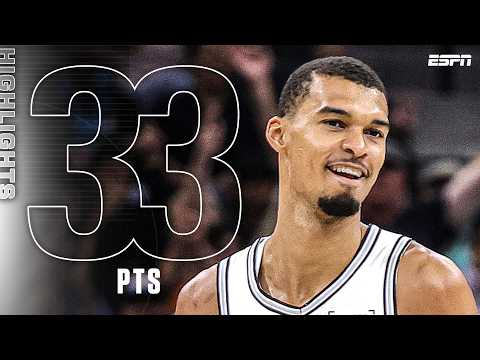
WEMBY GAME 4 TAKEOVER 😤 Highlights from Victor Wembanyama leading ALL SCORERS vs. OKC | NBA on ESPN
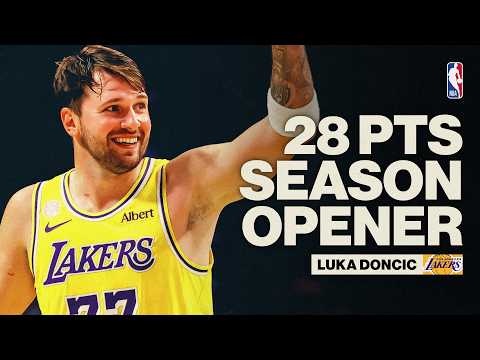
Luka Dončić Drops 28 Points vs Golden State Warriors Highlights 26/27
Nikola Jokić 2025-2026 Full Season Highlights | Denver Nuggets
Chart basis: counts from Sport on Earth’s own carried data files at build time — verified videos carried for this sport (the verified pool: sport-videos.json + the desk league pools), news items carried (news.json), and league pages carried (desk.json). No external or estimated figures.
The filter sorts the Review Room embeds and the picture cards above by the keywords in their carried titles (review / analysis / recap and similar, or highlights). It runs entirely in your browser — nothing is sent anywhere.
Hall of Fame
This page carries the Naismith Memorial Basketball Hall of Fame, the sport’s principal hall, which inducts players, coaches, referees and contributors from every level of the game.
Naismith Memorial Basketball Hall of Fame
Springfield, Massachusetts, United States
363 inductees — every name on the hall's published list, grouped by class year.
All 363 inductees by class year
1959 — Luther H. Gulick · Edward J. "Ed" Hickox · Ralph Morgan · James Naismith · Harold G. Olsen · Amos Alonzo Stagg · Oswald Tower · Matthew P. "Pat" Kennedy · First Team · Original Celtics · Chuck Hyatt (Player) · Hank Luisetti (Player) · George Mikan (Player) · John Schommer (Player)
1960 — Henry V. Porter · George T. Hepbron · Vic Hanson (Player) · Ed Macauley (Player) · Branch McCracken (Player) · Charles Murphy (Player) · John Wooden (Player)
1961 — John J. O’Brien · Arthur A. Schabinger · Arthur L. Trester · George H. Hoyt · Ernest C. Quigley · David "Dave" Tobey · Buffalo Germans · Bennie Borgmann (Player) · Forrest DeBernardi (Player) · Bob Kurland (Player) · Andy Phillip (Player) · John Roosma (Player) · Chris Steinmetz (Player) · Ed Wachter (Player)
1962 — Pop Morgenweck · Lynn W. St. John · David H. Walsh · Jack McCracken (Player) · Pat Page (Player) · Barney Sedran (Player) · John Thompson (Player)
1963 — William A. Reid · New York Renaissance · Robert Gruenig (Player)
1964 — John W. Bunn · Edward S. "Ned" Irish · R. William Jones · Bud Foster (Player) · Nat Holman (Player) · John Russell (Player)
1965 — Walter A. Brown · Paul D. "Tony" Hinkle · William G. "Bill" Mokray
1966 — Joe Lapchick (Player)
1968 — Clair F. Bee
1969 — Charles H. "Chuck" Taylor · Dutch Dehnert (Player)
1970 — Bob Davies (Player)
1971 — Abraham M. "Abe" Saperstein · Bob Cousy (Player) · Bob Pettit (Player)
1972 — Robert L. "Bob" Douglas · Eddie Gottlieb · W.R. Clifford "Cliff" Wells · Paul Endacott (Player) · Marty Friedman (Player)
1973 — Elmer H. Ripley · John Beckman (Player) · Dolph Schayes (Player)
1974 — Harry A. Fisher · Maurice Podoloff · Ernest Schmidt (Player)
1975 — Emil S. Liston · Joe Brennan (Player) · Bill Russell (Player) · Robert Vandivier (Player)
1976 — Tom Gola (Player) · Ed Krause (Player) · Bill Sharman (Player)
1977 — Elgin Baylor (Player) · Tarzan Cooper (Player) · Lauren Gale (Player) · William Johnson (Player)
1978 — John P. Nucatola · Paul Arizin (Player) · Joe Fulks (Player) · Cliff Hagan (Player) · Jim Pollard (Player)
1979 — John B. McLendon · Peter F. "Pete" Newell · James E. "Jim" Enright · Wilt Chamberlain (Player)
1980 — Lester "Les" Harrison · J. Dallas Shirley · Jerry Lucas (Player) · Oscar Robertson (Player)
1981 — Ferenc Hepp · James Walter Kennedy · Tom Barlow (Player)
1982 — Alva O. Duer · Hal Greer (Player) · Slater Martin (Player) · Frank Ramsey (Player) · Willis Reed (Player)
1983 — Louis G. Wilke · Lloyd R. Leith · Bill Bradley (Player) · Dave DeBusschere (Player) · Jack Twyman (Player)
1984 — Clifford B. "Cliff" Fagan · Edward S. "Ed" Steitz · John Havlicek (Player) · Sam Jones (Player)
1985 — Senda Berenson Abbott · Bertha F. Teague · Al Cervi (Player) · Nate Thurmond (Player)
1986 — Zigmund J. "Red" Mihalik · Billy Cunningham (Player) · Tom Heinsohn (Player)
1987 — Rick Barry (Player) · Walt Frazier (Player) · Bob Houbregs (Player) · Pete Maravich (Player) · Bobby Wanzer (Player)
1988 — Clyde Lovellette (Player) · Bobby McDermott (Player) · Wes Unseld (Player)
1989 — William Gates (Player) · K.C. Jones (Player) · Lenny Wilkens (Player)
1990 — Dave Bing (Player) · Elvin Hayes (Player) · Neil Johnston (Player) · Earl Monroe (Player)
1991 — Lawrence "Larry" Fleisher · Lawrence F. "Larry" O’Brien · Borislav "Boris" Stankovic · Nate Archibald (Player) · Dave Cowens (Player) · Harry Gallatin (Player)
1992 — Sergei Belov (Player) · Lusia Harris-Stewart (Player) · Connie Hawkins (Player) · Bob Lanier (Player) · Nera White (Player)
1993 — Walt Bellamy (Player) · Julius Erving (Player) · Dan Issel (Player) · Dick McGuire (Player) · Ann Meyers (Player) · Calvin Murphy (Player) · Uļjana Semjonova (Player) · Bill Walton (Player)
1994 — Carol Blazejowski (Player) · Buddy Jeannette (Player)
1995 — Earl Strom · Kareem Abdul-Jabbar (Player) · Anne Donovan (Player) · Vern Mikkelsen (Player) · Cheryl Miller (Player)
1996 — Krešimir Ćosić (Player) · George Gervin (Player) · Gail Goodrich (Player) · Nancy Lieberman (Player) · David Thompson (Player) · George Yardley (Player)
1997 — Joan Crawford (Player) · Denise Curry (Player) · Alex English (Player) · Bailey Howell (Player)
1998 — Larry Bird (Player) · Marques Haynes (Player) · Arnie Risen (Player)
1999 — Wayne R. Embry · Fred Zollner · Kevin McHale (Player)
2000 — Daniel "Danny" Biasone · Charles Martin Newton · Bob McAdoo (Player) · Isiah Thomas (Player)
2001 — Moses Malone (Player)
2002 — Harlem Globetrotters · Magic Johnson (Player) · Dražen Petrović (Player)
2003 — Francis D. "Chick" Hearn · Meadowlark Lemon · Earl F. Lloyd · Dino Meneghin (Player) · Robert Parish (Player) · James Worthy (Player)
2004 — Jerry Colangelo · Dražen Dalipagić (Player) · Clyde Drexler (Player) · Maurice Stokes (Player) · Lynette Woodard (Player)
2005 — Hubert "Hubie" Brown · Hortencia de Fatima Marcari (Player)
2006 — Dave Gavitt · Charles Barkley (Player) · Joe Dumars (Player) · Dominique Wilkins (Player)
2007 — Marvin "Mendy" Rudolph · Texas Western
2008 — William Davidson · Richard "Dick" Vitale · Adrian Dantley (Player) · Patrick Ewing (Player) · Hakeem Olajuwon (Player)
2009 — Michael Jordan (Player) · David Robinson (Player) · John Stockton (Player)
2010 — Jerry Buss · 1960 United States Olympic Team · 1992 United States Olympic Team ("Dream Team") · Cynthia Cooper-Dyke (Player) · Dennis Johnson (Player) · Gus Johnson (Player) · Karl Malone (Player) · Ubiratan Pereira Maciel (Player) · Scottie Pippen (Player)
2011 — Tom "Satch" Sanders · Tex Winter · Dennis Rodman (Player) · Chris Mullin (Player) · Arvydas Sabonis (Player) · Artis Gilmore (Player) · Teresa Edwards (Player) · Goose Tatum (Player)
2012 — Donald "Don" Barksdale · Phil Knight · Hank Nichols · All American Red Heads · Mel Daniels (Player) · Katrina McClain (Player) · Reggie Miller (Player) · Ralph Sampson (Player) · Chet Walker (Player) · Jamaal Wilkes (Player)
2013 — Russ Granik · Edwin Bancroft Henderson · Roger Brown (Player) · Bernard King (Player) · Gary Payton (Player) · Richie Guerin (Player) · Dawn Staley (Player) · Oscar Schmidt (Player)
2014 — David Stern · Immaculata College · Nathaniel "Sweetwater" Clifton (Player) · Šarūnas Marčiulionis (Player) · Alonzo Mourning (Player) · Mitch Richmond (Player) · Guy Rodgers (Player)
2015 — George Raveling · Richard "Dick" Bavetta · Louie Dampier (Player) · Spencer Haywood (Player) · John Isaacs (Player) · Lisa Leslie (Player) · Dikembe Mutombo (Player) · Jo Jo White (Player)
2016 — Jerry Reinsdorf · Darell Garretson · Yao Ming (Player) · Cumberland Posey (Player) · Sheryl Swoopes (Player) · Zelmo Beaty (Player) · Shaquille O’Neal (Player) · Allen Iverson (Player)
2017 — Rebecca Lobo · Mannie Jackson · Tom Jernstedt · Jerry Krause · Tracy McGrady (Player) · Nikos Galis (Player) · George McGinnis (Player) · Zack Clayton (Player)
2018 — Rod Thorn · Rick Welts · Ray Allen (Player) · Maurice Cheeks (Player) · Grant Hill (Player) · Jason Kidd (Player) · Steve Nash (Player) · Katie Smith (Player) · Tina Thompson (Player) · Ora Mae Washington (Player) · Dino Rađa (Player) · Charlie Scott (Player)
2019 — Al Attles · Tennessee A&I State Teams of 1957 , 1958 , 1959 · Wayland Baptist Women’s Teams of 1948–82 · Carl Braun (Player) · Chuck Cooper (Player) · Vlade Divac (Player) · Bobby Jones (Player) · Sidney Moncrief (Player) · Jack Sikma (Player) · Teresa Weatherspoon (Player) · Paul Westphal (Player)
2020 — Patrick Baumann · Kobe Bryant (Player) · Tamika Catchings (Player) · Tim Duncan (Player) · Kevin Garnett (Player)
2021 — Val Ackerman · Howard Garfinkel · Chris Bosh (Player) · Bob Dandridge (Player) · Yolanda Griffith (Player) · Lauren Jackson (Player) · Fats Jenkins (Player) · Toni Kukoč (Player) · Pearl Moore (Player) · Paul Pierce (Player) · Ben Wallace (Player) · Chris Webber (Player)
2022 — Lawrence "Larry" Costello · Delmer "Del" Harris · Hubert "Hugh" Evans · Sonny Boswell (Player) · Manu Ginóbili (Player) · Theresa Grentz (Player) · Tim Hardaway (Player) · Lou Hudson (Player) · Inman Jackson (Player) · Radivoj Korać (Player) · Albert Pullins (Player) · Lindsay Whalen (Player) · Swin Cash (Player)
2023 — Jim Valvano · 1976 United States Women’s Olympic Team · Pau Gasol (Player) · Becky Hammon (Player) · Dirk Nowitzki (Player) · Tony Parker (Player) · Dwyane Wade (Player)
2024 — Doug Collins · Herb Simon · Jerry West · Seimone Augustus (Player) · Dick Barnett (Player) · Chauncey Billups (Player) · Vince Carter (Player) · Michael Cooper (Player) · Walter Davis (Player)
2025 — Micky Arison · Danny Crawford · 2008 United States Olympic Team ("Redeem Team") · Carmelo Anthony (Player) · Sue Bird (Player) · Sylvia Fowles (Player) · Dwight Howard (Player) · Maya Moore (Player)
2026 — Mike D’Antoni · Joey Crawford · 1996 United States Women’s Olympic Team · Elena Delle Donne (Player) · Chamique Holdsclaw (Player) · Candace Parker (Player) · Amar’e Stoudemire (Player)
Source basis: Wikipedia — "List of members of the Naismith Memorial Basketball Hall of Fame" (accessed Nov 1, 2026); parsed mechanically from the article’s published table; and Wikipedia — "List of players in the Naismith Memorial Basketball Hall of Fame" (accessed Nov 1, 2026); parsed mechanically from the article’s published table. Material from Wikipedia is used under CC BY-SA 4.0..
Full inductee profiles → 183 of the 363 inductees above carry a full verified profile — biography, induction record and verified video where one exists. The rest are list-only until a biography can be verified the same way.
Also recognised: FIBA Hall of Fame (Mies, Switzerland (administered by FIBA)). Its published inductee list is not carried here in parsed form — the hall's own published list is the complete record.
Also recognised: Women’s Basketball Hall of Fame (Knoxville, Tennessee, United States). Its published inductee list is not carried here in parsed form — the hall's own published list is the complete record.
📖 The Basketball Playbook — every entry, plus the arcade strategy, at the foot of this page.
Basketball Arcade — Arc Shot
An arcade take on Basketball: set the angle, set the power, and land the ball in the hoop. Five attempts; the closer to the middle, the more it scores. Arcade distances and a training arc — a game in the spirit of the sport, not a simulation of it.
More ways to play Basketball
This page’s own game is the arcade above. Everything else on the site that fits this sport is listed here — and anything borrowed from a similar sport is labelled as that sport’s game, never passed off as this one’s.
- Quiz track — 12 questions on Basketball, drawn from this site's own record for the sport: Quiz Tracks (choose “Basketball”).
- Top Sport on Earth — Basketball is one of the 455 sport cards in the SPORTS deck: play Top Sport on Earth.
- Mock Draft Simulator — run the NBA (2027–2030) and WNBA (2027) drafts on the site's real boards: Mock Draft Simulator.
- The basketball arcade suite — Buzzer Beater, Dunk Contest, Three-Point Shootout, Free-Throw Frenzy, Around the World, pinball and the VR hoops games: the Games hub.
- More in this family — 3x3 Basketball Arcade — Arc Shot: the game of 3x3 Basketball, a similar sport in Basketball’s family.
- Everything else the site runs lives on the Games hub.
Training by attribute
This sport's demands, broken down by attribute — the attributes it trains, why it demands them, and a sample week built from published coaching sources (general information, not medical advice): Training by Attribute — Basketball.
On screen
6 verified documentaries, films and series about this sport are listed in the site's screen guide: Sport on Screen — Basketball.
Tools for Basketball
The tools on this site that honestly run on Basketball — its own record first, then the site-wide general tools that apply. The full Basketball toolkit prints the ones that do not apply, with the data reason why.
Tools that run on Basketball’s own record
- You Are the Referee — Branching decision trees built from this sport’s own rule-changes dossier, each ruling cited to its rule.
- Signals in the Record — The officials’ signals extracted from the rule dossiers, this sport’s included where its dossier documents them.
- The Model Lab — Re-weights carried standings archives — this sport’s archive is one of them — into rankings under your criteria. A model, never a prediction.
- Cross-Era Normalizer — Restates a team season from this sport’s standings archive against another era’s baseline, basis printed.
- Strength of Schedule — SoS tables computed from the site’s standings archives, this sport’s leagues included, formula printed.
- Anomaly Desk — Statistical outlier scans over the archives flag this sport’s strangest team seasons, each linked to its data.
- Draft Capital Board — Pick values computed from the draft boards the site carries — this sport’s league boards are among them, on the house value curve, labeled as a model.
- Field Blueprints — A scale diagram of this sport’s playing surface, dimensions as published in the governing laws its dossier cites.
- Rules, Code by Code — The rule-variance grid compares this sport’s codes directly (for example NBA vs WNBA vs FIBA; league rules vs the Laws of the Game).
- Venue Profiles — The venue directories the site carries name 254 venues for this sport, with the flagship grounds documented from the structured record.
General tools that also apply
Site-wide tools, not built for Basketball alone: Tournament Planner · My Notebook · The Labs · Design Studio · The Makers’ Bench · Match Day Desk · Play It Near You · Myth-Check Desk · Governing Bodies · Heat & Safety Calculator (WBGT) · Hydration Calculator · Training-Load Planner · Game Clock & Timer · Custom Rulebook Generator · Scout Notes Parser.
Player & referee associations
Players: National Basketball Players Association — The union for current NBA players, established in 1954 to protect and advance players’ rights, including negotiating the collective bargaining agreement and handling grievances.
Players: Women’s National Basketball Players Association — The players’ union for the WNBA, created in 1998 as the first labour union for professional women athletes, negotiating CBAs and counselling players on benefits and post-career opportunities.
Officials: National Basketball Referees Association (association) — The recognised union for NBA, WNBA and NBA G League officials, founded in 1977 as the National Association of Basketball Referees and expanded in 2017 to cover all three leagues’ referees.
Officials: FIBA Referee Operations (federation arm) — FIBA’s referee operations arm, which licenses game officials every two years with Black, Green or White licences defining the international level a referee may officiate, on nomination by national federations.
Verified associations for this sport, from the sources listed on the players' associations and referees' associations pages.
The Basketball Playbook — the Extended Playbook
The Playbook · 154 plays
Sport on Earth's basketball playbook is the full extended book: the 64-play interactive catalog, the Second Volume's 26 plays and the Third Volume's 64 — every major documented play family, system and action in the shared coaching vocabulary, offence, defence, out-of-bounds and special situations, each drawn and broken down the same way.
One honest note on the words "all plays ever": no book can literally hold every play ever called. Teams invent new named variants of these actions constantly, and real team playbooks are proprietary and unpublished. What this Playbook holds is every major documented play family, system and action in the shared coaching vocabulary — historic to modern — each drawn and broken down the same way.
Volume One — the Interactive 64
The original catalog: the game’s core actions, each with its reads, counters and variations.
Offence
Pick and Roll
Ball screen · the default NBA action
A big screens for the ball-handler, then rolls to the rim. Two defenders have to guard three outcomes: the drive, the roll and the kick-out.
When it's used: Any time, against any coverage — it is the action defences are built to stop, so it bends them out of shape on every possession.
The sequence:
- O5 sprints up from the weak side and sets the screen on X1, feet wide, angle forcing O1 toward the middle.
- O1 rubs off the screen shoulder-to-shoulder. X5 drops a step to wall off the drive while X1 recovers over the top.
- O5 rolls hard down the lane, sealing X5 on his back — now the defence’s back line has to choose.
- O1 reads the help: no tag from the corner, so he delivers the pocket pass and O5 finishes at the rim.
Reads and counters:
- Reject the screen: if X1 cheats over early expecting the screen, O1 plants and crosses back the other way — no screen needed.
- The tag from the corner: when X2 sinks to tag the roll, the corner three is the roll’s twin — the defence pays for the tag with the kick-out.
- Short roll: against a blitz or a hard show, O5 catches at the free-throw line and plays 4-on-3 — the modern roll man’s real job.
Variations:
- Empty-side PnR: clear the strong-side corner so no tag help exists — the roll runs at one defender only.
- Inverted PnR: a guard screens for a big handler (a Jokic or Antetokounmpo bringing the ball up), flipping every matchup.
On the floor: John Stockton and Karl Malone turned it into a science for the 1990s Utah Jazz; it is still the most-run action in the league.
Pick and Pop
Ball screen · the stretch-big answer
The same screen as the pick and roll — but instead of rolling, the screener pops out behind the three-point line, dragging the rim protector away from the basket.
When it's used: When your big shoots it. The drop defender cannot guard both the drive and the pop, so one of them is open by design.
The sequence:
- O5 sets the same hard screen as a roll — the defence cannot tell the difference yet.
- O1 attacks off it; X5 drops toward the paint to contain the drive, exactly as coached.
- Instead of rolling, O5 pops straight back out beyond the arc. X5 is now ten feet from his man.
- O1 pitches it back and O5 shoots the open trail three — the price of protecting the rim.
Reads and counters:
- X5 recovers to the pop in time: O5 shot-fakes and drives the closeout — the pop’s second act.
- Defence pre-switches the pop: the handler keeps it and attacks the smaller man the switch delivered.
- The roll is offered instead: a pop man who never rolls becomes predictable — one roll a quarter keeps the drop honest.
Variations:
- Pop into a re-screen: the pop man turns and sets a second screen going back the other way.
- Trail three in transition — the pop as an early-offence shot, not a set play.
On the floor: Dirk Nowitzki’s pick-and-pop with Jason Terry and Jason Kidd was a Dallas Mavericks staple for a decade.
Spain Pick and Roll
Ball screen · back-screen wrinkle
A pick and roll with a trapdoor: a third attacker back-screens the dropping big’s defender, so the roll man is free and the screener’s man cannot recover — then the back-screener pops out himself.
When it's used: Against drop coverage, when the defence thinks it has the roll solved. It turns their safest scheme into a two-on-one.
The sequence:
- O5 comes up to screen for O1. O3, the third attacker, drifts in behind the play — the defence barely registers him.
- As O1 turns the corner, O3 plants a back screen on X5, the drop defender. X5 never sees it.
- O5 rolls untouched — his defender is stuck on the screen — while O3 pops out to the arc behind the play.
- O1 takes his pick: the roll, or the pop. Here the tag comes from the corner, so the ball goes back out to O3 for three.
Reads and counters:
- X3 switches onto the roll to beat the back screen: O3 pops out and is open behind the play — the Spain action’s built-in second prize.
- X5 fights over the back screen in time: the roll man seals and the entry becomes a post feed.
- Defence calls the back screen out early: O5 ghosts the roll into a pop — the Spain picture with the roles swapped.
Variations:
- Spain from a drag screen in transition — the same trap, set at speed.
- Spain with a shooter as the back-screener, so the pop is the play and the roll is the decoy.
On the floor: Named for the Spanish national team, which popularised the back-screen wrinkle; it is now called in every NBA playbook.
Horns
Set play · two bigs at the elbows
Both bigs station at the elbows — the two ’horns’ — with shooters in the corners. The ball-handler picks a horn, and every choice branches into screens, pops and flares the defence must guard simultaneously.
When it's used: As a set-opener out of timeouts and to start the offence with a decision the defence cannot pre-rotate against.
The sequence:
- The horns are set: O4 and O5 on the elbows, corners filled, the whole floor balanced. X1 has to guess which screen is coming.
- O1 chooses the right horn — O5 steps up and the screen is on. X5 shows to slow the ball.
- O5 rolls to the rim; behind the play, O4 pops out to the top as the safety valve and second threat.
- X4 leaves O4 to tag the roll — one step too many. O1 skips it back and O4 shoots the pop three.
Reads and counters:
- X1 goes under the chosen horn: the handler pulls up, or uses the OTHER horn as a re-screen — Horns always has a second door.
- Both bigs’ defenders drop: the horns become two pops — both elbows are shooting spots by design.
- Strong-side corner help tags the roll: kick to the corner the Horns spacing isolated.
Variations:
- Horns Twist: the non-screening horn sets a flare for the corner man behind the ball screen.
- Horns into a post entry: the far horn seals, and the set becomes inside-out.
Floppy
Off-ball set · the shooter’s maze
A shooter starts under the basket with a screen parked on each side of the lane. He picks a side — single screen one way, staggered double the other — and sprints off it into a catch-and-shoot. His defender has to chase through all of it.
When it's used: To free an elite movement shooter without putting the ball in his hands first; a staple for getting a sniper his first look of a half.
The sequence:
- O3 waits under the rim. O4 screens on his left, O5 on his right — X3 has to guess, and guessing wrong ends the play.
- O3 sells the left, then bursts right, brushing off O5’s screen at the block. X3 is already a step behind.
- He keeps sprinting to the wing, square to the basket on the catch — the footwork is the play.
- O1 delivers on time and on target. Catch, rise, shoot — before X3 can recover through the screen.
Reads and counters:
- X3 tops BOTH screens (runs above them to beat the shooter to the spot): O3 fades to the corner — the floppy’s other door is always the corner.
- Defence switches the floppy: the screener whose man switched away seals inside for the mismatch feed.
- The chase is clean and the shot isn’t there: the shooter curls one more dribble into the lane rather than forcing the jumper.
Variations:
- Floppy into a DHO: the catch flows straight into a hand-off with the near big.
- Double floppy: run it, reset, and run it back the other way — endurance as a tactic.
On the floor: The shooter’s set — long used to free Ray Allen and Kyle Korver off staggered baseline screens.
Hammer
Set play · the blind weak-side screen
The ball-handler drives hard toward one baseline, pulling every defender’s eyes with him. On the far side, a big sets a diagonal back screen — the ’hammer’ — on the corner defender, and the skip pass finds a shooter who never had to move.
When it's used: Late in the clock or out of a timeout, when the defence is ball-watching and the weak-side corner is being guarded by habit, not attention.
The sequence:
- O1 attacks downhill toward the left baseline. Four defenders turn their heads to watch the drive.
- Behind their backs, O4 angles across and sets the hammer — a blind back screen on X2, the corner man.
- X2 turns to close out and runs straight into the screen. O2 hasn’t moved an inch and is wide open.
- O1 whips the cross-court skip pass off the baseline. Corner three, no contest.
Reads and counters:
- X2 anticipates and beats the hammer screen to the corner: the drive’s own kick-out to the top is open, because the corner man vacated early to cheat.
- The skip pass is jumped: O1’s drive finishes at the rim instead — the hammer only works because the drive itself is real.
- Defence switches the hammer: the screener (O4) slips to the rim against the switch.
Variations:
- Hammer off a post-up instead of a drive — the same blind screen, a different magnet.
- Double hammer: a second weak-side screen for the other corner, for defences that scout the first one.
On the floor: A signature of Gregg Popovich’s San Antonio Spurs — the hammer sprang their corner shooters throughout the 2013 and 2014 Finals runs.
Elevator Doors
Off-ball set · the doors close behind him
Two bigs stand side by side at the free-throw line with a gap between them. The shooter sprints straight up the lane through the gap — then the bigs step together and the doors slam in his defender’s face.
When it's used: For a game-tying or go-ahead three, or any time a great shooter needs one clean look and the defence is chasing over every screen.
The sequence:
- O2 waits under the basket. O4 and O5 stand a body’s width apart at the line — the open doors. X2 is chest-to-chest behind him.
- O2 explodes straight up the lane, through the gap. X2 follows the only path he has — the same one.
- The doors close: O4 and O5 step together. X2’s path disappears — he has to go around two bigs or through them.
- O1 hits O2 at the top in stride. The contest arrives a full second late.
Reads and counters:
- X2 goes under the doors (through the lane early to beat the shooter to the top): the shooter stops short inside the arc for the midrange — the doors serve as a wall both ways.
- A third defender leaves his man to help at the top: one of the doors’ bigs slips to the rim as the contest leaves.
- The doors close early by design: the shooter can split before they shut and flare to the wing instead.
Variations:
- Elevator from the sideline inbound (see the Out of Bounds catalog) — the famous end-game edition.
- Reverse elevator: the shooter starts at the top and sprints DOWN through the doors to the corner.
On the floor: The Golden State Warriors’ favourite door-opener for Stephen Curry and Klay Thompson.
Flex
Continuity set · screen the screener
A chain reaction along the baseline: a big screens for the corner man to cut across the lane (the flex screen), then immediately receives a down screen himself and pops open at the elbow. Guard one action and the next one frees somebody.
When it's used: As a continuity offence — it repeats until the defence breaks, and it hunts layups for cutters before it ever looks for a jumper.
The sequence:
- O3 sets up on the block; O2 waits in the corner he guards. O4 owns the free-throw line — he is the second half of the play.
- O3 steps across and sets the flex screen on X2. O2 cuts hard along the baseline, across the lane to the opposite block.
- Now O4 turns and down-screens for O3 — screen the screener — and O3 pops to the elbow as X3 recovers from setting the screen late.
- O1 can hit the cutter or the pop. The defence guarded the first action; the second one scores.
Reads and counters:
- X2 beats the flex screen by going under the lane: the cutter plants and seals at the block — the screen’s miss becomes a post-up.
- Defence switches the flex cut: the screener O3 now has the smaller man, and the pop becomes a duck-in.
- The continuity is the read: if neither man scores, the same two screens recur on the other side — flex defends itself by repeating.
Variations:
- Flex with a shooter as the cutter — the cut becomes a curl for three.
- UCLA flex: the flex chain entered from a UCLA cut instead of a guard entry.
On the floor: Jerry Sloan’s Utah Jazz ran flex cuts inside their half-court offence for two decades.
Triangle Offense
System · the sideline triangle
Three players form a triangle on the strong side — post, corner, wing — spaced so every pass has a counter. Feed the post and the corner and wing ’split’ around him; the offence reads the defence instead of calling the next move.
When it's used: A full system rather than a play: it ran best with a dominant post scorer and patient passers, and it punished any defence that committed early.
The sequence:
- O1 swings it to the wing, O3. The triangle is formed: O3, O2 in the corner, O5 on the block — every man a pass from the other two.
- O3 feeds the post. The moment the ball goes in, the split begins: O2 and O3 criss-cross around O5.
- X2 and X3 both trail their men around the big body — the post is a screen as well as a scorer.
- O5 reads it: no double-team, so he turns and scores over the single coverage. The triangle dared them to help, and they couldn’t.
Reads and counters:
- Post doubled from the corner: the corner man’s split partner is open at the top — the splits are the double-team’s punishment.
- Wing pass denied: the corner goes backdoor and the post becomes the passer — every triangle spot can play every role.
- Strong side fully loaded: the weak-side guard is one skip pass from a two-man game the defence forgot it was guarding.
Variations:
- Pinch post series: the elbow catch replaces the low post as the hub — the triangle’s modern dialect.
- Weak-side two-man game: while the triangle holds the defence’s eyes, the far side runs its own screen action.
On the floor: Tex Winter’s offence, run by Phil Jackson’s Chicago Bulls and Los Angeles Lakers across eleven championships.
Princeton Backdoor
System read · the overplay killer
The offence spreads the floor and puts its centre at the high post. When a wing defender overplays the passing lane to deny the catch, the wing cuts backdoor — behind him, to a rim nobody is guarding, because the centre pulled the rim protector out.
When it's used: Against aggressive, denying defences — and the more a team pressures the wings, the more the rim opens behind them.
The sequence:
- O1 enters it to O5 at the high post. The defence’s centre has to follow him out — the rim is now unguarded.
- X2 denies the wing pass with a hand in the lane. That is the trigger — everything in this offence keys off the overplay.
- O2 plants the outside foot and cuts backdoor, straight down the lane behind X2’s back.
- O5’s bounce pass leads him to the rim. Layup — scored by the defender’s own aggression.
Reads and counters:
- Wing catch allowed (no overplay): the offence takes the entry and flows into the centre series — the backdoor is a threat, not a diet.
- Centre’s defender sags to protect the rim: O5 keeps the ball and shoots the elbow jumper, or drives the sag.
- Backdoor covered by help: the cutter’s pass back out to the corner is the help’s price — Princeton counts its assists in layers.
Variations:
- Chin set: the same reads entered off a back screen instead of the high-post feed.
- Low-post series: the centre works from the block when the matchup flips — Princeton is a family of series, not one cut.
On the floor: Pete Carril’s Princeton offence; its reads powered Rick Adelman’s Sacramento Kings at the turn of the 2000s.
Isolation (Clear-Out)
One-on-one · the oldest play there is
Four attackers flatten to the far side of the floor and give a scorer the entire strong side against one defender. No screen to switch, no help close enough to matter — just a mismatch and a clock.
When it's used: Late in the shot clock or the game, with an elite one-on-one scorer holding a size, speed or foul-count advantage.
The sequence:
- The floor clears: four attackers cross to the weak side. X1 is alone, on an island, with the whole strong side to defend.
- O1 sizes him up — jab step, rocker step. X1 has to respect the jumper and the drive with the same feet.
- One hard dribble middle beats the close-out hip. The nearest help is two passes away and a full second late.
- Pull-up at the elbow or all the way to the rim — the iso ends on the scorer’s terms.
Reads and counters:
- Help creeps one step early: the kick-out is the iso’s release valve — a great iso scorer is really a great double-team passer.
- Defender sits on the strong hand: cross over and go the other way — the clear-out clears BOTH directions.
- The drive stalls at the elbow: the step-back is the iso’s rehearsed third act, part of the same move, not a bailout.
Variations:
- Iso at the elbow (the ’Melo spot’) versus iso at the top: the elbow shortens the drive and lengthens the fadeaway.
- Post isolation: the clear-out for a big on the block — same solitude, different zip code.
On the floor: The late-clock diet of Michael Jordan, Kobe Bryant and James Harden — the clear-out iso is basketball’s original argument-settler.
Post-Up and Kick-Out
Inside-out · gravity at the block
Feed a dominant post scorer on the block. One defender can’t guard him, so the defence must double — and the double-team’s departure is the real play: a shooter stands exactly where the help came from.
When it's used: With a true low-post scorer, or to punish a small defender switched onto a big; it also slows the game and manufactures free throws.
The sequence:
- O5 seals X5 on his back at the block — the seal is won before the pass. O3 delivers the entry on the outside hand.
- One power dribble toward the middle. X4 digs down from the weak side to help — exactly what the offence wants.
- O5 reads the double and kicks it out to O4 — the exact man X4 abandoned to help.
- Feet set, nobody within six feet. The post-up scored two points of gravity and three on the board.
Reads and counters:
- Double comes from the top instead of the weak side: the kick goes over the top to the guard — the post passer reads WHICH man left, not just that one did.
- No double at all: the kick-out never comes — the post man eats. The play is honest about its first option.
- Post fronted: the kick-out family hands over to the hi-lo (see Hi-Lo) — seal the front and lob over it.
Variations:
- Duck-in: the post man seals early off a teammate’s drive instead of waiting for a called entry.
- Post splits: the guards criss-cross off the post catch — the triangle’s split in miniature.
On the floor: Shaquille O’Neal’s Orlando Magic and Los Angeles Lakers offences were built on this gravity — guard him single and lose, double him and lose slower.
Dribble Hand-Off
Two-man game · the moving screen
A big holds the ball at the elbow like a quarterback. The guard sprints around him, takes the hand-off at full speed and turns the corner — the big’s body is a screen the defence can’t go under without surrendering the curl.
When it's used: To get a guard moving downhill without a set screen, and as the entry into endless re-screens, rolls and pops.
The sequence:
- O1 passes ahead to O5 at the elbow and clears through. O5 turns to face the corner — the exchange point is set.
- O2 sprints the long way around, shoulder brushing O5’s hip, and takes the hand-off at full speed. X2 is screened by the handoff itself.
- O2 turns the corner into the lane. O5, having handed off, rolls behind him into the space X5 vacated.
- Two on one at the rim: floater, lob or the finish. Here O2 keeps it and lays it in.
Reads and counters:
- X2 goes under the hand-off: the guard stops behind the big and shoots — the under is a dare the DHO takes personally.
- Defence switches the exchange: O5 fakes the hand-off and keeps it — the ’keep’ — driving at a defence that just traded its size away.
- X5 drops deep on the curl: the pocket pass to the short roll — the DHO’s family inheritance from the pick and roll.
Variations:
- Fake DHO (the keep) as a called play rather than a read — the defence’s discipline becomes the weapon.
- DHO into a re-screen: hand it off, then the big turns and screens again — the zoom family’s engine.
On the floor: The Nikola Jokic - Jamal Murray hand-off game at the elbows anchored Denver’s 2023 championship offence.
Seven Seconds or Less (Early Offence)
Transition · score before the defence sets
No play call at all: the point guard pushes the ball at sprint speed, the centre rim-runs, the wings sprint to the corners — and the shot goes up inside seven seconds, against a defence still running backwards.
When it's used: As a philosophy, not a set: it manufactures open shots from pace before any half-court defence can load up.
The sequence:
- Rebound or make, it doesn’t matter: O1 takes off at full speed and the wings sprint wide, dragging defenders to the corners.
- Four seconds gone. O5 rim-runs straight down the middle — X5 is still back-pedalling and can’t find him.
- The pitch-ahead: O1 hits the rim-runner in stride, or — if X5 commits — the corner shooter he left. Here the runner gets it.
- Layup at six seconds, against a defence that never got set. That was the whole playbook page.
Reads and counters:
- Defence sprints back and sets: seven seconds becomes seventeen — the Suns’ secret was taking the first GOOD shot, not simply the first shot.
- Rim-runner sealed early by a smart big: the pitch goes to the corner instead — the corners are the rim-run’s insurance.
- Trailer three: when the defence collapses onto the rim-runner, the trailing big is the offence’s forgotten man.
Variations:
- Secondary break: when the first wave fails, flow straight into a drag screen — the modern early offence never really stops.
- Pitch-ahead sets (see Pistol, ’21’) — Seven Seconds’ set-play descendants.
On the floor: Mike D’Antoni’s Phoenix Suns, with Steve Nash pitching ahead and shooters sprinting to the corners, rewired the league in the mid-2000s.
UCLA Cut
Set opener · the guard rubs off the high post
The guard passes to the wing, then cuts hard off the high-post man’s screen toward the basket — the ’rub’ cut. If the layup isn’t there, the cutter clears to the corner and the big pops into a two-man game.
When it's used: As the classic set-opener: it tests the guard’s defender immediately and flows straight into post and screen actions if the cut is covered.
The sequence:
- O1 passes to the wing and takes one step away — a lie. O5 holds his ground at the high post: the screen is coming.
- O1 cuts hard off O5’s shoulder, straight at the rim. X1 has to chase over a big body or switch and give up position.
- X5 steps up to bump the cut — covered, this time. O1 clears through to the corner and O5 pops to receive at the elbow.
- O3 reverses it to O5 and the set flows on. The cut didn’t score, but it bent the defence for everything after it.
- Or O5 keeps it himself: one power dribble at a back-pedalling X5 and the high-post man scores. The UCLA cut’s last read belongs to the screener.
Reads and counters:
- X1 goes under O5’s screen: the cutter pops back out to the wing for the return pass and the jumper.
- X5 switches onto the cutter: O5 seals the guard inside — the screen’s owner collects the mismatch tax.
- Cut covered and pop covered: the wing reverses it to the weak side and the set becomes a fresh possession with the defence already shifted.
Variations:
- UCLA into flex: the cutter sets the flex screen on arrival in the corner.
- UCLA for a big cutter — the guard’s rub cut run with a forward’s body.
On the floor: Named for John Wooden’s UCLA Bruins; the guard’s rub cut off the high post still opens sets across the league.
Zipper (Guard Up the Lane)
Off-ball entry · the guard zips to the top
The entry pass’s oldest friend: a shooter waits on the block while a big waits at the elbow. The shooter sprints straight up the lane’s edge off the big’s vertical screen — the zipper — catches at the top and the offence starts with the defence already chasing.
When it's used: As the default set-opener: it gets a guard the ball on the move, in the middle of the floor, with every option in the playbook still available.
The sequence:
- O2 waits on the block, showing to the corner as if the play is going elsewhere. O5 angles his body at the elbow — the zipper screen is a wall built along the lane’s edge.
- The zip: O2 plants and sprints straight up the lane, brushing O5’s hip. X2 must chase over the screen or switch late — both cost him a step.
- O1 hits him in stride at the top. Entry complete, floor spaced, defence already rotating toward a man who hasn’t stopped moving.
- From the catch everything is open — here O2 attacks the scrambled closeout downhill, straight past the recovering defence to the rim.
Reads and counters:
- If X2 ducks under the zipper screen, O2 catches and shoots over it, or accepts a re-screen — the under is a dare, not a plan.
- If the defence switches the zipper, O5 seals the smaller man inside and the entry pass becomes a post feed.
- Trailed hard and cut off at the top, O2 can reject the catch and cut backdoor — the Princeton read in miniature.
Variations:
- Zipper straight into a side ball screen — the modern NBA’s default doorway into flow offence.
- Zipper for the big at the top instead, morphing into a five-out delay series.
Iverson Cut
Off-ball set · across both elbows
A guard starts on one wing and cuts clear across the court, over a screen at each elbow, to catch on the far wing at full speed — or to keep curling to the rim. Two screens, no pause, and a defender who has to survive both.
When it's used: To spring a scorer without a dribble: the cut itself is the play’s engine, and it lands him in a side pick and roll or a hand-off with momentum.
The sequence:
- O2 starts on the left wing and sells one step toward the corner — then takes off across the court, straight at the first elbow screen.
- He rubs off O4, then immediately off O5 — two screens with no pause between them. X2 is chasing through both and losing ground at each.
- The catch comes on the far wing, still moving. X2 arrives a step and a heartbeat after the ball does.
- Caught at speed, O2 attacks the scrambling closeout downhill — the cut built the advantage, the drive spends it at the rim.
Reads and counters:
- If X2 cheats under the screens early to beat him to the spot, O2 plants off the second screen and curls straight back to the rim.
- If the defence switches across the elbows, the second screener (O5) slips or seals the switch — the mismatch is the cut’s tax.
- If X2 sags under both screens entirely, O2 fades behind the second one and shoots the three the sag conceded.
Variations:
- Iverson into an immediate side pick and roll — the cut becomes the entry pass.
- Iverson ’keep’: the cutter clears through, and the two screeners play their own two-man game behind him — Horns through the back door.
On the floor: Named for Allen Iverson, who ran it relentlessly for the early-2000s Philadelphia 76ers; the cut is now a standard entry in every playbook in the league.
Pin Down (Down Screen)
Off-ball screen · the shooter’s staircase
The half-court offence’s silent engine. A big at the elbow steps down and plants a screen on the shooter’s defender; the shooter, buried at the block, explodes off it to the wing. One screen, three reads — curl, pop or fade — and a defender who must pick wrong.
When it's used: The universal way to free a shooter who doesn’t need the ball first; run for spot-up men, movement shooters and post players popping to the elbow alike.
The sequence:
- O3 buries himself at the block behind the screen’s shadow — hidden and patient. The later he leaves, the less time X3 has to solve what’s coming.
- O5 steps down and plants the screen square on X3. O3 explodes off his hip, reading X3’s choice as he goes.
- X3 trails through the screen a step late, so the read is the curl: O3 comes off tight and keeps rising toward the wing, square to the basket.
- O1 delivers on the catch. Rise and fire before the recovery arrives — the down screen bought exactly one heartbeat, and the shooter spent it.
Reads and counters:
- If X3 tops the screen (jumps above it early to beat the shooter out), O3 fades to the corner instead — the fade is the pin down’s built-in counter.
- If the defence switches it, O5 slips straight to the rim behind the switch before it can settle.
- If the chase is clean all the way, O3 keeps curling into the lane — the ’curl’ read — rather than forcing the jumper the chase conceded nothing to.
Variations:
- Pin down into a re-screen: O5 turns out of it and sets the ball screen right behind his own screen.
- Double pin down — two screeners staggered on the same side, for the defence’s best chaser.
On the floor: Reggie Miller built a Hall of Fame career running defenders into down screens for the Indiana Pacers.
Stagger (Staggered Double Screen)
Off-ball set · two screens, one rhythm
A shooter comes off two screens set a few feet apart — staggered, so he hits them one, then the other, without breaking stride. Each screen delays his defender a half-step; two of them turn a chased shooter into an open one.
When it's used: For the defence’s most-hounded shooter, when one screen isn’t enough separation — a staple for movement shooters who relocate for a living.
The sequence:
- O2 waits deep in the corner. Ahead of him stands a corridor: O4 on the block, O5 at the free-throw line, set at a stagger so the shooter hits them one, then the other.
- First screen: O2 comes off O4 tight, shoulder to hip. X2 trails half a step behind — and the corridor’s second door is already waiting.
- Second screen, no pause: O2 brushes O5 and bursts out to the top. He has now been delayed zero times; his defender has been delayed twice.
- O1 hits him at the top in rhythm. The stagger turned a smothered shooter into an open one without a single dribble.
Reads and counters:
- If X2 cheats under both screens, O2 stops behind the second screen and pops back out — the under turns the stagger into a shooting booth.
- If the defence switches the second screen, O5 slips to the rim before the switch settles.
- If both screens are trailed cleanly all the way, the curl continues into the lane — a chase that never catches up becomes a layup line.
Variations:
- Stagger away: both screens on the weak side, bringing the shooter clear across the court.
- Stagger into a DHO — the second screener keeps the ball and hands it off (the Chicago family, see Zoom Action).
On the floor: A shooter’s staple — the staggered doubles the Golden State Warriors ran for Klay Thompson are the modern textbook version.
Cross Screen (Big to Big)
Post set · free the big across the lane
With the ball on the wing, one big sets a screen across the lane for the other, who cuts from the far block to the near block and seals his man at the rim. The screen happens where the defence is most crowded — and least able to switch.
When it's used: To manufacture a deep post catch for a big without a dribble: the classic way post scorers have been freed for generations.
The sequence:
- The ball sits on the wing and the lane is the battlefield: O5 buried on the far block, O4 waiting near the near block, X5 standing between them and the play.
- O4 steps across the mouth of the lane and sets the cross screen on X5. O5 comes off it low and hard, across the paint to the ball-side block.
- O5 seals X5 on his back at the block — the screen bought the position and the seal keeps it. X4 must now choose between his own man and the seal.
- O3 feeds the post on the outside hand. One-on-one at the block, feet from the rim: the cross screen’s entire point, collected.
Reads and counters:
- If X5 fights over the cross screen early, O4 — the screener — flashes to the middle for the hi-lo feed instead (see Hi-Lo).
- If the defence switches the cross screen, the smaller man ends up on the post: seal him deeper and call for it louder.
- If the double-team comes on the catch, the kick-out goes to the corner the helper abandoned — the post-up family’s oldest read.
Variations:
- Cross screen into a duck-in: the cutter seals high-side and the entry comes over the top.
- Cross screens live inside the flex and UCLA sets too — the screen behind the screen.
On the floor: A staple of post play for generations — the San Antonio Spurs freed Tim Duncan with big-to-big cross screens throughout his career.
Double Drag (’77’)
Transition ball screens · two walls in a row
Early offence’s heavy artillery: both bigs sprint into staggered ball screens near the top, one behind the other. The handler walks through both; the first screener rolls, the second pops, and one back-line defender must guard a rim run and a three at the same time.
When it's used: In the first eight seconds, before the defence sets — the ’77’ call (two screens, side by side in the coach’s hand signal) is a first option, not a bailout.
The sequence:
- Early offence, no set call needed: O4 and O5 sprint into a staggered pair at the top — one screen directly behind the other. A wall, with a spare.
- O1 attacks the first screen downhill. X4 shows to slow him; behind the play, X5 is already reading the second screen he must guard essentially alone.
- Off the second screen the picture breaks: O4 has rolled to the rim, O5 pops out to the arc, and X5 is guarding both of them inside his own head.
- Here X5 stays home on the pop — so the roll is the score. O1 drops the pocket pass and O4 finishes what two screens built.
Reads and counters:
- If the defence goes under both screens, the handler pulls up behind the second one — two walls make a shooting booth.
- If the second screen is switched, the pop man has a guard on him: drive the mismatch, or feed it inside before it escapes.
- If the first screen is blitzed, the second screener slips early — with two screeners, a spare attacker is always free.
Variations:
- Double drag with BOTH screeners rolling, against small lineups that can’t protect the rim twice.
- Drag into Spain: the weak-side wing back-screens the pop man’s defender as the screens resolve.
On the floor: Called ’77’ in NBA huddles; a transition staple — Luka Doncic’s Dallas offences walked him through double drags as a nightly first option.
Ram Screen (Screen for the Screener)
Ball-screen wrinkle · hit him before the screen
Before the ball screen can happen, somebody has to free the screener. A third attacker plants a screen — the ram — on the screener’s defender as the big sprints up, so the big arrives at the ball screen a full step ahead of the man who must guard the roll.
When it's used: Against defences that blow up ball screens by bodies arriving early: the ram makes the defence’s big late to his own job, every single time.
The sequence:
- O5 is buried at the block — he cannot set the ball screen from there, and X5 is glued to him. So first, the ram: O3 waits at the elbow, standing exactly in X5’s future path.
- O5 sprints up to set the ball screen — and X5 runs straight into O3’s ram screen on the way up. The delay is one step. One step is the play.
- The ball screen arrives with X5 still a step behind the play. O5 screens, then rolls into a lane his own defender cannot reach in time.
- O1 reads the late recovery and delivers the pocket pass. The ram didn’t score a point — it made the roll unguardable.
Reads and counters:
- If X5 anticipates the ram and slips under it early, O5 arrives ahead of schedule and the ball screen becomes a ghost or a slip to the rim.
- If the defence switches the ram screen, O3 — the rammer — pops out as the free man and the ball reverses to him.
- If X5 fights through both screens anyway, his aggression opens the pop for any screening big who can shoot.
Variations:
- Ram into Spain: ram the screener free first, then back-screen the drop on the roll — two traps in one possession.
- Ram for a shooter: the ’screener’ being freed is a guard sprinting up into a hand-off.
Ghost Screen (The Fake Screen)
Ball-screen wrinkle · touch nothing, break everything
The screener sprints toward the ball exactly as if to set a screen — and never does. At the last stride he plants and sprints away to the empty wing. His defender, braced for a screen that doesn’t exist, is beaten by its absence.
When it's used: For shooters whose defenders prepare obsessively for screens: the ghost turns the defence’s own preparation into the opening.
The sequence:
- O2 jogs toward the ball as if to set the screen. X2 checks his hip, ready to fight over it or switch it — he is solving a screen that does not exist.
- The ghost: at the last stride O2 plants and sprints AWAY from the ball to the empty wing. X2’s preparation pointed him the wrong way; he opens up and is beaten instantly.
- O1 uses the phantom screen’s threat — X1 hedged toward help that never formed — and drives the middle gap both defenders have vacated.
- Here the scramble closes the drive a beat late, so the ball goes back out to the ghost himself, alone on the wing. The screen that never happened freed both men.
Reads and counters:
- If the defence ignores the ghost and stays home, the handler attacks one-on-one — the ghost still did its job as a decoy.
- If the switch is pre-called, the ghost slips into the space the switch vacates — very often an open corner three.
- If X2 chases the ghost hard, the ghost curls back into a real hand-off with the handler — ghost into keep.
Variations:
- Double ghost: both wings ghost in sequence in early offence, and the defence braces twice for nothing.
- Ghost into a flare: the ghost’s defender gets screened for real on his way back out.
On the floor: A modern staple — the Golden State Warriors’ ghost screens for Stephen Curry turn the defence’s screen preparation against itself.
Zoom Action (’Chicago’)
Two-man entry · pin down into hand-off
Two classics bolted together: a shooter comes off a pin down from the corner, and instead of catching a pass he takes a hand-off from the big at the elbow — screen and hand-off in one continuous wall, with the shooter turning the corner at full speed.
When it's used: To get a guard downhill without ever setting a static ball screen; a favourite entry for offences built around a passing big.
The sequence:
- O1 enters it to O5 at the elbow and clears to the wing. Below, O2 hides in the corner behind O4 — the zoom is loading, and the defence can only see half of it.
- The pin down: O4 screens X2 and O2 comes off it tight, sprinting up toward O5 and the ball, still accelerating.
- The hand-off in motion: O2 takes it from O5 at full speed and turns the corner. The pin down’s screen and the big’s body have merged into one continuous wall.
- Downhill, with O5 rolling behind him into the vacated lane: floater, lob, or — here — the finish at the rim before X5 can build a wall.
Reads and counters:
- If X2 goes under the pin down, O2 stops behind O5 and takes the hand-off jumper — or flares out for three.
- If the defence switches the hand-off, O5 keeps the ball and drives the mismatch, or slips behind the switch to the rim.
- If X5 drops deep on the curl, the pocket pass to the short roll — four-on-three, inherited from the pick and roll family.
Variations:
- Corner zoom: the same action with the shooter starting in the corner and the entry coming from the wing.
- Zoom into Spain: a weak-side back screen joins the party as the curl turns the corner.
On the floor: The Denver Nuggets’ zoom sets — a pin down flowing straight into a Nikola Jokic hand-off — are the action’s modern signature.
Flare Screen
Off-ball screen · fade away from the ball
The shooter’s defender leans toward the ball, as coached. A big steps in and screens that defender’s ball-side shoulder — and the shooter flares the OTHER way, sprinting away from the ball into the open wing the lean created.
When it's used: Against top-locking and ball-leaning defenders; also a favourite sideline-inbound call when a team needs a three (see the variations).
The sequence:
- O2 stands at the top, guarded tight — X2 is chest-forward and leaning into the ball side, exactly as coached against a shooter. The lean is the setup.
- O5 angles in and sets the flare: a screen on X2’s ball-side shoulder. At the same moment O2 flares — sprinting AWAY from the ball, against his defender’s lean.
- X2 must reverse his hips and travel around a centre to chase a shooter running the opposite direction. The geometry is unfair, and entirely legal.
- O1 skips it across the court — the pass the flare was designed to create — and O2 catches it alone on the wing.
Reads and counters:
- If X2 anticipates and goes under the flare, O2 curls back toward the ball into the vacated middle instead.
- If the defence switches the flare, the big slips into the post against the smaller switcher.
- If corner help sinks onto the skip pass, the corner shooter is the flare’s insurance policy — one more pass collects it.
Variations:
- Flare from a sideline inbound — the need-a-three edition, and one of the most-called SLOB quick-hitters.
- Flare the screener: after setting the flare, O5 is himself screened — the screen-the-screener family claims another member.
Hi-Lo (Big to Big)
Post set · over the fronting defence
The defence fronts the low-post big, sitting between him and the ball to deny the entry. The offence’s answer goes UP instead of through: the high-post big catches at the elbow and lobs over the front to the low big, who has sealed the fronter on his back.
When it's used: Whenever a post scorer is being fronted — the front is not the counter to the post feed; properly sequenced, it is the trigger for a better one.
The sequence:
- O1 feeds O4 at the high post — the easy pass the defence happily allows. Down low, X5 is fronting O5, sitting between the big man and the ball.
- Fronting is the trigger, not the problem: O5 seals X5 on his back, pinning him outside the lane, and shows his numbers to the high post.
- The hi-lo pass goes UP, not through: a lob thrown over the fronting defender and dropped to the rim’s far side, where only O5’s hands can reach it.
- Caught at the rim and finished before help can exist. The front bought position — and sold the basket.
Reads and counters:
- If X5 plays behind instead of fronting, the direct wing entry beats the hi-lo to the punch — the lob is only the answer to the front.
- If weak-side help sinks toward the lob, O4 is the release valve: hi-lo back to the high post for the elbow jumper.
- If the double comes on the catch, the kick goes to the corner the dig came from — post family rules apply.
Variations:
- Hi-lo from the short corner: the feeder is a guard stationed in the dunker spot area.
- Hi-lo as a zone buster — the high-post catch is simultaneously the 2-3 zone’s softest spot.
On the floor: Bill Self’s Kansas offences made the hi-lo a college institution; NBA big-to-big pairs run the same read off the same front.
Shuffle Cut
Set action · the guard disappears to the far block
The guard passes to the wing and cuts off the high-post screen — but instead of stopping, he keeps going, shuffling across the lane all the way to the far block, arriving exactly where the defence’s help just left. A 1950s play that still opens after-timeout sets.
When it's used: As an after-timeout quick-hitter and a set-opener: it tests whether the cutter’s defender can survive a screen and a full journey.
The sequence:
- O1 passes to the wing and cuts toward O5 at the high post. The defence reads a UCLA cut, or a clear-out. It is neither.
- The shuffle: O1 rubs off O5’s shoulder and keeps going — across the lane, all the way to the far block, arriving where the defence’s help just vacated.
- X5 bumps the cut for a half-second; that is the toll. O5 pops to the elbow as the second read while O1 seals his smaller defender at the block.
- The reversal finds O5 at the elbow, and X5 must now recover out to him — behind the play, the shuffle cutter sits alone with his seal.
- O5 turns and drops it in to the seal. The oldest cut in the building still works, because defences still guard the first action and bill the second to somebody else.
Reads and counters:
- If X1 chases over the screen cleanly, O1 curls back high instead of completing the shuffle — the counter-cut.
- If the defence switches at the high post, O5 keeps the ball and drives the switched guard.
- If help waits for the cutter at the far block, the corner (O2) is the helper’s abandoned man.
Variations:
- Shuffle into flex: the shuffle cutter sets the flex screen on arrival at the far side.
- Shuffle as a sideline-inbound entry — the same disappearance, started from the SLOB.
On the floor: A 1950s Boston Celtics staple from the Bob Cousy era — the shuffle cut still opens NBA after-timeout plays today.
Back Screen (The Lob Play)
Off-ball set · screen the blind side, throw it up
A screen set on a defender’s blind side, freeing the cutter to sprint straight to the rim while the pass travels over everyone’s heads. The cutter never has to beat his man — the man never sees the screen that beats him.
When it's used: As an after-timeout special and a change-up against defences that chase shooters over every screen: the chase is the vulnerability the back screen hunts.
The sequence:
- O3 drifts toward the elbow as if to receive a hand-off. O4 sets up behind X3 — on his blind side, where a screen cannot be seen coming.
- The back screen lands: O4’s body is a wall X3 never saw. O3 explodes off it straight down the lane, eyes up, already running the lob’s route.
- X5 must choose: step up to meet the lob, or stay with O5 at the rim. The pass is already in the air — the choice is the play’s trap, and both answers lose.
- Thrown to the rim’s far side and caught above the square. A screen set on a blind side just scored a dunk.
Reads and counters:
- If the defence calls the back screen out (X3 steps back early to beat it), the screener O4 pops out as the open man — screeners get theirs second.
- If the back screen is switched, the cutter seals the smaller man at the rim for the direct feed instead of the lob.
- If help meets the cutter at the rim, the dunker spot (O5) is the lob’s under-card.
Variations:
- Back screen into a flare for the screener’s own defender — the screen-and-re-screen chain.
- The same picture run as a baseline inbound (see The Lob in Out of Bounds).
Beating the Zone (Overload & Flash)
Zone offence · attack one man in the zone
Zones guard areas, so the offence manufactures a crowd: three attackers overload one side against two zone defenders, a big flashes into the free-throw line — the spot no zone defender owns — and the zone must collapse inward and pay a corner or a block for doing it.
When it's used: Against any set zone, 2-3 above all: the flash and the overload are not one play but the zone offence’s permanent grammar.
The sequence:
- The 2-3 sits in its shape, proud and balanced. The offence’s answer is arithmetic: three attackers load the right side, where only two zone defenders live.
- The flash: O4 cuts from the weak side straight into the zone’s heart at the free-throw line — the one spot no zone defender owns, bracketed by all of them.
- O1 feeds the flash, and the zone collapses inward: X5 steps up from the block, X2 sinks from the wing. Both have left a man open to stand here.
- One touch down to the short corner: O4 drops it to O5, sealed at the block with the zone’s anchor stranded above the play. Zones break from the inside out.
Reads and counters:
- If the zone refuses to collapse on the flash, O4 turns and takes the free-throw-line jumper — the zone concedes it by design, so take it on schedule.
- If the top defenders stay home on the flash, the overload’s corner shooter is standing alone on the skip pass.
- If the zone extends hard to smother the overload, reverse the ball fast — a zone shifted hard one way is a layup line the other way.
Variations:
- Screen the zone’s top man and drive the seam — the guard version of the same idea.
- Two bigs against the zone: hi-lo — flash high, seal low (see Hi-Lo).
Pistol (’21’)
Early offence · pitch ahead, screen away
The pitch-ahead is the play: the guard gives the ball up early to the wing and sprints through, the trailer runs straight into a ball screen for the wing, and the action resolves before the defence has finished crossing half court.
When it's used: As the default first action of early offence — ’21’ is the headset number for the two-man pitch-and-screen that half the league opens with.
The sequence:
- The pitch ahead: O1 gives it up early to O3 on the wing and sprints through to the corner. The ball has beaten the defence down the floor, which the dribble never could.
- The trailer arrives on schedule: O5 runs straight into a ball screen for O3 before X5 can set his feet, call a coverage or find his help.
- O3 comes off it downhill against a defence still organising itself — X5 stranded between the drive and the roll, no help set anywhere on the floor.
- The early screen’s whole harvest: a rim run against a defence that was never allowed to become one. O3 finishes the play the pitch started.
Reads and counters:
- If the defence jams the pitch ahead, O1 keeps the ball and attacks alone — the pitch’s threat is itself a play.
- If X5 switches the early screen, the trailer seals the guard inside — a mismatch delivered by geography.
- If corner help tags the roll, O1 — sprinted through to the corner — is the kick-out waiting there.
Variations:
- ’21 keep’: the wing keeps the ball and the pitcher gets a flare screen coming back the other way.
- Pistol into a second side: reverse through the trailer into a fresh screen — early offence that never actually stops.
On the floor: Steve Nash’s Phoenix Suns called it ’21’ — the pitch-ahead into an early screen is now the league’s default opening grammar.
Motion Offence (Pass, Cut, Screen Away)
System · five men, no called play
No play call at all — just rules every man knows: pass and cut through, screen away from the ball, fill the empty spot. The defence isn’t beaten by a design but by arithmetic: five men moving honestly will outlast five men reacting.
When it's used: As a full system for rosters without a dominant creator — and as the base every set play in this catalog interrupts and returns to.
The sequence:
- No call, no set — just rules. O1 passes to the wing and cuts straight through the lane to the far corner: pass and cut, the motion’s first commandment.
- Away from the ball, where defenders relax, O3 screens away for O4 — movement the defence’s eyes are not watching, because eyes follow balls.
- O4 comes off the screen away into the open wing and takes the reversal — a look created by three men who never touched the ball in sequence.
- The catch is clean because the closeout is still chasing the offence’s third move. Rise, shoot — motion pays its workers.
Reads and counters:
- If a wing defender overplays the pass, the backdoor cut is motion’s pressure valve — the Princeton read, from shared ancestry.
- If help sags off a cutter, the cutter stops in the open seam: cut to open space, then BE the open space.
- If the defence switches everything, motion’s last rule applies: post the mismatch and clear the side — the system flows into isolation without shame.
Variations:
- Four-out motion — the same rules with one big inside; the modern NBA’s spacing dialect.
- Motion with a dominant post drifts toward the triangle — systems are families, not fences.
On the floor: Bob Knight’s Indiana motion offence — three national titles built on passing, cutting and screening away from the ball.
Give and Go
Fundamental · pass, cut, get it back
The first play ever taught, and still run nightly: pass the ball to a teammate, and the instant your defender turns his head to watch it, cut hard past him to the rim. The pass is the screen.
When it's used: Everywhere, always — against any defender who ball-watches, which at some moment in a game is every defender alive.
The sequence:
- O1 passes to the wing — and the pass is the screen. X1 turns his head to follow the ball for one fatal instant.
- The cut: O1 plants and explodes past X1’s turned shoulder, straight down the lane’s open middle. The go is not a jog; it is a break for the rim.
- O2’s return pass leads him into the lane with no defender between him and the basket. Give, go, layup.
Reads and counters:
- If X1 never turns (he stays home and honest), the receiver simply keeps the ball — the go was a decoy and the offence flows on.
- If help meets the cutter at the rim, the helper’s man in the short corner is the return pass’s second home.
- If the defence switches onto the cut, the cutter seals the switch at the rim — the smallest play in basketball becomes a post-up.
Variations:
- Give and go off the high post — the elbow version, and the Princeton offence’s bread and butter.
- The fake give and go: the cutter stops short and pops back out for the return three.
The Weave (Delay Action)
Continuity · hand-offs across the top
Three guards exchange hand-offs across the top in a weaving pattern, each man looping behind the next. It runs the clock, keeps the ball in motion, and forces the defence to solve the same switch-or-chase question three times in a row — before the last exchange turns into an attack.
When it's used: To manage a lead late, rest a set play into existence, or probe a defence’s communication before the real action starts.
The sequence:
- Three guards across the top with one job: keep the ball moving and make the defence talk. O1 hands off to O2 and loops behind him.
- The weave repeats: O2 hands to O3, looping behind in his turn. Each exchange forces a switch-or-chase decision the defence must make out loud.
- Round it goes a third time — the defence has now communicated, or failed to, three times running, and the clock they needed has bled away beneath the rhythm.
- The last hand-off is the attack: O1 takes O3’s exchange and turns the corner off O5’s step-up screen. The delay was a ball screen in disguise.
- Downhill against a defence softened by three exchanges. The weave bleeds the clock first, then spends the confusion it saved up.
Reads and counters:
- If the defence switches every exchange cleanly, the last keeper holds the ball and attacks the smallest switch — patience finds the mismatch the weave was hiding.
- If a defender jumps a hand-off lane, the backdoor behind him is the weave’s theft tax.
- If the clock is nearly dead, the final exchange becomes a straight isolation for the best guard — the weave’s emergency exit.
Variations:
- Weave into zoom: the final hand-off pairs with a pin down (the Chicago family again).
- The five-man weave the length of the court — the old fast-break drill is also a real press-relief pattern.
Defence
Man-to-Man (Help and Recover)
Base defence · one man each, help as a team
Every defender owns a man; the system lives in the help. The nearest defender stunts at a drive, the low man tags the roll, and everyone recovers to a shooter on the kick-out. Guard your man — and a piece of everybody else’s.
When it's used: The NBA’s base defence: the default against almost every lineup, adjusted by how much help each matchup can afford to give.
The sequence:
- The screen comes. X1 fights over it and X5 contains — but the ball-handler still turns the corner a half-step ahead.
- X4, the low help man, reads the drive and sinks to the charge circle, showing his chest to the ball. His man is the price.
- The drive is walled off, so the ball comes back out to the shooter X4 left — the recovery is the whole defence now.
- X4 closes out sprinting, chops his feet, hand high — a contested three instead of a layup. Help, then recover: that’s the job.
Reads and counters:
- The offence’s counter is the skip pass: every act of help is paid for by the man two passes away — closeouts are the defence’s real system.
- Backdoor cuts punish overeager denial: help-and-recover only works with the ball-side hand high and the feet honest.
- Screen-the-screener actions attack the recovery, not the help — the second screen is man defence’s exam question.
Variations:
- No-middle man: funnel everything to the baseline instead of toward the help — same personnel, opposite geography (see ICE).
- Man with a designated rover: one defender (usually on the worst shooter) helps everywhere — man-to-man with a cheat code, and a price.
2-3 Zone
Zone · protect the paint first
Two defenders across the top, three along the baseline. The zone guards areas, not men: it walls off the rim and the post, dares teams to win with outside jumpers, and shifts as one body toward the ball.
When it's used: To protect a foul-prone big, slow a drive-heavy team, or change the rhythm — NBA teams flash it for a few possessions rather than live in it.
The sequence:
- The shape: two up, three back. The ball at the top is guarded by the seam between X1 and X2 — neither owns it, both do.
- O1 swings it to the wing. The whole zone slides like a curtain: X2 takes the ball, X5 steps up, the back line shifts across.
- Down to the corner — the zone’s hardest cover. X5 closes out, X4 sinks to the block, X3 guards two men on the far side.
- The corner shooter is covered and the rim stayed home. The zone concedes the pass back out — and resets to do it again.
Reads and counters:
- The offence’s first answer is the high-post flash (see Beating the Zone) — the free-throw line is the 2-3’s confession.
- Short-corner touches: the man behind the zone’s bottom row is the other confession — the zone’s two soft spots never move.
- Overload and skip: shift the zone hard to one side, then skip it back — zones are slowest exactly where they feel proudest, in the seams.
Variations:
- 2-3 match-up variant: the zone’s top man chases the ball-handler man-to-man, one pass deep (see Match-Up Zone).
- Extended 2-3: the top two pick up at half court — a rhythm change, not a home.
3-2 Zone
Zone · take away the arc instead
The 2-3 flipped: three defenders across the top smother the three-point line and the high post, while two bigs hold the baseline. It trades rim traffic for jump-shot denial — the answer to a team living on threes and elbow touches.
When it's used: Against perimeter-oriented teams, or with a small lineup that can’t survive post-ups but can fly around the arc.
The sequence:
- Three across the top, nearly at the arc. O4 at the high post — the one soft spot — is bracketed by X2 in front and the two bigs behind.
- The ball swings right: X3 takes it, X2 slides to the elbow seam, X1 guards the reversal. Three men, three seams, no gaps.
- O2 probes the high post — X2 steps up into the passing lane while X5 pinches from behind. The entry pass has nowhere clean to go.
- Denied, the ball comes back out and the three-man top resets. The zone would rather be passed around than penetrated.
Reads and counters:
- The high post is the 3-2’s rent: a big who catches and faces there plays one-against-two with passing lanes everywhere.
- Baseline overloads: two bigs cannot guard the corner AND the block on the same side at once.
- Ball-reversal speed: a three-across zone rotates by sliding, and the slide is slower than the pass.
Variations:
- 3-2 with the middle top man dropping to the post on the entry — a 2-3 in disguise after one pass.
- The amphibious 3-2/2-3: start 3-2 against shooters, sink to 2-3 against drivers, called pass by pass from the bench.
1-3-1 Zone
Zone · length on the ball, trap in the corners
One defender chases the ball at the top, three stretch across the middle, and a quick ’rover’ patrols the baseline corner to corner. Its traps live where the sideline and baseline meet — two boundary lines act as extra defenders.
When it's used: With a long, mobile lineup; often sprung mid-game to speed a careful team up and turn the corners into ambushes.
The sequence:
- The shape: X1 on the ball, three across at the free-throw line extended, X5 the rover alone along the baseline.
- Swing to the wing: X4 takes the ball, X1 drops to guard the high-post seam, the rover starts sliding toward the strong side.
- The corner pass springs it: X4 and the rover X5 trap the corner — ball, sideline and baseline, three walls at once.
- The only escape is back out through the trap’s hands. The 1-3-1 doesn’t guard the pass — it hunts it.
Reads and counters:
- Attack the rover: overload one corner so the lone baseline man must choose — the 1-3-1’s loneliness lives down there.
- High post plus skip: the middle three cannot cover the free-throw line and both wings in a single slide.
- Dribble penetration at the point man: the 1-3-1’s top defender is one screen away from being a rumour.
Variations:
- 1-3-1 at three-quarter court: the trap’s spring moves to the half-court sideline (it marries the Half-Court Trap).
- 1-3-1 with the rover assigned as a star-stopper — junk-zone genetics inside a classic shape.
Box-and-One
Junk defence · four zone, one shadow
Four defenders form a box zone around the paint. The fifth ignores the ball entirely and face-guards the opponent’s star everywhere he goes — no help duties, no switching, just a shadow with a whistle’s worth of contact.
When it's used: Against a one-man offence in a big game, when stopping the star matters more than the scheme’s pride.
The sequence:
- The box: X1 and X3 at the elbows, X4 and X5 on the blocks. And X2, chest-to-chest with the star O2, wherever that is.
- O2 cuts through the lane hunting a touch — X2 goes with him, through the box, over the screens. The box doesn’t move for either of them.
- O2 relocates to the corner. X2 is already there waiting. The other four attackers are playing four-on-four against a zone.
- The star never touched it. The box-and-one is a bet: your four can out-score our four. Some nights, that’s the only bet left.
Reads and counters:
- The offence’s answer: screen the chaser — every off-ball screen is aimed at X2, not at the box.
- Post the box: four zone defenders around the paint are still zone defenders, and a real post scorer eats zones.
- The star as a decoy: his gravity bends the box even without a touch — his teammates play four-on-three-and-a-half all night.
Variations:
- Diamond-and-one: the box becomes a diamond (one high, two middle, one low) with the same shadow attached.
- Box-and-one sprung only off dead balls and timeouts — a surprise, retired before the offence adjusts to it.
On the floor: Nick Nurse’s Toronto Raptors sprang it on Stephen Curry in the 2019 NBA Finals — a college trick on the sport’s biggest stage.
Triangle-and-Two
Junk defence · three zone, two shadows
The box-and-one’s bigger sibling: three defenders hold a triangle zone around the rim while two chasers deny the opponent’s two best scorers man-to-man. The other three attackers are invited — politely — to win the game themselves.
When it's used: When two stars drive everything and the supporting cast hasn’t proven it can beat you; a playoff-series curveball more than a nightly base.
The sequence:
- The triangle: one at the free-throw line, two on the blocks. X1 and X2 are glued to the two stars — the rest of the offence is the triangle’s problem.
- The ball goes to a role player at the top. The triangle’s point, X3, steps toward him — late, on purpose. That shot is the one the defence is selling.
- He drives into the triangle’s middle and three bodies converge. Meanwhile both stars are still being face-guarded, out of the play entirely.
- Contested finish at the rim, stars spectating. The junk defence did exactly what it was designed to do.
Reads and counters:
- Screen the two chasers: the stars’ job becomes setting screens for the very role players the defence dared to win the game.
- Attack the triangle’s point: one hard drive at the free-throw-line man turns the triangle into a two-man help problem.
- The role players’ midrange is the defence’s bet — the counter is simply making it, twice, and watching the junk get junked.
Variations:
- Triangle-and-two with fresh chasers swapped in at halftime — the stars face rested legs in the second half.
- The wider junk family: box-and-one, diamond-and-one — some zone plus some shadows, in several chassis.
Full-Court Press (1-2-1-1)
Pressure · the diamond press
The diamond press: one defender on the inbound, two at the elbows of the back court, one at half court, one protecting the rim. Trap the first pass in the corner, funnel everything to the sidelines, and turn 94 feet into a turnover hunt.
When it's used: When trailing late, after made free throws, or against a shaky ball-handler — it trades the risk of a layup for the chance of a steal and panic.
The sequence:
- The diamond sets: X1 pressures the inbounder’s view, X2 and X3 split the first receivers, X4 owns half court, X5 guards the rim from 80 feet away.
- The inbound comes to the deep corner side — the trap’s chosen ground. X2 sprints to close the sideline door.
- The trap snaps shut: X1 and X2, the sideline and the baseline. Four walls. The ball-handler’s only clean pass is back across the court.
- The cross-court lob is the press’s harvest — X4 reads it at half court and steps into the passing lane. Turnover, and the press scores without a shot.
Reads and counters:
- The break’s bible: flash a big to the middle (see Press Break) — the diamond guards everywhere except its own centre.
- Throw over it: the deep safety is eighty feet of consequence, but a press beaten deep once often stops pressing.
- Dribbling through the sideline trap is the one sin: a press is beaten by passes, never by bravery.
Variations:
- Press only after made free throws — the same diamond with guaranteed setup time.
- Shadow press: same shape, no traps — it just burns ten seconds of the offence’s life in the back court.
On the floor: Rick Pitino’s teams made relentless full-court pressure a signature; NBA teams now save it for comebacks, young benches and desperation time.
Half-Court Trap
Pressure · the sideline ambush
Let the ball cross half court — then spring. The on-ball defender funnels the handler toward the sideline, a second defender sprints to trap him against the sideline and the half-court line, and the other three play the passing lanes for the panic throw.
When it's used: To speed up a deliberate team, burn clock, and create the turnovers that zones and man-to-man can’t; it lives on surprise more than structure.
The sequence:
- X1 shades O1 toward the left sideline, soft — almost polite. Let him cross half court. Let him get comfortable.
- Now: X3 sprints from the middle and the trap springs where the sideline meets the half-court line. O1 can’t go back — that’s over-and-back.
- Trapped, O1 picks up his dribble. X2, X4 and X5 split the three passing lanes and play his eyes, not their men.
- The bail-out pass floats — X2 undercuts it. The trap’s steal is scored by the defenders who never touched the ball-handler.
Reads and counters:
- The trap’s antidote is the pass BEFORE it: beat the second defender’s sprint with one early reversal.
- Split the trap with the dribble only when both trappers commit high — a low trap is a wall; a high trap is a door.
- The trapped man’s teammate flashes to the middle — every trap leaves the middle of the floor borrowed, not owned.
Variations:
- Trap the first pass instead of the dribble — the same sideline ambush, sprung one beat earlier.
- Run-and-jump flowing into the trap: the half-court version chains straight from full-court pressure (see Run and Jump).
Drop Coverage (vs the Pick and Roll)
Ball-screen coverage · protect the rim, concede the pull-up
Against a screen, the big’s defender drops deep toward the paint instead of chasing the ball. He walls off the drive and the roll at once, conceding the one shot analytics say to concede: the pull-up two.
When it's used: With a big rim protector and against guards who feast at the rim but shoot the midrange reluctantly; it keeps the defence out of rotation entirely.
The sequence:
- The screen is set. X5 doesn’t step up — he backs off, dropping below the level of the screen toward the lane.
- O1 comes off it and finds a wall: X5 waiting at the free-throw line, X1 on his hip. The rim is closed; so is the roll.
- Everything the offence wanted is gone. What’s left is the shot the defence chose for him: the pull-up from the elbow.
- A contested two, no rotation, no foul, no kick-out three. The drop doesn’t stop the pick and roll — it prices it.
Reads and counters:
- The pull-up is the read the drop sells; elite handlers counter by snaking — dribbling back across the big’s body to keep his defender behind the play.
- The floater lives exactly in the drop’s concession zone: up over the dropping big’s reach, down before the rim’s protection.
- Short-roll the drop: with X1 chased off the play entirely, the roll man’s catch at the nail turns the drop into four-on-three.
Variations:
- Drop with tag-and-recover: a corner defender dips to the roll and sprints back out — the drop’s most common modern costume.
- Deep drop versus drop-to-the-level: how far the big sinks is a personnel dial, not a different defence.
On the floor: The Milwaukee Bucks under Mike Budenholzer built an elite defence on Brook Lopez’s drop coverage.
ICE and Switch (Side Pick and Roll)
Ball-screen coverage · force it down, or trade men
Two answers to the side screen. ICE: the on-ball defender jumps to the middle and forces the ball down toward the baseline, where the big waits — never let it come back to the middle. SWITCH: the two defenders simply trade men, killing the screen entirely and daring the offence to win a mismatch.
When it's used: ICE against side screens to keep the ball out of the middle third; switching against great shooters, or late in games when one action decides everything.
The sequence:
- The screen comes to O1’s left, toward the middle. ICE the call: X1 jumps to his right hip and walls off the middle — the screen is refused.
- Forced down the sideline instead, O1 meets X2 waiting at the level of the screen, feet set. Two defenders, one narrow corridor.
- Reset the other way: now a screen comes with the defence’s best two athletes — and this time the call is switch.
- X1 takes the screener, X2 takes the ball. The screen accomplished nothing — but now a big guards a guard, and the iso is the offence’s only prize.
- Now the offence plays its prize: O1 attacks the switched big off the dribble. The coverage traded the screen’s chaos for one honest mismatch, and both benches know it.
Reads and counters:
- Reject the ICE: the handler refuses the screen and explodes back to the middle — the counter that built a thousand highlights; the big must re-screen or the possession restarts.
- Against the switch: the slip — the screener leaves before contact, into the space the switch is vacating.
- The switched mismatch invites the iso: ICE’s switch trades the screen’s problem for a personnel problem, on purpose.
Variations:
- ICE everywhere: wolf the middle on top screens too — a full no-middle philosophy grows from this seed.
- Coverage by clock: ICE for twenty seconds, switch everything for the last four.
On the floor: ICE became league shorthand under Tom Thibodeau’s defences, in Boston and then Chicago.
Hedge & Blitz (Attacking the Screen)
Ball-screen coverage · show hard, or trap it
The drop’s aggressive opposite. In the hedge, the big’s defender explodes out at the ball-handler to stop the turn, then recovers. In the blitz, he stays — both defenders trap the ball together and dare the offence to pass out of a phone booth.
When it's used: Against handlers who feast on drop coverage’s patience, and as a rhythm-changer: the same screen that got a pull-up last quarter gets a trap this one.
The sequence:
- The screen comes. This time the big does not drop — X5 explodes out beyond the screen, feet wide, showing his whole body. The hedge: a wall standing exactly where the handler planned to turn.
- One second of wall is the whole job: O1 retreats a step and dribbles high and wide, the drive postponed — and X5 recovers to the roll man before the roll can start.
- Reset, same screen, a different call — the blitz: this time BOTH defenders attack the ball. Two bodies, one handler, no escape dribble, the trap set at the top of the floor.
- The pass out of a blitz is forced and floating, and X4 — the low man — left his corner early, because the blitz buys exactly that gamble. The blitz’s price and prize, in one rotation.
Reads and counters:
- If the handler splits the blitz — dribbling between both defenders — the coverage dies instantly; it is the blitz’s mortal risk, drilled against daily.
- If the screener slips the screen early, the blitz becomes a layup line; blitzing teams drill the slip before they drill anything.
- If the trap pass finds the short roll anyway, the rotation behind the blitz must be perfect — two defenders were spent to buy the trap.
Variations:
- Show and recover — the hedge’s softer cousin: a bluff of the blitz with none of its commitment.
- The situational blitz: trap only the side screen, keeping the middle of the floor trap-free.
On the floor: The Miami Heat’s blitzing defence of the early 2010s turned the pick and roll into a trap at the top of the floor.
2-2-1 Press (Three-Quarter Court)
Pressure · the containment press
The patient press: two defenders across the back court, two at half court, one deep. It doesn’t lunge — it funnels the ball to a sideline, taxes every second of the clock, and springs its one trap where the sideline meets the half-court line.
When it's used: For steady pressure across a whole quarter rather than a desperation minute: it speeds nobody up dramatically, and it makes every possession start late and tired.
The sequence:
- The 2-2-1 sets at three-quarter court: two across the back court, two at half court, one deep. Unlike the diamond press it is in no hurry at all — it is a toll road, not an ambush.
- The inbound goes to the guard, and the first line performs its one job: X1 funnels him toward the sideline, X2 shades the middle shut. No trap yet — just geography.
- At the sideline, near half court, the toll comes due: X1 and X3 close the trap with the sideline and the half-court line as the other two walls.
- The safe escape is backwards — ten seconds gone, nothing gained. The risky one, the cross-court lob, is where X4 lives: played in the passing lane, read like a route.
Reads and counters:
- If the offence flashes a big to the middle — the press’s soft spot — the deep safety steps up and the press becomes a half-court trap mid-flight.
- If the ball reverses quickly before any trap forms, the 2-2-1 simply concedes it: the press taxes time, not every pass.
- If the sideline trap is beaten once, the press sets itself again next possession — containment presses win by repetition, not surprise.
Variations:
- 2-2-1 into man-to-man: after the first trap attempt, match up — the press as a disguise worn for eight seconds.
- The full-depth 2-2-1: the first line starts at the baseline instead of three-quarter court.
Run and Jump (Full-Court Man Pressure)
Pressure · leave your man, ambush the dribble
Full-court man-to-man with a trapdoor: as the dribbler turns a shoulder or picks a side, the nearest off-ball defender abandons his own man and sprints straight at the ball — the run and jump — while everyone else rotates behind him. The trap is never set; it happens.
When it's used: Against teams with one real ball-handler and a shaky second option; it manufactures turnovers from players who were comfortable a dribble ago.
The sequence:
- Full-court man-to-man, everyone attached. X1 turns O1 toward the sideline — not to trap him, but to show him a picture: open floor, no pressure, relax.
- The jump: X3, guarding the far wing, abandons his man entirely and sprints straight at the dribbler. O1 looks up mid-dribble and his whole world has changed.
- O1 picks the ball up in panic — and behind the jump, the defence rotates one man over: X1 takes the wing, X2 sinks toward the next pass. The jump only works because the rotation is automatic.
- The hurried bail-out pass is the harvest: X2 steps into its lane. The run-and-jump never guards the ball at all — it ambushes the dribble.
Reads and counters:
- If the dribbler splits the jump with a crossover, the jump defender recovers behind the play and the press simply re-forms — it can jump again in three seconds.
- If the offence keeps a release man behind the ball, the jump never comes: discipline is this press’s steering wheel, not its brake.
- The backdoor pass against an over-eager jump is the standing tax — the deep man (X5) is the insurance policy that makes the gamble rational.
Variations:
- Run-and-jump only after made free throws — a dead-ball press the defence can set perfectly.
- Jump the SECOND dribble, not the first — the timing wrinkle that catches patient guards.
On the floor: Dean Smith’s North Carolina teams made the run-and-jump a signature of college pressure defence.
Match-Up Zone
Zone · a zone that becomes man-to-man
It sets like a zone — two up, three across — but the rules are personal: whichever attacker enters your area is yours, man-to-man, until he leaves it. Offences keep calling zone plays against a defence that is quietly playing man in zone clothing.
When it's used: Against teams whose zone offence is better than their man offence — and as a possession-by-possession disguise a coach can toggle from the bench.
The sequence:
- It sets like a zone — two up, three across — and the offence duly calls its zone plays. That is the trap: the pieces are zone-shaped, but the rules are personal.
- O2 catches on the wing, and X2 does not ’close out his area’ — he locks on, man-to-man, because the man with the ball in his zone is HIS until the possession ends.
- O2 drives, and X5 steps across to help like a zone big — then recovers to O5 not by area but by assignment, because O5 is his man in this area too.
- The ball reverses and the whole thing calmly re-forms: zone picture, man rules. The offence has spent four passes solving a defence that is not the one being played.
Reads and counters:
- The offence’s counter is the overload: two men in one defender’s area demand a call-out and a bump, and one beat of hesitation is a layup.
- A star hiding in the corner seam — the zone’s no-man’s land — forces a defender to claim him personally; in a match-up, the corner is claimed, not zoned.
- Screen it like man-to-man, because inside each area it IS man-to-man: screening the match-up is the scout’s eventual answer.
Variations:
- Match-up out of a 1-3-1 shell — extra length at the point of the same idea.
- True zone for exactly one pass, then match-up rules engage — the hybrid’s hybrid.
On the floor: John Chaney’s Temple match-up zone befuddled a generation of college offences.
Pack-Line Defence
Scheme · everybody inside the pack line
Draw an imaginary line a step inside the three-point arc. Every off-ball defender sags inside it, packing the lane until it is a crowd; the on-ball defender pressures hard and funnels drives into that crowd — never baseline. The scheme concedes contested jumpers and defends the rim with arithmetic.
When it's used: For rosters without elite rim protection: the pack manufactures a crowded paint out of positioning instead of shot-blocking — and it travels, quarter after quarter, with almost no gambles to go wrong.
The sequence:
- The pack line is an arc inside the arc, and every off-ball defender stands inside it, in the gaps. Before anyone drives anywhere, the lane is already a crowd.
- On the ball, the opposite rule: X1 pressures hard and funnels O1 toward the middle — toward the pack. Baseline is the pack line’s one unforgivable sin.
- The drive meets the crowd: X5 stunts in from the post, X4 sinks from the corner. The help is never late, because the pack never left.
- The kick-out comes, and the closeouts arrive under control — sprint halfway, chop the feet, no fly-bys. A contested jumper over a set defence: the pack line’s idea of a perfect possession.
Reads and counters:
- An elite pull-up shooter bends the scheme: his man goes over every screen and the pack stretches a step toward him — the rules serve the personnel, not the reverse.
- Skip passes to the far corner are the pack line’s longest closeout and its known tax — paid willingly, and budgeted for in advance.
- A genuine post scorer forces the pack’s one exception: the double comes from the baseline side only. Even its exceptions have rules.
Variations:
- Pack line with a no-middle tweak against a drive-first star: bend the funnel, keep the pack.
- The pack line is the 2-3 zone’s man-to-man cousin — patient teams morph between the two within a single game.
On the floor: Dick Bennett built it; his son Tony’s Virginia teams turned the pack line into a national-championship defence in 2019.
Switch Everything (1 through 5)
Scheme · trade every screen, guard every mismatch
The simplest scheme card in basketball: any screen, any exchange, switch it. No fighting over, no dropping, no hedging — the defenders trade men and the action dies at birth. The price is a mismatch somewhere, and the scheme’s bet is that one mismatch is cheaper than one rotation.
When it's used: With five switchable defenders, against screen-heavy offences and great shooters — and late in close games, when a single action decides everything and the switch refuses to let it.
The sequence:
- The rule fits on an index card: any screen, any exchange — switch it. X1 and X5 do not fight, hedge or drop. They simply prepare to trade men.
- The trade happens at the level of the screen: X5 steps up to the ball, X1 veers onto the roll. No gap, no pocket pass, no advantage created.
- Behind them, the other three switch their exchanges too. Cross-matches are temporary, the defence stays honest everywhere — except in one spot.
- The one spot: a big guarding a guard, alone at the nail. That iso is the offence’s only prize for all that switching — and the defence has bet it can guard exactly one. Often it is right.
Reads and counters:
- When the mismatch is real — a post scorer on a guard — the answer is the scram switch: a third defender swaps the guard out of the mismatch on the first pass or dribble.
- The slip before the switch sets is switching’s shared nightmare (see Hedge & Blitz): the screener leaves early, into the space the trade vacated.
- An elite isolation scorer is the scheme’s true tax; the counter is the pre-switch — arranging the matchup you want BEFORE the screen ever comes.
Variations:
- Switch 1 through 4 and drop the 5: the perimeter trades freely while the rim protector stays home.
- Point-switching: switch only like-sized exchanges and fight through the rest — the dial between this scheme and man-to-man.
On the floor: The 2017-18 Houston Rockets defended elite offences by switching everything, and rode it to 65 wins and the conference finals.
Out of Bounds
Box Set (Baseline Out of Bounds)
BLOB · four in a box, three options deep
Four attackers start in a box around the lane. The first screen springs the best shooter to the corner, the second flashes a big to the middle, and the inbounder reads them in order — corner, middle, safety. Under the basket, space is scarce and sequencing is everything.
When it's used: Baseline inbound under the attacking basket, especially after a foul or a made basket with the defence set — the highest-value four seconds in a playbook.
The sequence:
- The box: two on the blocks, two at the elbows, all four guarded tight. The inbounder has five seconds and three reads, in order.
- First read: O4 screens down for O2, who curls off the block to the corner. XI, guarding the ball, can’t help without opening the middle.
- Second read is already moving: O5 flashes hard to the front of the rim as X5 turns toward the corner threat.
- The corner is covered, so the ball goes to the rim. O5 catches in the lane’s heart and finishes — the box’s second option is the best one tonight.
Reads and counters:
- The inbounder is the fourth read: covered on all three, inbound to the safety, step in bounds — the inbounder becomes the open man nobody is guarding.
- Defence switches the box’s screens: the last screener seals the smallest switcher at the rim.
- Zone under the basket: the box becomes an overload — same formation, different reading order (see Screen the Zone).
Variations:
- Box with a lob finish: the flash man goes UP for it instead of catching on the floor (see The Lob).
- Box flipped: the elbows screen first and the blocks second — same box, reversed gravity.
Stack (Baseline Out of Bounds)
BLOB · the line that peels apart
All four attackers stack in a line in the middle of the lane, facing the basket — a single file of problems. They peel off one by one: corner, top, rim, corner — and the defence can’t call out four assignments to one clump of bodies.
When it's used: Against man-to-man on the baseline, especially with a great shooter buried second or third in the stack where the defence loses him.
The sequence:
- Four attackers, one vertical line, eight feet of total width. Every defender has a man and no room to guard him in.
- The peel begins: the front man, O1, bursts to the left corner; O2 pops straight back to the top as the safety and the swing pass.
- O3 curls off O4’s body to the rim while O4 rolls to the opposite corner. X3 and X4 cross paths trying to follow.
- The curl is free — the stack turned four defenders into traffic. Lob it in and O3 lays it up.
Reads and counters:
- Defence calls out the peel order: the stack answers by running the SAME peel in reverse — the line deals from either end.
- Switch everything on the stack: the peel becomes a seal — the smallest defender ends up at the rim with the biggest attacker.
- The safety valve (O2 at the top) is the stack’s conscience: a fully covered stack still owes a legal inbound, and he is it.
Variations:
- Stack with the shooter buried LAST, fourth in line — the defence loses him in the traffic the longest.
- Stack on the sideline (the SLOB stack): the same line, formed along the lane with the ball on the side.
Screen the Zone (BLOB vs Zone)
BLOB · overload and pin the bottom man
Against a zone under the basket, don’t run at the zone — run at one man in it. Three attackers overload one side, the biggest attacker pins the bottom zone defender with a screen, and the corner shooter stands in the space that one man used to guard.
When it's used: Whenever the defence zones up on a baseline inbound: the pin screen turns the zone’s anchor into a spectator.
The sequence:
- The overload loads up on the right: shooter O2 in the corner, O3 on the wing, O5 at the block. Three attackers, two zone defenders.
- O5 steps out and sets the pin — a legal screen square on X5, the bottom man. The zone’s anchor is now screening himself out of the play.
- O3 takes one dribble-step of attention toward the middle — X2 bites — and O2 lifts one step up the sideline, alone.
- Skip the middle entirely: the inbound goes straight to the corner. Feet set, three points, one screened defender watching it fly.
Reads and counters:
- Bottom man fights over the pin: O5 becomes the receiver himself — a screen that turns into a seal is the pin’s second life.
- The zone’s top sinks toward the corner: the wing (O3) the sink abandoned is the skip pass’s destination.
- The pin works too well (two defenders follow the corner): the middle flash behind them is the zone’s other wound.
Variations:
- Pin the other bottom man with a decoy overload first — the two-sided version.
- Screen-the-zone hidden inside a box formation — the pin wearing the box’s traffic as camouflage.
Screen the Screener (Sideline Out of Bounds)
SLOB · the second screen is the real one
The first screen is a decoy with a job: a shooter screens for the big, drawing the defence’s attention and switch — then a second screener frees the first screener, who pops open at the top. Guard the action and you lose the actor.
When it's used: Sideline inbound in the front court, for a shooter, when the defence is switching early screens aggressively.
The sequence:
- O2, the shooter, jogs in to set a screen for O5 at the block. The defence sniffs a big-man play and loads up on it.
- O5 curls off it to the rim, dragging X2’s attention with him. Meanwhile O3 has quietly arrived at the elbow.
- Screen the screener: O3’s back is a wall, and O2 sprints off it to the top of the arc — the man who set the first screen is the shot.
- The inbound hits him in rhythm. X2 is still in the paint, guarding the decoy.
Reads and counters:
- X2 switches onto the pop early (he scouted the play): the screener O3 slips to the rim behind the switch — the second screen punishes mind-readers too.
- Defence tops the second screen: the shooter fades to the corner instead of the top — screen-the-screener keeps a corner door.
- The decoy is too open: if the defence ignores O5’s curl entirely, the decoy becomes the play — take the layup.
Variations:
- Screen-the-screener into a hand-off: the pop man doesn’t shoot — he hands it on, and the screens keep chaining.
- Double screen-the-screener: a third man frees the second screener’s screener — rare, theatrical, real.
Four-Across Line (Sideline Out of Bounds)
SLOB · the rugby line breaks four ways
Four attackers stand shoulder to shoulder across the free-throw line, like a lineout. On the slap of the ball they break four ways at once — deep, top, corner, rim — and the defence has a half-second to solve four assignments that all look identical.
When it's used: Sideline inbound needing a safe entry plus a real chance to score; the line’s symmetry is the misdirection.
The sequence:
- The line: four men, eight feet apart from nobody, each with a defender holding a jersey and a guess.
- The break: O1 dives to the rim, O4 bursts to the far corner, O2 pops to the top, O3 curls to the near wing. Four directions, one heartbeat.
- The defenders collide calling switches. O2, the safety valve, is the open one this time — the line always frees somebody.
- Inbounded to the top, shot clock alive, offence flowing. A sideline play that scores by arithmetic: four breaks, three can be guarded.
- O2 doesn’t settle for the entry — he drives the scramble before it can re-form, and finishes through the untangled lane. The line’s real shot was the broken defence, not the pass.
Reads and counters:
- Defence switches the whole line: the four breaks become four seals — somewhere, a small defender is guarding a big one, and the inbound finds him.
- The line’s fifth man: covered everywhere, the entry goes to the safety and the inbounder steps in bounds as a cutter.
- Overplay the top break (O2) and the rim break (O1) is the overplay’s price — the line charges for every guess.
Variations:
- Line with a lob finish: the rim break goes up for the ball instead of catching it on the floor.
- Line broken from a walk-up — the four arrive at the line at different tempos, misdirection by rhythm.
Elevator Doors (Sideline, for the Win)
SLOB · the famous doors, from the sideline
The Warriors’ signature, run off a sideline inbound: the shooter starts in the far corner, sprints the length of the lane, and slips through two bigs at the elbow who close behind him like elevator doors.
When it's used: Down two or three, seconds left, ball on the sideline — the one set defences know is coming and still can’t chase through.
The sequence:
- The doors wait at the elbows. O2 hides in the far corner behind them, and X2 is exactly where the play wants him: a step behind.
- The sprint: O2 comes off the baseline, up the lane’s edge, straight at the gap between the bigs. X2 follows the only route available.
- Through — and the doors close. O4 and O5 step together; X2’s chase ends at two backs and no whistle.
- One more stride to the top, the inbound on his fingertips, the shot away. The most famous two seconds in modern playbooks.
Reads and counters:
- Defence switches a big onto the shooter at the doors: the doors’ owners slip — two bigs, one rim, no guard between them and it.
- X2 chases clean through the closing doors: the shooter fades to the corner as they shut — the corner is the elevator’s ground floor.
- Everyone knows it’s coming: the set’s decoy value — run the inbounder’s other options while the defence guards a memory.
Variations:
- Elevator for the second shooter: the doors free the decoy while the real shot comes off a flare behind them.
- Half-court elevator (see Elevator Doors in Offence) — the set-play original this sideline edition quotes.
On the floor: Golden State’s elevator doors — designed for Stephen Curry and Klay Thompson, and run from sideline inbounds as well as half-court sets.
The Lob (Baseline Out of Bounds)
BLOB · score it in the air
Under the basket with the clock nearly dead, there is no time to catch and shoot — so don’t catch it on the floor. Decoys clear the lane, a big screens his own man free at the rim, and the inbounder throws the pass where only his teammate’s hands can reach: above the rim.
When it's used: Two seconds or less under the attacking basket; also as a surprise against a defence overplaying every ground-level option.
The sequence:
- The decoys clear: O2 and O3 sprint to opposite corners, taking their defenders and the corners’ help with them. The lane empties.
- O4 steps in and screens X5 — not to free a shooter, but to buy the lob’s half-second. O5 turns toward the rim and goes up.
- The pass is the shot: high, flat and to the rim’s far side, where X5’s recovery leap can’t reach it.
- Caught at the rim’s height and put in on the way down. Zero dribbles, zero seconds wasted — the clock never had a say.
Reads and counters:
- X5 reads the lob and retreats early: the decoys’ corners are his price — the lob’s threat alone manufactures two open corners.
- The screen is switched: O4, the screener, is the lob’s second jumper — screeners collect their tax again.
- Clock too generous (four-plus seconds): the lob becomes the entry rather than the shot — catch, land, play on.
Variations:
- Lob off a back screen instead of a down screen (see Back Screen in Offence).
- The tip play: the lob is tipped, not caught — for clocks under a second, where a catch spends time the offence doesn’t have.
The Home Run (Full-Court Inbound)
Full court · 94 feet, one throw
After a made free throw or a timeout with seconds left, the length of the court is the play. A sprinter takes off disguised as a decoy, a blocker screens the safety, and the inbounder — often a big with a quarterback’s arm — throws it the length of the floor.
When it's used: End of game, needing a score with too few seconds to dribble the court; also after timeouts, when the play can be drawn exactly.
The sequence:
- The disguise: O2 walks casually toward his own back court cluster, just another body. X5, the safety, guards the middle from half court.
- The break: O2 plants and sprints straight down the sideline’s gut — full speed, no dribble needed. O4 steps into X5’s path as a legal screen at half court.
- Ninety feet of air: the inbounder leads him like a wide receiver, the ball dropping over the sprinting shoulder.
- Caught in stride with the defence behind him. One throw replaced eight dribbles — and the clock barely moved.
Reads and counters:
- The safety plays deep and honest: the Home Run becomes a long catch and a dribble — the play’s modest second life as a press reliever.
- Defence fouls before the throw (the counter-strategy): the Home Run dies at the free-throw line, and the foul game begins.
- The throw is the first read: an inbounder without a quarterback’s arm turns this into a five-man dribble play instead — personnel is the first page of every playbook.
Variations:
- The Valparaiso play (1998 NCAA tournament): the full-court pass is TIPPED to a shooter at the top — the Home Run with a relay, and the most famous buzzer play in tournament history.
- Home Run off a made free throw while the defence is still celebrating — the surprise edition.
Four Flat (Baseline Out of Bounds)
BLOB · the whole baseline is the formation
Four attackers spread in a line clear across the baseline — a picket fence under the rim. Screens fire along the line, the middle pops free, the edges curl, and the defence must solve four assignments that begin from identical stillness.
When it's used: Baseline inbound against man-to-man when the box and the stack have been scouted: the flat line’s symmetry is its camouflage.
The sequence:
- Four attackers spread flat along the baseline, a picket fence beneath the rim. Every defender has a man — and a screen somewhere in his very near future.
- The fence animates: O4 steps up and screens for O3, who pops into the middle of the lane — the fence’s first loose board.
- Now the edges: O2 curls off O3’s arriving body to the corner while O5 flashes to the rim behind the traffic the middle just created.
- Three men moved, three answers required, one of them missed: the flash is free at the rim and the picket fence becomes a layup.
Reads and counters:
- If the defence switches the flat line’s screens, the last screener seals the smallest switcher — flat sets end in mismatches by design.
- Against a zone under the basket, four flat becomes four overloads: two men flood a single zone defender’s patch of floor.
- If everything is covered, the fifth option is eternal: the inbounder himself steps in bounds as the trailer nobody guards.
Variations:
- Four flat with the best shooter as the middle man — the pop every defender must honour.
- Four flat arrived at from a box: the four sprint INTO the line as the ball is slapped, movement as camouflage.
Press Break (Beating the Full-Court Press)
Full-court inbound · the middle is the exit
The diamond press guards the sidelines and the corners — so the break attacks its one unguarded address: the middle of the floor. Two receivers wide, a big flashing to the centre, one man deep: the alignment answers the press piece by piece before the ball is even inbounded.
When it's used: Against any full-court zone press, after made baskets and free throws: the break is not improvised courage, it is a formation — and the middle flash is its beating heart.
The sequence:
- The diamond press is set and smug. The break’s alignment answers it piece by piece: two receivers wide, the big on the strong side ready to flash, and one man deep — all alone, entirely on purpose.
- The inbound goes to the corner-side receiver — yes, toward the trap. It comes with a plan attached, and the plan is already sprinting.
- The middle flash: before the trap can close, O5 has cut to the centre of the court — the one patch of floor the diamond cannot guard — and the ball is gone to him. A press beaten in the middle is beaten everywhere.
- Now attack, don’t admire it: O5 turns, pitches ahead to the streaking O3, and the break scores on the defence that came out to steal. Presses fear the middle flash more than any dribble ever invented.
Reads and counters:
- If the safety cheats up to deny the middle flash, the denial’s price is the deep man — throw it over the top (the Home Run read).
- If the trap arrives before the flash, the receiver’s answers are the dribble-split or the reversal back through the inbounder — never the cross-court lob into X4’s waiting hands.
- Against a man-to-man press rather than a zone press, the break becomes clear-outs and backdoors — a different animal, the same courage.
Variations:
- Press break by a three-across line at half court, the alignment preferred against the 2-2-1’s containment shape.
- The inbounder as the trailer: inbound, step in bounds, and become the reversal the trap cannot guard.
Special Situations
The 2-for-1
Clock situation · manufacture the last shot
End of a quarter, clock inside forty seconds: shoot early enough — by roughly the thirty-second mark — and no matter what the opponent does, the quarter’s final possession belongs to you. The 2-for-1 is not a play; it is arithmetic wearing a play’s clothes.
When it's used: At the end of the first, second and third quarters (and halves in other rule sets): the offence trades a slightly worse shot now for an entire extra possession at the horn.
The sequence:
- The clock reads inside forty seconds in the quarter. The offence’s first job is not the basket — it is arithmetic: score or shoot by the thirty-second mark, and the quarter ends with the ball back in their hands.
- So the action is early and simple: one high screen, no set to wait for. O1 comes off it at full speed — not hunting the perfect shot, but the right-clock shot.
- Up it goes, with the margin banked: even a make by the opponents now leaves a final possession. The 2-for-1 has already won the quarter’s last ten seconds before they are played.
- And the final possession is the opposite creature: walk it up, hold it, one shot released at zero. Same team, same minute, two completely different plays — the situation was the play call.
Reads and counters:
- If the quick look is a bad one — defence already set — the rule bends: a 2-for-1 bought with a turnover-grade attempt is no bargain. Take the one good shot instead.
- If the opponents foul or trap the quick action, the stopped clock still preserves the plan, barely — the last-shot possession adjusts, the arithmetic survives.
- Trailing big late in a half, the 2-for-1 inverts toward foul-game maths: sometimes the extra possession must be manufactured at the other end.
Variations:
- The 3-for-2: with the clock near a minute, the same engineering stretched over three possessions — rarer, and the province of very sharp benches.
- College and international clocks differ, and the shot-by mark moves with the ruleset; the arithmetic does not.
Foul or Defend (Up Three, Late)
Clock situation · the foul that protects the lead
Up three, seconds left, the league’s eternal argument. Defend, and a contested three can tie you. Foul early and on the floor, and the opponent’s ceiling becomes two free throws — the tie now needs a missed free throw, an offensive rebound and a score, all in a row.
When it's used: Up three with the ball coming up the floor and roughly five to seven seconds left — the window where a clean dribble foul is possible and a shooting foul is not. Coaches split on it; the maths has a favourite, and the maths fouls.
The sequence:
- Up three, under seven seconds, the ball coming up the floor. Every defender on the court knows the call before it is shouted: foul the dribble, guard the line, nothing in the act of shooting.
- The foul is EARLY and on the floor: X1 wraps O1 up as he crosses into the front court — a plain dribble foul, before any gather, before a shooting motion can even be claimed.
- The details are the defence now: nobody fouls a man already rising, nobody reaches at heave range out of habit. The free throws are conceded; the three-pointer is the thing being defended.
- Two free throws, likely two points, and the lead survives at one with the ball in hand and the clock nearly dead. Unglamorous and nearly undefeated: the foul was the defence.
Reads and counters:
- The case for defending instead is real: a foul risks the four-point play, the intentional-miss rebound sequence, and the nightmare ruling of ’in the act’. Coaches who defend are citing ghosts they have personally met.
- If the ball reaches a corner or a shooter already gathering, the foul window is shut: defend the line, hands high, no reach, and live with the contested three.
- Up three with under four seconds, most benches flip to defend — there is no time for the free-throw sequence to hurt, and any foul risks being geography’s shooting foul.
Variations:
- Foul on the catch: against a dead-ball inbound, wrap the receiver before he can turn into the shot.
- The middle path many benches actually use: guard it straight, and foul only if the handler turns his back — a wrap that cannot be mistaken for a shooting foul.
On the floor: The debate is eternal; Gregg Popovich is the foul’s most famous advocate, and the arithmetic backs him — losing after fouling requires a missed free throw, an offensive rebound AND a score in sequence.
The Intentional Miss (Free-Throw Rebound)
Clock situation · miss it on purpose, on a plan
Down two, one free throw left, almost no clock: a make still loses. The only live outcome is a deliberate miss, a carom off the rim’s edge, and a putback — so the miss itself becomes a designed play, with crashers, a chosen side of the rim, and the shooter following his own shot.
When it's used: Trailing by two (or by three, needing the kick-out) at the line with seconds left: the percentages are poor, and the alternative is zero.
The sequence:
- Down two, one free throw, a second and change on the clock. A make still loses — the offence’s only living outcome is a miss, a rebound and a putback. So the miss becomes a designed play, rehearsed like any other.
- The shooter’s delivery is the design: flat and firm off the rim’s right side — a shooter’s touch turned inside out, aiming for a carom instead of a swish.
- On the release the crashers attack the rim’s edges, hunting the exact carom the shooter just manufactured — and the shooter himself follows straight down the lane’s middle, the one lane nobody is assigned to box out.
- Chaos arithmetic: most nights the defence’s rebound ends it. Some nights — rarely, memorably — the carom finds the crash and the putback beats the horn. A small chance beats the alternative, which was none.
Reads and counters:
- Down three instead of two, the plan mutates: the miss must be tipped OUT to a shooter, not put back — the crashers’ job becomes the tip-out, aimed at the arc.
- If the defence stations its best rebounder in the shooter’s follow lane, the shooter fakes the follow and becomes the kick-out target himself.
- Lane-entry timing on the release is the legal edge every crasher rehearses: a toe over early is a violation, and the whole design dies of it.
Variations:
- The self-miss: the shot caroms off the rim’s front edge back to the shooter himself — legal once it touches iron — for his own putback.
- International lane rules change the crash geometry; the plan ports, the spots move.
Hack-a (The Intentional Foul Strategy)
Clock situation · foul their worst shooter, on purpose
A free throw from a sub-fifty-percent shooter is worth less than any half-court possession — so the defence simply fouls that man, away from the ball, again and again, and trades the game’s flow for the scoreboard’s arithmetic. Cruel, slow, and coldly rational.
When it's used: Against a lineup carrying a truly poor free-throw shooter, to stall a run, extend a game, or force the opposing coach to bench a player he needs for defence and rebounding.
The sequence:
- The target is chosen by arithmetic, not animus: a free-throw shooter under fifty percent is worth less per trip than any defence the fouling team owns. So the foul goes to HIM, away from the ball, before the offence can even start.
- The foul arrives as he crosses into the play: a plain wrap-up by X5, whistle, and two shots for a man the entire building knows shoots them like medicine.
- And again the next possession. The strategy’s cruelty is repetition: the game slows to a walk, the crowd groans, the target’s coach stares at his own substitution card — and the scoreboard’s maths quietly agrees with the foulers.
- The counters are roster-deep rather than tactical: the target’s coach must choose between his man’s defence and rebounding, and his free throws. Being forced to make that choice IS the strategy working.
Reads and counters:
- If the target starts hitting them — a sixty-percent night — the strategy dies by its own maths. Professionals abandon it before the hole deepens.
- The target’s team can hide him off the ball in the deep corner, substitute him offence-for-defence, or inbound through him late in the clock; each parry has a cost, and charging costs was the foul’s design.
- Since 2016, away-from-the-play fouls in the final two minutes cost a free throw AND possession — so Hack-a lives in the game’s middle quarters now, not its endgame.
Variations:
- The ordinary foul game — fouling while behind to stop the clock — is Hack-a’s respectable cousin; the maths differ, the whistle is the same.
- Hack-a while ahead (stalling a comeback by feeding a bad shooter free throws) versus Hack-a while behind: same foul, opposite benches, opposite intentions.
On the floor: Named for Shaquille O’Neal — ’Hack-a-Shaq’ — and aimed at DeAndre Jordan, Andre Drummond and Ben Simmons since; the NBA rewrote its away-from-the-play foul rules in 2016 because of it.
Four Corners (The Delay Game)
Clock situation · Dean Smith’s stall
Four attackers stand in the four corners of the half court; the fifth handles the ball alone in the middle. No screens, no cuts for whole minutes at a time — the formation itself is the play, the clock is its best player, and the defence must either chase into a backdoor or foul.
When it's used: Born in the era before the shot clock, to protect a lead absolutely; its descendants — the five-out hold, the end-of-quarter stall — still close games today.
The sequence:
- Four attackers walk to the four corners of the half court and the handler stands alone in the middle. There is no screen coming and no cut coming — the formation itself is the play, and the clock is its best player.
- The defence cannot guard four corners and a handler at once. When X3 steps toward the ball, the ball simply moves — corner to handler to corner, a shell game played at walking pace.
- Chase harder, and the corners empty behind the chasers: O4 backdoors a defender who leaned one step too far toward the ball, and the stall shows its teeth.
- Eventually the defence must foul, or be carved. The four corners never beat teams — it made them beat themselves against the clock. In the end it took a rule change to kill it.
Reads and counters:
- If the defence sits in a zone and refuses to chase, the stall wins by default — the offence holds the ball until the foul or the horn (the pre-shot-clock world’s whole point).
- Trapping the handler only speeds the shell game: four stationary outlets surround every trap, and the trapper’s man is the freest of them.
- In the shot-clock era the formation survives as the last-seconds hold and as the ancestor of every delay series in this catalog’s Weave entry.
Variations:
- The five-out hold: the modern NBA’s end-of-quarter version — same geometry, shot-clock compliant, thirty seconds instead of thirty minutes.
- ’Carolina’ as a stall after made free throws, the corners clearing for one backdoor the entire arena knows is coming.
On the floor: Dean Smith’s North Carolina four corners strangled games so effectively that it helped force the NCAA to adopt a shot clock in 1985.
Second Volume
Twenty-six more: the sets and systems the first volume’s families point at, drawn and broken down the same way.
Offence
Chin Set
Five-out Princeton family · the back-screen entry
A five-out entry from the Princeton family: the ball goes to the big at the elbow, and the passer cuts at the rim off a back screen. If the cut is not there, the set flows — nobody stands and watches.
When it's used: Against pressure and switching, and any time a team wants its big handling the ball as a hub with cutters moving around him.
The sequence:
- O1 enters the ball to O5 at the right elbow, then cuts hard toward the rim off O4’s back screen on the other side.
- No lob — X5 stayed home. O4 flashes to the top to keep the ball moving and O2 lifts out of the corner.
- O5 swings it to O4, who reverses to O2; O5 dives down the lane to seal on the block.
- O4 hits O2 on the lift; O2 attacks the closeout or drops it into O5’s seal.
Reads and counters:
- The back-door: if the passer’s defender turns his head or overplays, the cut becomes a layup — the elbow man throws it over the top.
- The keep: if the defense sags off the elbow, the big keeps it himself and drives the empty side.
Variations:
- Chin flare: the back-screener pops out off a flare screen for the three instead of rolling.
- Chin into DHO: the elbow hub hands off to the second guard rather than passing out.
Get Action (Pitch and Chase)
Early offence · the pass you follow into a screen
The guard pitches the ball ahead to the wing and chases his own pass, so the receiver’s defender is already a step behind when the ball screen arrives. Momentum, not a set call, does the work.
When it's used: In early offence and against defenses that relax for one beat after a pass — the chase turns a simple pitch into a downhill start.
The sequence:
- O1 pitches ahead to O2 in the slot and chases his pass at full speed.
- O5 steps up as O1 clears through to the corner — O2 is already moving when the screen arrives.
- O2 comes off the screen downhill; O5 short-rolls into the pocket.
- O2 delivers to the short roll and O5 plays 4-on-3 — score, or find the corners.
Reads and counters:
- The reject: if the chasing screen is overplayed, the receiver drives baseline before it is set.
- The under: if the ball defender goes under the chase screen, the receiver pulls up behind it.
Variations:
- Get into Spain: a third man back-screens the drop defender as the chase screen is used.
- Throwback get: the pitch goes to the trailer instead, and the chase runs the other way.
Split Action (Elbow Hub)
Hub offence · two guards splitting off the big
The ball goes into the big at the nail and the two guards split off him — one screens for the other, one curls, one pops. The defense has to call the split out in advance or lose somebody.
When it's used: For teams with a passing big, against defenses that watch the ball at the hub and lose cutters on both sides of it.
The sequence:
- O1 feeds O5 at the nail. The guards close toward the hub to set up the split.
- O1 screens across for O2, who curls tight off the hub to the rim.
- The curl is covered — O1 pops to the top off the hub’s shoulder and O5 passes out.
- O1 shoots the open three or drives the late closeout; the action restarts if neither is clean.
Reads and counters:
- The curl: the first cutter’s man trails the screen — the curl to the rim is the layup.
- The pop: both defenders jump the curl, and the screener pops free at the top — the passer’s hardest read, and the shot that makes the action famous.
Variations:
- Split into screen: the popping guard turns and sets a ball screen for the hub’s dribble.
- Fake split: both guards threaten the split, then one clears and the hub attacks his own man.
Screen the Screener (Half-Court)
Shooter action · the second screen is the point
A shooter runs off a cross-screen along the baseline — and then the screener gets screened himself as he flashes to the ball. Defenses call out the first screen and forget the man who set it.
When it's used: To free a shooter and a big on the same trip, especially after a timeout when the defense is keyed on the shooter alone.
The sequence:
- O1 dribbles toward O3’s side to clear the picture. O4 steps to cross-screen for O2 along the baseline.
- O2 sprints the baseline under the rim to the far block, rubbing his man off O4.
- Now the second screen: O5 turns and screens O4’s defender as O4 flashes to the ball-side elbow.
- O1 reverses to O4 at the elbow — jumper, or the hi-lo down to O2 sealed on the block.
Reads and counters:
- The shooter first: if the cross-screen rubs his man off entirely, the corner catch is the shot.
- The screener second: if the defense switches the cross-screen, the flashing screener has the smaller man sealed at the elbow.
Variations:
- STS into a post-up: the flashing screener continues to the block and posts the mismatch.
- Double STS: a second big screens the first screener again as he crosses the lane.
Brush Screen
Ball screen family · the screen that never stops
Instead of setting and holding, the screener jogs straight past the ball-handler and brushes his defender in stride. There is no set screen to call out or switch — the contact happens inside the flow.
When it's used: Against switching defenses and slow-footed drops, and whenever a team wants a ball screen without pausing its motion.
The sequence:
- O4 jogs up and brushes past O1, clipping X1 in stride without stopping.
- O1 attacks the brushed side immediately — X1 is a full step behind the play.
- O1 turns the corner into the lane as O4 settles in the short corner and O2 drifts deeper.
- Help sinks from the corner, so O1 kicks the drift pass to O2 — the brush bought the open three.
Reads and counters:
- The slip window: because the brush man never stops, his own defender cannot help long — the pocket pass behind the brush is live.
- The re-screen: if the brush does not shake the defender, the same man circles back and sets it for real.
Variations:
- Double brush: two men brush past in sequence, a moving wall the defense cannot switch cleanly.
- Brush into a hand-off: the brush man takes the ball on the move instead of clearing.
Angle Pick and Roll
Ball screen family · the sideline-angled screen
The screen is set at an angle on the slot, facing the sideline, so the ball is driven toward the baseline side with the roll running down the lane line. The angle strands the drop defender in no-man’s land.
When it's used: Against drop coverage that defends the middle well, and to attack a big who cannot move laterally along the baseline side.
The sequence:
- O5 sets the screen angled toward the sideline, his back to the middle of the floor.
- O1 refuses the middle and drives the baseline side off the angle; O5 rolls down the lane line.
- The drop defender is caught between drive and roll — O1 throws back over him to the rolling O5.
- If the throwback is taken away, O4 has lifted to the top for the reversal and the re-screen.
Reads and counters:
- The throwback: if the defense over-runs the baseline drive, the ball comes back over the top to the trail man lifting.
- The under-and-pop: if the roll defender sags to the lane line, the screener pops to the slot three instead.
Variations:
- Twirl out of the angle: the ball-handler spins back to the middle when the sideline is cut off.
- Angle into a re-screen: the screener re-angles and screens again in the other direction.
Drive and Drift
Penetration family · the corner man’s two steps
As the drive goes, the corner shooter drifts two steps deeper along the baseline, away from the sinking help. The pass looks like it is going out of bounds — and lands in the shooter’s pocket.
When it's used: On every middle drive against a defense that helps off the strong-side corner — the drift turns its help into the assist.
The sequence:
- O1 jabs and attacks middle, drawing the defense’s eyes into the lane.
- X2 sinks off the corner to help. On the sink, O2 drifts two steps deeper along the baseline.
- O1 jump-passes the drift — O2 catches in the deep corner with the closeout a full stride late.
Reads and counters:
- The stay-home: if the corner defender refuses to sink, there is no kick — the driver finishes or uses the dunker spot.
- The extra pass: if the closeout on the drift is wild, one more pass finds the wing the rotation abandoned.
Variations:
- Drift and replace: after the drift, the corner man relocates up as the wing replaces him in the corner.
- Baseline drift on a baseline drive: the drift runs the other way, up to the wing, against baseline penetration.
The Duck-In (Post Seal)
Post family · seal him before the ball arrives
As the ball swings, the big walks his defender up the lane, then ducks in — sealing him on his back with a target hand up — at the exact moment the entry pass is ready. The seal is won before the catch, not after it.
When it's used: For a strong finisher against a smaller or fronting post defender, and to punish teams that play behind in the post.
The sequence:
- O1 swings the ball to O2 at the top. As it travels, O5 walks X5 up the lane, showing a target hand.
- O2 feeds O4 at the right elbow. On the flight of that pass, O5 ducks in — sealing X5 on his back at the rim.
- O4 drops the entry over the seal and O5 finishes before the help can arrive.
Reads and counters:
- The front: if the defender fronts the seal, the lob over the top is the answer — the duck-in becomes a lob play.
- The dig: if the entry passer is dug at, his own man is the open kick-out at the elbow.
Variations:
- Duck-in from the weak side: the seal happens on the reversal rather than the first swing.
- Seal and re-seal: if the first entry is denied, the big re-seals on the other side of his man as the ball swings back.
Defence
1-2-2 Zone
Zone family · one point, two wings, two on the back line
The mirror image of the 2-3: one defender at the point, two at the elbows, two on the back line. It takes away the top of the key and the high post first, and dares teams to beat it from the corners and the short corners.
When it's used: Against a guard-driven team whose offence flows through the top, and to protect a foul-prone big by keeping him on the back line’s strong side.
The sequence:
- The ball swings to O2. X2 closes out under control, X1 sinks to the elbow, X4 steps toward the short corner.
- O2 drives the baseline. X4 walls the drive, X5 slides across the lane, X3 drops to the rim line behind them.
- The skip goes across to O3’s side — and the whole zone shifts as one string: X3 closes out, X1 takes the nail, the back line slides across.
Reads and counters:
- The corner is the confession: the back-line defender closes it out, and the zone pays for the top with the corner three — shooters hunt it.
- The short corner: a player flashing behind the back line, between its two men, is the zone’s other honest weakness.
Variations:
- 1-2-2 into man: the zone shows for one pass, then matches up man-to-man on the second swing.
- Extended 1-2-2: the point man picks up at half-court, turning the zone into a tempo weapon.
Dig and Double the Post
Post defence · the guard’s dig, then the trap on the dribble
First a guard digs down at the posted ball — a hard stab that makes the big pick it up or pivot away — and on his first dribble the double comes for real from the nearest perimeter defender. The post player is never allowed to be comfortable twice.
When it's used: Against a dominant post scorer when the defense’s big cannot hold him alone, especially when the post man’s passing out of traffic is the weak link.
The sequence:
- O1 feeds the post. O5 catches with X5 on his high side, sealing for his move.
- On the catch, X1 digs down hard — one long stab at the ball, then back out. O5 has to protect it and pivot away.
- O5 puts it on the floor — that is the trigger. X2 sprints to trap with X5; X4 sinks to the rim and X3 zones two men weakside.
- The kick-out comes and the defense X-outs — X1 is already recovering to the shooter as the ball is in the air.
Reads and counters:
- The kick-out is the price: the double always opens one perimeter man — the defense chooses in advance which one, and it is never the best shooter.
- The split: a strong post man who keeps his dribble alive can split a late double — the trap must arrive on the dribble, not after it.
Variations:
- Dig only, no double: against a great passing big, dig and recover — bother him without paying the kick-out price.
- Double from the baseline: the trap comes from the baseline-side guard instead, keeping the middle defender home.
Top-Lock and Deny the Shooter
Off-ball defence · take the screen away entirely
Instead of chasing the shooter over his screen, the defender top-locks him — sitting on the screen side so the shooter cannot use it at all. The only door left open is the back cut, and the defense has already decided to protect the rim against it.
When it's used: Against a movement shooter whose whole game is running off pin-downs, when chasing has already failed twice.
The sequence:
- X2 top-locks O2 — on his top shoulder, between the shooter and O4’s pin-down. The screen is unusable.
- O2’s only cut is the back cut. He takes it — and X4 shows at the rim line while X5 guards the basket, then both recover.
- O1 never throws it. He reverses to O3 and the denial resets on the other side — the possession restarts, the shooter got nothing.
Reads and counters:
- The back cut is the gamble’s cost: if the big steps out too far, the cut is a layup — the scheme lives and dies on the rim man’s discipline.
- The reversal: a smart offence stops fighting the lock and reverses the ball, attacking the side the denial has weakened.
Variations:
- Lock and trail selectively: top-lock only on the side of the designed action, chase on the other.
- Deny with a switch: if the shooter curls anyway, the screener’s man switches onto him and the lock man takes the screener.
The Scram Switch
Mismatch rescue · switch the mismatch away off the ball
When a switch strands a guard on a big, the defense scrams: the nearest big sprints to take the post man himself, and the little man peels off to find the big’s original man. The mismatch is erased off the ball, before the entry pass can exploit it.
When it's used: Any time a pick-and-roll switch leaves a guard postmarked against a scoring big — the scram is the league’s standard rescue.
The sequence:
- O2 swings the ball toward O5 at the nail, who turns to hunt the mismatch — X1, a guard, is stranded on him.
- The scram: X5 sprints to take O5 himself, and X1 peels off to find O4 in the corner — X5’s man.
- A beat late is still in time — O5 faces a real big again and the offence has to start over.
Reads and counters:
- The timing is everything: the scram must start before the ball is in the air, or the entry pass beats both men.
- The peel man’s man: for one beat the peeler’s new assignment is open at the three-point line — the scram trades a post mismatch for a possible kick-out.
Variations:
- Pre-scram: the big never switches at all — he shows and the scram arrangement is set before the screen arrives.
- Double scram: against two mismatches at once, both bigs rotate and the guards fan out to the shooters.
Sink, Fill and X-Out
Rotation system · the chain reaction behind the drive
When the ball drives, the weakside sinks to help, the next man fills behind him, and on the kick-out the fill man X-outs — the longest sprint on the floor, taken at full speed because the shooter is his. Rotations are a chain: every link moves because the one before it did.
When it's used: The base rotation behind any man-to-man scheme that helps on penetration — if a team cannot X-out, it cannot afford to help at all.
The sequence:
- O1 beats X1 off the bounce. Weakside, X3 sinks to the nail to help and X2 fills behind him toward two men.
- O1 kicks to O3’s corner. X2 X-outs — the long sprint to the shooter — while X3 recovers out to the next man.
- O3 shot-fakes the flying closeout and drives it — but X1 has recovered down to help, and the possession survives.
Reads and counters:
- The shot fake beats the sprint: a shooter who fakes the flying X-out drives past him — the closeout must end under control, a stride short.
- One more pass: every rotation buys the offence one extra pass. Two rotations in one possession usually end in an open shot — the first help has to be the good one.
Variations:
- Stay home instead: against an elite corner shooter, the sink is faked — a stunting step only — and the drive is guarded by the rim man alone.
- Peel switch inside the rotation: the sinking helper takes the driver and the beaten man peels to the helper’s man.
No-Middle (Force the Sideline)
Scheme defence · the middle is closed by law
The on-ball defender overplays the middle shoulder and turns every drive toward the sideline, where the help is waiting and the boundary itself defends. No middle — not on the drive, not on the pass — is the entire rulebook.
When it's used: Against middle-driven offences and elite pick-and-roll guards, when a team would rather defend a sideline and a baseline than the whole floor.
The sequence:
- X1 overplays the inside shoulder, chest angled to the middle. There is no middle drive — O1 is invited to the sideline.
- O1 takes the invitation and picks the ball up near the sideline, where X5 waits on the trap line and X2 sinks to the level of the ball.
- The only pass is backward, out to O4. The defense resets with the shot clock as its sixth defender.
Reads and counters:
- The spin back: a great guard accepts the sideline, then spins back to the middle the moment the defender’s hips open — the scheme needs the next man ready.
- The middle pass: forcing the drive wide is wasted if the slot pass still goes middle — off-ball men shade inside too.
Variations:
- No-middle with a trap: the sideline drive meets a hard trap at the baseline instead of a wall.
- Weak-hand no-middle: the force is toward the sideline on the driver’s weak-hand side specifically.
Out of Bounds
Curl and Pop (Baseline Out of Bounds)
BLOB · the curl first, the screener second
The shooter curls tight off a screen set at the rim; if the defense chases the curl, the screener pops back the other way as the second read. Two options, one screen, in that order.
When it's used: Under the offence’s own basket, for a shooter who draws a chase — and for the screener everyone forgets once the curl goes.
The sequence:
- O2 curls tight off O4’s screen at the rim, sprinting to the far elbow. The inbounder hits him on the move.
- Chased — so the second read: O5 slips down the lane as O4 pops back to the ball-side block.
- O2 feeds O5’s slip for the finish, with O4 sealed behind the play if the help commits.
Reads and counters:
- Chase the curl and the pop is open; switch the curl and the shooter keeps the screener’s man sealed behind him.
- If both are covered, the safety at the top is the release — never force the first option against a set defense.
Variations:
- Curl to a lob: against a defender trailing on the shooter’s hip, the curl finishes at the rim instead of the elbow.
- Pop to a post: the screener pops only two steps and posts his man on the block.
Cross and Pop (Baseline Out of Bounds)
BLOB · cross under the rim, pop off the double
Both bigs cross under the rim, each rubbing off the other; then the guards stack a double screen at the elbow and one of the crossers pops off it to the free-throw line. The defense is still sorting out the cross when the pop is open.
When it's used: Against man-to-man under the basket, for a big who can shoot the free-throw-line jumper or pass the hi-lo.
The sequence:
- O5 and O4 cross under the rim, each rubbing his man off the other.
- O2 and O3 stack a double at the near elbow. O4 curls off it and pops to the free-throw line — the inbound finds him.
- O5 has sealed his cross man on the block — the hi-lo drops straight in.
Reads and counters:
- If the cross men switch, the second crosser seals the smaller man on the block — the hi-lo punishes the switch.
- If the defense zones the inbound, the pop man sits in the soft spot at the line and the play becomes a jump shot, not a pass fake.
Variations:
- Pop and drive: the pop man shot-fakes the late closeout and drives the empty lane.
- Cross and clear: both crossers clear to the corners and the inbound becomes a five-out entry.
Line and Seal (Baseline Out of Bounds)
BLOB · a line across the lane, a seal at the rim
Three men line up across the lane and pinch inward together, walling off the middle; behind their wall the big seals his man at the rim and the inbound comes over the top of the front.
When it's used: For a scoring big, against a defense that fronts the post on inbounds or plays a single rim protector behind the play.
The sequence:
- The line pinches in — O2 and O4 step together, walling the middle — while O3 slips out toward the corner.
- Behind the wall, O5 seals X5 at the rim, target hand high. The inbound lobs it over the front.
- Help commits to the seal, so the finish becomes the kick — O3 is alone in the corner the line emptied.
Reads and counters:
- If the pinch is ignored and the zone sits, the middle man of the line slips out to the corner for the open three.
- If the seal’s man plays behind instead of fronting, the inbound is a simple direct pass — no lob needed.
Variations:
- Line and flare: the outside man of the line flares to the wing off the pinch instead of slipping to the corner.
- Seal and skip: the sealed big, doubled on the catch, skips it to the corner the line vacated.
Zipper into Pick and Roll (Sideline Out of Bounds)
SLOB · the inbound flows straight into the offence
The guard zippers up off a screen to take the inbound at the slot, and the screener turns without a pause into a ball screen. A sideline inbound that is already a pick and roll before the defense is set.
When it's used: After a timeout or any sideline inbound in the frontcourt, when the offence wants its best action instead of a static entry.
The sequence:
- O1 zippers up off O5’s screen and takes the inbound at the slot, already facing the floor.
- No pause: O5 turns straight into a ball screen and O1 comes off it toward the middle.
- O5 rolls, O3 lifts for the reversal — O1 reads the drop and hits the roll.
Reads and counters:
- If the zipper is denied, the screener flashes to the ball himself — the denial opens the screener.
- If the drop is deep, the ball-handler turns the ball screen into a pull-up three — the whole point of starting this high.
Variations:
- Zipper into a hand-off: instead of the screen, the screener keeps the ball on a hand-off as the guard curls.
- Double zipper: both guards zipper, one each side, and the ball screen comes from whichever side catches.
Hammer Set (Sideline Out of Bounds)
SLOB · the baseline sprint and the long skip
The ball enters on one side and is dribbled across to fix the defense’s eyes; underneath, a screener sets the hammer screen at the rim and the shooter sprints the baseline to the far corner. The skip pass travels the width of the floor to meet him.
When it's used: Needing a three from a sideline inbound, against a defense that loads up to the ball side — the hammer is the classic answer.
The sequence:
- The inbound enters to O1, who dribbles across toward the right side to set the hammer angle — every defender turns to watch.
- O4 sets the hammer screen on X3 under the rim. O3 sprints the baseline behind it to the far corner.
- The long hammer skip crosses the whole floor and lands in the corner — the three the set was built for.
Reads and counters:
- If the corner is covered, the hammer screener slips to the rim — the coverage of the corner opens the slip.
- If the skip is taken away entirely, the ball reverses back and the set flows into a hand-off on the entry side.
Variations:
- Hammer with a flare behind it: if the corner man is chased off the line, the screener flares to the wing as the second shot.
- Fake hammer: the shooter fakes the baseline sprint and cuts back over the top — for defenses that call the hammer out.
Box Curl (Sideline Out of Bounds)
SLOB · a box set built for the star
A box formation: the star starts at the far elbow, crosses under the rim off a screen to the near block — and the man who screened for him then gets screened himself, popping to the far elbow as the second read. First the star, then the screener.
When it's used: For the team’s best scorer on a sideline inbound, when the defense is locked onto him and the decoy has to be a genuine second option.
The sequence:
- O3 cross-screens under the rim and the star, O2, comes off it to the near block.
- Now O4 down-screens for O3, who pops to the far elbow. Two live reads: the star on the block, or the pop. The ball goes to the star.
- Doubled on the block, the star kicks out to the pop man at the elbow — the read the box was hiding.
Reads and counters:
- Front the star and the pop man is standing alone at the elbow — the inbounder’s second read is a shot, not a safety valve.
- If the defense switches the cross, the star seals the smaller man on the block and the entry is a post pass.
Variations:
- Box with a lob: if the cross screen rubs the star completely free, the inbound goes up to the rim instead of down to the block.
- Box into a screen: the pop man, on the catch, turns and sets a ball screen for the inbounder stepping in.
Special Situations
The Tip Window (Under 0.3 Seconds)
Clock situation · when only a tip can count
With 0.3 seconds or more, a quick catch-and-shoot can still count; with less than 0.3, the league’s rule (the Trent Tucker rule) says only a tip or a deflection on the way in can score. The play is therefore not a shot at all — it is a lob to the front of the rim and a hand already moving.
When it's used: For the last inbound of a game at 0.1–0.3 seconds, when a normal shot is ruled out before it is drawn up.
The sequence:
- O4 screens X5’s body at the rim and O5 seals to the front of the iron — the tip is set up before the ball is in the air.
- The inbounder throws the lob to the front rim. No catch — O5’s hand redirects it on the way through, the only finish the clock allows.
Reads and counters:
- If the lob is overthrown or the tip man is bodied off, a second tipper crashing from the weak side is the only other legal finish.
- At exactly 0.3, the call changes: a lightning catch-and-shoot becomes legal, and the shooter at the elbow is the better percentage.
Variations:
- Decoy tip: the first man fakes the tip and the lob goes to the second tipper behind him.
- The screen at the rim: the tip man’s own screener seals the rim protector a step deeper, buying the tip its space.
Up Four — Guard the Two-Possession Game
Clock situation · defend the lead without the foul
Up four, one stop ends it — but a three plus a foul, or any foul on a shooter, reopens the game. The defense plays a step off every shooter with hands high, funnels the drive into help, and concedes the honest two if it comes: a two never beats you in one trip.
When it's used: Protecting a four-point lead inside the last half-minute, when the only losing plays are the foul and the uncontested three.
The sequence:
- X1 plays a full step off with hands high, inviting the drive and refusing the three and the foul. O1 probes.
- The drive comes and X5 walls it without reaching — the layup goes up contested but honest. Two points, and the lead still stands.
- Now the ball comes to the leaders. The five spread the floor and the inbound is drawn for one man only — the best free-throw shooter — with everyone else a decoy or a screener.
Reads and counters:
- If the offence hunts the foul instead of the basket, the hands-high discipline is the whole game — reach at nothing.
- After the conceded two, the game flips: the leading team takes the inbound, and its best free-throw shooter is the only acceptable receiver.
Variations:
- Up four, under ten seconds: the same defense with no help at all — five men on five shooters, concede the uncontested layup if it is offered.
- The intentional-foul alternative: some benches foul deliberately before a shot can be attempted, trading two free throws against any three — a genuine school-of-thought split, taken with a lead and the clock under six seconds.
Beating the Five-Second Count
Clock situation · five seconds is the whole play
The inbounder has five seconds and a defender counting out loud. The answer is movement in two directions at once off a stack, plus a big flashing to the ball as the safety valve — the pass must have somewhere legal to go by four.
When it's used: Against a denial inbound defense late in a game, when a five-second violation is a turnover the offence cannot afford.
The sequence:
- The count starts. The stack splits in two directions at once — O1 breaks low, O2 breaks high — and the defense has to choose.
- Both are run off, so the safety valve fires: O5 flashes straight to the ball and takes the inbound before the count reaches five.
- O5 pivots out of the trap and finds O2 streaking up the floor — the count is beaten and so is the press.
Reads and counters:
- If both split men are run off, the safety valve is not a failure — it is the design. A clean catch by the big beats a heroic throw.
- If the inbounder is also trapped by a second defender, the timeout is the correct play — draw it up in the huddle before the count starts.
Variations:
- Stack and clear: the stack splits, then clears entirely, and the fourth man comes back to the ball alone.
- The long heave: with the court behind the defense empty, the streaking split man is a touchdown pass the count cannot reach.
Defending the Intentional Miss
Clock situation · the free throw you must rebound
The shooting team, down two with one free throw left, will miss on purpose and hunt the rebound. The defending team’s lane men take the inside spots, box out first and pursue second, and a fifth man is assigned to the shooter — the most forgotten rebounder on the floor.
When it's used: Protecting a two-point lead at the free-throw line in the final seconds, against a deliberate miss everyone in the building can see coming.
The sequence:
- Before the shot: X2 and X3 hold the inside lane spots, X1 takes the shooter, X4 and X5 pinch from behind the lane line. Assignments are called out loud.
- The miss comes off the right edge of the rim, as designed. X3 boxes his man first, then pursues the bounce; X1 is already on the shooter.
- X5 pinches down from the top of the lane and secures it. Ball, game, both protected.
Reads and counters:
- The miss is aimed: shooters miss to their dominant-hand side off the rim’s edge — the inside man on that side is the first pursuer.
- If the rebound kicks long, the guard at the top of the lane — not a lane man — owns it; lane men who chase long rebounds open the putback.
Variations:
- Send the shooter rule: the man guarding the shooter steps to him the instant the ball leaves his hand, never watching the flight.
- Secure and call it: on the rebound, the timeout is called in the same motion — rehearsed, so the possession cannot be tied up.
The Opening Tip Set
Clock situation · win the tap, win the first attack
The tap is a set play too: the jumper taps backward to a secure man, the wings sprint their lanes on the tap itself, and the trailer arrives as an early drag screener. A won tip becomes a five-second head start on the first possession.
When it's used: At the start of a game or an overtime, for a team with a dominant jumper — free structure on a possession most teams treat as a coin flip.
The sequence:
- O5 wins the tap backward to O1, the secure man. Possession and structure in one touch.
- On the tap itself, O2 and O3 sprint the wide lanes and O4 trails toward the top — the floor is already spread.
- O1 pushes into an early drag screen from the trailing O4 — the first action of the game, five seconds in.
Reads and counters:
- If the tap is lost, the sprint lanes become transition defense lanes — the same speed, the other direction.
- If the defense retreats onto the drag screen, the ball-handler walks into the open three the screen creates.
Variations:
- Forward tap: against a small opposing jumper, tap it forward to a wing already sprinting — riskier, and a layup when it lands.
- Tap and post: the trailer, instead of screening, seals at the elbow for an early post entry.
Fouls to Give — Both Sides of It
Clock situation · the foul that is not yet a penalty
A team with fouls to give can stop a possession for free — if the foul lands before the shooting motion. The defense uses it early and on the floor; the offence’s counter is to catch already gathering, so the same foul becomes free throws. Both benches coach the same foul from opposite sides.
When it's used: In the last possessions of a quarter or a game, whenever the foul count — not the score — is the number that matters most.
The sequence:
- The defense spends its foul early: X1 reaches in as O1 starts his move, clearly before any shooting motion. Clock stopped, ball out of bounds, nobody shoots.
- Next trip the offence counters — O1 catches already gathering into his shot, so X1 cannot foul without sending him to the line. X1 has to back off and defend honestly.
- With the foul spent, the possession is a normal one — and the offence hunts its switch with the clock it has left.
Reads and counters:
- The gather is the fight: a handler who picks the ball up into his shooting motion before contact turns a free foul into two or three shots.
- The count is public: the offence should know the defense has the foul and attack accordingly — the surprise is worth points.
Variations:
- Use it on the catch: foul the receiver the moment he touches it, before any gather can start.
- Spend it twice: with two fouls to give, the defense fouls the entry AND the first action, burning the possession to the last seconds.
Third Volume
Sixty-four more, historic and modern, era-tagged — from the triangle’s counters to the defences built to stop the modern game.
Offence
Blind Pig (Triangle Counter)
Classic · 1950s–90s — the triangle’s answer to the denied wing
A signature counter of the triangle offence, as taught in Tex Winter’s system: the wing pass is denied, so the denied man cuts backdoor while the post flashes to the elbow to become the passer. The pass the defence took away is replaced by a better one.
When it's used: Whenever a wing entry is being overplayed — the denial that stops ordinary offences is this play’s trigger.
The sequence:
- O1 looks to enter to O3 on the right wing. X3 climbs into the passing lane and denies it — in the triangle, the denial is not a problem. It is the trigger.
- O3 plants and goes backdoor, hard down the lane behind X3’s back. O5 leaves the block and flashes to the elbow to become the new passer.
- O1 feeds O5 at the elbow, above the denial. X5 has to step up or concede the elbow jumper.
- O5 turns and hits O3 in stride at the rim. The defence’s own aggression opened the door — the blind pig scores behind its back.
Reads and counters:
- The elbow jumper: if the post’s defender stays home on the flash, the elbow man shoots it himself — the flash has to be guarded honestly.
- The keep: if the cutter’s defender recovers and the post is doubled, the ball reverses and the triangle simply re-forms on the other side.
Variations:
- Blind pig into the split: after hitting the cutter is covered, the elbow man and the corner split off him as in the base triangle.
- Weak-side blind pig: the same counter run off a denied reversal pass, with the weak post flashing.
Low-Post Split (Princeton)
Classic · Princeton family — two guards splitting off the block
The Princeton low-post series, from the system commonly credited to Pete Carril: the ball goes into the post and the two nearest guards split off him — one curls over the top toward the rim, the other splits away and pops. The post is a passer standing in the defence’s blind spot.
When it's used: With a passing post player, against defences that watch the ball go inside and lose the guards moving around it.
The sequence:
- O2 feeds O5 on the left block. O1 walks in toward the post — the split is set up by two guards arriving at the big man together.
- The split: O1 curls over the top of O5 toward the rim, and O2 splits off the other side, popping out to the top. Two defenders, two opposite directions.
- Both defenders chased the curl — so the pop is the shot. O5 turns out of the post and hits O2 at the top, alone.
Reads and counters:
- The curl: if the first guard’s man trails the split, the curl over the post’s shoulder is a layup — the post hands it off or drops it in stride.
- The post keeps it: if both defenders leave with the split men, the post turns on single coverage and scores — the split only works because he can.
Variations:
- Reverse split: the wing guard curls and the top guard pops — same reads, mirrored, so the defence can’t cheat the pattern.
- Split into hand-off: the popping guard keeps coming and takes a hand-off from the post, turning the split into a two-man attack.
The Numbered Break (Primary Fast Break)
Historic · 1940s–60s — every man owns a number, every number owns a lane
The original organised fast break: the players are numbered by job, not by size. 1 brings the ball up the middle, 2 and 3 sprint the wide lanes, 4 trails as the second wave, 5 rim-runs. The defence is attacked before it exists.
When it's used: Off every rebound and turnover, with any roster — the numbering means a substitute inherits a lane, not a playbook.
The sequence:
- The numbers take their lanes: O1 up the middle, O2 and O3 sprinting wide to the corners, O5 rim-running down the centre, O4 trailing behind the play.
- O1 keeps the middle until somebody stops him. X5 back-pedals toward the rim-runner — the lanes are already won or lost by what the middle does.
- The pitch-ahead: O1 hits O2 in stride on the right lane. Behind them, O4 arrives at the top — the trailer, the break’s second wave.
- O2 attacks the rim before the defence can set. If the lane is walled off, the trailer at the top is the release — the break always has a next man.
Reads and counters:
- The middle is sacred: 1 keeps the ball in the middle of the floor until a defender stops him — the lanes only open because the middle is threatened.
- The trailer is the pressure valve: if the first wave is covered, the break doesn’t die — 4 arrives at the top as the second attack, against a defence facing the wrong way.
Variations:
- Pitch-ahead break: 1 gives it up early to a lane runner and fills behind — the break run on the pass instead of the dribble.
- Break into the secondary: if nothing is there in the first five seconds, the lanes flow straight into the half-court set — no reset, no dead ball.
Secondary Break (Trailer Action)
Classic · 1970s–80s — commonly credited to Dean Smith’s North Carolina teams
What happens when the primary break doesn’t score: the trailer arrives at the top, takes the reversal, and the break flows into offence without ever stopping — a swing to the wing, a seal on the block, a ball screen from the man who just passed it.
When it's used: On every possession that starts as a break and meets a set defence — the bridge between running and the half-court game.
The sequence:
- The break fills its lanes: O4 rim-runs to the left block and seals early, O2 and O3 spot up wide, and O5 trails in behind — the trailer owns the top of the floor.
- O1 reverses it to the trailing O5. The defence has matched the lanes but not the trailer — he catches facing the basket with the whole floor to read.
- O5 swings it to O3 and follows his pass into a ball screen. O4 holds his seal on the block — the defence must guard the screen and the post at once.
Reads and counters:
- The seal first: the rim-runner posts up in the first three seconds, before his defender can get between him and the ball — early post position is the cheapest in basketball.
- The follow screen: if the seal is fronted or late, the trailer simply follows his own pass into a ball screen — the break becomes a pick and roll with the defence still turning around.
Variations:
- Trailer drag: the trailer doesn’t stop at the top — he runs straight into the ball screen for the guard, the break’s modern form.
- Reversal to the post: the swing goes wing-to-post directly when the seal is deep, skipping the screen entirely.
Post Entry Over the Front
Classic — beating the front with a change of passer
When the post is fronted, the wing pass is a turnover waiting to happen — so the offence changes the angle instead of forcing it: the ball goes to the high post, the fronted man seals his defender on the high side, and the lob comes over the top to the rim.
When it's used: Against any team that fronts the post — smaller, quicker defenders fronting a scorer they can’t guard behind.
The sequence:
- X5 fronts O5 on the left block — the direct wing pass is dead. So O4 flashes from the weak side to the nail to become the passer instead.
- O2 feeds O4 at the nail, an angle the defence can’t deny without abandoning the front. On the catch, O5 seals: X5 is pinned on the high side, the rim side is his.
- The lob goes over the front, to the sealed side of the rim. O5 catches it where only he can reach it — the front, beaten by geometry.
Reads and counters:
- The seal is the play: the post man must pin the fronter above him before the lob is thrown — a lob to a man still wrestling is a jump ball, a lob to a sealed man is a layup.
- If the weak-side defence sinks to sit under the lob, the high-post man keeps it and shoots or drives — the lob threat is what opens his own game.
Variations:
- Skip and seal: the entry comes from a skip pass to the opposite wing instead — the front is beaten by the ball arriving faster than the defence can re-front.
- Lob to the dive: the flashing high-post man throws the lob to the other big diving behind the front instead.
The V-Cut (Getting Open)
Historic — the first move ever taught, and still the one that works
Getting open is a play: the receiver takes his denying defender two steps toward the lane — where the defender is happy to go — then plants and bursts back out in a sharp V. The separation is manufactured by the change of direction, not by speed.
When it's used: Every time a wing or guard is denied — before any set can start, somebody has to get open against pressure, and this is how.
The sequence:
- X2 denies O2 on the right wing, a hand in the passing lane. O2 doesn’t fight him at the spot — he walks him in toward the lane, two patient steps.
- The V: O2 plants the inside foot and bursts back out to the wing. X2’s weight was going in; the separation is already two full steps.
- O1 delivers on the break-out. O2 catches square to the basket — the shot is there, and so is the drive past a defender still recovering from the V.
Reads and counters:
- The defender calls the counter: if he refuses to go in with the cut — staying high to guard the burst out — the receiver keeps going and the walk-in becomes a backdoor cut.
- The catch is a weapon: square to the basket on the catch, and the lunging closeout that follows a good V-cut can be driven past as easily as the shot can be taken.
Variations:
- The L-cut: the same deception run along the block — a step up the lane, then a burst to the wing — for post players coming out to receive.
- Blast cut: no deception at all — a flat sprint straight through the defender’s chest line to the spot, for when the denial is loose.
Split the Top (Screen the Zone’s Guards)
Classic — one screen, and the zone’s two-man roof has a hole in it
A 2-3 zone’s roof is two guards who pass the ball-handler between them — so the offence screens one of them. The big steps out and walls off the ball-side top guard, the handler splits the two roof men through the gap the screen made, and the zone’s middle must step up into a decision it never rehearsed.
When it's used: Against 2-3 and 3-2 zones whose guards play passively — the screen-the-top is the standing counter to a roof that won’t come out and play man.
The sequence:
- O1 dribbles at the seam between the zone’s two top guards. Neither owns him — that is the roof’s design, and its weakness.
- O5 steps out of the short corner and screens X2, the ball-side roof man. O1 splits the two guards through the screened gap — suddenly he is INSIDE the zone’s roof, at the nail, with the ball.
- The middle man steps up to stop the split — and O5, the screener, seals back into the short corner he came from. The drop-off is the screen’s second product: the roof was screened, the middle was moved, the corner was emptied.
Reads and counters:
- The middle man’s step is the read: he steps up and the ball drops to the screener sealing into the short corner; he stays and the handler shoots the gap jumper the split created.
- If the two roof men switch the screen like a man defence, the second guard is beaten by his own call — the handler keeps the dribble and turns the corner the switch opened.
Variations:
- Screen the top from the flash: the screener is the flashing high-post man himself — he catches the defence’s attention at the nail, then steps out to screen the roof.
- Double screen the top: both bigs screen both roof men at once, and the handler picks his gap — the roof removed entirely for one possession.
Dribble-At (The Backdoor Signal)
Classic — the dribble is the play call
No hand signal, no shouted name: when the ball-handler dribbles directly AT a teammate, that teammate cuts backdoor. The defender, watching the ball arrive at his man, is ball-side and beaten the moment the cut starts.
When it's used: Against denial and ball-watching defences — and any time a team wants a backdoor without telegraphing it with a call.
The sequence:
- O1 dribbles directly at O2 on the right wing. There is no call — every man on the floor who knows the system knows what the dribble means, except X2.
- O2 reads it and cuts backdoor, hard down the lane. X2, watching the ball arrive, is a full step late turning his hips.
- O1 picks the dribble up and leads O2 to the rim. The signal cost nothing, made no sound, and the defence’s own ball-watching sprung it.
Reads and counters:
- If the defender refuses to bite — staying between his man and the rim — the receiver simply clears through, and the ball-handler keeps a whole cleared side to attack with.
- The third man reads it too: if the post defender rotates to the cutter early, the post is open behind him for the drop-off.
Variations:
- Dribble-at into hand-off: if the defence plays the cut honestly, the dribble-at becomes a hand-off instead — the same approach, the opposite answer.
- Double dribble-at: the ball-handler dribbles at the wing, who clears, then at the corner — two signals in one possession until one bites.
The Backdown (Barkley Post-Up)
Classic · 1980s–90s — named for Charles Barkley’s back-down game
A strong wing catches on the side, turns his back, and backs his defender down dribble by dribble — the possession the league nicknamed after Charles Barkley. The whole side is cleared, and every dribble is a question the defence must answer: send help, or concede the spot.
When it's used: Against a smaller or weaker defender, late in the clock or to settle a game down — the slowest, most deliberate attack in the book.
The sequence:
- O2 catches on the right wing, turns his back to X2 and starts the backdown — two dribbles toward the block, the whole side of the floor cleared for him.
- Every dribble is a read. X5 edges toward the help and thinks better of it; O5 relocates to the weak block to keep the lane honest.
- No double came — so the spot is the shot. O2 spins off the backdown to the rim, finishing the possession his patience bought.
Reads and counters:
- The double is the pass: the moment a second defender commits, the ball comes out to the man he left — the backdown buys the open shot whether it shoots or not.
- No double means the spot is the shot: two more dribbles puts him on the block, where the spin baseline and the fadeaway are both his.
Variations:
- Backdown into the kick-swing: the double is drawn, the ball comes out, and the swing finds the shooter two passes away before the defence can re-form.
- The re-post: kicked out without a shot, the ball comes straight back in — the defender has lost two more feet of position in the meantime.
1-4 High (Four Across the Line)
Classic — the whole team on one line, and the defence with nowhere to help from
Four attackers stand in a flat line across the free-throw line and its extensions — a formation with no strong side, no weak side, and no help positions, because every defender is standing next to the man he guards. From the line come cross screens, backdoors and elbow entries, each one run against a defence stretched too thin to help.
When it's used: Against man defences that live on help — and whenever a team wants its five best one-on-one matchups isolated on a line with no hiding places.
The sequence:
- The 1-4 high stands still: four men on one flat line across the free-throw line, every defender isolated next to his man, help nowhere on the floor. The formation is the first play.
- O1 enters to O4 at the left elbow. Across the line, O5 screens for O3, who comes off it to the ball-side block — one two-man game per side, started by the same pass.
- O4 reads the cross screen’s arrival and feeds O3 at the block. The defence guarded the line honestly, man by man — and the line’s spacing made honest guarding the wrong answer.
Reads and counters:
- The line punishes the first helper: any defender who leaves the line to help opens his own man’s cut along it — the formation’s help is countered by the formation itself.
- The elbows are the hubs: an entry to either elbow turns the line into two two-man games, one on each side, with the defence split by the lane it cannot cross quickly.
Variations:
- 1-4 into the cross screen: the ball-side elbow man screens across for the far forward — the line’s signature first option.
- 1-4 low: the same line dropped to the blocks and low elbows, trading the elbow game for post seals — the formation’s other address.
The Early Seal (Transition Post-Up)
Modern — post position won in the first three seconds
Before the defence is set, the rim-runner doesn’t stop at the rim — he turns, finds his defender arriving late and out of position, and seals him on his back. A post-up that takes three seconds to build and none to call.
When it's used: In every transition that doesn’t produce a layup — the seal turns a broken break into the cheapest post position in basketball.
The sequence:
- O5 rim-runs ahead of the break and beats X5 down the floor. Instead of stopping under the rim, he turns at the block and finds his man arriving late.
- The seal: O5 pins X5 on his back, target hand up, the whole lane side of him open. The post-up took no play call and three seconds.
- O1 feeds the seal before the help can organise. A transition that produced no layup has produced something nearly as good.
Reads and counters:
- The seal must be called for early and loudly — the guard will only throw it if the big shows a target hand before the defence’s help arrives behind him.
- If the defence fronts the early seal in desperation, the lob over the top is there — a fronting defender in transition has no help behind him yet.
Variations:
- Seal into the swing: the entry is denied, so the ball swings and the big re-seals on the other block against a defence now chasing the ball.
- Trail seal: the trailer, not the rim-runner, is the sealer — he ducks in behind a retreating defence that followed the first runner to the rim.
Dribble-Drive Motion
Modern · 2000s — commonly credited to Vance Walberg, popularised at Memphis
An offence built on one command: reach the paint. The floor is divided into zones — drive to the ’rack’, and if you’re stopped, the kick-out doesn’t reset the offence, it starts the NEXT drive. Four men outside, one in the dunker spot, and a drive, a kick and a drive again until the defence breaks.
When it's used: With penetrating guards and shooting around them — a system, not a set, for teams that want constant rim pressure without a play call.
The sequence:
- O1 attacks downhill into the rack zone — the drive must reach the paint or it isn’t a drive. X5 steps up to wall it off.
- Stopped at the edge of the paint, O1 kicks to O2 — and O2 doesn’t admire it. The second drive goes baseline immediately, the system’s engine turning over.
- The second drive collapses what the first one bent. O5 reads it from the dunker spot and cuts behind the help to clean up the possession.
Reads and counters:
- Drive it twice: the first drive bends the defence, the second drive breaks it — a catch on the kick-out is a driving start, not a shooting invitation, unless the shot is clean.
- The dunker spot is the drive’s insurance: when the help comes from the big’s man, the drop-off behind him is the system’s layup.
Variations:
- Drive and replace: the driver kicks and replaces the shooter he fed, keeping the spacing shape as the offence rotates.
- The skip drive: the kick goes across the court to the far wing, whose defender is longest from help — the second drive starts against the defence’s weakest closeout.
Five-Out (Cut and Fill)
Modern · 2010s–today — five men outside, nobody lives in the lane
The modern default shape: all five attackers stationed beyond the arc, the lane standing empty. Pass and cut through the vacancy, fill the spot the cutter left, and drive into a paint with no shot-blocker living in it — help against a five-out drive must come from a man guarding a shooter.
When it's used: With five credible shooters or drivers — the spacing system of the pace-and-space era, run as a shape rather than a play call.
The sequence:
- Five men outside the arc, the paint standing empty. O1 passes to O2 and cuts straight through the vacancy — a lane nobody has to clear because nobody lives there.
- Cut and fill: O1 fills the corner he cut to, O4 fills up to the slot behind him. The shape has rotated and every spot is occupied again — by a different man.
- O2 drives the closeout into a lane with no big waiting in it. Whatever help comes, comes from a man who was guarding a shooter at the arc.
Reads and counters:
- Cut and fill is the heartbeat: every pass sends the passer cutting through the empty lane, and every cut is refilled — five men moving as one rotating shape, so the defence guards motion, not spots.
- The empty lane cuts both ways: a defender who turns to watch a cut loses his man, and a defender who doesn’t leaves the rim open — the cutter and the driver share one read.
Variations:
- Five-out into hand-offs: the shape runs dribble hand-offs around the top, each exchange a new decision for a defence stretched to the arc.
- The drag cut: the cutter, instead of filling a corner, drags behind the ball to the opposite slot — the shape rotates the other way and the defence’s calls reverse.
Horns Flare
Modern — the other horn screens the shooter free
From the horns alignment, the ball goes to one elbow big — and while the defence reads a high pick and roll coming, the OTHER big steps out and sets a flare screen for the weak-side shooter, who drifts behind it to the wing. The entry pass is the decoy; the flare is the play.
When it's used: For a shooter the defence is tracking — the flare frees him moving AWAY from the ball, against a defender whose help instincts pull him the wrong way.
The sequence:
- Horns set. O1 enters to O5 at the right elbow and clears to the left corner — the defence calls out the high pick and roll it expects.
- No pick and roll is coming. O4 steps out and flares X3, and O3 drifts behind the screen to the left wing — a shooter moving away from the ball, against every help instinct.
- O5 turns out of the elbow and hits the flare. The defence guarded the play it expected; the horns’ other half scored.
Reads and counters:
- If the shooter’s man cheats under the flare to beat him to the spot, the shooter curls off it toward the rim instead — the flare and the curl are one screen with two exits.
- The elbow big is a shooter too: if his man leaves to help on the flare, the entry pass was never a decoy at all — he keeps it and shoots.
Variations:
- Flare into the roll: after the flare, the entry big and the guard flow into a pick and roll — the defence has spent its communication on the flare.
- Double flare: both wings flare off both horns at once, and the elbow catch chooses a side.
Horns Twist
Modern — the horns screen each other before anyone screens the ball
Before the ball screen exists, the two horns screen FOR EACH OTHER: one big crosses and picks the other’s defender, freeing his partner to sprint up and set the ball screen already a step ahead of his man. The defence’s bigs arrive at the pick and roll crossed up and calling different coverages.
When it's used: Against defences whose bigs guard the horns man-to-man and communicate coverages between them — the twist makes their first conversation wrong.
The sequence:
- The twist: O4 steps across and screens X5, the other horn’s defender. O5 is freed before the ball screen has even been mentioned.
- O5 sprints up and sets the ball screen a step ahead of his recovering man. O1 turns the corner; O5 rolls, and O4 — the twister — pops out behind the play.
- The defence tagged the roll with the popper’s man — the twist’s built-in answer. O1 pitches back and O4 shoots the pop, created by a screen set before the play began.
Reads and counters:
- The pop is built in: the twisting big, having screened, pops out behind the play — when the defence tags the roll, the tag leaves the popper, and the twist’s second screen is its own answer.
- If the defence switches the twist itself, the freed big seals the switching guard on his way to the ball screen — the twist becomes a post-up.
Variations:
- Twist into the re-screen: the ball screen is beaten once, so the freed big flips and screens again — the defence must solve the twist and the re-screen in one possession.
- Fake twist: the screening big slips his own twist screen and dives — both defenders jumped the action that never happened.
Step-Up Screen
Modern — the side screen whose angle sends the ball to the middle
A ball screen set on the wing with the screener’s back to the baseline: instead of driving the ball-handler toward the sideline and the help waiting there, the step-up angle turns him BACK toward the middle of the floor, where the defence is thinnest and his options are widest.
When it's used: Against defences that force the ball sideline and trap there — the step-up refuses the invitation and attacks the middle they vacated.
The sequence:
- O5 steps up from the dunker area to the right slot and sets the screen with his back to the baseline. The angle is the play: it sends O2 to the middle, not the sideline.
- O2 comes off the step-up and turns toward the nail. X5, set to defend a sideline drive, is caught guarding an angle that never comes.
- The screener dives short into the pocket and O2 drops it in. Turn the corner or feed the dive — the step-up’s angle makes the defence pick which one beats it.
Reads and counters:
- The angle is the coverage test: a defender who fights over the step-up concedes the middle drive; one who goes under concedes the pull-up behind a screen angled to hide him.
- The short dive: the screener, having set the angle, dives short into the pocket — if the defence’s big commits to the middle drive, the dive is unguarded.
Variations:
- Step-up into the snake: the handler turns the corner, then snakes back across the screener’s body to freeze the recovering big — the middle attack with a second gear.
- Double step-up: a second big steps up behind the first on the same side, and the handler chooses his screen at full speed.
Veer Screen
Modern — a down screen that veers into a ball screen
One screener, two screens, one motion: the big starts toward the corner as if to pin down for the shooter — the defence calls it, shifts to it — then veers back up and sets a ball screen instead. The defence has communicated a coverage for a play that changed its mind.
When it's used: Against well-drilled defences whose strength is communication — the veer weaponises their own calls, punishing the first coverage they announce.
The sequence:
- O4 walks toward O2 in the corner as if to set a pin-down. The defence calls it out and shifts toward the corner action — the call is the trap.
- The veer: O4 plants and comes back up to set the ball screen for O1 instead. O1 turns the corner against a defence still arranged for the pin-down.
- O4 short-rolls into the scrambled coverage while O2 lifts out of the corner behind the play. Two actions, one screener, and the defence guarded the first one.
Reads and counters:
- If the defence reads the veer and switches the ball screen, the screener seals the switching guard on the roll — the veer punishes the call and the counter-call alike.
- The corner man is live throughout: if his defender leaves early to help on the veer screen, the lift out of the corner is open behind the whole action.
Variations:
- Veer into the pop: the veering big pops instead of rolling — a third direction for a defence that has already guessed two.
- Double veer: two bigs veer in sequence, the second arriving as the first is used — the defence’s communication never catches up.
The Keeper (Fake Hand-Off)
Modern — the hand-off that never happens
The receiver comes to take the hand-off, shows the exchange to both defenders — and pulls the ball back and keeps it himself, turning downhill through the space the fake just emptied. The keeper only exists because the real hand-off is a threat; it is the counter that keeps the counter honest.
When it's used: Against defences that jump hand-offs — switching the exchange, or sending the receiver’s man over the top to blow it up.
The sequence:
- O1 brings the ball to O2 on the right side for the hand-off. Both defenders shift toward the exchange — X2 preparing to jump it, X1 a step behind the ball.
- The fake: O2 shows the ball to the defence, pulls it back, and turns downhill in one motion. X2 bit on the hand-off; the lane he was guarding is open.
- O2 attacks the rim through the emptied space while O1 pops out behind the play as the safety valve. The hand-off scored without ever happening.
Reads and counters:
- The fake must be sold with the eyes and the ball, not the feet: the receiver is already moving downhill as he pulls it back — a stationary fake fools nobody.
- If the receiver’s man refuses the bait and stays home, the answer is simply the real hand-off — the keeper is a read, not a call, and choosing wrong is choosing the defence’s option.
Variations:
- Keeper into the step-back: the pull-back becomes a step-back jumper when the recovering defender overruns the drive.
- Keeper, then the real one: the fake draws the jump, the ball comes back out, and the hand-off is run for real against a defence that has already shown its answer.
The Slip Screen
Classic — the screen that never exists, against the coverage that attacks it
Against a blitz or a hard show, the screener doesn’t set the screen at all: he shapes to set it, lets both defenders commit to attacking it — and slips down the lane before any contact. The defence has trapped a screen that isn’t there and left the rim to a rolling big.
When it's used: Whenever the defence blitzes or shows hard — the more aggressive the coverage, the more completely the slip punishes it.
The sequence:
- O5 approaches to set the screen — and the coverage declares itself early: X5 starts his show, X1 fights over the top. The trap is being built in plain sight.
- The slip: O5 plants and dives down the lane before any contact is made. The screen never existed, so the coverage built to attack it is guarding air.
- O1 holds through the pressure and hits the slip in the pocket. Four-on-three, with the defence’s two biggest commitments standing at the arc.
Reads and counters:
- Timing is everything: slip too early and the coverage never commits; too late and the contact happens. The slip leaves the moment the big defender’s first step toward the show lands.
- The ball-handler’s job is survival: he must hold the ball through the pressure without picking it up early — the slip is open for exactly as long as the blitz is committed.
Variations:
- Slip into the seal: if the defence recovers to the slip, the screener seals his recovering man on the block instead of finishing the dive.
- The fake slip: show the slip once, and the next screen is real — the defence, burned once, hedges at air while the handler turns the actual corner.
Exit Screen
Modern — the shooter leaves through the baseline door
The shooter starts under the rim, hidden in the traffic, and exits along the baseline off a screen set at the block — arriving in the corner at full speed, squared by his own momentum, with his defender still fighting through the lane behind him.
When it's used: For a corner shooter the defence face-guards and follows — the exit uses the whole width of the baseline as his runway and the rim itself as a first screen.
The sequence:
- O2 waits under the rim, lost in the traffic, reading O5’s exit screen at the left block. X2 is behind him, where the play wants him.
- O2 brushes off O5’s screen and exits along the baseline at full speed to the left corner. X2 trails through the lane, a body and a screen behind.
- The skip pass reaches the corner in stride. Catch, square, shoot — the exit’s momentum does the squaring for him.
Reads and counters:
- If the defender cheats under the rim to beat the shooter to the corner, the exit becomes a curl: the shooter plants at the block and cuts back over the screen to the rim.
- The screener’s man is the second read: if he shows toward the exiting shooter, the screener slips to the rim behind him.
Variations:
- Exit to the wing: the shooter keeps running past the corner to the wing, for defences that guard the corner as the destination.
- Double exit: shooters exit both baselines at once off both blocks, and the ball chooses the side the defence reads slower.
The Boomerang (Pass It Back)
Modern — the pass that comes straight back
The guard passes to the big at the top — and gets it straight back. The exchange is not about moving the ball; it is about moving the DEFENCE: the pass triggers a switch call or a moment of relaxation, and the boomerang returns the ball to the guard while the defence is mid-sentence.
When it's used: Against switching defences and deny pressure on the guard — the two situations where receiving the ball is harder than having it.
The sequence:
- O1 passes to O4 at the top and cuts a step toward him. The boomerang is already in the air — the defence just doesn’t know it yet.
- The defence makes its call — switch, show, relax — and on the call, O4 pitches it straight back. The ball returns to O1 while the defence is mid-sentence.
- O1 attacks the defence exactly as it is rearranging itself. The pass gained no ground; the moment it bought is the whole play.
Reads and counters:
- Against the switch, the boomerang is a mismatch machine: the big now has the guard’s defender, and the return pass attacks before the defence can switch back.
- If the defence refuses to react — no switch, no relaxation — the big simply keeps it and the offence flows into a hand-off or a post at the top. The boomerang that isn’t returned is never wasted.
Variations:
- Boomerang into the screen: on the return, the big stays and becomes a ball screen — the guard attacks off the exchange instead of on the catch.
- Double boomerang: returned once and thrown again — the defence must make the same decision twice in three seconds.
The Shake (Corner Lift)
Modern — when the drive comes, the corner man rises
The drive draws the corner defender toward the ball — and the corner man, instead of holding his spot, lifts up the sideline to the slot, into the driver’s eyeline and out of the helper’s body. A two-man read that turns a stopped drive into an open three or a driving start against a flying closeout.
When it's used: On every drive toward a filled corner — the shake is the modern corner man’s default answer to his defender helping.
The sequence:
- O1 comes off O5’s screen and drives right. X2, the corner defender, sinks toward the nail to help — and leaves O2 standing in the corner, watched by nobody.
- The shake: O2 lifts from the corner up to the slot, into O1’s eyeline — not deeper into the corner, where the sideline would guard him for free.
- O1 kicks back out to the shake. O2 shoots it, or drives the closeout that now has to travel twice as far as the one he was promised.
Reads and counters:
- Lift, don’t drift: the shake goes UP toward the slot, behind the drive — drifting deeper into the corner takes the shooter out of the driver’s vision and into the sideline trap.
- The catch is a decision, not a shot: the recovering closeout arrives at full speed, so the shake catch is a shot fake and a drive as often as it is a shot.
Variations:
- The shake and replace: after the kick, the driver replaces into the corner the shooter left — the two men trade spots and the shape survives.
- Slot shake: the same lift run by the slot man when the drive comes from the opposite wing — the read belongs to whichever man the help leaves.
The 45 Cut
Modern — the wing cut at forty-five degrees, behind the helper’s back
When the ball drives one way, the weak-side wing’s defender turns his head and steps toward the nail to help — and the wing cuts behind him at forty-five degrees, straight to the rim, on the exact line the drive just cleared. A cut named for its angle, run on the defence’s turned back.
When it's used: Against any defence that helps from the weak side with its head — which is to say, against the nail help that the modern game is built on.
The sequence:
- O1 drives left off the dribble. X3, the weak-side wing’s man, turns his head to the ball and takes his step toward the nail to help.
- The 45 cut: O3 cuts at forty-five degrees behind X3’s turned back, straight down the line the drive cleared — a rim run from the wing, at the angle the help can’t see.
- O1 drops it off in stride. The defence’s help, its strength all game, has been turned into the opening — by a cut timed to a turned head.
Reads and counters:
- The cut needs the help to be real: if the wing’s defender stays home, there is no cut — the wing holds his spacing and the drive keeps its kick-out. The 45 is a read on a turned head, never a habit.
- Cut to score or cut to clear: even when the pass doesn’t come, the cut drags the help defender to the rim and empties the wing for the next action.
Variations:
- 45 into the seal: the cutter, arriving as the drive is stopped, seals his recovering man under the rim for the drop-off.
- The double 45: both wings cut in sequence as the drive crosses the floor — the second cut runs behind a defence already rotating to the first.
The Dunker Spot
Modern — the big lives on the baseline, behind the defence’s eyes
The non-shooting big doesn’t space to the corner or clog the lane — he stations himself on the baseline, a step outside the paint on the weak side, directly behind the rim defender’s line of sight. When that defender steps up to help on a drive, the drop-off behind him is a dunk.
When it's used: To keep a rim-protecting defender occupied without a shooter — the dunker spot is how a non-shooting big spaces the floor in the modern game.
The sequence:
- O5 takes the dunker spot on the left baseline, a step outside the paint — directly behind X5’s line of sight, where the rim defender cannot see him and guard the drive at once.
- O2 drives baseline off the right wing. X5 steps across to cut him off — and leaves the dunker spot, and the man in it, behind his own back.
- The drop-off goes behind the help. O5, patient until the lane opened, steps in and finishes. He never moved until the pass did.
Reads and counters:
- Patience is the skill: leave the spot early to chase a rebound or a pass and the drop-off window closes — the dunker man’s job is to arrive at the rim exactly when the help leaves it.
- If the rim defender refuses to leave — guarding the spot instead of the drive — the drive itself is the answer, and the dunker man becomes the screener who frees the next one.
Variations:
- Two dunkers: against zones and switching defences, both bigs take a dunker spot, one on each baseline — the help has no safe side.
- Dunker to the short roll: the spot man flashes up to the pocket when the ball screen is blitzed — the dunker spot as a starting point, not an address.
Mismatch Post-Up (Hunting the Switch)
Modern — make the switch, then feed the man it stranded
The switch is not beaten by attacking it at the arc — it is beaten by what it leaves at the block. A guard sets a screen that forces the switch, then turns and seals the small defender the switch gave him, in the post, with the whole side of the floor cleared for the entry.
When it's used: Against switch-everything defences — the scheme that erases pick and rolls concedes post mismatches, and this is how the offence collects.
The sequence:
- O2 comes up and screens for O1 — a little man’s screen, set to be switched. The defence obliges: X1 takes O1’s drive away by giving O2 to the guard.
- O2 doesn’t clear out. He turns on the switch and seals X1 — a guard — on the right block, calling for the ball with the whole side emptied for him.
- O1 feeds the seal over the top. The switch survived the screen and lost the possession: a guard is guarding a post-up, alone, by design.
Reads and counters:
- The seal must happen on the switch’s first breath: seal late and the defence switches back or sends the double before the entry — the mismatch is a two-second asset.
- Clear the side: the entry is only safe with the strong side emptied — every extra attacker on that side is a defender who can double without leaving a shooter.
Variations:
- Hunt with the big: the big screens and the GUARD is the target — a small handler ends up sealed by the roll man; the same hunt, run at the defence’s centre.
- Mismatch at the nail: the seal happens at the elbow instead of the block, for a face-up big whose mismatch game is the drive, not the backdown.
Ball-Screen Continuity
Modern — the offence that never resets, because the next screen is the system
No play, no reset: guard a ball screen on one side, and the ball’s reversal to the other side arrives with the next ball screen already attached. The continuity means the defence defends a screen every five seconds for twenty-four — and the fifth screen is guarded by men who have stopped talking.
When it's used: With interchangeable bigs and patient guards — a structure for teams that want pressure without a play call, possession after possession.
The sequence:
- O1 comes off O5’s screen to the right. Nothing is there — and nothing needs to be. The screen was a probe; the reversal it earned is the play.
- O1 reverses through O4 at the top, and O4 doesn’t pause to admire it — he steps straight toward the next screen as the ball moves to O3. The continuity is already reloading.
- O4 swings it to O3 and becomes his screener in the same motion. The defence has now guarded three ball screens without a dead ball, a reset, or a breath.
Reads and counters:
- The reversal is the engine: the first screen is a probe, and its real product is the defence’s rotation — the continuity attacks the rotation, not the first coverage.
- Any screen can become the play: the moment a coverage breaks — a late switch, a lazy under — the continuity stops and the advantage is taken. The system hunts the mistake, not the design.
Variations:
- Continuity with a pop: the screening bigs pop instead of rolling on every second screen, changing the defence’s tag responsibilities mid-possession.
- Continuity into the post: after two reversals, the third screen’s roller seals instead — the continuity’s change-up, for defences sprinting to the next screen.
Twirl Action
Modern — the curler becomes the screener for the man behind him
A shooter curls off a stagger toward the elbow — and instead of taking the pass, he turns his curl into a hand-off for a third man arriving behind him. The defence chases the curl it can see; the twirl hands the ball to the man it can’t, already moving downhill.
When it's used: For a driving guard hidden behind a shooting threat — the stagger’s reputation opens the lane, and the twirl spends it on the driver.
The sequence:
- O2 comes off the stagger — O4, then O5 — and curls to the elbow. O1 hits him in stride; the defence is chasing the curl exactly as drawn.
- But O2 isn’t the shooter on this play. O3 sprints in behind the curl and arrives at O2’s hip — the twirl is set up by two men the defence is already watching the wrong one of.
- O2 turns the curl into the hand-off, and O3 takes it downhill in one motion. The stagger freed a shooter; the twirl freed a driver.
Reads and counters:
- The curl must be a real threat: if the curler couldn’t score off the stagger himself, the defence won’t chase him, and the twirl hands off into a set defence. The decoy is a scorer first.
- If the hand-off’s defender switches onto the driver early, the curler keeps it and shoots — the twirl reads the switch the same way the keeper reads the jump.
Variations:
- Twirl into the re-screen: after the hand-off, the curler turns once more and sets a ball screen — three actions from one curl.
- Fake twirl: the hand-off is shown and kept, the curler driving himself — the keeper’s logic, one screen deeper.
Gate Screen
Modern — two screeners stand open, then close the gate behind the shooter
Two bigs stand at the elbow a body’s width apart — a gate, standing open. The shooter sprints through the gap from the corner, and the moment he passes, the gate closes behind him: two set bodies between him and his defender, and a catch with the whole shooting pocket to himself.
When it's used: For a shooter whose defender trails him through screens — the gate doesn’t slow the chase, it ends it, in one legal instant.
The sequence:
- The gate stands open: O4 and O5 a body’s width apart at the left elbow. O3 waits in the corner, and X3 can see the whole picture except the timing.
- O3 sprints up through the gap — and the gate closes behind him. X3 runs into two set bodies; the chase ends in one legal instant.
- O1 delivers to the wing, where O3 catches alone behind the closed gate. Sprint, wall, shot — the gate did the guarding for him.
Reads and counters:
- The gate must be earned by the run: the shooter who jogs through gives the defender time to go under or around — the sprint through the gap is what makes the closing gate a wall instead of a suggestion.
- If the defender anticipates and cheats to the far side of the gate, the shooter refuses it — curling back through the still-open gate toward the rim.
Variations:
- Gate at the top: the gate stands above the arc for a shooter coming from the wing — the same closing wall, a longer runway.
- Gate into the hand-off: the shooter catches behind the gate and hands straight back to the passer curling — the gate protects the exchange as well as the shot.
The Re-Screen (Flip and Screen Again)
Modern — beat the coverage once, then screen the other way before it re-forms
The first screen is beaten — the defence’s coverage did its job. So the screener doesn’t roll or clear: he flips his hips and screens AGAIN, the other way, before the defence can call a second coverage. The re-screen attacks the one moment every defence is disorganised: right after it has succeeded.
When it's used: Against disciplined coverages — the drop, the ICE, the under — that solve the first screen cleanly and relax for half a second.
The sequence:
- O5 sets the first screen on the right, and the coverage beats it cleanly: X5 drops, X1 chases over, O1 has no corner to turn. Most offences reset here.
- The re-screen: O5 flips his hips and sets it again, the other way, before the defence can call anything new. The coverage that just succeeded is now facing the wrong direction.
- O1 crosses back off the second screen and turns downhill. The defence guarded the play once, perfectly — and that was the problem.
Reads and counters:
- The flip is the skill: the screener must turn without travelling and re-set at the new angle in one motion — a slow re-screen is just a second screen, and the defence will solve it too.
- The handler must stay patient and close: drifting away from the beaten screen kills the re-screen — he holds his dribble at the screener’s shoulder and lets the flip come to him.
Variations:
- Re-screen into the snake: after the second screen, the handler snakes back across the screener to freeze the big a second time.
- Triple screen: against the most stubborn coverages, the screener flips a third time — rare, exhausting, and nearly uncallable for a defence.
The Trail Three (Transition)
Modern — the break’s third wave stops at the top and shoots
Transition defence is coached paint-first: everyone sprints to the rim, then fans out. The trailing big or forward runs into that blind spot — stopping at the top of the arc while the defence is still facing the basket — and the pitch-back gives him the most open three the break can make.
When it's used: With a trailing big who can shoot — the trail three turns the defence’s own transition rules into the opening.
The sequence:
- The break’s first wave goes to the rim: the wings fill the corners and O5 rim-runs, drawing the defence’s eyes and bodies to the paint — exactly as transition defence is coached.
- The third wave arrives: O4 trails in behind the play and stops at the top of the arc, in the blind spot of a defence still facing its own basket.
- O1 turns and pitches it back. The trail three is the shot the defence’s own rules conceded — everyone did their job, and the job was wrong.
Reads and counters:
- The trailer must arrive on time and in rhythm: too early and the defence reads him, too late and the break has died — he runs to arrive exactly as the first wave is being stopped.
- If the defence does fan out to the trailer, his catch is a driving start: one dribble past the flying closeout and the break is alive again, against a defence running the wrong way.
Variations:
- Trail into the drag: the trailer catches the pitch-back and hands it straight back into a ball screen — the trail three’s reputation opens the drag behind it.
- The early trail: the pitch-back comes before the first wave is even stopped — the trailer shoots over a defence that never left the paint.
Defence
Diamond-and-One
Classic — four in a diamond zone, one man hunting the star
The other junk defence: four defenders form a diamond — one at the top, two at the wings, one under the rim — and play it as a small zone, while the fifth chases the opponent’s star wherever he goes, through every screen, all night. The diamond protects the middle the box leaves open.
When it's used: Against a team with one dominant perimeter scorer and a supporting cast that can be guarded zonally — the diamond concedes the middle less than the box-and-one does.
The sequence:
- The diamond forms: X1 at the point, X2 and X3 at the wings of it, X5 under the rim — and X4 face-guarding O2, the star, wherever he stands. Four men guard the floor; one guards a person.
- O1 probes the point of the diamond. X1 meets him alone at the top — the diamond’s known price — while the wings pinch toward the elbows behind him.
- Meanwhile the real game is elsewhere: O2 runs his man through two screens and X4 is still on his hip, having touched nobody and helped on nothing. The star’s night is already long.
Reads and counters:
- The diamond’s point man is its risk: a high ball screen attacks the one zone defender at the top with no partner beside him — diamond teams guard it with the chaser arriving to help and recover.
- The chaser never helps: the moment he sinks toward the ball, the star is free — his discipline is the scheme, everything else is a 1-2-2 with ambitions.
Variations:
- Diamond into man: after a dead ball or a timeout, the diamond quietly becomes straight man-to-man — the offence’s first read of the floor is a lie.
- Inverted diamond: the point of the diamond sits at the free-throw line instead of the top, against a star who operates from the post.
Amoeba Defence
Classic · 1980s–90s — commonly credited to Jerry Tarkanian’s UNLV teams
A zone with no fixed shape: it begins in one alignment and morphs — two men up becomes three, a 1-1-3 becomes a 1-3-1 — sliding and splitting like the creature it’s named for, trapping from angles the offence can’t diagram because the shape won’t hold still.
When it's used: Against offences that read zones by their alignment — the amoeba’s answer is to never be the zone the offence just identified.
The sequence:
- The amoeba shows a two-guard front — the offence reads a 2-3 and begins its zone offence. The reading is already out of date.
- On the first pass, the shape morphs: X1 splits the difference at the top alone, the wings rise, and the zone the offence diagrammed has become a 1-3-1 while the ball was in the air.
- O2 drives at what he thinks is a seam. The amoeba closes it from both sides — a trap built from a shape that didn’t exist a pass ago.
Reads and counters:
- The morph is triggered, not random: the shape changes on the first pass, on a dribble at a seam, on a call — the offence’s own actions wind the amoeba up.
- Morphing zones live on their guards’ range: the top defenders must cover a pass and a half each, so the amoeba is only ever as good as the athletes sliding inside it.
Variations:
- Amoeba with a chaser: the morphing zone plus one man locked on a star — the amoeba’s answer to the one player a zone can’t solve.
- Half-court amoeba: the shape-shifting starts at the three-quarter line’s little brother — a defence that picks up at half court and traps the first entry.
1-2-2 Full-Court Press
Classic — the containment press: pressure without the gamble
A point man on the ball, two at the foul-line level, two deep: the 1-2-2 doesn’t chase steals like the diamond press — it herds. The ball is funnelled toward the sideline traps, the middle is walled off, and the offence’s advance is made slow, sideways and exhausting.
When it's used: To control tempo and wear a team down rather than to steal — the press of a deep, disciplined team playing the long game over forty minutes.
The sequence:
- The shape sets in the backcourt half of the diagram: X1 on the ball, X2 and X3 at the next line, X4 and X5 deep. The funnel is open — toward the sideline, where the trap lives.
- O1 is herded left, away from the middle. X2 pinches down as the dribble approaches the sideline — the trap’s two walls are the defender and the boundary itself.
- The trap closes on the sideline with nowhere legal to step. The press hasn’t reached for a steal all possession — it has simply removed the floor, one lane at a time.
Reads and counters:
- The middle is the press’s religion: everything is conceded except the centre of the floor — one middle reception and the whole press is running backwards.
- Traps come on the sideline and the dribble, never in the middle of the floor: a trap that doesn’t take the sideline away is two defenders guarding one man while three guard nobody.
Variations:
- 1-2-2 into zone: the press falls back not into man but into a half-court zone — the offence crosses half court and finds a second puzzle waiting.
- The soft 1-2-2: no traps at all — just the shape, the funnel and the clock, for protecting a lead without fouling.
Fronting the Post
Classic — deny the catch, not the shot
The post defender doesn’t guard his man from behind — he sits in front of him, between the man and the ball, a hand up in the passing lane, and refuses the entry entirely. The shot is never defended because the catch never happens; the scheme’s whole cost is the lob it invites and the help that must answer it.
When it's used: Against a post scorer too strong to guard after the catch — smaller defenders front, and the scheme bets the offence can’t throw over it all night.
The sequence:
- X5 fronts: he sits between O5 and the ball on the left block, hand up in the lane. O2’s entry pass — the one the offence was built on — has nowhere legal to go.
- O5 tries to seal the front off and re-post deeper. X5 rides him with his hips, staying ball-side through the wrestling — the front is a position defended every second, not a spot.
- The offence’s answer is the lob, and the scheme has priced it in: X4 sinks from the weak side to the rim to meet it. Fronting is never one man’s job — the sink is what makes it a scheme.
Reads and counters:
- The front is a two-man scheme: the weak-side defence must sink to the rim to answer the lob, or the front is a layup line — fronting without a sinker behind it is gambling, not defending.
- Position is maintained on the move: the fronter rides the post man’s seal attempts with his hips, staying ball-side through every re-post — a front lost for one second is a dunk conceded.
Variations:
- Three-quarter front: the defender plays on the high side, one arm in the lane — the front’s cautious cousin, conceding the deep catch to prevent the lob.
- Front and trap: the entry is allowed once, deliberately, and the trap comes on the catch from the baseline — the front as bait.
The Free Safety (Man Press with Help Over the Top)
Classic — four men deny, one man roams deep like American football’s safety
Full-court man-to-man with one defender taken off his man entirely: he plays deep, in the middle, reading the ball like a free safety — doubling the first dangerous receiver, then protecting the rim against whatever the pressure concedes. The press gambles with four and insures with one.
When it's used: With a fast, instinctive athlete to spare — against teams whose press break relies on the long pass or the cleared-out drive.
The sequence:
- Four defenders deny their men chest-to-chest up the floor. X5 has no man at all — he plays deep in the middle, reading the inbounder like a safety reads a quarterback.
- The inbound goes to O2, and the pressure follows it. Behind the play, X5 shades toward the ball’s side — his insurance moves with the risk.
- O2 turns the corner past his deny man — the gamble beaten, as gambles are. The safety is already there: the press conceded the drive into the one defender who was waiting for it.
Reads and counters:
- The safety’s first step is the scheme: he reads the inbounder’s eyes and breaks on the throw — a safety who guesses early is beaten deep, a safety who waits is just a fifth defender standing nowhere.
- The four deniers can gamble precisely because he exists: every denial can be beaten backdoor, and the safety is the answer standing behind the gamble.
Variations:
- Safety on the ball: the safety doubles the receiver of the inbound pass, then sprints out — the press’s most aggressive form.
- Half-court safety: the same roaming role in the half court, off the opponent’s weakest shooter — the ancestor of the modern free-roam defender.
Chase Over (and the Rear-View Contest)
Classic — the shooter’s man goes over, and contests from behind
Against a shooter coming off a screen, the default answer of the game’s whole history: chase him OVER the screen, staying on his high side, and if the shot still rises, contest it from behind — the rear-view contest, a hand in the shooter’s vision without the foul a front contest risks.
When it's used: Against shooters whose teams screen for them — the chase concedes the curl to protect the shot, and pairs with the big’s coverage to take both away in turn.
The sequence:
- O2 comes off O5’s screen at the block, curling up toward the wing. X2’s job is decided before the screen is set: over it, on the shooter’s hip, no matter the contact.
- The chase: X2 fights over the top of the screen, absorbing the bump and staying attached to the shooter’s high side — the curl is conceded by design, the shot is not.
- O1 delivers and O2 rises. X2 contests from behind — the rear-view contest: a hand in the shooter’s eye-line from the back, pressure without the foul.
Reads and counters:
- The chase is a footrace with rules: the chaser must arrive at the screen on the shooter’s hip, not a step behind — a late chase is neither over nor under, just beaten.
- The rear-view contest is a skill, not a foul: the hand goes to the ball’s line from behind the shooter’s shoulder — reach across the body and the whistle erases the whole chase.
Variations:
- Chase with a bump: the screener’s defender bumps the shooter as he passes — a legal heartbeat of contact that slows the chase’s target without a switch.
- Chase into the switch: if the chase is beaten, the big calls the late switch and the chaser becomes the roll defender — the chase’s failure mode, rehearsed rather than improvised.
Peel Switch
Modern — the beaten man’s help peels off and switches onto the drive
When a driver beats his man toward the baseline, the NEXT defender — guarding the corner — peels off his own man and switches onto the ball, while the beaten defender peels behind him and recovers to the corner. A switch that happens mid-drive, without a screen anywhere in sight.
When it's used: Against baseline drives and closeout attacks — the peel rescues the drive that an ordinary help-and-recover arrives too late to stop.
The sequence:
- O2 drives baseline past X2 — beaten clean, shoulders committed, the rim two steps away. An ordinary help rotation is already late.
- The peel: X3 leaves the corner and switches onto the drive, meeting it at the block. Behind him, X2 peels off along the baseline toward the corner man he can no longer see.
- The drive is walled and the corner is recovered — two defenders traded assignments in one dribble, without a screen, a call from the bench, or a beat of hesitation.
Reads and counters:
- The call belongs to the helper: he sees the driver’s shoulders commit — the beaten defender can’t call what he can’t see, so the peel is triggered by the man with the view.
- The beaten man’s recovery is the scheme’s price: he must sprint the peel line to the corner shooter — a peel switch with a lazy recovery is just a corner three with extra steps.
Variations:
- Peel from the slot: the peeling defender comes from one pass away at the top instead of the corner — the same switch, a longer recovery behind it.
- Peel and stay: against a non-shooting corner, the peel switch becomes permanent and the recovery becomes a roam — the corner man is conceded by design.
Veer Switch
Modern — the big veers from the roll to the pop, the guard veers to the roll
Against the pick and pop, the screen’s defenders don’t chase their own men: as the screener pops out, the big defender VEERS out to him, and the guard — instead of recovering to the ball — veers down to the roll lane and the next threat. A switch of responsibilities performed at full speed, in the middle of the action.
When it's used: Against popping bigs, where a traditional coverage asks the slowest defender to recover the furthest — the veer lets each defender guard the man nearest to where he already is.
The sequence:
- O5 sets the screen and reads as a popper — his first step goes OUT, toward the arc, not down the lane. The coverage changes on that step.
- The veer: X5, the big defender, veers out to the popper instead of recovering late. X1, the guard, veers the other way — down toward the roll lane and the next threat, not back to the ball he can’t reach.
- O1 comes off the screen to find both men guarded by defenders who are already there. The switch happened without a screen being switched — the veer traded assignments at full speed.
Reads and counters:
- The veer is called by the big: he reads the pop’s first step — a roll gets the traditional coverage, a pop gets the veer, and the guard must trust the call without looking.
- The guard’s veer is a gamble with a floor: he runs to the roller’s lane and the low help — if the pop is a fake and the screener dives instead, the veer has traded the defence’s biggest man away from the rim.
Variations:
- Veer on the flare: the same exchange run against a flare screen — the screener’s man veers to the shooter, the shooter’s man veers to the next threat.
- Late veer: the switch is held until the pass is in the air — against offences that read the early veer and throw it back at the vacated man.
Going Under (The Under Coverage)
Modern — concede the pull-up, take away the drive and the roll
The screen defender drops, and the ball defender goes UNDER the screen — beneath the screener, through the space the drop created — meeting the handler on the other side with the roll already walled. The pull-up three behind the screen is conceded, deliberately, as the cheapest shot the possession can be made to take.
When it's used: Against poor-shooting ball-handlers whose drive and roll game power their offence — the under trades the shot they can’t make for the actions they can.
The sequence:
- O5 comes up to screen. The call was made in the film room: this handler’s drive is the offence, his pull-up is not. X5 drops toward the lane.
- The under: X1 ducks beneath the screen, through the space the drop opened, and meets O1 on the other side — with the roll already standing behind X5’s wall.
- O1 pulls up behind the screen — the shot the coverage chose for him, over a recovering contest, instead of the drive and the roll the offence wanted. The under has done arithmetic, not magic.
Reads and counters:
- The under is a scouting decision, not a habit: go under on a real shooter and the coverage is a shooting drill — the call lives and dies on the scouting report’s honesty.
- The re-screen is the under’s natural enemy: a handler who is gone under on will flip the screen and force the under to be run twice — the defence’s drop must hold its depth through both.
Variations:
- Under and chase: against a handler who stops behind the screen to shoot anyway, the under becomes a late chase — the defender comes back over the top on the shot’s rise.
- The deep under: two full steps under, against the league’s most drive-only handlers — an under so deep it dares the shot out loud.
Show and Recover
Modern — the big shows his body to the drive, then recovers to his man
The screen’s defender steps out — shows — just long enough to stop the ball-handler turning the corner: a body’s width of obstacle, hands high, one hard beat. Then he recovers to the screener before the pass can punish him. Not a trap, not a drop — a visit, timed to the dribble.
When it's used: Against roll-heavy bigs and patient handlers — the show buys the guard one dribble to get back into the play without conceding the blitz’s 4-on-3.
The sequence:
- O5 sets the screen and X5 steps out to show — body in the driving lane, hands high. Not a trap: a one-beat obstacle between O1 and the corner he wants to turn.
- The show did its work: O1 hesitates a dribble, and X1 fights back over the screen into the play. The moment the guard is home, the show is over.
- X5 recovers on the line between O5 and the rim, arriving as the roll starts. Show, stall, recover — the roll is guarded by the man who just stopped the drive.
Reads and counters:
- The show is sized to the handler: a quick handler gets a short show — one beat and gone — because a long show against speed is a blow-by, not a coverage.
- The recovery route is the scheme: the big recovers on the line between the screener and the rim, never behind him — recover late AND behind, and the roll is a dunk.
Variations:
- Soft show: the big shows at an angle, conceding the middle step to protect his recovery — for handlers who split aggressive shows.
- Show into the switch: if the handler retreats from the show, the big stays — the show becomes a switch the offence didn’t choose.
Switch Back (The Hit)
Modern — switch the screen, then switch back before the mismatch is fed
The screen is switched to survive it — and then, on the first safe moment, the defenders switch BACK: the guard’s defender ’hits’ the screener just long enough for the big to recover to him, then returns to the ball. The mismatch the switch created is borrowed for two seconds and repaid before the offence can spend it.
When it's used: Against offences that hunt the switch’s mismatch in the post — the switch-back defends the screen with the switch and the post with the original matchups.
The sequence:
- The screen is switched to survive it: X5 takes the ball, X1 takes O5. The switch worked — and created the mismatch the offence will now hunt. The clock on it is already running.
- The hit: X1 fronts O5 and wrestles for two seconds — not guarding the post, renting it. Behind him, X5 recovers down toward his own man.
- The switch back: X5 arrives, X1 releases to the ball, and the matchups are the ones the defence chose in the locker room. The mismatch existed for two seconds and was never fed.
Reads and counters:
- The hit is a stall, not a guard: the small defender fronts and wrestles for exactly as long as the big needs — a hit that tries to guard the post for a whole possession is the mismatch, not the answer to it.
- The switch-back window is the offence’s target: a quick entry before the big recovers beats the whole scheme, so the weak-side help sinks toward the post until the matchups are restored.
Variations:
- Hit and run: against a screener who slips, the hit becomes a chase — the small defender runs the slip down until the big’s recovery arrives.
- Delayed switch-back: the return waits for the ball to leave the post side — the switch-back hidden inside the offence’s own reversal.
Defending the Hammer
Modern — the corner defender stays home on the blind back screen
The hammer set frees the weak-side corner with a blind back screen set behind the corner defender’s vision as the ball drives the other way. Defending it is a discipline, not a reaction: the corner defender refuses to sink toward the drive, feels for the screen he cannot see, and the drive’s help comes from anywhere else.
When it's used: Against the league’s hammer teams — the set is run by design against defences whose corner help is automatic, so the counter is to make it manual.
The sequence:
- O1 drives left, and the whole defence’s instinct says help. On the weak side, O4 walks toward X2’s blind side to set the hammer — the screen the corner defender cannot see coming.
- The discipline: X2 does NOT sink toward the drive. He stays on O2’s hip, feeling backwards for the screen he knows is there — and X4 calls it, because he can see what X2 can’t.
- The hammer lands on empty urgency: O2 comes off it into a defender who never left. The set that frees a corner against every automatic defence runs into the one that stayed home.
Reads and counters:
- The corner defender’s rule is absolute: he does not help off a hammer-side corner until the drive is past the point where the hammer matters — his help is the screen’s whole purpose.
- The screener’s defender is the scheme’s voice: he sees the hammer being set and must call it — a hammer defended silently is a hammer that scores.
Variations:
- Switch the hammer: the corner defender and the screener’s man switch the blind screen on the call — effective, and the reason offences counter it with the screener slipping.
- Top-lock the corner: deny the corner man his spot entirely, so the hammer screen has no clean angle to set — defending the set before it starts.
Build a Wall (Transition Defence)
Modern · 2010s — made famous against Giannis Antetokounmpo in the 2019 playoffs
Against a transition freight train, one defender is a speed bump — so the defence builds a wall: three defenders across the lane at the foul line, shoulders nearly touching, taking the drive away by acreage. The ball-handler is invited to shoot over it, pass out of it, anything but run through it.
When it's used: Against the league’s great open-court drivers — the wall concedes the pull-up and the kick to erase the rim run entirely.
The sequence:
- O1 comes downhill in transition at full speed — the possession every wall is built for. One retreating defender would be a speed bump. So three of them stop retreating.
- The wall: X5, X4 and X1 set across the foul line, shoulders nearly touching, three men wide where the drive has to go. The rim is behind an acreage of defenders.
- O1 pulls up short of the wall — the drive erased, the possession reduced to a pull-up over three set men or a pass out to a matched-up wing. The wall has chosen his shot for him.
Reads and counters:
- The wall forms at the foul line, not the rim: a wall built too deep is just three men standing under a dunk — it must meet the driver while he still has decisions to make.
- The wall’s men guard the seams between them, not their own men: the driver who splits two wall defenders has beaten all three — the wall moves as one body or not at all.
Variations:
- Wall and match: once the drive is stopped, the wall breaks and matches up — the wall is a transition answer, not a half-court scheme.
- The half wall: two defenders and a third shading from the corner, against drivers whose kick-out pass is as dangerous as the drive.
Help the Helper (The Second Rotation)
Modern — when the first help goes, somebody must guard HIS man
The first rotation is famous; the second is what makes it a defence. When the low man helps on the drive, the next defender rotates down to the helper’s man — and the next to his — a chain of second rotations that closes the hole the first help opened, one link behind the play.
When it's used: Against drive-and-kick offences built to beat the first rotation — every modern offence is, which is why the second rotation is the modern defence’s foundation.
The sequence:
- O1 drives left. X5, the low man, leaves O5 to help — the first rotation, the one every defence makes. It has just opened the hole this play exists to close.
- Help the helper: X2 rotates down from the corner to O5 — the helper’s man — arriving as the drop-off is being considered. Behind him, X4 begins his own rotation toward the corner.
- The drop-off arrives to find O5 guarded by the second rotation. The chain held: three defenders moved, each one link behind the play, and the drive bought nothing.
Reads and counters:
- Each link guards the pass, not the man: the second rotator arrives on the catch’s flight, in the passing lane’s neighbourhood — arriving after the catch is just a closeout with extra running.
- The chain stops at the shooter it trusts least: the last rotation is a choice about whose shot to concede — the scheme’s honesty is knowing which link not to complete.
Variations:
- Pre-rotation: against known drivers, the second rotation starts BEFORE the drive — the chain pre-loaded, at the cost of a shooter left a half-step earlier.
- The stunt and stay: the second rotator fakes the rotation and stays home — for offences that pass to wherever the rotation came from, on principle.
Defending the Short Roll (4-on-3)
Modern — the back line’s rules when the blitz is beaten
When the blitz is thrown and beaten, the short roll catches with four attackers against three defenders — and the back line has rehearsed exactly this: the middle defender takes the roller until he commits, the corner defenders stunt at the shooters without leaving them, and the roller is made a passer under pressure, not a scorer at leisure.
When it's used: For any blitzing or hard-hedging team — the blitz is only a scheme if the 4-on-3 behind it is defended by rule rather than by panic.
The sequence:
- The blitz was beaten: O5 catches the short roll at the free-throw line with the ball, the rim, and shooters in both corners. Four attackers, three defenders — the back line’s rehearsed emergency.
- X5, the middle defender, takes the roller — stepping up to make him a passer under pressure, not a scorer at leisure. The corner defenders stunt toward him and stay home: bluff at the roll, guard the three.
- O5 passes to the corner — the shot the 4-on-3 was designed to create — and finds a defender arriving who never actually left. The emergency produced a contested shot instead of a layup. That is the scheme succeeding.
Reads and counters:
- The middle defender’s rule: take the roller until he picks the ball up or passes — a middle man who retreats to the rim concedes the floater, one who charges concedes the lob.
- The corners stunt, never fly: a corner defender who fully commits to the roller leaves the corner three — the 4-on-3 defends the rim and the arc by bluffing at both, in order.
Variations:
- The tag-and-stay: against a non-finishing roller, the middle defender only tags him — a touch to slow the catch — and recovers to his own man, daring the roller to score it himself.
- Rotate from the top: the fourth defender sprints from the ball side — the blitz’s own guard, recovering down the middle to become the second wave.
Tag and Recover (Guarding the Roll)
Modern — the weak-side defender bumps the roller, then gets back
As the screener rolls, the nearest weak-side defender steps in and TAGS him — a body in the roll lane at the moment the pocket pass would be thrown — then recovers to his own man as the moment passes. The tag doesn’t guard the roller; it delays him by the half-second that lets the real coverage arrive.
When it's used: In drop and show coverages — anywhere the roll runs free for one beat while the screen’s defenders recover, the tag is the beat’s price.
The sequence:
- O1 comes off the screen; O5 rolls down the lane with the pocket pass available. For one beat, nobody owns the roller — X5 is recovering, X1 is chasing. The beat is the danger.
- The tag: X2 steps in from the weak-side corner and puts a body in the roll lane at the exact moment the pass would come. The roller’s stride is broken; the pocket window closes.
- The ball stays with O1 — and X2 recovers to his corner as the real coverage arrives behind him. The tag cost a half-second of corner coverage and bought the whole possession.
Reads and counters:
- Tag with the body, recover on the pass: a tag made with a reaching hand is a foul or nothing — the tag is a shoulder in the lane, and the recovery starts the instant the ball leaves the handler’s hands.
- The tag is a loan, repaid by the kick-out: the tagger’s own man is the roll’s twin threat — the tag must be shallow enough that the corner three it concedes is a contested one.
Variations:
- The deep tag: against an elite finishing roller, the tag becomes a full rotation and the corner is conceded — the scheme choosing the dunk over the three, on purpose.
- Tag from the top: the tagger comes from the slot instead of the corner, against rolls that come down the middle — the tag belongs to whichever defender the roll runs at.
Out of Bounds
SLOB — Beat the Denial (Backdoor First)
Modern — when they guard the inbound like a playoff possession
Against a defence denying every first option on a sideline inbound, the play starts with the option they can’t deny: the best receiver goes backdoor off the denial, and the sets behind him — a flare, a post seal — punish the help the backdoor attracts. The denial itself is the first screen.
When it's used: Against teams that pressure inbounds plays — tournament basketball, late-game sidelines, any defence treating the SLOB as a possession to win.
The sequence:
- The denial is total: every receiver is face-guarded, X2 glued to O2 with a hand in the lane. The defence has decided the first pass will not happen — which is the play’s opening.
- O2 plants and goes backdoor, straight down the lane behind his denier’s back. The inbounder’s lob leads him — the denial’s own aggression is the screen.
- If the lob is taken away by the sinking help, the help came from somewhere: O5 seals the helper’s man on the block as the second arrival. Deny the first, and the second is free.
Reads and counters:
- The backdoor must be the FIRST look, not the bailout: a backdoor run as the third option arrives after the defence has settled — its whole value is the denial’s aggression in the first second.
- The inbounder’s eyes sell it: he looks at the flare side while the backdoor is live — the denial reads his eyes as much as his receivers.
Variations:
- Denial into the lob: if the backdoor’s defender recovers by going under, the receiver seals him and the lob comes over the top instead.
- The return pass: denied everywhere, the ball comes in safely to the big and the set re-forms — a SLOB beaten by denial still has five seconds of offence left.
BLOB — Pass Back to the Inbounder
Classic — the man nobody guards is the man who just threw it in
Every defender on a baseline inbound guards a receiver — nobody guards the inbounder, who is out of bounds and therefore invisible. The ball comes in safely to the corner, comes straight BACK to the inbounder stepping inbounds in the corner, and the defence’s five assignments are suddenly guarding four men.
When it's used: Against aggressive BLOB defences that deny the first two options — and whenever the inbounder is himself a shooter.
The sequence:
- The inbounder is a shooter standing where no defender can stand. The defence denies the receivers; the man with the ball is, by the rules of attention, invisible.
- The safe entry: the ball comes in to O2 in the corner. The instant it leaves the inbounder’s hands, he steps inbounds behind it — a fifth attacker appearing where no assignment exists.
- Straight back: O2 returns it to the inbounder, now a corner shooter in play with a defence that never counted him. The simplest BLOB in the book, because the book is about receivers.
Reads and counters:
- The step-in must be immediate: the inbounder enters the floor the instant the ball leaves his hands — a pass-back to a man still drifting inbounds is a pass to a covered player.
- If the defence does account for him — a defender lurking on the pass-back — the lurk IS the opening: his man is the receiver the lurker abandoned.
Variations:
- Pass-back into the drive: the inbounder steps in and drives the closeout instead of shooting — the defence’s recovery arrives backwards.
- Pass-back as decoy: the receiver keeps it and the inbounder’s step-in becomes a cut to the rim — the pass-back’s reputation runs the play.
BLOB — Four-Low Flare
Modern — all four down low, and the shooter flares out of the crowd
All four receivers start low, in a bunch near the lane — and the shooter doesn’t fight out of the crowd, he flares AWAY from it: screened by the bunch itself, he drifts to the wing as the defence sorts out the traffic jam under the rim. The congestion is the screen.
When it's used: Against man defences that lose shooters in traffic — and as a change of picture against teams that have scouted the box and stack sets.
The sequence:
- Four low: both blocks and both low elbows filled, a crowd under the rim. The defence is sorting assignments in a traffic jam — and the shooter is already leaving it.
- O3 flares out of the bunch to the right wing, screened by the congestion itself. X3 is two bodies deep in the sort and arrives at the flare a full step late.
- The inbounder skips the crowd entirely and hits the flare. The four-low’s threat was the rim; its product was a wing three against a sorted-out defence.
Reads and counters:
- The bunch must threaten the rim first: if nobody in the four-low is a lob or post threat, the defence guards the flare early — the flare is free because the rim is not.
- The inbounder reads the defence’s sort, not a script: the flare, the post seal inside the bunch, and the safety at the top are one play with three addresses.
Variations:
- Four-low into the post: the flare is the decoy and the ball goes inside to the big who sealed during the defence’s sort.
- Four-low split: the bunch splits two ways at once — two flare, two post — and the inbounder picks the side the defence sorted slower.
SLOB — Double Stagger Release
Classic — two screens in a row, and the shooter outruns both chases
The shooter starts deep, near the far block, and comes off two screens in sequence — a stagger — running from the baseline to the far wing. A defender can survive one screen with a chase; the stagger asks him to survive two, at full sprint, against a shooter who only has to run one line.
When it's used: To free a shooter on a sideline inbound with time to run a real action — the stagger is the SLOB’s most reliable way to manufacture a clean catch.
The sequence:
- O2 starts at the far block, as far from his destination as the floor allows. O4 and O5 stand in his path — the stagger, two screens deep, waiting to be run.
- O2 comes off the first screen shoulder-to-shoulder, then the second, sprinting the long diagonal toward the far wing. X2 has survived one screen and is losing the second.
- The catch at the wing, a full step and two screens ahead of the chase. The stagger didn’t beat the defender — it outlasted him, which is the same thing.
Reads and counters:
- The first screen is run at the defender, not the spot: the shooter brushes it shoulder-to-shoulder so the chase has no shortcut — a stagger run loosely is just two screens and a covered shooter.
- If the defence switches the second screen, the second screener slips to the rim — the stagger’s screens are themselves receivers, in order.
Variations:
- Stagger and curl: if the chase is beaten by an undercut, the shooter curls off the second screen to the rim instead of flaring to the wing.
- Stagger into the set: the catch flows straight into a ball screen without a pause — the SLOB as the offence’s first action, not a prelude.
BLOB — Weak-Side Stack and Seal
Classic — the stack is on the far side, and the seal is the play
Two men stack on the weak-side block, drawing the defence’s eyes and its biggest bodies to the wrong side of the rim — while on the strong side, quietly, the post man seals his defender under the basket. The stack is the loudest decoy in the BLOB book: a formation that exists to be watched while the seal happens.
When it's used: Against defences that load up on formations — the more honestly a defence guards the stack, the more alone the seal is.
The sequence:
- The stack stands on the weak-side block: O4 over O5, two big bodies in a line, demanding the defence’s attention and its help-side positioning.
- O4 cuts off the stack toward the rim — and on that cut, on the strong side, O3 seals X3 under the basket. The seal is the play; the stack was the noise it hid inside.
- The entry goes straight to the seal, under the rim, with the defence’s biggest men still watching the stack. Formations draw eyes; seals score points.
Reads and counters:
- The seal’s timing is the stack’s movement: the post seals on the SECOND man’s cut from the stack, not the first — early seals get re-fought before the ball can arrive.
- If the defence ignores the stack and doubles the seal’s neighbourhood, the stack’s second man is the play — the decoy must be a genuine second option or it stops decoying anyone.
Variations:
- Stack and pop: the stack’s top man pops to the corner after cutting — the decoy becomes the shooter against a defence that respected the seal.
- Both sides live: the inbounder chooses at the throw between the seal and the stack’s dive — one read, two real plays.
SLOB — Slip the First Screen
Modern — against the switch, the screener doesn’t screen
The defence has scouted the SLOB and plans to switch its first screen. So the first screener slips it — shaping to set the screen and diving to the rim before contact — and the switch, called early and loudly, switches two defenders onto the men who are no longer there.
When it's used: Against switching defences on the sideline — the slip is the standing counter to every switch call a defence makes before the ball is in.
The sequence:
- O4 steps up to set the SLOB’s first screen for O2 — and the defence calls the switch early, the way switching teams do. The call is the slip’s starting gun.
- O4 slips: no contact, no screen, a dive straight down the lane. Two defenders are switching onto assignments that just dissolved — O2 clearing out, O4 at the rim.
- The inbounder hits the slip in stride, inside the one-second window. The switch defended the screen perfectly; there simply never was one.
Reads and counters:
- The slip keys on the call, not the coverage: the screener listens for ’switch’ and leaves on the word — slipping against a defence that chases instead leaves his own shooter screened by nobody.
- The inbounder must hold the slip’s window: the dive is open for one second, before the switched defenders recover — a SLOB slip thrown late is a pass into a crowd.
Variations:
- Slip and re-screen: the slipped screener, if covered, turns at the rim and re-screens for the second option — the slip as a relocation, not just a dive.
- Double slip: against a defence that switches everything, both screeners slip in sequence — the set becomes a race the switching defence started.
BLOB — Zipper from the Baseline
Modern — the guard zips up the lane off a baseline start
The guard starts under the rim on the baseline set and zips — sprints straight up the lane off the big’s screen, the same zipper cut the half-court offence runs, launched from a dead ball. He catches at the top already moving, and the BLOB flows into offence without a seam.
When it's used: When a BLOB must produce a guard catch against denial — the zipper’s sprint is the hardest catch to deny, and it doubles as the offence’s entry.
The sequence:
- O1 waits under the rim, a sprinter in the blocks. O5 stands at the free-throw line’s edge, the zipper screen — the same cut the half-court offence runs, set up by a dead ball.
- The zip: O1 sprints straight up the lane, brushing O5’s screen. X1 chases from behind the play — a denial defender cannot deny a man running at full speed away from the baseline.
- The catch at the top, already moving, defender trailing. The BLOB is over and the offence has begun in the same second — there was no seam between them.
Reads and counters:
- The zipper catch is a beginning, not an end: catching at the top with a trailing defender, the guard attacks immediately — the BLOB’s product is a driving start, not a reset.
- If the defence switches the zipper screen, the screener seals the switch at the rim — the BLOB becomes a post play before it becomes a guard play.
Variations:
- Zipper into the ball screen: the catching guard keeps his speed and goes straight into a screen from the zipper’s own screener, following up the lane.
- Fake zipper: the guard zips halfway and plants back to the corner — against defenders who sprint the zipper line to beat him to the top.
SLOB — Curl the First Screener
Classic — the man who sets the first screen is the shooter
The first screener sets a hard screen for the decoy cutter — the whole defence reacts to the cut — then turns and curls off the SECOND man’s screen himself, arriving at the wing as the shooter. Screeners are guarded loosely by habit; the curl-the-screener set spends that habit.
When it's used: For a shooting big or forward — against defences whose SLOB coverage tracks cutters and treats screeners as furniture.
The sequence:
- O4 sets the SLOB’s first screen, a hard one, for O2’s cut across the lane. The defence reacts to the cut — every coverage does. O4, the screener, is now the least-watched man on the floor.
- O4 turns off his own screen and curls around O5’s — the screener becomes the shooter, arriving at the wing off a screen set while the defence chased his decoy.
- The inbounder hits the curl. The man who set the first screen takes the shot — guarded, as screeners always are, by nobody in particular.
Reads and counters:
- The first screen must be real: a screener who sets a phantom screen doesn’t draw the reaction his curl needs — the defence must believe the first cut is the play.
- If the screener’s own man cheats toward the curl early, the screener fades instead — the same set, the opposite exit, and the inbounder reads the one defender who matters.
Variations:
- Curl and pop: against a defence that chases the curl under, the screener pops to the top instead — the screener choosing his exit by the chase.
- The screener seals: if the defence switches the curl, the screener buries the switching guard on the block — the SLOB’s third life.
BLOB — Hunt the Switch (Mismatch Post)
Modern — run one screen, collect the switch, feed the block
The BLOB’s first action is a single screen designed to be switched — and the set’s real play is already waiting: the screener seals the small defender the switch delivered, on the block, and the inbounder’s second look is a post entry against a guard. One screen, one switch, one mismatch, fed before the defence can switch back.
When it's used: Against switching BLOB defences — the teams that switch to survive inbounds plays concede the post mismatch this set exists to collect.
The sequence:
- O4 steps out and screens for O2’s cut to the corner. The defence, a switching team, calls it and switches — X2, a guard, now owns O4. The hunt has its animal.
- O4 doesn’t admire the switch — he buries X2 on the block, sealing him under the rim side, target hand up. The switch survived the cut and delivered the post-up.
- The inbounder’s second look is the real play: the entry to the seal, inside the count, before anyone can switch back. One screen bought all of it.
Reads and counters:
- The screen must be set on the RIGHT defender: the hunt targets the specific small defender the team wants stranded — the screen is aimed, not general.
- The seal’s clock is the inbound count: the entry must come before the defence switches back or the count dies — the mismatch on a BLOB is a three-second asset inside a five-second rule.
Variations:
- Hunt the guard at the rim: the switched mismatch is sealed directly under the basket for the lob — the hunt’s shortest form.
- The switch refuses: if the defence won’t switch, the original screen’s cutter is free — the hunt only works because the first option is real.
SLOB — The Step-In (Inbounder Is the Fifth Man)
Classic — after the pass, the inbounder joins the play as the trailer
The sideline version of the pass-back principle: the ball comes in to the guard, the set runs its action — and the inbounder steps inbounds behind the play as the trailing fifth man, arriving at the top while every defender is matched to someone else. The last attacker is the one the defence stopped counting at the throw.
When it's used: In late-game SLOBs especially — defences assign five men to five receivers, and the inbounder’s step-in is the arithmetic error every assignment sheet makes.
The sequence:
- The ball comes in safely to O1, and the set begins: O3 curls off O5 toward the rim, the defence’s five assignments all accounted for and all occupied.
- Behind the play, the inbounder steps inbounds and trails to the top — a fifth attacker arriving at the one spot no assignment covers, because the sheet was written for the men in the play.
- O1 reverses to the step-in at the top: catch, shoot, or drive a defence that is a man short by its own arithmetic. The inbounder was the play all along.
Reads and counters:
- The step-in goes to the play’s weak side: stepping in behind the action makes him a help defender’s problem — and help defenders, mid-possession, have already spent their attention.
- If a defender does track the step-in, he has left a receiver — the inbounder’s cut then becomes the decoy, and the first action’s second option is the play.
Variations:
- Step-in to the shot: against defences that sink, the trailer’s arrival at the top is a catch-and-shoot — the SLOB’s quietest open three.
- Step-in and screen: the inbounder steps in and sets the back screen for the set’s cutter — the fifth man as the play’s final screener.
Special Situations
Need a Two (Late-Clock Set)
Modern — one possession, down one or two, the ball must reach the rim
Down one or two with one possession left, the set is built backwards from the rim: a shooter decoys to the corner to take the help with him, the best driver catches on the move off a screen, and the roll man and the putback are sequenced before anyone improvises. A two-point play has no use for a contested three’s prayer — it needs the paint, with a plan for the miss.
When it's used: Down 1–2, under 24 seconds — the possession where shot SELECTION is the whole strategy: the rim first, the foul second, the offensive rebound third.
The sequence:
- Down two, one possession. O3 — a shooter — runs to the strong corner and takes the help defender’s eyes with him. The set is built backwards from the rim, and this is its first piece: the paint must be emptied before it’s attacked.
- O2 catches on the move off O5’s screen and turns downhill in one motion — no survey, no hesitation. The coverage has one beat to solve a driver already at speed.
- O2 attacks the rim; O5 follows for the putback the play budgeted time for. Rim first, foul second, rebound third — the order was decided before the ball was inbounded.
Reads and counters:
- The driver reads the tag, not the rim: if the corner’s man tags the roll, the kick to the decoy — now a shooter — is the play’s built-in second chance at the same two points.
- Time is a defender too: the set must start early enough for the putback to exist — a need-a-two that leaves no time for its own rebound plan is half a play.
Variations:
- Need a two, fouls to give: the defence will foul on the catch — the set runs its first action BEFORE the catch, so the foul only resets a play that’s already moving.
- The lob option: against a defence that switches and sinks, the roll man’s lob replaces the drive — the same set, read by the coverage.
Need a Three (Late-Clock Set)
Modern — down three, one possession, a two is a loss with better lighting
Down three, the set has one acceptable outcome and it draws accordingly: the shooter comes off two screens with a flare as the second exit, the inbounder’s safety valve is itself a shooter, and every man on the floor knows a drive is a defeat. The defence knows it too — which is why the set needs two exits, not one.
When it's used: Down 3 with the last possession — and, in its quicker form, down 3 with fouls and time, where the first three must come fast enough to foul again.
The sequence:
- Down three, one possession, and the whole building knows what the set must produce. O2 waits under the rim — the shooter — with O4 and O5’s stagger standing between him and the arc.
- O2 comes off the stagger at full sprint toward the right wing. Behind the play, O4 — the first screener — flares to the top: the second exit, opening as the defence commits to the first.
- The read is the defence’s: chase the stagger and the flare is alone; guard both and the stagger’s man is a step clear. O1 chooses the exit the coverage conceded — the set’s whole design in one pass.
Reads and counters:
- Two exits or none: a single-exit need-a-three is guarded by five men who know the address — the flare behind the stagger is what makes the first exit possible.
- The shooter catches to shoot: no shot fake against a defence that will happily foul the fake — the catch, the rise and the release are one motion, rehearsed at this exact clock.
Variations:
- The quick three: with time to foul after, the set runs its FAST exit — the first screen only — trading shot quality for the possessions the clock still owes.
- Need a three, long pass: from the backcourt inbound, the set stretches — the shooter starts deep and the screens happen at half court, the heave-set’s organised cousin.
Hold for the Last Shot (End of Quarter)
Classic — the quarter ends on YOUR shot, or not at all
Not a stall — a schedule. The ball is held beyond the arc until the clock reaches the number the set needs, then the action runs so the shot leaves with two seconds or fewer: too late for a rebound-and-answer, early enough for a putback. The last shot of a quarter is worth more than a quick good one, because it is the only one.
When it's used: At the end of any quarter with the clock under thirty and the ball in hand — most valuable tied or ahead, when an opponent’s answer is worth more than the shot’s margin.
The sequence:
- Twenty-six seconds in the quarter, ball in hand. O1 holds it beyond the arc, dribble alive, body between the ball and X1 — and the clock, not the defence, is being guarded.
- At the rehearsed number, the set starts: O5 steps up, O1 comes off the screen with the clock already inside single figures. The defence has one action to guard and no time to guard it twice.
- The shot leaves with two seconds on the clock — late enough that no answer exists, early enough that O5’s putback does. The quarter ends on schedule: the offence’s shot was the only one it contained.
Reads and counters:
- The start time is arithmetic, not feel: the set’s duration is known to the second in practice — the handler starts it when the clock says the shot will leave at two, not when the moment feels right.
- The hold is guarded, not idle: the holder keeps his dribble alive and his body between the ball and the reaching defender — a held ball stolen is the quarter’s worst trade.
Variations:
- Hold against pressure: if the defence comes out to force an early start, the holder’s man is beaten off the dribble and the set runs early by invitation — the hold punishes impatience.
- The decoy start: a first action at eight seconds that is pure theatre, resetting the defence’s jump — the real set begins at five, against a defence that already flinched.
Defending the 2-for-1
Modern — the other side of the arithmetic: make their quick shot a bad one
The offence wants a quick shot to steal the quarter’s last possession. The defence’s counter is not to foul the arithmetic away — it is to make the quick shot SLOW and BAD: no transition, no early screen accepted, the handler walked to the sideline and the shot forced deep into the clock the offence was trying to beat.
When it's used: Whenever the clock sits between 28 and 40 seconds and the opponent has the ball — the 2-for-1 only exists if the first shot is quick, so the defence’s whole scheme is delay disguised as defence.
The sequence:
- Thirty-four seconds, opponent’s ball, and their intention is arithmetic: shoot by twenty-eight and the quarter’s last possession is theirs. X1’s job is to make ’quick’ impossible — starting with no transition at all.
- The handler is walked to the sideline and kept there — no middle, no early screen accepted, every dribble sideways and every second spent. The shot clock they were racing is now the opponent.
- The shot finally goes at nineteen seconds — contested, late, and worthless as arithmetic: the last possession now belongs to the defence’s team. The 2-for-1 was defended before it was ever a shot.
Reads and counters:
- No cheap fouls: a foul stops the clock the defence is trying to spend — the 2-for-1 defence’s first rule is that its hands stay home no matter how the handler baits them.
- Delay is measured in dribbles: every second the handler spends sideways is a second off the stolen possession — the defence counts the possession a win at six seconds, before any shot is taken.
Variations:
- The soft trap: at the sideline, a brief trap burns three more seconds without fouling — then releases, its work done by the clock it ate.
- Defend it with the foul — once: with fouls to give and the offence’s set broken, ONE floor foul at the right moment resets their quick shot into a dead-ball play the clock survives.
The Advance (Use the Timeout to Move the Ball)
Modern — the timeout that buys seventy feet
Under the advance rule, a timeout called in the backcourt in the last two minutes moves the inbound to the frontcourt — the timeout buys seventy feet of floor along with its rest. The special skill is knowing the rule exists BEFORE the moment: the coach who calls it late, or the player who dribbles past the point of no return, spends the timeout for nothing.
When it's used: In the last two minutes, on any backcourt possession where the inbound point matters more than the timeout’s rest — the advance is a rule to be used, not a trivia answer.
The sequence:
- Ninety seconds left, the ball secured deep in the backcourt — the far end of the diagram. Every dribble toward half court spends the option this play exists to protect. The timeout is called NOW, with the ball where the rule needs it.
- The advance: the inbound moves from the backcourt to the frontcourt sideline at the hash mark — seventy feet bought with a timeout, before a single action is run.
- The hash set runs from the new spot: a frontcourt play with the defence set and the clock managed — the advance didn’t draw the play, it decided WHERE the play could be drawn from.
Reads and counters:
- The decision precedes the dribble: advancing requires the timeout be called with the ball in the backcourt — a handler who crosses half court first has spent the option by accident.
- The advance changes the set, not just the spot: a frontcourt sideline inbound at the hash is a different playbook page from a backcourt one — the team that advances has rehearsed the hash set, not just the rule.
Variations:
- Advance and save: with two timeouts, the first advances the ball and the second survives for the ATO’s failure — the advance and the insurance are bought separately.
- The fake advance threat: a defence that over-guards the hash inbound concedes the long option — the advance’s reputation opens the play it replaced.
The Comeback Math (Down Late)
Classic — trade your twos for their free throws, and never waste a second
Down six or more inside a minute, the comeback is arithmetic with rules: score in under five seconds or foul in under five seconds — never both slowly. Foul EARLY, before the opponent’s offence can run clock; score QUICKLY, taking the first layup the floor offers; and send the ball to the opponent’s worst free-throw shooter by fouling with intention, not hope.
When it's used: Down two or three possessions in the last minute — the situation where clock management, not shot-making, decides whether a comeback exists at all.
The sequence:
- Down seven, forty-eight seconds. The possession has one rule: it may not last. O1 attacks off the first screen and the shot — a layup, a drive, the first thing the floor offers — goes up inside five seconds.
- Score or miss, the next rule fires instantly: foul, immediately, and at the RIGHT man — their weakest shooter, identified in the huddle before the inbound, wrapped up on the catch before a second can burn.
- The free throws decide the trade: two points conceded at the line for a possession regained at full value. Repeat the arithmetic — quick two, early foul — until the math says otherwise. The comeback is a loop, not a miracle.
Reads and counters:
- The foul is chosen, not chased: the team knows before the inbound which opponent it wants at the line — fouling their best shooter quickly is worse than fouling their worst slowly.
- Score the two: down six, the quick layup is worth more than the contested three that takes twelve seconds to manufacture — possessions are the currency, and the layup buys one back cheapest.
Variations:
- The press as the foul’s partner: the foul strategy with a press in front of it — some inbounds never complete, and the press makes the foul a sometimes, not an always.
- Extend the game honestly: the math only works while real possessions remain — down nine with twenty seconds, the comeback is theatre, and everyone in the building who can count knows it.
Run the Baseline (Inbound After a Made Basket)
Classic — after a make, the inbounder may run — and the defence forgets
After a made basket, the throw-in can be taken from anywhere along the baseline — the inbounder may RUN it. Late in games, defences set their press or their matchups against a stationary spot, and the running inbounder passes from a moving window: receivers break from angles the set defence never rehearsed.
When it's used: After any made basket, most valuably late — against a press that keys on the inbound spot, or a defence whose matchups were set for a throw from one place.
The sequence:
- Their basket is good, and the defence jogs into its press — set, as presses are, against an inbound from the spot under the rim. The rulebook has a sentence they are not thinking about.
- The inbounder RUNS the baseline — legally, after a made basket — carrying the throw-in window forty feet along the line while the press’s angles stay set for the spot he left.
- From the moving window, the pass goes to O2 breaking free of a matchup set for a different throw. The receivers ran their routes off a moving passer; the defence guarded a photograph.
Reads and counters:
- The run must threaten the far pass: running the baseline is only valuable if the defence believes the deep throw is real — a runner who only ever throws short has spent the rule on nothing.
- The receivers run routes for a MOVING passer: their breaks are timed to the inbounder’s stride, not to a spot — the receiver who breaks early is open before the window arrives and covered when it does.
Variations:
- Run and stop: the inbounder runs, stops dead at the far third, and throws back against his own momentum — the defence’s shift, committed to the run, is wrong-footed by the stop.
- The second inbounder: after a make, a teammate takes it out and the first inbounder becomes a receiver — the run-the-baseline rules apply to whoever holds the ball, and defences assign the run to the wrong man.
The Last Timeout (Worth More Than the Play)
Modern — a timeout unspent is a play you still own
A coach’s last timeout is not a rest and not a whiteboard — it is an asset with a market price that rises every second: it can advance the ball, stop a run-out, rescue a trapped ball-handler, or draw the season’s last play. The special situation is the SPENDING of it — and the discipline of arriving at the final minute still owning it.
When it's used: Across the whole fourth quarter: every earlier timeout decision — the momentum call, the rest call — is really this play being kept or spent.
The sequence:
- Fourth quarter, close game, one timeout left on the board. It will not be spent on this run, this rest, or this argument — every earlier call was made knowing what this one is for.
- The trap comes — two defenders, the sideline, a guard in genuine trouble with the season’s possession. THIS is the price the timeout was saved for: the player calls it himself, in the trap, and the possession survives.
- Out of the timeout: the advance, the drawn set, the ball where the team chose to put it. The last timeout, spent once, bought all three — because it was never spent on anything less.
Reads and counters:
- Spend it on possessions, not emotions: a timeout spent to stop a 6-0 run in the third quarter is a timeout that cannot advance the ball in the last minute — the price is the same, the value is not.
- The players own one too: a trapped guard with the last timeout unspent by the bench has one call of his own — the timeout taken by a player in trouble is the asset spent at its highest price of all.
Variations:
- The 20-second version: where the rules offer a short timeout, the calculus splits — the short one for rest and matchups, the full one hoarded for the advance and the ATO.
- No timeouts at all: the endgame with zero — the team that rehearsed its no-timeout sets owns an asset the timeout-rich team never built.
Playing the Game
Playing the Game — Arc Shot
The arcade cell · strategy
This page’s arcade cell: launch the ball at the hoop from beyond the arc · 34 m (arcade scale). Angle, power, launch — five attempts, and the cell keeps your best.
When it’s used: On this page, in the Play section — and its strategy is the same craft as the book above it, miniaturised.
The sequence
- Set the angle first. The target is the hoop, beyond the arc · 34 m (arcade scale) — the angle is chosen for where the ball must finish, not where it starts.
- Set the power second, on the sweeping meter: the scoring zone is a band, not a point, so aim for the middle of the band you can repeat, not the edge you can imagine.
- Launch, and read the result like a rangefinder: every attempt tells you the cell’s wind — there is none, so a miss is a measurement error, and it is yours to correct on the next attempt.
- You have 5 attempts. Arc is everything: a flatter launch dies on the front of the target, so trade a little power for height.
- The cell’s own honesty line applies: arcade distances; a game, not a simulation.
Part of the Sport on Earth Playbooks — a book for every sport and every game on the site.
94x50 League
The newest American professional league — founded in 2026 by eight breakaway teams and named for the 94-by-50-foot court. History, the founding eight, the first championship and the 2027 expansion: the 94x50 League page.
Behind the Play
Behind the Play · Full treatment — from this sport’s own record
Five players per side shoot a ball through a hoop 3.05 m high. Players dribble or pass; points are worth 1, 2, or 3.
Behind the Play takes the decisive actions of Basketball apart: how the scoring play is built, which patterns the players are really running, and which rules remade the play into its modern shape.
The shape of the play
World basketball runs on FIBA’s rules and America’s two great laboratories — the NBA (dossiered on its own league page) and the NCAA. The game’s defining geometry — the three-point line, the shot clock, the key — arrived in different years in each jurisdiction, and the staggered adoptions are the story.
The patterns behind the play
- Spacing: offences spread the floor so one defender cannot guard two players, opening driving lanes and kick-out passes for three-pointers.
- Shot selection: layups, free throws and corner threes are the most efficient shots; long two-pointers are the least — modern offences are built around that maths.
- Transition first: the easiest baskets come before the defence sets, so teams push pace off rebounds and make opponents pay for slow floor balance.
- Matchup hunting: offences use screens to force a weaker or slower defender onto their best scorer.
- Defence starts at the shot: where a shot is taken from decides where the rebound falls and how the defence is set — shot selection is defensive play too.
- Fouls are a currency: teams spend them deliberately — to stop layups, break rhythm or trade free throws for time — and budget them across a game.
Rules that remade the play
FIBA Adopts the Three-Point Line (1984). FIBA introduced a 6.25-metre three-point line in 1984 (moved to 6.75 m in 2010, matching the NBA’s distance at the top), instantly creating the stretch big, the corner specialist and the comeback arithmetic the shot makes possible.
The three-pointer is now the dominant shot in world basketball at every level; FIBA’s 2010 move of the line outward, with the rectangular key (below), completed the international game’s visual convergence with the NBA.
The NCAA Shot Clock (1985–86 (45 seconds); women’s game adopted a clock in 1970 (30 seconds)). The NCAA adopted a 45-second clock for men in 1985–86 — conspicuously longer than the NBA’s 24, reflecting the college game’s self-image — shortened it to 35 in 1993 and to 30 in 2015. The women’s college game, under its own rules lineage, had used a 30-second clock since 1970.
The college clock’s slow march to 30 seconds is the cleanest illustration of basketball’s global tempo convergence — and the 1985 change is the reason ’four corners’ survives only as a nostalgic phrase.
The NCAA Three-Point Line (1986–87 (men and women)). The NCAA standardised a 19-foot-9-inch line nationally in 1986–87. The men’s line moved back to 20’9" in 2008 and to the FIBA distance (22’1¾" / 6.75 m) in 2019; the women’s line joined the FIBA distance in 2021.
The three-pointer is now the engine of college basketball’s upset economy and its analytics era alike; the line’s two retreats (2008, 2019) mark the game’s ongoing calibration of how powerful the weapon should be.
From this page’s Rule Changes & Named Rules dossier, where every entry names its source.
The moves in the book
- Field goal
- Any basket scored from open play, worth two points — or three when taken from beyond the three-point arc.
- Three-point arc
- The curved line (with straight corner sections) beyond which a made shot counts for three points instead of two.
- Free throw
- An unguarded shot from the free-throw line awarded after a foul, worth one point each.
- Rebound
- Gaining possession of the ball after a missed shot; offensive rebounds keep the attack alive, defensive rebounds end it.
- Assist
- A pass credited to the player whose delivery directly leads to a teammate’s made basket.
Source basis: this sport’s carried record on this page (verified record, rule-changes dossier, history datasets) and the play patterns of its family as written in the site’s guides. Nothing here is invented.