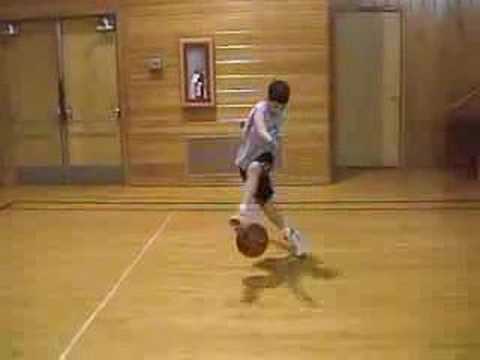
CONMAN STREETBALL, FREESTYLE, TRICKSHOT MIX
YouTube · Tom "Conman" Connors
Pages
On this page
Sport on Earth › Sports
Sport on Earth · Sport
Ball-handling tricks set to rhythm and choreography.
Every embed below was verified playable before listing — the network’s standing rule.
YouTube · Tom "Conman" Connors
YouTube · Rathgeber Films
Pages
On this page
Playable on the Sport on Earth Games page.
Playable on the Sport on Earth Games page.
Playable on the Sport on Earth Games page.
Playable on the Sport on Earth Games page.
Playable on the Sport on Earth Games page.
Playable on the Sport on Earth Games page.
Playable on the Sport on Earth Games page.
Playable on the Sport on Earth Games page.
Playable on the Sport on Earth Games page.
WebXR game, embedded on the Sport on Earth Games page, with a playable non-VR preview.
WebXR game, embedded on the Sport on Earth Games page, with a playable non-VR preview.
WebXR game, embedded on the Sport on Earth Games page, with a playable non-VR preview.
Real pinball on a table themed for this sport — the game carries a Basketball theme.
A new set of questions every day, across every sport this site covers.
Real-athlete Top Sport on Earth decks built from the site’s verified board data.
The Possession Lab — a possession-by-possession engine with defences and fatigue, playable on the Games page.
The Hoops Lab widgets — the Games page's basketball lab cards (matchups, comparisons, picks explorer).
Physics Arena — the general biomechanics & physics teaching sandbox, shared by every sport.
Calendar data not yet carried for Freestyle Basketball — this site does not yet hold schedule data for it, so no dates are shown rather than invented.
Which section of this page should we expand first?
Votes are counted on the Sport on Earth server and the totals shown are every reader’s votes; your own choice is remembered in this browser.
Sport on Earth does not yet hold verified dated events for Freestyle Basketball, and its carried record does not state the season's timing in words — so no calendar is shown rather than an invented one. What the site does carry for this sport is on this page: its verified record, its rules record and its history.
A basketball shot is projectile motion with a forgiving twist: the rim (about 45 cm across) is nearly twice the ball’s diameter, so a shot arriving on a steep arc — entering at 45° or more — has a real margin for error, while a flat shot must be nearly perfect. The calculator below runs the core flight model (no air resistance, no spin, flat ground) — try the release speeds and angles and watch the entry conditions change.
Backspin is the shooter’s friend: it softens the bounce off rim and board (spin converts to friction at contact) and, through the Magnus effect, slightly steadies the flight. This sport also carries this site’s dedicated basketball labs — the Possession Lab and Hoops Lab linked from the Games page.
From this sport's own record: Ball-handling tricks set to rhythm and choreography. The lab above treats the physics of the sport's family; no measurement specific to this sport is printed, because the site's verified record for it carries none — parameters are never invented to fill a lab.
Model: R = v²·sin(2θ)/g, flight time T = 2·v·sin(θ)/g, apex H = (v·sin θ)²/(2g), g = 9.81 m/s². Assumptions: no air resistance, no spin, flat ground, launch and landing at the same height. Real balls and shuttles fly shorter and curve — drag and spin are exactly what this model leaves out, so treat the output as the gravity-only ceiling, not a prediction.
This sport also carries dedicated labs on the Games page: the Possession Lab and the Hoops Lab widgets.
The general teaching sandbox for every sport is the Physics Arena on the Games page — the same printed models, with a defender added.
The hands-on lab for Freestyle Basketball, built entirely from the record this site carries for it — its documented rolls, its halls, its venues, its calendar and its census family. Every figure below is computed from that carried record at build time; nothing is estimated and nothing is pulled live. The companion Physics Lab on this page works the family's physics; this lab works the record.
Freestyle Basketball carries 1 hall in the site’s record — Naismith Memorial Basketball Hall of Fame — with 363 inductees carried, 0 of them with a full verified profile on this site.
Basis: the Hall of Fame record carried on this site — the same rolls and verified profiles the Hall of Fame books print. Inductees a hall lists but the site has not verified stay list-only, exactly as the books state.
Computed from the site census: the Court games family holds 10 entries on this site. Across the family, the carried record includes documented rolls for 1 of them, Hall of Fame data for 3, venue sets for 1, and dated calendars for 2.
Every other entry in the family: 3x3 Basketball · Aero-Ball · Basketball · BIG3 · Professional Dunking · Regball · SlamBall · Unrivaled · Wheelchair Basketball
Basis: the Sport on Earth census itself — the same 460-entry register the census page prints.
The desk has not verified a sponsorship record for Freestyle Basketball from published sources, so none is printed. Sponsorship history is added only when a real published source supports it — sponsor by sponsor, deal by deal. Current sponsorship deals across sport are tracked on the Money Desk sponsorship page.
How this game is played, gathered from the record Sport on Earth already carries for Freestyle Basketball, with the positions taken from the sourced chart cited in that section.
Sport on Earth carries no separate rules list for Freestyle Basketball; the governing framework its record carries is this:
Freestyle basketball is a judged performance discipline (its flagship is Red Bull’s one-on-one street format and FIBA-linked freestyle showcases): competitors are scored on difficulty, originality, execution and flow by panels. As a judged showcase code there is no match-play law history to record; formats are set per event by the organiser. No major documented rule change is carried for freestyle basketball.
Freestyle Basketball has no fixed positions — its format designates no positional roles.
Format as carried in hidden_files/batchB-nov1/batchb_data.json: "Ball-handling tricks set to rhythm and choreography." The format carries no designated positional roles. (Source: Sport on Earth carried sport record.)
Its Playbook — its opening entries, the basic plays, are:
The full book carries 8 entries — in this page’s Playbook / Tactics & Strategy section, and at the Playbooks hub.
Sport on Earth's own analytics: every figure in this panel is computed at build time from the record this site itself carries, with the source named. No outside data is used, and no betting figures of any kind.
Census arithmetic: Freestyle Basketball sits in the basketball family family — 9 census sports, of which 1 carry a qualifying champions roll in the site's record.
The carried record for Freestyle Basketball is too thin for computed panels: no champions roll, hall-of-fame list or venue record is carried for it. This panel therefore prints the census arithmetic only — the honest answer rather than a manufactured figure.
How the laws of Freestyle Basketball are governed today — the documented record, stated plainly.
Freestyle basketball is a judged performance discipline (its flagship is Red Bull’s one-on-one street format and FIBA-linked freestyle showcases): competitors are scored on difficulty, originality, execution and flow by panels. As a judged showcase code there is no match-play law history to record; formats are set per event by the organiser. No major documented rule change is carried for freestyle basketball.
That framework summary is the whole documented record Sport on Earth can verify for this sport — no major dated rule changes are carried, rather than invent any.
Source basis: The governing body’s published framework as summarised in this section (see the framework text).
Sport on Earth carries no results feed for Freestyle Basketball: no scores or fixtures are published here, rather than inventing them. The sport's documented record is in its history page and the History & Records section of this page.
The historical record for Freestyle Basketball — past standings, champions, title history and all-time leaders, as deep as verifiable public records go.
Season-by-season standings, historical player statistics and title rolls are not carried for Freestyle Basketball: no public archive publishes them in a form Sport on Earth can verify, and this site does not invent history. What is carried for this sport is its verified record, its rule-change history and its league history — elsewhere on this page.
The review and analysis videos from Freestyle Basketball’s verified video pool — every embed below was identity-checked and probed playable before listing, the site’s standing rule. Nothing here is a show Sport on Earth produces; these are the review, post-game and breakdown videos the pool already carries for this sport.
No verified review-show video is carried for this sport yet.
The filter sorts the Review Room embeds and the picture cards above by the keywords in their carried titles (review / analysis / recap and similar, or highlights). It runs entirely in your browser — nothing is sent anywhere.
Freestyle basketball is honoured through basketball’s own hall — the Naismith Memorial Basketball Hall of Fame, carried in full on the Basketball page and summarised here.
Springfield, Massachusetts, United States
363 inductees. The full list is carried on the Basketball page.
Source basis: Wikipedia — "List of members of the Naismith Memorial Basketball Hall of Fame" (accessed Nov 1, 2026); parsed mechanically from the article’s published table; and Wikipedia — "List of players in the Naismith Memorial Basketball Hall of Fame" (accessed Nov 1, 2026); parsed mechanically from the article’s published table. Material from Wikipedia is used under CC BY-SA 4.0..
Also recognised: Naismith Memorial Basketball Hall of Fame (Springfield, Massachusetts, United States). Its published inductee list is not carried here in parsed form — the hall's own published list is the complete record.
Ball-handling tricks set to rhythm and choreography.
In the wider basket family of sports — the shot is a parabola with a target the size of a beach ball, the game turns on: Spacing: offences spread the floor so one defender cannot guard two players, opening driving lanes and kick-out passes for three-pointers.; Shot selection: layups, free throws and corner threes are the most efficient shots; long two-pointers are the least — modern offences are built around that maths.; Transition first: the easiest baskets come before the defence sets, so teams push pace off rebounds and make opponents pay for slow floor balance.; Matchup hunting: offences use screens to force a weaker or slower defender onto their best scorer.; Defence starts at the shot: where a shot is taken from decides where the rebound falls and how the defence is set — shot selection is defensive play too.; Fouls are a currency: teams spend them deliberately — to stop layups, break rhythm or trade free throws for time — and budget them across a game..
Sport on Earth carries no team or player directory for this sport, because no structured public feed publishes a verifiable one. What is carried is the documented record on this page — history, rules, honours and the calendar — each with its source named.
The Freestyle Basketball record book, as this site carries it: its honours run through the Naismith Memorial Basketball Hall of Fame, carried in full on the parent sport's page. Every figure above is computed from the lists and dossiers printed on this page, each with its source basis named beside it.
More from the desk: the expert guide to Freestyle Basketball · the site-wide Writing Desk · every sport on Earth.
📖 The Freestyle Basketball Playbook — every entry, plus the arcade strategy, at the foot of this page.
An arcade take on Freestyle Basketball: set the angle, set the power, and land the ball in the hoop. Five attempts; the closer to the middle, the more it scores. Arcade distances and a training arc — a game in the spirit of the sport, not a simulation of it.
This page’s own game is the arcade above. Everything else on the site that fits this sport is listed here — and anything borrowed from a similar sport is labelled as that sport’s game, never passed off as this one’s.
The tools on this site that honestly run on Freestyle Basketball — its own record first, then the site-wide general tools that apply. The full Freestyle Basketball toolkit prints the ones that do not apply, with the data reason why.
No bench tool yet computes from Freestyle Basketball’s own carried record — the general tools below are the ones that honestly apply.
Site-wide tools, not built for Freestyle Basketball alone: Tournament Planner · My Notebook · The Labs · Design Studio · The Makers’ Bench · Match Day Desk · Play It Near You · Myth-Check Desk · Governing Bodies · Heat & Safety Calculator (WBGT) · Hydration Calculator · Training-Load Planner · Game Clock & Timer · Custom Rulebook Generator · Scout Notes Parser.
The Playbook · set plays, systems & situations
the variant codes’ own books — SlamBall’s trampolines, the BIG3’s four-point circles and half-court 3-on-3, Unrivaled’s compressed professional 3-on-3, and freestyle basketball’s scored artistry, each described as its own game, not as basketball with decorations.
8 entries, plus the arcade strategy below. All wording is original coaching-vocabulary prose; nothing is copied from any proprietary playbook.
SlamBall’s scoring runs through the trampolines set in the court: the handler builds speed, hits the launch bed in stride and attacks the rim in the air, where the stopper — the defence’s goalie with pads — meets him under full-contact rules.
When it’s used: The slam zones turn the drive into an aerial collision sport; timing the launch is the core skill.
The sequence
Defence is anchored by the stopper at the rim and the handlers’ checks on the trampoline approaches: the defence concedes the floor game to own the air lanes.
When it’s used: SlamBall defence is air-traffic control: the stopper’s crease is the kingdom.
The sequence
The BIG3’s four-point circles, 30 feet out, pay four for a shot with any part of the shooter’s body touching the circle — the half-court 3-on-3 game’s signature gamble, defended like a second arc.
When it’s used: A four-point shot reprices every late-game decision in the BIG3’s book.
The sequence
The BIG3 lets a coach challenge a foul call by sending the players to settle it one-on-one — ’Bring the Fire’ — the only code in basketball where a disputed call becomes a duel with the possession at stake.
When it’s used: A rule that creates a play: the one-on-one is a rehearsed speciality, not a brawl.
The sequence
Unrivaled plays 3-on-3 on a compressed full court (72 by 49.2 feet) with a short clock and a target-score fourth quarter: end-to-end 3-on-3 at professional speed, where the two-man game is played running, not walking.
When it’s used: The league’s format rewards the transition two-man game above all half-court craft.
The sequence
Freestyle basketball is judged performance: routines are choreographed combinations of dribble tricks, spins and ball manipulation scored on difficulty, execution and originality — the ’play’ is the combination itself, built like a gymnastics routine.
When it’s used: The honest entry in this book: freestyle’s plays are routines, and they are built as routines are.
The sequence
Every 3-on-3 code converges on the same endgame: the two-man game at the top, the arc’s double value, and a last play drawn for the shooter the whole game has been hiding.
When it’s used: Half-court basketball’s universal closing argument, whatever the league’s decorations.
The sequence
Both codes allow defensive contact the parent game forbids — the BIG3’s hand-checking era rules, SlamBall’s full-contact stops — so their books teach playing through contact as a core skill, not an edge case.
When it’s used: Contact is written into these rulebooks; the craft is absorbing it productively.
The sequence
The arcade cell · strategy
This page’s arcade cell: launch the ball at the hoop from beyond the arc · 34 m (arcade scale). Angle, power, launch — five attempts, and the cell keeps your best.
When it’s used: On this page, in the Play section — and its strategy is the same craft as the book above it, miniaturised.
The sequence
Part of the Sport on Earth Playbooks — a book for every sport and every game on the site.
Behind the Play · From the carried record
Ball-handling tricks set to rhythm and choreography.
Behind the Play takes the decisive actions of Freestyle Basketball apart: how the scoring play is built, which patterns the players are really running, and which rules remade the play into its modern shape.
Source basis: this sport’s carried record on this page (verified record, rule-changes dossier, history datasets) and the play patterns of its family as written in the site’s guides. Nothing here is invented.