Sport on Earth › Sports
Sport on Earth · Sport
Chess
FIDE-governed mind sport with a world championship.
League histories
- FIDE — founded 1924. Chess’s world governing body, running the World Championship, Olympiads and official ratings.
Leagues
FIDE Desk
FIDE
30 team views · 19 pieces · 12 videos
News Desk
News stories from around the world, gathered and sourced by the Sport on Earth desk.
No news items filed for this sport yet — the News Desk adds them as the world reports them.
Columns & Stories
Written by Sport on Earth’s journalists — columns, features and interviews from the desk.
FIDE Desk · Column
Sixteen Names, and the Seventeenth Is Already Playing
Chess keeps the shortest honours list in sport, and this site carries it whole: 16 undisputed World Champions from Wilhelm Steinitz, champion from 1886, to Gukesh Dommaraju, champion from 2024. Emanuel Lasker’s reign, 1894 to 1921, lasted 27 years. Alexander Alekhine held the title in two separate reigns; so, on the roll’s own lines, did Garry Kasparov. Magnus Carlsen’s decade, 2013 to 2023, is a single line. A table where each row is an era does something no season-by-season roll can: it makes succession itself the story, and it makes the present champion’s line — the sixteenth — read like a cliff edge. Whoever the seventeenth name is, the roll has been waiting at 16 for over a century’s worth of candidates.
November 1, 2026
FIDE Desk · Column
In Defense of the Unbreakable: World Chess Champions
The position of this column: Emanuel Lasker’s place atop the world chess champions table is the most secure record in its sport, and the table itself — five names, counted from the record this site carries — is the proof. Emanuel Lasker: 27 years as champion. The nearest challenger, Alexander Alekhine, is 10 behind. Gaps like that are not closed by a good season; they are closed by a great career, and great careers are rationed by time.
November 2, 2026
FIDE Desk · Column
The Roll Is the Argument: What Women’s World Chess Championship Really Tells Us
Here is the column’s position, stated plainly: the women’s world chess championship roll — 45 editions, 1927 to 2027, counted from the record this site carries — is a better historian than any panel of experts. Panels argue about eras. The roll just keeps score, and its score says Vera Menchik won 8 of those editions. 17.8% of a competition’s entire history is not a hot streak; it is a structural fact.
November 2, 2026
FIDE Desk · Column
Who Gets In, Who Waits: The World Chess Hall of Fame & U.S. Chess Hall of Fame Standard
The World Chess Hall of Fame & U.S. Chess Hall of Fame roll this site carries holds 129 names, inducted from 1986 to 2025. Every hall of fame is really two institutions: the one that inducts, and the one that makes the inducted argue about the standard. This column is about the second one.
November 2, 2026
FIDE Desk · Column
Institutions Outlive Seasons: A Column on the FIDE
A column about a league should begin where the league began: International Chess Federation (FIDE) founded in Paris on 20 July 1924; it has controlled the World Championship since the 1948 tournament, after the title’s 1886 origin.. The FIDE — Chess’s world governing body, running the World Championship, Olympiads and official ratings. — has since been many things, but it has never stopped being that founding decision, renewed every season.
November 2, 2026
FIDE Desk · Column
The FIDE Notebook: A League in Its Own Image
Every league desk keeps a notebook that is not really about results. This is ours for the FIDE. The census record this site carries describes its sport in one line — FIDE-governed mind sport with a world championship. — and files it under Mind & digital, in the mind family of sports. One line is a discipline: before the desk argues about a league, it has to say what the league is.
November 2, 2026
FIDE Desk · Column
What the FIDE Record Asks of Its Next Season
A new season of the FIDE makes three quiet demands, and the record — not the hype — names them. It asks about the leader table’s slow arithmetic: Emanuel Lasker at 27 years as champion, a total no single season will move; the hall’s next class: the World Chess Hall of Fame & U.S. Chess Hall of Fame roll stands at 129 names, its most recent from 2025; the institution’s next chapter: a league founded in 1924 that has already survived every previous version of this argument.
November 2, 2026
FIDE Desk · Feature
Emanuel Lasker and the Number That Will Not Move: World Chess Champions
The world chess champions table this site carries is five names long, and the first name is the story: Emanuel Lasker, with 27 years as champion. Second is Alexander Alekhine at 17 — a gap of 10 (58.8% clear of the field).
November 2, 2026
FIDE Desk · Feature
The Long Roll: Women’s World Chess Championship and the Weight of Vera Menchik
Count the women’s world chess championship roll the way this site carries it — 45 editions, 1927 to 2027 — and one name does the heavy lifting: Vera Menchik, champions 8 times. That is 17.8% of the roll’s whole history, a share no argument about eras can explain away.
November 2, 2026
FIDE Desk · Feature
The First Class: World Chess Hall of Fame & U.S. Chess Hall of Fame and the 1986 Inductees
Every hall of fame is founded twice: once when the building opens, and once when the first class walks in. For the World Chess Hall of Fame & U.S. Chess Hall of Fame in St. Louis, Missouri, United States, that moment came in 1986, when 8 names were inducted together: Reuben Fine, Robert Fischer, Isaac Kashdan, George Koltanowski, Frank Marshall, Paul Morphy. The roll this site carries now runs to 129 inductees — and it still begins with them.
November 2, 2026
FIDE Desk · Feature
The Rematch: Nona Gaprindashvili vs Alla Kushnir, the Final the Women’s World Chess Championship Keeps Restaging
Some finals are fixtures. On the women’s world chess championship roll this site carries — 45 editions, 1927 to 2027 — the pairing of Nona Gaprindashvili and Alla Kushnir has decided the title 3 times: 1965, 1969, 1972. No other pairing on the roll recurs as often.
November 10, 2026
FIDE Desk · Feature
From the Rule Book: Playoff Tiebreaks Decide the World Championship (Chess)
The rule-change dossiers this site carries for Chess run to 2 entries. The one filed as “Playoff Tiebreaks Decide the World Championship” is dated formalised 2006 reunification match; decisive 2016/2018/2023 and credited to FIDE World Championship — and it is the rare rule change whose before and after describe two different sports.
November 18, 2026
FIDE Desk · Interview — the Sport on Earth desk, in its own words
Five Questions With the FIDE Desk
The Sport on Earth FIDE desk takes questions on the ratings, the Olympiad and one number for everything. The desk answers in its own words — no player is quoted, and nothing here is presented as anyone else’s statement.
FIDE Desk · Interview — the Sport on Earth desk, in its own words
Five Questions With the FIDE Desk: The World Chess Champions Table
The Sport on Earth FIDE Desk takes questions on the world chess champions table. The desk answers in its own words — no player, coach or official is quoted, and nothing here is presented as anyone else’s statement. The table counts the five greatest career totals in years as champion that the record carries.
FIDE Desk · Interview — the Sport on Earth desk, in its own words
Five Questions With the FIDE Desk: The Women’s World Chess Championship Roll
The Sport on Earth FIDE Desk takes questions on the women’s world chess championship roll. The desk answers in its own words — no player, coach or official is quoted, and nothing here is presented as anyone else’s statement. 45 editions, 1927–2027; most titles Vera Menchik (8); 18 distinct winners.
FIDE Desk · Interview — the Sport on Earth desk, in its own words
Five Questions With the FIDE Desk: Inside the World Chess Hall of Fame & U.S. Chess Hall of Fame
The Sport on Earth FIDE Desk takes questions on the World Chess Hall of Fame & U.S. Chess Hall of Fame. The desk answers in its own words — no player, coach or official is quoted, and nothing here is presented as anyone else’s statement. Every figure below is counted from the hall’s own roll as this site carries it.
FIDE Desk · Interview — the Sport on Earth desk, in its own words
Five Questions With the FIDE Desk: The FIDE File
The Sport on Earth FIDE Desk takes questions on the FIDE file. The desk answers in its own words — no player, coach or official is quoted, and nothing here is presented as anyone else’s statement. The answers draw on the league history this site carries.
FIDE Desk · Interview — the Sport on Earth desk, in its own words
Five Questions With the FIDE Desk: The FIDE Briefing
The Sport on Earth FIDE Desk takes questions on the FIDE. The desk answers in its own words — no player, coach or official is quoted, and nothing here is presented as anyone else’s statement. A standing briefing, refreshed from the files this site carries.
FIDE Desk · Interview — the Sport on Earth desk, in its own words
Five Questions With the FIDE Desk: FIDE by the Numbers
The Sport on Earth FIDE Desk takes questions on the FIDE in numbers. The desk answers in its own words — no player, coach or official is quoted, and nothing here is presented as anyone else’s statement. Every answer below is a count taken from the site’s own files.
Writing Desk
Everything the desk has published for Chess, organised by section.
Stories
- Emanuel Lasker and the Number That Will Not Move: World Chess Champions FIDE Desk · November 2, 2026
- The Long Roll: Women’s World Chess Championship and the Weight of Vera Menchik FIDE Desk · November 2, 2026
- The First Class: World Chess Hall of Fame & U.S. Chess Hall of Fame and the 1986 Inductees FIDE Desk · November 2, 2026
- The Rematch: Nona Gaprindashvili vs Alla Kushnir, the Final the Women’s World Chess Championship Keeps Restaging FIDE Desk · November 10, 2026
- From the Rule Book: Playoff Tiebreaks Decide the World Championship (Chess) FIDE Desk · November 18, 2026
All stories across every sport →
Columns
- Sixteen Names, and the Seventeenth Is Already Playing FIDE Desk · November 1, 2026
- In Defense of the Unbreakable: World Chess Champions FIDE Desk · November 2, 2026
- The Roll Is the Argument: What Women’s World Chess Championship Really Tells Us FIDE Desk · November 2, 2026
- Who Gets In, Who Waits: The World Chess Hall of Fame & U.S. Chess Hall of Fame Standard FIDE Desk · November 2, 2026
- Institutions Outlive Seasons: A Column on the FIDE FIDE Desk · November 2, 2026
- The FIDE Notebook: A League in Its Own Image FIDE Desk · November 2, 2026
- What the FIDE Record Asks of Its Next Season FIDE Desk · November 2, 2026
All columns across every sport →
Interviews
- Five Questions With the FIDE Desk FIDE Desk
- Five Questions With the FIDE Desk: The World Chess Champions Table FIDE Desk
- Five Questions With the FIDE Desk: The Women’s World Chess Championship Roll FIDE Desk
- Five Questions With the FIDE Desk: Inside the World Chess Hall of Fame & U.S. Chess Hall of Fame FIDE Desk
- Five Questions With the FIDE Desk: The FIDE File FIDE Desk
- Five Questions With the FIDE Desk: The FIDE Briefing FIDE Desk
- Five Questions With the FIDE Desk: FIDE by the Numbers FIDE Desk
Shows
Sport on Earth’s daily and weekly video shows for Chess — every episode, newest first.
Chess Weekly Weekly show
Episode 1 — Gukesh holds Sindarov to a 38-move Berlin draw as the 2026 World Championship opens in Geneva
Ep. 1 — the week of Wednesday, November 25, 2026 · 1:39
Videos
Every embed below was verified playable before listing — the network’s standing rule.
Magnus Carlsen
When arch rivals meet- Magnus Carlsen vs Hikaru Nakamura
#1 on the board · Norway
Fabiano Caruana
Put This Game in Every Book || Andy Woodward vs Fabiano Caruana || U.S. Chess Championships 2026
#3 on the board · United States
Vincent Keymer
Praggnanandhaa’s stunning victory against Vincent Keymer in just 17 moves
#4 on the board · Germany
Wesley So
The Final Match! || Wesley So vs Fabiano Caruana || U.S. Chess Championship 2026
#5 on the board · United States
Praggnanandhaa Rameshbabu
GM Praggnanandhaa Rameshbabu vs GM Daniil Dubov
#6 on the board · India
View all videos (15)Show fewer videos
Anish Giri
ROASTING ANISH GIRI - Fun Highlights
#7 on the board · Netherlands
Nodirbek Abdusattorov
The real strength of Nodirbek Abdusattorov | Nodirbek vs Oliwia Kiolbasa | Qatar Masters 2024
#8 on the board · Uzbekistan
Arjun Erigaisi
Levy doesn’t realize he’s playing against Arjun Erigaisi
#9 on the board · India
Highlights from Chess - Johan de Meij
YouTube · Jaime Oliveira
Hello Magnus, My Old Friend! || Vincent vs Fabi || Total Chess World Championship 2026
YouTube · agadmator’s Chess Channel
Yet another Magnus Carlsen vs Arjun Erigaisi classic | Total Chess Blitz 2026
YouTube · ChessBase India
At 75, Anatoly Karpov Reveals The 5 Greatest Chess Players He Ever Saw
YouTube · Beyond the Board
Some of Chess Best Bars SUBTITLES | SMACK URL | Gates Of the Garden | Masked Inasense
YouTube · Masked Inasense 2
The Best Chess Clips of 2025
YouTube · ChessMentality
chess, but it becomes increasingly more funny
YouTube · chezzard
Everything for Chess
Pages
On this page
- Visit the Chess Hub →
- League histories
- Leagues
- News Desk
- Columns & Stories
- Writing Desk
- Videos
- Reader comments
- Games, Lab & Calendar
- Story extras
- Season Calendar
- The Physics Lab
- The Record Lab
- Sponsorship History
- How to Play Chess
- Mechanics & Tips — Chess
- Analytics — Chess
- Rule Changes & Named Rules
- Results & Fixtures
- History & Records
- Review Room — in-game and post-game review & analysis
- Chess in pictures & numbers
- Hall of Fame
- The Sport in Depth
- Stories from the Record
- On screen
- Tools for Chess
- Chess — Tactics & Strategy
- Behind the Play
Games, Lab & Calendar
Games for this sport
No game on this site is made specifically for Chess yet. The games below are the site's all-sport games, which honestly cover every sport — nothing from another sport has been dressed up as this sport's game.
Daily Trivia
A new set of questions every day, across every sport this site covers.
Top Sport on Earth
Real-athlete Top Sport on Earth decks built from the site’s verified board data.
The Lab
Chess's lab is the Physics Lab section on this page — the applied physics of its sport family, with a computed interactive where one honestly fits.
Physics Arena — the general biomechanics & physics teaching sandbox, shared by every sport.
The homepage sport explorer also carries a general Lab tab of small interactive experiments.
Season calendar
Calendar data not yet carried for Chess — this site does not yet hold schedule data for it, so no dates are shown rather than invented.
Story extras
Fan poll
Which desk story should we follow up?
Votes are counted on the Sport on Earth server and the totals shown are every reader’s votes; your own choice is remembered in this browser.
Key numbers — Emanuel Lasker and the Number That Will Not Move: World Chess Champions
Bars use only the metrics in the desk's summary data whose values are purely numeric; labels and values are shown verbatim.
How this story developed
Dated desk pieces for Chess, newest first, dates exactly as carried in the desk data.
- November 18, 2026 — From the Rule Book: Playoff Tiebreaks Decide the World Championship (Chess) (Chess)
- November 10, 2026 — The Rematch: Nona Gaprindashvili vs Alla Kushnir, the Final the Women’s World Chess Championship Keeps Restaging (Chess)
- November 2, 2026 — Emanuel Lasker and the Number That Will Not Move: World Chess Champions (Chess)
- November 2, 2026 — The Long Roll: Women’s World Chess Championship and the Weight of Vera Menchik (Chess)
- November 2, 2026 — The First Class: World Chess Hall of Fame & U.S. Chess Hall of Fame and the 1986 Inductees (Chess)
- November 1, 2026 — Sixteen Names, and the Seventeenth Is Already Playing (Chess)
Season Calendar
Sport on Earth does not yet hold verified dated events for Chess, and its carried record does not state the season's timing in words — so no calendar is shown rather than an invented one. What the site does carry for this sport is on this page: its verified record, its rules record and its history.
The Physics Lab
The physics is information and time
Mind sports have no projectile to model — honestly, a calculator would be decoration. Their measurable physical quantities are human: reaction times of roughly 150–250 milliseconds set the floor for esports actions; sustained calculation burns real metabolic energy (elite chess players’ heart rates and stress hormones during long games are documented in the sports-science literature); and the clock converts thinking itself into a resource with a hard physical limit.
The applicable science is information theory and decision science: a position’s complexity can be counted (legal moves, game-tree size), engines measure evaluation in centipawns (hundredths of a pawn), and time trouble is simply the point where required calculation exceeds available seconds. Sport on Earth’s lab for this family is therefore an explainer, with the honest note that no honest calculator fits.
From this sport's own record: FIDE-governed mind sport with a world championship. The lab above treats the physics of the sport's family; no measurement specific to this sport is printed, because the site's verified record for it carries none — parameters are never invented to fill a lab.
No calculator is offered for this sport — honestly, none fits without inventing parameters. The site's general Physics Arena remains the hands-on sandbox, with every formula printed.
The general teaching sandbox for every sport is the Physics Arena on the Games page — the same printed models, with a defender added.
The Record Lab
The hands-on lab for Chess, built entirely from the record this site carries for it — its documented rolls, its halls, its venues, its calendar and its census family. Every figure below is computed from that carried record at build time; nothing is estimated and nothing is pulled live. The companion Physics Lab on this page works the family's physics; this lab works the record.
Champions explorer — World Chess Champions
Computed from the roll itself: 16 editions carried (span not dated in the roll). Most titles in the carried roll:
- 1886–1894 — 1 title
- 1894–1921 — 1 title
- 1921–1927 — 1 title
- 1927–1935 — 1 title
- 1935–1937 — 1 title
Basis: the documented dataset “World Chess Champions” carried on this site (Sport on Earth’s documented datasets). Counts are computed from the carried rows only — editions the roll does not carry are not estimated.
Hall of Fame explorer
Chess carries 1 hall in the site’s record — World Chess Hall of Fame & U.S. Chess Hall of Fame — with 131 inductees carried, 121 of them with a full verified profile on this site.
Inductions by decade (computed from the carried induction years):
1980s13
1990s16
2000s27
2010s41
2020s34
Basis: the Hall of Fame record carried on this site — the same rolls and verified profiles the Hall of Fame books print. Inductees a hall lists but the site has not verified stay list-only, exactly as the books state.
The family lab — Mind sports
Computed from the site census: the Mind sports family holds 23 entries on this site. Across the family, the carried record includes documented rolls for 1 of them, Hall of Fame data for 2, venue sets for 1, and dated calendars for 0.
Every other entry in the family: Backgammon · Bashi · Bridge · Crocker · Dominoes · Draughts · Esports · Fantasy Sports · Go · Janggi · Jeu de Main · Lexicon & Coordinate Quizzes · Mahjong · Oware · Pachisi / Ludo · Pärk · RoboCup · Scrabble · Shogi · Slahal · Subbuteo · Xiangqi
Basis: the Sport on Earth census itself — the same 460-entry register the census page prints.
Sponsorship History
The desk has not verified a sponsorship record for Chess from published sources, so none is printed. Sponsorship history is added only when a real published source supports it — sponsor by sponsor, deal by deal. Current sponsorship deals across sport are tracked on the Money Desk sponsorship page.
How to Play Chess
How this game is played, gathered from the record Sport on Earth already carries for Chess, with the positions taken from the sourced chart cited in that section.
Core rules
Chess’s Laws (FIDE) change with glacier slowness; its modern rule story is fought instead over tournament regulations — how draws may be offered, and how champions survive tiebreaks.
The current rules, as the site's rule-change dossier records them:
- The Sofia Rules (Draw-Offer Restrictions) (elite tournament regulation, 2005 (Sofia); spread thereafter): The 2005 Sofia super-tournament banned draw offers entirely: games could end drawn only by the Laws’ objective routes (stalemate, threefold repetition, the 50-move rule, dead position, or arbiter ruling). Sofia-style restrictions — commonly ’no agreed draws before move 30 or 40’ — spread across elite chess and into FIDE events.
- Playoff Tiebreaks Decide the World Championship (FIDE World Championship, formalised 2006 reunification match; decisive 2016/2018/2023): The modern cycle abolishes draw odds: level matches go to rapid, then blitz, then (in recent formats) an Armageddon-style final game, all on a rest-day playoff. The system decided the title in 2016 (Carlsen beat Karjakin in rapid), 2018 (Carlsen beat Caruana 3–0 in rapid after twelve straight classical draws — and Carlsen had controversially offered a draw in a better position in game 12, knowing his rapid edge) and 2023 (Ding beat Nepomniachtchi in rapid).
The full dossier — every dated change and named rule, with its source basis — is in this page’s Rule Changes & Named Rules section.
Positions & basic plays
Chess has no fixed positions — its format designates no positional roles.
Format as carried in hidden_files/batchB-nov1/batchb_data.json: "FIDE-governed mind sport with a world championship." The format carries no designated positional roles. (Source: Sport on Earth carried sport record.)
Its Tactics & Strategy book — its opening entries, the basic plays, are:
- The Italian Game (Giuoco Piano) — The ’quiet game’: bishop to c4, pawns to c3 and d4 in good time, building a broad centre behind which every piece develops — the oldest recorded opening plan in chess, still the teaching model of sound development. When it’s used: For players who want a classical centre and harmonious development rather than a street fight.
- The Ruy Lopez (Spanish Game) — Bishop to b5 pressures the knight that defends the e5 pawn: the opening of world championships for 150 years, a slow squeeze in which White’s whole plan is to make Black’s centre a lifelong tenant, never an owner. When it’s used: The tournament player’s main line against 1...e5 — depth over surprise.
- The Sicilian Defence — Black answers e4 with c5, fighting for the centre from the flank and unbalancing the game at once: the most successful and most analysed defence in chess, a family of systems (Najdorf, Dragon, Scheveningen) rather than one opening. When it’s used: For Black players who play for the win: the Sicilian trades symmetry for counterplay.
- The French Defence — Black builds a pawn chain with e6 and d5 and accepts a cramped game and a bad bishop in exchange for a centre that is nearly impossible to break — then undermines it with c5 and f6 until it cracks. When it’s used: For patient defenders: the French is a siege endured and then reversed.
The full book carries 12 entries — in this page’s Playbook / Tactics & Strategy section, and at the Playbooks hub.
Mechanics & Tips — Chess
This is a mind sport: it has no physical technique to break down. What follows is decision technique — the thinking procedure the game is actually played with — labelled as such, not dressed up as physical mechanics.
How the core actions of Chess are performed, and how to improve them — the layer between this page's How to Play section (the rules) and its training and physics sections.
Candidate moves and calculation
The calculation routine used by trained players has a strict order: generate first, calculate second. Before analysing any variation, the player lists candidate moves — scanning checks, captures and threats first (the forcing moves, whose outcomes are concrete because the opponent’s replies are limited), then quiet improving and prophylactic moves — and holds three to five candidates. Only then is each line calculated, forcing lines first, each followed to a position quiet enough to judge, and the final positions compared by evaluation: material, king safety, piece activity, pawn structure, weak squares. The method traces to Kotov’s Think Like a Grandmaster: write the candidates down in study, and never re-calculate a line already calculated — note its result and move on.
Key checkpoints
- Candidates listed BEFORE any variation is calculated
- Forcing moves (checks, captures, threats) scanned for BOTH sides
- Each calculated line ends at a position that can be evaluated, not mid-tactic
- A final blunder check runs before the move is played
Common faults
- Tunnel vision: calculating the first attractive move and never generating alternatives
- Calculating quiet positions as forcing lines and vice versa — misjudging which tool the position needs
- Stopping a line at the first capture without asking what the position looks like one move later
Practice drills
- Puzzle protocol: cover the solution, generate candidates aloud, calculate the most forcing line fully, THEN move — pattern-guessing does not count
- Weekly deep-calculation session: 3–4 complex positions from master games or your own, candidates written down, lines calculated to evaluation, compared with the game’s continuation
Evaluation and prophylactic thinking
Between calculations, positions are steered by evaluation habits: identify the worst-placed piece and improve it; ask what the opponent’s threat and plan are before choosing your own move (prophylaxis); improve the position in small increments when no tactic exists. This is the non-calculation half of decision technique — the discipline that decides which positions your calculation gets applied to.
Key checkpoints
- Name the opponent’s threat out loud before every move in training games
- Identify your worst piece and give it a plan
- After every opponent move, ask what changed before continuing your own plan
Common faults
- Drifting pieces — an inactive piece quietly becomes a spectator for ten moves
- Playing ’hope’ moves that assume the opponent misses the threat
- Exchanging into a worse structure because the exchange was available, not because it helped
Practice drills
- Annotate your own games without an engine first: write the threat you missed and the candidate you never generated — engines grade moves; the log grades the process
- Master-game replay lab: pause before each critical move, write candidates and evaluation, then compare with the game
Tips
- The most common calculation mistake is also the most fixable: picking a move without generating alternatives first.
- Calculate forcing lines first — they end sooner because the opponent’s options are limited, so they are the cheapest truth in the position.
- Strong players calculate more, not necessarily faster: depth comes from method, not raw speed.
- Speed puzzle-clicking builds pattern reflexes but not calculation; the technique only transfers when the full line is worked out before moving.
Mechanics sources consulted: Chess Archive — Mastering the Art of Calculation (candidate move method, CCT filter, structured training routines); School of Chess — 5 Calculation Techniques to Sharpen Your Chess Thinking.
Analytics — Chess
Sport on Earth's own analytics: every figure in this panel is computed at build time from the record this site itself carries, with the source named. No outside data is used, and no betting figures of any kind.
Champions-roll concentration
- Women’s World Chess Championship: 45 carried editions (1927–2027), 18 different champions; most successful Vera Menchik — 8 (17.8%); concentration HHI 0.0943, effective champions 10.60.
Computed from the site's documented champions datasets — the same rolls behind the Parity Tracker.
Hall of Fame record carried: 129 inductees across 1 hall(s); inductions span 1986–2025; the largest induction decade is the 2010s (41 inductees).
Source: the site's carried hall-of-fame record (historical-players.json).
Census arithmetic: Chess sits in the mind games family — 22 census sports, of which 1 carry a qualifying champions roll in the site's record.
Rule Changes & Named Rules
Chess’s Laws (FIDE) change with glacier slowness; its modern rule story is fought instead over tournament regulations — how draws may be offered, and how champions survive tiebreaks.
The Sofia Rules (Draw-Offer Restrictions)
Before: Players could agree a draw at any moment, and elite events were plagued by the 12-move handshake — ’grandmaster draws’ agreed effectively in advance, with sponsors and spectators watching a contest that never began.
The change: The 2005 Sofia super-tournament banned draw offers entirely: games could end drawn only by the Laws’ objective routes (stalemate, threefold repetition, the 50-move rule, dead position, or arbiter ruling). Sofia-style restrictions — commonly ’no agreed draws before move 30 or 40’ — spread across elite chess and into FIDE events.
Why it happened: Named for the Bulgarian tournament that pioneered them (and for organiser Silvio Danailov’s crusade against short draws), the rules answered a commercial crisis: chess’s best players were its worst advertisement when they shook hands at move 15. Purists objected that a draw is a legitimate result players own; Sofia reframed it as a product the audience owns.
In practice today: Agreed early draws have largely vanished from top events (replaced, critics note, by repetition-engineered draws that stay within the letter), and draw-offer bans are now standard in super-tournaments, with FIDE’s own events using move-threshold versions.
Playoff Tiebreaks Decide the World Championship
Before: Classical world title matches that ended level had historically gone to rematches, retained titles (’champion’s advantage’), or lotteries — Kramnik kept his title on a 2004 draw. The champion’s draw odds were part of the crown’s traditional value.
The change: The modern cycle abolishes draw odds: level matches go to rapid, then blitz, then (in recent formats) an Armageddon-style final game, all on a rest-day playoff. The system decided the title in 2016 (Carlsen beat Karjakin in rapid), 2018 (Carlsen beat Caruana 3–0 in rapid after twelve straight classical draws — and Carlsen had controversially offered a draw in a better position in game 12, knowing his rapid edge) and 2023 (Ding beat Nepomniachtchi in rapid).
Why it happened: The 2006 reunification settlement (Kramnik–Topalov) codified tiebreaks as the price of one championship; television and sponsor logic then made speed-chess playoffs permanent. Carlsen’s 2018 draw offer — declining to play for a win classically because the playoff format rewarded it — triggered the loudest format debate in chess history and Carlsen’s own eventual refusal (2022) to defend the title under the system.
In practice today: Speed tiebreaks are now how chess crowns champions: a spectacle success and a legitimacy argument that never closes, with the classical game’s primacy permanently diluted by the format that guarantees a winner.
Source basis: FIDE Laws of Chess and championship regulations; the 2005 Sofia tournament’s draw rule and its spread; FIDE world championship tiebreak history (2006–2023).
Results & Fixtures
Sport on Earth carries no results feed for Chess: no scores or fixtures are published here, rather than inventing them. The sport's documented record is in its history page and the History & Records section of this page.
History & Records
The historical record for Chess — past standings, champions, title history and all-time leaders, as deep as verifiable public records go.
World Chess Champions
| Champion | Years as champion |
|---|---|
| Wilhelm Steinitz | 1886–1894 |
| Emanuel Lasker | 1894–1921 |
| José Raúl Capablanca | 1921–1927 |
| Alexander Alekhine | 1927–1935 |
| Max Euwe | 1935–1937 |
| Alexander Alekhine | 1937–1946 |
| Mikhail Botvinnik | 1948–1957 |
| Bobby Fischer | 1972–1975 |
| Anatoly Karpov | 1975–1985 |
| Garry Kasparov | 1985–1993 |
| Garry Kasparov | 1993–2000 |
| Vladimir Kramnik | 2006–2007 |
| Viswanathan Anand | 2007–2013 |
| Magnus Carlsen | 2013–2023 |
| Ding Liren | 2023–2024 |
| Gukesh Dommaraju | 2024–present |
Source basis: Wikipedia — “World Chess Championship” (accessed Nov 1, 2026); parsed mechanically from the article’s published table. Material from Wikipedia is used under CC BY-SA 4.0..
Women’s World Chess Championship — 45 entries
| Year | World champion | Runner-up |
|---|---|---|
| 1927 | Vera Menchik | Katarina Beskow |
| 1930 | Vera Menchik | Paula Wolf-Kalmar |
| 1931 | Vera Menchik | Paula Wolf-Kalmar |
| 1933 | Vera Menchik | Edith Charlotte Price |
| 1935 | Vera Menchik | Regina Gerlecka |
| 1937 | Vera Menchik | Sonja Graf |
| 1937 | Vera Menchik | Clarice Benini |
| 1939 | Vera Menchik | Sonja Graf |
| 1950 | Lyudmila Rudenko | Olga Rubtsova |
| 1953 | Elisaveta Bykova | Lyudmila Rudenko |
| 1956 | Olga Rubtsova | Elisaveta Bykova |
| 1958 | Elisaveta Bykova | Olga Rubtsova |
| 1959 | Elisaveta Bykova | Kira Zvorykina |
| 1962 | Nona Gaprindashvili | Elisaveta Bykova |
| 1965 | Nona Gaprindashvili | Alla Kushnir |
| 1969 | Nona Gaprindashvili | Alla Kushnir |
| 1972 | Nona Gaprindashvili | Alla Kushnir |
| 1975 | Nona Gaprindashvili | Nana Alexandria |
| 1978 | Maia Chiburdanidze | Nona Gaprindashvili |
| 1981 | Maia Chiburdanidze | Nana Alexandria |
| 1984 | Maia Chiburdanidze | Irina Levitina |
| 1986 | Maia Chiburdanidze | Elena Akhmilovskaya |
| 1988 | Maia Chiburdanidze | Nana Ioseliani |
| 1991 | Xie Jun | Maia Chiburdanidze |
| 1993 | Xie Jun | Nana Ioseliani |
| 1996 | Susan Polgar | Xie Jun |
| 1999 | Xie Jun | Alisa Galliamova |
| 2000 | Xie Jun | Qin Kanying |
| 2001 | Zhu Chen | Alexandra Kosteniuk |
| 2004 | Antoaneta Stefanova | Ekaterina Kovalevskaya |
| 2006 | Xu Yuhua | Alisa Galliamova |
| 2008 | Alexandra Kosteniuk | Hou Yifan |
| 2010 | Hou Yifan | Ruan Lufei |
| 2011 | Hou Yifan | Koneru Humpy |
| 2012 | Anna Ushenina | Antoaneta Stefanova |
| 2013 | Hou Yifan | Anna Ushenina |
| 2015 | Mariya Muzychuk | Natalia Pogonina |
| 2016 | Hou Yifan | Mariya Muzychuk |
| 2017 | Tan Zhongyi | Anna Muzychuk |
| 2018 | Ju Wenjun | Tan Zhongyi |
| 2018 | Ju Wenjun | Kateryna Lagno |
| 2020 | Ju Wenjun | Aleksandra Goryachkina |
| 2023 | Ju Wenjun | Lei Tingjie |
| 2025 | Ju Wenjun | Tan Zhongyi |
| 2027 | Ju Wenjun vs. Vaishali Rameshbabu |
Source basis: Wikipedia — “Women’s World Chess Championship” (accessed Nov 1, 2026); parsed mechanically from the article’s published table. Material from Wikipedia is used under CC BY-SA 4.0..
Review Room — in-game and post-game review & analysis
The review and analysis videos from Chess’s verified video pool — every embed below was identity-checked and probed playable before listing, the site’s standing rule. Nothing here is a show Sport on Earth produces; these are the review, post-game and breakdown videos the pool already carries for this sport.
No verified review-show video is carried for this sport yet.
Chess in pictures & numbers
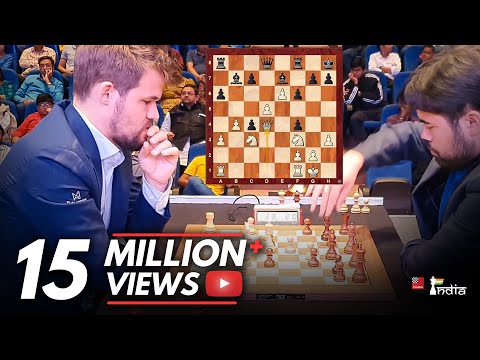
When arch rivals meet- Magnus Carlsen vs Hikaru Nakamura
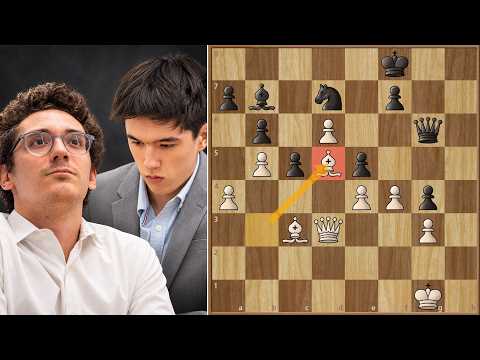
Put This Game in Every Book || Andy Woodward vs Fabiano Caruana || U.S. Chess Championships 2026
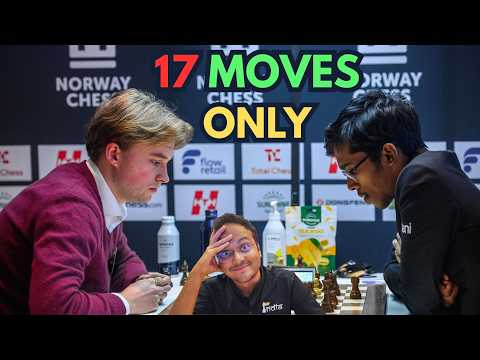
Praggnanandhaa’s stunning victory against Vincent Keymer in just 17 moves
Chart basis: counts from Sport on Earth’s own carried data files at build time — verified videos carried for this sport (the verified pool: sport-videos.json + the desk league pools), news items carried (news.json), and league pages carried (desk.json). No external or estimated figures.
The filter sorts the Review Room embeds and the picture cards above by the keywords in their carried titles (review / analysis / recap and similar, or highlights). It runs entirely in your browser — nothing is sent anywhere.
Hall of Fame
World Chess Hall of Fame & U.S. Chess Hall of Fame
St. Louis, Missouri, United States
131 inductees — every name on the hall's published list, grouped by class year.
All 131 inductees by class year
1986 — Reuben Fine (U.S. Chess Hall of Fame) · Robert Fischer (U.S. Chess Hall of Fame) · Isaac Kashdan (U.S. Chess Hall of Fame) · George Koltanowski (U.S. Chess Hall of Fame) · Frank Marshall (U.S. Chess Hall of Fame) · Paul Morphy (U.S. Chess Hall of Fame) · Harry Pillsbury (U.S. Chess Hall of Fame) · Sammy Reshevsky (U.S. Chess Hall of Fame)
1987 — Sam Loyd (U.S. Chess Hall of Fame) · Wilhelm Steinitz (U.S. Chess Hall of Fame)
1988 — Arpad Elo (U.S. Chess Hall of Fame) · Hermann Helms (U.S. Chess Hall of Fame)
1989 — Al Horowitz (U.S. Chess Hall of Fame)
1990 — Hans Berliner (U.S. Chess Hall of Fame)
1991 — John W. Collins (U.S. Chess Hall of Fame) · Arthur Dake (U.S. Chess Hall of Fame)
1992 — Arnold Denker (U.S. Chess Hall of Fame) · Gisela Gresser (U.S. Chess Hall of Fame) · George MacKenzie (U.S. Chess Hall of Fame)
1993 — Pal Benko (U.S. Chess Hall of Fame) · Victor Palciauskas (U.S. Chess Hall of Fame)
1994 — Arthur Bisguier (U.S. Chess Hall of Fame) · Robert Byrne (U.S. Chess Hall of Fame) · Larry Evans (U.S. Chess Hall of Fame)
1995 — Ed Edmondson Jr. (U.S. Chess Hall of Fame)
1996 — Fred Reinfeld (U.S. Chess Hall of Fame)
1997 — Kenneth Harkness (U.S. Chess Hall of Fame)
1998 — Milan Vukcevich (U.S. Chess Hall of Fame)
1999 — Benjamin Franklin (U.S. Chess Hall of Fame)
2000 — Edmar Mednis (U.S. Chess Hall of Fame)
2001 — Lubomir Kavalek (U.S. Chess Hall of Fame) · José Raúl Capablanca (World Chess Hall of Fame) · Emanuel Lasker (World Chess Hall of Fame)
2003 — Lev Alburt (U.S. Chess Hall of Fame) · Walter Browne (U.S. Chess Hall of Fame) · Donald Byrne (U.S. Chess Hall of Fame) · Mikhail Botvinnik (World Chess Hall of Fame) · Tigran Petrosian (World Chess Hall of Fame) · Vasily Smyslov (World Chess Hall of Fame) · Boris Spassky (World Chess Hall of Fame) · Mikhail Tal (World Chess Hall of Fame)
2004 — Anatoly Lein (U.S. Chess Hall of Fame) · Leonid Shamkovich (U.S. Chess Hall of Fame) · Alexander Alekhine (World Chess Hall of Fame) · Max Euwe (World Chess Hall of Fame) · Anatoly Karpov (World Chess Hall of Fame)
2005 — Garry Kasparov (World Chess Hall of Fame)
2006 — Yasser Seirawan (U.S. Chess Hall of Fame)
2007 — Irving Chernev (U.S. Chess Hall of Fame) · Jeremy Gaige (U.S. Chess Hall of Fame)
2008 — Joel Benjamin (U.S. Chess Hall of Fame) · Larry Christiansen (U.S. Chess Hall of Fame) · Nick de Firmian (U.S. Chess Hall of Fame) · Siegbert Tarrasch (World Chess Hall of Fame)
2009 — John Fedorowicz (U.S. Chess Hall of Fame) · Burt Hochberg (U.S. Chess Hall of Fame)
2010 — Diane Savereide (U.S. Chess Hall of Fame) · Jackson Showalter (U.S. Chess Hall of Fame) · Herman Steiner (U.S. Chess Hall of Fame)
2011 — Boris Gulko (U.S. Chess Hall of Fame) · Andy Soltis (U.S. Chess Hall of Fame) · Vera Menchik (World Chess Hall of Fame)
2012 — Alex Yermolinsky (U.S. Chess Hall of Fame)
2013 — Gregory Kaidanov (U.S. Chess Hall of Fame) · Mona May Karff (U.S. Chess Hall of Fame) · Elisaveta Bykova (World Chess Hall of Fame) · Mikhail Chigorin (World Chess Hall of Fame) · Nona Gaprindashvili (World Chess Hall of Fame)
2014 — Abraham Kupchik (U.S. Chess Hall of Fame) · Jacqueline Piatigorsky (U.S. Chess Hall of Fame) · Maia Chiburdanidze (World Chess Hall of Fame) · Paul Keres (World Chess Hall of Fame)
2015 — Alexander Shabalov (U.S. Chess Hall of Fame) · Olga Rubtsova (World Chess Hall of Fame) · Lyudmila Rudenko (World Chess Hall of Fame) · Carl Schlechter (World Chess Hall of Fame)
2016 — Gata Kamsky (U.S. Chess Hall of Fame) · Maurice Ashley (U.S. Chess Hall of Fame) · David Bronstein (World Chess Hall of Fame) · Sonja Graf (World Chess Hall of Fame) · Howard Staunton (World Chess Hall of Fame) · Johannes Zukertort (World Chess Hall of Fame)
2017 — Edward Lasker (U.S. Chess Hall of Fame) · Paula Kalmar-Wolf (World Chess Hall of Fame) · Viktor Korchnoi (World Chess Hall of Fame) · Alla Kushnir (World Chess Hall of Fame)
2018 — Bill Goichberg (U.S. Chess Hall of Fame) · Alex Onischuk (U.S. Chess Hall of Fame) · Aron Nimzowitsch (World Chess Hall of Fame) · Richard Réti (World Chess Hall of Fame) · Kira Zvorykina (World Chess Hall of Fame)
2019 — Max Judd (U.S. Chess Hall of Fame) · Susan Polgar (U.S. Chess Hall of Fame) · William Lombardy (U.S. Chess Hall of Fame) · Akiba Rubinstein (World Chess Hall of Fame) · Mark Taimanov (World Chess Hall of Fame) · Xie Jun (World Chess Hall of Fame)
2020 — Rex Sinquefield (U.S. Chess Hall of Fame) · Jeanne Sinquefield (U.S. Chess Hall of Fame)
2021 — James Sherwin (U.S. Chess Hall of Fame) · Frank Brady (U.S. Chess Hall of Fame) · Miguel Najdorf (World Chess Hall of Fame) · Judit Polgár (World Chess Hall of Fame) · Eugene Torre (World Chess Hall of Fame)
2022 — Daniel Willard Fiske (U.S. Chess Hall of Fame) · James Tarjan (U.S. Chess Hall of Fame) · John Watson (U.S. Chess Hall of Fame)
2023 — Yury Shulman (U.S. Chess Hall of Fame) · Lisa Lane (U.S. Chess Hall of Fame) · William Shinkman (U.S. Chess Hall of Fame) · Bent Larsen (World Chess Hall of Fame) · Lajos Portisch (World Chess Hall of Fame) · Susan Polgár (World Chess Hall of Fame)
2024 — Charles Henry Stanley (U.S. Chess Hall of Fame) · Zhu Chen (World Chess Hall of Fame) · Irina Levitina (World Chess Hall of Fame) · Elena Donaldson-Akhmilovskaya (World Chess Hall of Fame) · Fridrik Olafsson (World Chess Hall of Fame) · Lev Polugaevsky (World Chess Hall of Fame) · Nana Alexandria (World Chess Hall of Fame) · Robert Hübner (World Chess Hall of Fame) · Vladimir Kramnik (World Chess Hall of Fame) · Efim Geller (World Chess Hall of Fame) · Oscar Panno (World Chess Hall of Fame)
2025 — Irina Krush (U.S. Chess Hall of Fame) · Bruce Pandolfini (U.S. Chess Hall of Fame) · Pia Cramling (World Chess Hall of Fame) · Vlastimil Hort (World Chess Hall of Fame) · Jan Timman (World Chess Hall of Fame)
2026 — Vasyl Ivanchuk (World Chess Hall of Fame) · Alexandra Kosteniuk (World Chess Hall of Fame)
Source basis: Wikipedia — "World Chess Hall of Fame" (accessed Nov 1, 2026); parsed mechanically from the article’s published table. Material from Wikipedia is used under CC BY-SA 4.0..
Full inductee profiles → 121 of the 131 inductees above carry a full verified profile — biography, induction record and verified video where one exists. The rest are list-only until a biography can be verified the same way.
The Sport in Depth
How it’s played
FIDE-governed mind sport with a world championship.
Chess’s Laws (FIDE) change with glacier slowness; its modern rule story is fought instead over tournament regulations — how draws may be offered, and how champions survive tiebreaks.
The pro scene
Sport on Earth carries no team or player directory for this sport, because no structured public feed publishes a verifiable one. What is carried is the documented record on this page — history, rules, honours and the calendar — each with its source named.
📖 Chess — Tactics & Strategy — every entry, plus the arcade strategy, at the foot of this page.
Chess Arcade — Launch Lab
An arcade take on Chess: set the angle, set the power, and land the practice pod in the far marker. Five attempts; the closer to the middle, the more it scores. Arcade distances and a training arc — a game in the spirit of the sport, not a simulation of it. Chess has no thrown object of its own, so the pod stands in — the launch, the arc and the landing are the game.
More ways to play Chess
This page’s own game is the arcade above. Everything else on the site that fits this sport is listed here — and anything borrowed from a similar sport is labelled as that sport’s game, never passed off as this one’s.
- Quiz track — 5 questions on Chess, drawn from this site's own record for the sport: Quiz Tracks (choose “Chess”).
- Top Sport on Earth — Chess is one of the 455 sport cards in the SPORTS deck: play Top Sport on Earth.
- A similar sport’s game — Chess has no thrown object of its own, and neither does any sport in its family, so the similar-sport option is the same practice pod tuned for Esports Arcade — Launch Lab, the game of Esports, a similar sport in the same family. It is Esports’s version, listed here as the similar-sport option — not a Chess game.
- Everything else the site runs lives on the Games hub.
Sport on Earth Arcade — Chess games
Click to play — the game loads from the provider only when you press Play (verified to load and play on 2 November 2026). Open a game to play it here, or browse the whole collection in the Sport on Earth Arcade.
Play Chess Titans
On screen
6 verified documentaries, films and series about this sport are listed in the site's screen guide: Sport on Screen — Chess.
Tools for Chess
The tools on this site that honestly run on Chess — its own record first, then the site-wide general tools that apply. The full Chess toolkit prints the ones that do not apply, with the data reason why.
Tools that run on Chess’s own record
- You Are the Referee — Branching decision trees built from this sport’s own rule-changes dossier, each ruling cited to its rule.
- Signals in the Record — The officials’ signals extracted from the rule dossiers, this sport’s included where its dossier documents them.
General tools that also apply
Site-wide tools, not built for Chess alone: Tournament Planner · My Notebook · The Labs · Design Studio · The Makers’ Bench · Match Day Desk · Play It Near You · Myth-Check Desk · Governing Bodies · Game Clock & Timer · Custom Rulebook Generator · Scout Notes Parser.
Chess — Tactics & Strategy
Tactics & Strategy — this sport’s book
chess’s book is its named opening systems and strategic plans — the closest thing any mind sport has to a playbook, catalogued for centuries.
12 entries, plus the arcade strategy below. All wording is original coaching-vocabulary prose; nothing is copied from any proprietary playbook.
The Italian Game (Giuoco Piano)
Historic · recorded since the 16th century
The ’quiet game’: bishop to c4, pawns to c3 and d4 in good time, building a broad centre behind which every piece develops — the oldest recorded opening plan in chess, still the teaching model of sound development.
When it’s used: For players who want a classical centre and harmonious development rather than a street fight.
The sequence
- Develop knights before bishops, bishops before the queen — the order is the plan’s spine.
- Prepare d4 with c3 so the centre survives contact.
- Castle early; the quiet game becomes sharp only after the king is safe.
The Ruy Lopez (Spanish Game)
Historic · named for Ruy López, 1561
Bishop to b5 pressures the knight that defends the e5 pawn: the opening of world championships for 150 years, a slow squeeze in which White’s whole plan is to make Black’s centre a lifelong tenant, never an owner.
When it’s used: The tournament player’s main line against 1...e5 — depth over surprise.
The sequence
- The bishop retreats and returns as the structure demands; the pressure, not the piece, is the point.
- d4 is timed for when Black’s counterplay is slowest.
- The plan often ends in a pawn majority endgame — the squeeze is a mortgage, not a robbery.
The Sicilian Defence
Classic · the counterpunching defence
Black answers e4 with c5, fighting for the centre from the flank and unbalancing the game at once: the most successful and most analysed defence in chess, a family of systems (Najdorf, Dragon, Scheveningen) rather than one opening.
When it’s used: For Black players who play for the win: the Sicilian trades symmetry for counterplay.
The sequence
- The exchange of a flank pawn for a centre pawn is the defence’s founding bargain.
- Black’s counterplay comes on the c-file and the queenside, against White’s kingside space.
- Each variant is its own playbook — the Dragon’s bishop and the Najdorf’s pawn moves are separate crafts.
The French Defence
Black builds a pawn chain with e6 and d5 and accepts a cramped game and a bad bishop in exchange for a centre that is nearly impossible to break — then undermines it with c5 and f6 until it cracks.
When it’s used: For patient defenders: the French is a siege endured and then reversed.
The sequence
- The chain’s base (d5) is attacked with c5; its head with f6 — the undermining is the plan.
- The light-squared bishop is the famous problem; plans route around it or trade it.
- White’s space is real but brittle: one break at the right moment frees everything.
The King’s Indian Defence
Black gives up the centre entirely, castles into a pawn storm, and counters with e5 or c5 and the f-pawn’s advance — the defence of Fischer and Kasparov, a coiled spring of an opening.
When it’s used: For counter-attackers: surrender the middle, then take it back with interest.
The sequence
- White is allowed pawns on c4, d4, e4 — the bigger the centre, the bigger the target.
- The kingside pawn storm (f5, g5, g4) plays toward White’s castled king.
- The whole defence is timed to one tempo: strike before White’s queenside breaks through.
The London System
Modern · the system era
White builds the same quiet pyramid against almost anything — bishop to f4, pawns on d4, e3, c3, knights to f3 and d2 — a system, not an opening: its virtue is that the plan survives every reply.
When it’s used: The modern amateur’s favourite and an elite surprise weapon: solid, scheme-based, nearly theory-proof.
The sequence
- The bishop leaves before e3 locks it in — the order is the system’s first lesson.
- The plan is a slow squeeze: h3, a later e4 or Ne5, and pressure on the dark squares.
- Its reputation for dullness is a weapon; opponents who push against it push too far.
The Caro-Kann
Black challenges with c6 and d5, developing the light bishop outside the pawn chain before closing it — the French’s structure without its problem child, at the price of a tempo.
When it’s used: For solid Black players: the Caro is the thinking defender’s answer to e4.
The sequence
- The bishop reaches f5 or g4 before e3-e6 seals the chain.
- The endgames favour Black’s structure; the plan happily trades toward them.
- White’s sharpest tries attack before the solidity sets — the first ten moves are the danger zone.
The Scandinavian / Centre Counter
Black meets e4 with d5 at once, accepting the queen’s early outing or a pawn structure fight for the centre’s immediate destruction — the directness is the point.
When it’s used: A surprise weapon at every level: it asks White to prove his centre deserves to exist.
The sequence
- After the queen recaptures, she retreats with tempo-gaining ideas, not apologies.
- The structure plans e6, c6 and pressure on d4 for the whole middlegame.
- White’s space is real; the plan bets it will be overextended by move twenty.
The Fianchetto Plan
Classic · the hypermodern idea
A bishop developed to the long diagonal behind a pawn screen — g2, b2, g7, b7 — controlling the centre from the corner: the hypermodern idea that the centre can be governed without being occupied.
When it’s used: A strategic scheme that appears inside a dozen named openings, from the King’s Indian to the Catalan.
The sequence
- The pawn moves one square (g3) and the bishop takes the diagonal behind it.
- The fianchettoed bishop is a lifelong asset — it is traded only for concrete gains.
- The plan pressures the centre pawns from a distance until one of them moves into range.
The Isolated Queen’s Pawn (IQP) Middlegame
A pawn alone on d4 with no neighbours: a weakness to blockade and a weapon to advance. The side with the IQP attacks with piece activity and the d5 break; the side against it blockades, trades, and waits for the endgame.
When it’s used: The most-taught middlegame structure in chess — a whole playbook inside one pawn.
The sequence
- With the IQP: keep pieces on, push d5 at the first honest chance, aim everything at the king.
- Against it: trade pieces, plant a knight on d5, and let the endgame come.
- The side that plays the IQP position passively has chosen the weakness without the weapon.
The Minority Attack
On the queenside, two pawns advance against three, intending to leave the defence with a backward pawn on an open file — a slow, structural siege that decides endgames before they begin.
When it’s used: The signature plan of the Queen’s Gambit structures: attack the base, inherit the weakness.
The sequence
- The b-pawn advances to b5, trading itself for the defender’s c-pawn or driving it.
- The resulting backward pawn is blockaded and besieged for the rest of the game.
- The plan is played without haste: its clock is the endgame, not the attack.
Opposite-Coloured Bishops — Attacker’s Charter
With bishops of opposite colours, the middlegame favours the attacker hugely — the defending bishop cannot guard the squares the attacking one uses — while the endgame favours the defender, where the same fact makes draws.
When it’s used: One structure, two opposite plans, divided by the queens’ presence.
The sequence
- With queens on: attack the king on your bishop’s colour as if a piece up.
- Without queens: the weaker side blockades on the safe colour and the draw is near.
- Trading queens is therefore a plan in itself — it converts the position’s whole meaning.
Playing the Game
Playing the Game — Launch Lab
The arcade cell · strategy
This page’s arcade cell: launch the practice pod at the far marker from across the board · 40 m (arcade scale). Angle, power, launch — five attempts, and the cell keeps your best.
When it’s used: On this page, in the Play section — and its strategy is the same craft as the book above it, miniaturised.
The sequence
- Set the angle first. The target is the far marker, across the board · 40 m (arcade scale) — the angle is chosen for where the practice pod must finish, not where it starts.
- Set the power second, on the sweeping meter: the scoring zone is a band, not a point, so aim for the middle of the band you can repeat, not the edge you can imagine.
- Launch, and read the result like a rangefinder: every attempt tells you the cell’s wind — there is none, so a miss is a measurement error, and it is yours to correct on the next attempt.
- You have 5 attempts. Calculate two attempts ahead: the cell rewards the player who treats five attempts as one position to solve.
- The cell’s own honesty line applies: arcade distances; a game, not a simulation.
Part of the Sport on Earth Playbooks — a book for every sport and every game on the site.
Behind the Play
Behind the Play · Full treatment — from this sport’s own record
FIDE-governed mind sport with a world championship.
Behind the Play takes the decisive actions of Chess apart: how the scoring play is built, which patterns the players are really running, and which rules remade the play into its modern shape.
The shape of the play
Chess’s Laws (FIDE) change with glacier slowness; its modern rule story is fought instead over tournament regulations — how draws may be offered, and how champions survive tiebreaks.
The patterns behind the play
- Calculation beats hope: force yourself to see the opponent’s best reply before your own favourite move.
- Time is a resource: spending clock early buys accuracy late; several formats are lost on time more than on position.
- Study the classics of your game: the patterns recur for decades; pattern banks are built deliberately.
- Review every loss: the engine or replay shows the turning point — find it while the memory is fresh.
- Preparation is a weapon: at the top level, games are partly decided before they start, in the study of an opponent’s habits.
- Draw offers and resignations are decisions: the etiquette of ending a game is itself part of competition craft in scored mind sports.
Rules that remade the play
The Sofia Rules (Draw-Offer Restrictions) (2005 (Sofia); spread thereafter). The 2005 Sofia super-tournament banned draw offers entirely: games could end drawn only by the Laws’ objective routes (stalemate, threefold repetition, the 50-move rule, dead position, or arbiter ruling). Sofia-style restrictions — commonly ’no agreed draws before move 30 or 40’ — spread across elite chess and into FIDE events.
Agreed early draws have largely vanished from top events (replaced, critics note, by repetition-engineered draws that stay within the letter), and draw-offer bans are now standard in super-tournaments, with FIDE’s own events using move-threshold versions.
Playoff Tiebreaks Decide the World Championship (formalised 2006 reunification match; decisive 2016/2018/2023). The modern cycle abolishes draw odds: level matches go to rapid, then blitz, then (in recent formats) an Armageddon-style final game, all on a rest-day playoff. The system decided the title in 2016 (Carlsen beat Karjakin in rapid), 2018 (Carlsen beat Caruana 3–0 in rapid after twelve straight classical draws — and Carlsen had controversially offered a draw in a better position in game 12, knowing his rapid edge) and…
Speed tiebreaks are now how chess crowns champions: a spectacle success and a legitimacy argument that never closes, with the classical game’s primacy permanently diluted by the format that guarantees a winner.
From this page’s Rule Changes & Named Rules dossier, where every entry names its source.
The moves in the book
- Opening
- The studied first phase of a game (or a match-up, in esports) — prepared lines and plans before improvisation takes over.
- Endgame
- The final phase, where few pieces, cards or options remain and calculation replaces intuition.
- Rating
- A numerical strength score updated from results against other rated competitors.
- Time control / clock
- The allotted thinking time and its increments — a second game played inside the first.
- Analysis
- Post-game review, now usually engine- or replay-assisted, that finds where the game turned.
Source basis: this sport’s carried record on this page (verified record, rule-changes dossier, history datasets) and the play patterns of its family as written in the site’s guides. Nothing here is invented.