Humanoid Robot Football as B Human Scores 8 Goals to 1 at RoboCup 2026
YouTube · Chris Wabs
Pages
On this page
Sport on Earth › Sports
Sport on Earth · Sport
Robot soccer research league aiming to beat human champions by 2050.
Every embed below was verified playable before listing — the network’s standing rule.
YouTube · Chris Wabs
YouTube · United Robotics Group
YouTube · RFC-Tsudanuma
YouTube · StreamTeam HTWK
Pages
On this page
No game on this site is made specifically for RoboCup yet. The games below are the site's all-sport games, which honestly cover every sport — nothing from another sport has been dressed up as this sport's game.
A new set of questions every day, across every sport this site covers.
Real-athlete Top Sport on Earth decks built from the site’s verified board data.
RoboCup's lab is the Physics Lab section on this page — the applied physics of its sport family, with a computed interactive where one honestly fits.
Physics Arena — the general biomechanics & physics teaching sandbox, shared by every sport.
The homepage sport explorer also carries a general Lab tab of small interactive experiments.
Calendar data not yet carried for RoboCup — this site does not yet hold schedule data for it, so no dates are shown rather than invented.
Which section of this page should we expand first?
Votes are counted on the Sport on Earth server and the totals shown are every reader’s votes; your own choice is remembered in this browser.
Sport on Earth does not yet hold verified dated events for RoboCup, and its carried record does not state the season's timing in words — so no calendar is shown rather than an invented one. What the site does carry for this sport is on this page: its verified record, its rules record and its history.
Mind sports have no projectile to model — honestly, a calculator would be decoration. Their measurable physical quantities are human: reaction times of roughly 150–250 milliseconds set the floor for esports actions; sustained calculation burns real metabolic energy (elite chess players’ heart rates and stress hormones during long games are documented in the sports-science literature); and the clock converts thinking itself into a resource with a hard physical limit.
The applicable science is information theory and decision science: a position’s complexity can be counted (legal moves, game-tree size), engines measure evaluation in centipawns (hundredths of a pawn), and time trouble is simply the point where required calculation exceeds available seconds. Sport on Earth’s lab for this family is therefore an explainer, with the honest note that no honest calculator fits.
From this sport's own record: Robot soccer research league aiming to beat human champions by 2050. The lab above treats the physics of the sport's family; no measurement specific to this sport is printed, because the site's verified record for it carries none — parameters are never invented to fill a lab.
No calculator is offered for this sport — honestly, none fits without inventing parameters. The site's general Physics Arena remains the hands-on sandbox, with every formula printed.
The general teaching sandbox for every sport is the Physics Arena on the Games page — the same printed models, with a defender added.
The hands-on lab for RoboCup, built entirely from the record this site carries for it — its documented rolls, its halls, its venues, its calendar and its census family. Every figure below is computed from that carried record at build time; nothing is estimated and nothing is pulled live. The companion Physics Lab on this page works the family's physics; this lab works the record.
The honest position: the record this site carries for RoboCup is thin — no documented roll, hall, venue set or dated calendar is carried for it yet — so this entry’s lab is its family lab: the computed census of the family it belongs to. When the record grows, the lab grows with it; nothing here is estimated to fill the space.
Computed from the site census: the Mind sports family holds 23 entries on this site. Across the family, the carried record includes documented rolls for 1 of them, Hall of Fame data for 2, venue sets for 1, and dated calendars for 0.
Every other entry in the family: Backgammon · Bashi · Bridge · Chess · Crocker · Dominoes · Draughts · Esports · Fantasy Sports · Go · Janggi · Jeu de Main · Lexicon & Coordinate Quizzes · Mahjong · Oware · Pachisi / Ludo · Pärk · Scrabble · Shogi · Slahal · Subbuteo · Xiangqi
Basis: the Sport on Earth census itself — the same 460-entry register the census page prints.
The desk has not verified a sponsorship record for RoboCup from published sources, so none is printed. Sponsorship history is added only when a real published source supports it — sponsor by sponsor, deal by deal. Current sponsorship deals across sport are tracked on the Money Desk sponsorship page.
How this game is played, gathered from the record Sport on Earth already carries for RoboCup, with the positions taken from the sourced chart cited in that section.
Sport on Earth carries no separate rules list for RoboCup; the governing framework its record carries is this:
RoboCup (robot soccer) is governed by the RoboCup Federation under league rulebooks revised EVERY year by design — the federation’s stated mission (a robot team beating the human World Cup winners by 2050) is pursued by progressively tightening rules (natural grass-like surfaces, humanoid standardisation in the Standard Platform League era) — annual deliberate evolution, which makes any single ’landmark change’ the wrong frame. No single dated change is carried for RoboCup.
Positions for RoboCup are not yet sourced on Sport on Earth: no verified positions chart has been carried for this sport yet, so none is shown here rather than an invented one. That says nothing about whether the sport has positions — only that they have not been sourced for this page yet.
Its Tactics & Strategy book — its opening entries, the basic plays, are:
The full book carries 8 entries — in this page’s Playbook / Tactics & Strategy section, and at the Playbooks hub.
Sport on Earth's own analytics: every figure in this panel is computed at build time from the record this site itself carries, with the source named. No outside data is used, and no betting figures of any kind.
Census arithmetic: RoboCup sits in the mind games family — 22 census sports, of which 1 carry a qualifying champions roll in the site's record.
The carried record for RoboCup is too thin for computed panels: no champions roll, hall-of-fame list or venue record is carried for it. This panel therefore prints the census arithmetic only — the honest answer rather than a manufactured figure.
How the laws of RoboCup are governed today — the documented record, stated plainly.
RoboCup (robot soccer) is governed by the RoboCup Federation under league rulebooks revised EVERY year by design — the federation’s stated mission (a robot team beating the human World Cup winners by 2050) is pursued by progressively tightening rules (natural grass-like surfaces, humanoid standardisation in the Standard Platform League era) — annual deliberate evolution, which makes any single ’landmark change’ the wrong frame. No single dated change is carried for RoboCup.
That framework summary is the whole documented record Sport on Earth can verify for this sport — no major dated rule changes are carried, rather than invent any.
Source basis: The governing body’s published framework as summarised in this section (see the framework text).
Sport on Earth carries no results feed for RoboCup: no scores or fixtures are published here, rather than inventing them. The sport's documented record is in its history page and the History & Records section of this page.
The historical record for RoboCup — past standings, champions, title history and all-time leaders, as deep as verifiable public records go.
Season-by-season standings, historical player statistics and title rolls are not carried for RoboCup: no public archive publishes them in a form Sport on Earth can verify, and this site does not invent history. What is carried for this sport is its verified record, its rule-change history and its league history — elsewhere on this page.
The review and analysis videos from RoboCup’s verified video pool — every embed below was identity-checked and probed playable before listing, the site’s standing rule. Nothing here is a show Sport on Earth produces; these are the review, post-game and breakdown videos the pool already carries for this sport.
No verified review-show video is carried for this sport yet.
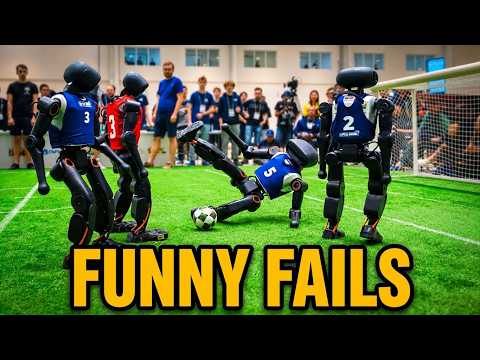
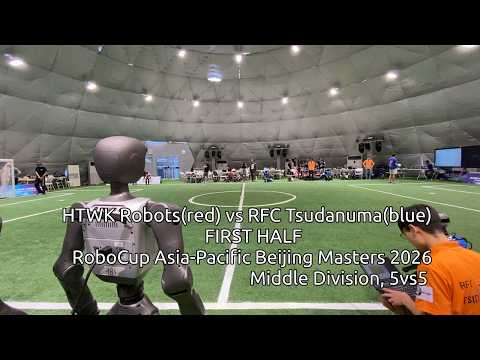
The filter sorts the Review Room embeds and the picture cards above by the keywords in their carried titles (review / analysis / recap and similar, or highlights). It runs entirely in your browser — nothing is sent anywhere.
No hall of fame with a published inductee list is carried for RoboCup. Sport on Earth does not invent halls or inductees: where a recognised hall publishes its list in a form this site can carry, the full list will appear here with its source named.
Robot soccer research league aiming to beat human champions by 2050.
In the wider mind family of sports — the physics is information and time, the game turns on: Calculation beats hope: force yourself to see the opponent’s best reply before your own favourite move.; Time is a resource: spending clock early buys accuracy late; several formats are lost on time more than on position.; Study the classics of your game: the patterns recur for decades; pattern banks are built deliberately.; Review every loss: the engine or replay shows the turning point — find it while the memory is fresh.; Preparation is a weapon: at the top level, games are partly decided before they start, in the study of an opponent’s habits.; Draw offers and resignations are decisions: the etiquette of ending a game is itself part of competition craft in scored mind sports..
Sport on Earth carries no team or player directory for this sport, because no structured public feed publishes a verifiable one. What is carried is the documented record on this page — history, rules, honours and the calendar — each with its source named.
The RoboCup record book is still thin: beyond the standings, rules and calendar layers on this page, no verified winners roll or honours list is carried yet. The desk adds record material only when a published source can be named for it — never from memory or invention.
More from the desk: the expert guide to RoboCup · the site-wide Writing Desk · every sport on Earth.
📖 RoboCup — Tactics & Strategy — every entry, plus the arcade strategy, at the foot of this page.
An arcade take on RoboCup: set the angle, set the power, and land the practice pod in the far marker. Five attempts; the closer to the middle, the more it scores. Arcade distances and a training arc — a game in the spirit of the sport, not a simulation of it. RoboCup has no thrown object of its own, so the pod stands in — the launch, the arc and the landing are the game.
This page’s own game is the arcade above. Everything else on the site that fits this sport is listed here — and anything borrowed from a similar sport is labelled as that sport’s game, never passed off as this one’s.
The tools on this site that honestly run on RoboCup — its own record first, then the site-wide general tools that apply. The full RoboCup toolkit prints the ones that do not apply, with the data reason why.
No bench tool yet computes from RoboCup’s own carried record — the general tools below are the ones that honestly apply.
Site-wide tools, not built for RoboCup alone: Tournament Planner · My Notebook · The Labs · Design Studio · The Makers’ Bench · Match Day Desk · Play It Near You · Myth-Check Desk · Governing Bodies · Game Clock & Timer · Custom Rulebook Generator · Scout Notes Parser.
Tactics & Strategy — this sport’s book
RoboCup’s book — robot football’s strategy layer: formations, role assignment and set plays executed by code, in the league whose stated goal is to beat the human world champions by 2050.
8 entries, plus the arcade strategy below. All wording is original coaching-vocabulary prose; nothing is copied from any proprietary playbook.
Robots are not fixed to positions: the team reassigns roles — striker, supporter, goalie — continuously from the ball’s position and each robot’s state, so the nearest able robot always owns the job.
When it’s used: The formation is a function, not a shape: it is recomputed every cycle.
The sequence
RoboCup teams script genuine set plays: kick-off routines with choreographed passes, free-kick formations around the ball, and throw-in shapes — each a stored procedure triggered by the GameController’s call.
When it’s used: The closest thing in sport to a literal playbook file: the plays are code, reviewed like code.
The sequence
Each robot’s sensors are local and noisy, so the team fuses sightings into one shared model of the ball and the opponents — strategy is written against the model, and its errors are the opponent’s best plays.
When it’s used: Perception is the league’s real midfield battle.
The sequence
In the humanoid leagues, the dribble is a walking skill: the ball is nudged ahead in the gait’s rhythm, and the kick is chosen from a library (the placed kick, the power kick) by the shoot decision’s geometry.
When it’s used: Every RoboCup skill is a trade between speed and the risk of falling over — falling is the game’s red card of physics.
The sequence
The goalie robot positions on the arc between ball and goal centre, scaled by the ball’s distance — the same geometry a human keeper learns, implemented as a function and tuned by shot data.
When it’s used: Angles are angles in every code of football, metal or human.
The sequence
In the simulation leagues there is no hardware: teams of software agents play with perfect physics and imperfect information, and the book is pure football strategy — formations, marking, stamina allocation, offside lines.
When it’s used: The simulation league is where RoboCup’s tactics are most like a human playbook — and most studied by human coaches’ software.
The sequence
In the standard platform league every team runs identical robots, so only software differs: the book is vision pipelines, walk engines and the strategy layer above them, compared in public like-for-like.
When it’s used: Same bodies, different minds: the purest tactics laboratory in robot sport.
The sequence
RoboCup’s founding charter aims for a robot team to beat the human World Cup winners by the middle of the century, under the ordinary rules: the league’s road map — adult-size humanoids, outdoor play, full rules — is its longest set play.
When it’s used: A tactics entry for the mission itself: every season’s craft is priced against 2050.
The sequence
The arcade cell · strategy
This page’s arcade cell: launch the practice pod at the far marker from across the board · 40 m (arcade scale). Angle, power, launch — five attempts, and the cell keeps your best.
When it’s used: On this page, in the Play section — and its strategy is the same craft as the book above it, miniaturised.
The sequence
Part of the Sport on Earth Playbooks — a book for every sport and every game on the site.
Behind the Play · From the carried record
Robot soccer research league aiming to beat human champions by 2050.
Behind the Play takes the decisive actions of RoboCup apart: how the scoring play is built, which patterns the players are really running, and which rules remade the play into its modern shape.
Source basis: this sport’s carried record on this page (verified record, rule-changes dossier, history datasets) and the play patterns of its family as written in the site’s guides. Nothing here is invented.