Episode 1 — Dicksboro retain the Leinster club title in Wexford
Ep. 1 — the week of Monday, November 23, 2026 · 1:05
Pages
On this page
Sport on Earth › Sports
Sport on Earth · Sport
The women’s Gaelic stick-and-ball game: camóg and a size 4 sliotar under the Camogie Association, played for the O’Duffy Cup.
Sport on Earth’s daily and weekly video shows for Camogie — every episode, newest first.
Ep. 1 — the week of Monday, November 23, 2026 · 1:05
Every embed below was verified playable before listing — the network’s standing rule.
YouTube · RTÉ Sport
YouTube · RTÉ Sport
YouTube · Anything Irish
YouTube · Clubber TV
YouTube · RTÉ Sport
YouTube · OfficialCamogie
YouTube · RTÉ Sport
YouTube · RTÉ Sport
YouTube · RTÉ Sport
YouTube · RC Analysis
YouTube · OfficialCamogie
YouTube · RTÉ Sport
YouTube · mary b
YouTube · CR’s Video Vaults
YouTube · RTÉ Sport
YouTube · Clubber TV
YouTube · RTÉ Sport
YouTube · StreamSport
YouTube · OfficialCamogie
YouTube · Clubber TV
YouTube · Clubber TV
YouTube · Film Venture
YouTube · British Pathé
YouTube · Mr.Animate
YouTube · Joco Sports
YouTube · RTÉ Sport
YouTube · Joco Sports
YouTube · TDUB REACTS
YouTube · RTÉ Sport
YouTube · OfficialCamogie
YouTube · GAA - officialgaa
YouTube · Play Hurling
YouTube · euronews
YouTube · Australasia Gaelic Games
YouTube · UlsterGAA
YouTube · CLG Na Fianna
YouTube · Enoch Castleberry
YouTube · GAA - officialgaa
YouTube · Dan Hanson
YouTube · Stripe YSTE
YouTube · Carryduff Hurling
YouTube · Clanna Gael Fontenoy
YouTube · Play Hurling
YouTube · Scripps News Life
YouTube · GAA - officialgaa
YouTube · Camogie with Bonnie
YouTube · Christina Gobbett
YouTube · Brendan Murray
Pages
On this page
No game on this site is made specifically for Camogie yet. The games below are the site's all-sport games, which honestly cover every sport — nothing from another sport has been dressed up as this sport's game.
A new set of questions every day, across every sport this site covers.
Real-athlete Top Sport on Earth decks built from the site’s verified board data.
Camogie's lab is the Physics Lab section on this page — the applied physics of its sport family, with a computed interactive where one honestly fits.
Physics Arena — the general biomechanics & physics teaching sandbox, shared by every sport.
The homepage sport explorer also carries a general Lab tab of small interactive experiments.
Calendar data not yet carried for Camogie — this site does not yet hold schedule data for it, so no dates are shown rather than invented.
Which section of this page should we expand first?
Votes are counted on the Sport on Earth server and the totals shown are every reader’s votes; your own choice is remembered in this browser.
How this game is played, gathered from the record Sport on Earth already carries for Camogie, with the positions taken from the sourced chart cited in that section.
Camogie is Ireland’s women’s game of the Gaelic stick-and-ball family: fifteen a side on a full GAA pitch, played with the camóg — the curved ash stick from which the game takes its name — and a sliotar, under the Camogie Association (An Cumann Camógaíochta), the separate governing body the players founded in 1904. Its laws are hurling’s near-twin, but they are its own: a smaller ball, a shorter match, and scoring rules hurling does not carry.
The game’s summit is the All-Ireland Senior Camogie Championship, played since 1932 for the O’Duffy Cup. Dublin, the first champions, dominated the early decades — 26 titles in all, including 18 of the 19 championships between 1948 and 1966; Cork have since built the record: 31 titles, the latest won in 2026 in front of a record camogie crowd of 33,419 at Croke Park. Below the senior grade the Association runs Intermediate, Premier Junior and Junior championships, and every county team in those grades is carried in this site’s Championships & Counties section for the sport.
How camogie differs from hurling — the rules as this site's record carries them:
The positions for Camogie, as carried from the source cited below:
Positions source: Camogie Association (An Cumann Camógaíochta) — Playing rules: camogie is 15-a-side in the standard GAA numbered formation (goalkeeper, three full-backs, three half-backs, two centre-fielders, three half-forwards, three full-forwards). Numbered 1-15 layout: goalkeeper, full-back line (2-4), half-back line (5-7), two midfielders (8-9), half-forward line (10-12), full-forward line (13-15). The same numbered formation is used across the Gaelic games codes.
Sport on Earth's own analytics: every figure in this panel is computed at build time from the record this site itself carries, with the source named. No outside data is used, and no betting figures of any kind.
Census arithmetic: Camogie sits in the goal & invasion games family — 60 census sports, of which 12 carry a qualifying champions roll in the site's record.
The carried record for Camogie is too thin for computed panels: no champions roll, hall-of-fame list or venue record is carried for it. This panel therefore prints the census arithmetic only — the honest answer rather than a manufactured figure.
Sport on Earth does not yet hold verified dated events for Camogie, and its carried record does not state the season's timing in words — so no calendar is shown rather than an invented one. What the site does carry for this sport is on this page: its verified record, its rules record and its history.
Almost every decisive action in an invasion game is a projectile problem: a kicked, thrown or struck ball follows a parabola set by its launch speed, angle and spin, bent by gravity and dragged by air. The calculator below is that core model — the same projectile maths the site’s Physics Arena teaches — with the assumptions printed: no air resistance, no spin, flat ground.
The second physics of invasion games is geometry: passing lanes are lines of sight, and the effective playing area shrinks or grows with team shape. Spin (curl and dip on struck balls) comes from the Magnus effect — a spinning ball deflects toward the side where its surface moves with the airflow.
From this sport's own record: The women’s Gaelic stick-and-ball game: camóg and a size 4 sliotar under the Camogie Association, played for the O’Duffy Cup. The lab above treats the physics of the sport's family; no measurement specific to this sport is printed, because the site's verified record for it carries none — parameters are never invented to fill a lab.
Model: R = v²·sin(2θ)/g, flight time T = 2·v·sin(θ)/g, apex H = (v·sin θ)²/(2g), g = 9.81 m/s². Assumptions: no air resistance, no spin, flat ground, launch and landing at the same height. Real balls and shuttles fly shorter and curve — drag and spin are exactly what this model leaves out, so treat the output as the gravity-only ceiling, not a prediction.
The general teaching sandbox for every sport is the Physics Arena on the Games page — the same printed models, with a defender added.
The hands-on lab for Camogie, built entirely from the record this site carries for it — its documented rolls, its halls, its venues, its calendar and its census family. Every figure below is computed from that carried record at build time; nothing is estimated and nothing is pulled live. The companion Physics Lab on this page works the family's physics; this lab works the record.
The honest position: the record this site carries for Camogie is thin — no documented roll, hall, venue set or dated calendar is carried for it yet — so this entry’s lab is its family lab: the computed census of the family it belongs to. When the record grows, the lab grows with it; nothing here is estimated to fill the space.
Computed from the site census: the Invasion field games family holds 61 entries on this site. Across the family, the carried record includes documented rolls for 8 of them, Hall of Fame data for 10, venue sets for 17, and dated calendars for 9.
Every other entry in the family: American Football · Arena Football · Athletes Unlimited · Atya patya · Australian Rules Football · Beach Handball · Beach Soccer · Bo-taoshi · Boxball · Buroinjin · Buzkashi · Calcio Storico · Canadian Football · Cestoball · Chinlone · Circle Rules Football · Cuju · Cycle Ball · Cycle Polo · Dibeke · Dodgeball · Double Ball · Eton Wall Game · Field Hockey · Flag Football · Floorball · Football (Soccer) · Four Square / FS Handball · Futsal · Gaelic Football · Gaga Ball · Goalball · Handball · Hurling · Ice Hockey · Jombola · Jugger · Kabaddi · Kai Wed · Kho kho · Kibasen · Knapan · Kronum · La Soule · Lacrosse · Ladies’ Gaelic Football · Langa · Langdi · Quadball · Ringette · Rollball · Rugby League · Rugby Union · S.P.U.D. · Sepak Manggis · Shinty · Squalleyball · Touch · Ulama · Wheelchair Rugby
Basis: the Sport on Earth census itself — the same 460-entry register the census page prints.
The desk has not verified a sponsorship record for Camogie from published sources, so none is printed. Sponsorship history is added only when a real published source supports it — sponsor by sponsor, deal by deal. Current sponsorship deals across sport are tracked on the Money Desk sponsorship page.
Camogie is Ireland’s women’s game of the Gaelic stick-and-ball family: fifteen a side on a full GAA pitch, played with the camóg — the curved ash stick from which the game takes its name — and a sliotar, under the Camogie Association (An Cumann Camógaíochta), the separate governing body the players founded in 1904. Its laws are hurling’s near-twin, but they are its own: a smaller ball, a shorter match, and scoring rules hurling does not carry.
The game’s summit is the All-Ireland Senior Camogie Championship, played since 1932 for the O’Duffy Cup. Dublin, the first champions, dominated the early decades — 26 titles in all, including 18 of the 19 championships between 1948 and 1966; Cork have since built the record: 31 titles, the latest won in 2026 in front of a record camogie crowd of 33,419 at Croke Park. Below the senior grade the Association runs Intermediate, Premier Junior and Junior championships, and every county team in those grades is carried in this site’s Championships & Counties section for the sport.
The first All-Ireland Senior Camogie Championship was played in 1932: ten counties entered, and Dublin beat Galway 3–2 to 0–2 in the final, played in July 1933 at the Galway Sportsgrounds, to lift the cup donated by Seán O’Duffy — the O’Duffy Cup.
Cork hold the championship record with 31 All-Ireland senior titles, the 31st won in 2026; Dublin stand second with 26.
The 2026 senior final set the game’s attendance record: 33,419 at Croke Park saw Cork beat Galway 2–14 to 0–19.
The senior championship’s 2026 field was ten counties in two groups, four and six, as published by the Camogie Association; the full four-grade county structure is carried in the Championships & Counties section.
Camogie has no central results feed this site can carry: the Association publishes its fixtures and results through its own channels, so this page carries the game’s verified structure and record — its association, its championships and its title roll — and the county-by-county championship structure lives in the sport’s Championships & Counties section.
Sources, verified November 1, 2026: Camogie Association — Official Playing Rules (An Treoir Oifigiúil, Part 2) · Dublin GAA — History of Camogie (first championship, 1932) · Her Sport — Cork crown record-breaking finals day (2026 senior final, 33,419 crowd)
Camogie’s code is hurling’s near-twin, but Ireland’s women’s game has written its own differences into law — its own ball, its own scoring quirks, and two changes hurling never made.
Before: A point in camogie counted one however it was scored; a sideline cut — the game’s signature restart, struck from the ground at the sideline — was worth the same as any other point.
The change: Since March 2012 a score struck directly from a sideline cut counts TWO points — a scoring rule no other Gaelic code carries, and hurling does not share it.
Why it happened: The lawmakers paid double for the game’s most distinctive skill: the sideline cut is camogie’s party piece, and the two-point tariff made it a genuine scoring weapon rather than a restart.
In practice today: Sideline cuts are now attacked as scoring chances in their own right, and the two-pointer remains camogie’s signature scoring quirk.
Before: Camogie kept its founders’ shorter form for most of the century: thirteen-a-side on a shorter pitch, as the game’s tradition had it.
The change: In 1999 camogie moved to the standard GAA field size and fifteen-a-side, adopting the full-size pitch and the standard formation.
Why it happened: The women’s game claimed the men’s stage outright: the same pitch, the same numbers, the same Croke Park finals-day stage as hurling’s.
In practice today: Senior camogie is now indistinguishable in scale from senior hurling — full field, fifteen a side — and its finals share the Croke Park stage.
Before: Helmets were long optional in camogie, as in hurling: generations of players contested a game of swinging ash camógs and a hard sliotar bare-headed.
The change: Under the helmet compulsion carried in the GAA’s Official Guide from 1 January 2010 — and stated as mandatory in the Camogie Association’s own Official Playing Rules (Rule 7.2, Helmet/Facial Guard) — every camogie player must wear a regulation helmet with faceguard in matches and training.
Why it happened: The same medical and insurance evidence that moved the GAA on hurling applied with equal force to the women’s game; the Association’s rulebook makes the helmet the player’s own responsibility in every game and training session.
In practice today: The bare-headed camogie player is extinct, as in hurling; the helmet with faceguard is now part of the game’s standard dress at every grade.
Source basis: Camogie Association, An Treoir Oifigiúil (Official Guide), Part 2 — Official Playing Rules; the Association’s published championship record.
Sport on Earth carries no results feed for Camogie: no scores or fixtures are published here, rather than inventing them. The sport's documented record is in its history page and the History & Records section of this page.
The historical record for Camogie — past standings, champions, title history and all-time leaders, as deep as verifiable public records go.
Season-by-season standings, historical player statistics and title rolls are not carried for Camogie: no public archive publishes them in a form Sport on Earth can verify, and this site does not invent history. What is carried for this sport is its verified record, its rule-change history and its league history — elsewhere on this page.
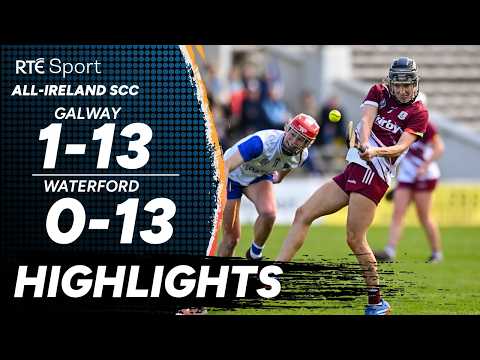
The review and analysis videos from Camogie’s verified video pool — every embed below was identity-checked and probed playable before listing, the site’s standing rule. Nothing here is a show Sport on Earth produces; these are the review, post-game and breakdown videos the pool already carries for this sport.
No verified review-show video is carried for this sport yet.


The filter sorts the Review Room embeds and the picture cards above by the keywords in their carried titles (review / analysis / recap and similar, or highlights). It runs entirely in your browser — nothing is sent anywhere.
No hall of fame with a published inductee list is carried for Camogie. Sport on Earth does not invent halls or inductees: where a recognised hall publishes its list in a form this site can carry, the full list will appear here with its source named.
The women’s Gaelic stick-and-ball game: camóg and a size 4 sliotar under the Camogie Association, played for the O’Duffy Cup.
The format, from this sport's verified record:
The Camogie record book, as this site carries it: its rule-changes dossier records 3 dated changes and named rules. Every figure above is computed from the lists and dossiers printed on this page, each with its source basis named beside it.
More from the desk: the expert guide to Camogie · the site-wide Writing Desk · every sport on Earth.
An arcade take on Camogie: set the angle, set the power, and land the ball in the goal mouth. Five attempts; the closer to the middle, the more it scores. Arcade distances and a training arc — a game in the spirit of the sport, not a simulation of it.
This page’s own game is the arcade above. Everything else on the site that fits this sport is listed here — and anything borrowed from a similar sport is labelled as that sport’s game, never passed off as this one’s.
The full county structure of camogie is now carried: the four camogie grades from the O'Duffy Cup down, and every county team — Camogie championships and counties · Camogie county teams (28). The club game is carried too: county club championships — the clubs, the grades and the latest published county finals.
The tools on this site that honestly run on Camogie — its own record first, then the site-wide general tools that apply. The full Camogie toolkit prints the ones that do not apply, with the data reason why.
Site-wide tools, not built for Camogie alone: Tournament Planner · My Notebook · The Labs · Design Studio · The Makers’ Bench · Match Day Desk · Play It Near You · Myth-Check Desk · Governing Bodies · Heat & Safety Calculator (WBGT) · Hydration Calculator · Training-Load Planner · Game Clock & Timer · Custom Rulebook Generator · Scout Notes Parser.
Players: Gaelic Players Association — The representative body for high-performance inter-county Gaelic games players, founded by players in 1999 and strengthened by a 2020 merger with the Women’s Gaelic Players Association, supporting over 4,000 male and female players across representation, welfare, development and equality.
Officials: Gaelic Games Match Officials (GAA, LGFA, Camogie Association and GAA Handball) (federation arm) — Officiating in the Gaelic games is run by the governing associations themselves, which jointly launched an aligned Match Official Pathway in October 2026 with Foundation, Talent and High Performing levels across Gaelic football, hurling, camogie, ladies’ Gaelic football and handball.
Verified associations for this sport, from the sources listed on the players' associations and referees' associations pages.
Behind the Play · Full treatment — from this sport’s own record
The women’s Gaelic stick-and-ball game: camóg and a size 4 sliotar under the Camogie Association, played for the O’Duffy Cup.
Behind the Play takes the decisive actions of Camogie apart: how the scoring play is built, which patterns the players are really running, and which rules remade the play into its modern shape.
The format, from this sport's verified record:
Two Points for a Sideline Cut (March 2012). Since March 2012 a score struck directly from a sideline cut counts TWO points — a scoring rule no other Gaelic code carries, and hurling does not share it.
Sideline cuts are now attacked as scoring chances in their own right, and the two-pointer remains camogie’s signature scoring quirk.
Fifteen-a-Side on the Full Field (1999). In 1999 camogie moved to the standard GAA field size and fifteen-a-side, adopting the full-size pitch and the standard formation.
Senior camogie is now indistinguishable in scale from senior hurling — full field, fifteen a side — and its finals share the Croke Park stage.
Compulsory Helmets (1 January 2010). Under the helmet compulsion carried in the GAA’s Official Guide from 1 January 2010 — and stated as mandatory in the Camogie Association’s own Official Playing Rules (Rule 7.2, Helmet/Facial Guard) — every camogie player must wear a regulation helmet with faceguard in matches and training.
The bare-headed camogie player is extinct, as in hurling; the helmet with faceguard is now part of the game’s standard dress at every grade.
From this page’s Rule Changes & Named Rules dossier, where every entry names its source.
Source basis: this sport’s carried record on this page (verified record, rule-changes dossier, history datasets) and the play patterns of its family as written in the site’s guides. Nothing here is invented.