Portugal vs United States - Acapulco Beach Soccer Cup 2026
YouTube · Beach Soccer TV
Pages
On this page
Sport on Earth › Sports
Sport on Earth · Sport
Small-sided football on sand with bicycle kicks.
Every embed below was verified playable before listing — the network’s standing rule.
YouTube · Beach Soccer TV
YouTube · ANOC World Beach Games
YouTube · Concacaf
YouTube · Dingyi Football
YouTube · Beach Soccer TV
YouTube · Beach Soccer TV
YouTube · Beach Soccer TV
YouTube · OFC
YouTube · Tahiti Nui Television
YouTube · Beach Soccer TV
YouTube · Beach Soccer TV
YouTube · Beach Soccer TV
YouTube · Beach Soccer TV
YouTube · ANOC World Beach Games
YouTube · Matchlog Football
YouTube · ANOC World Beach Games
YouTube · OFC
YouTube · OFC
YouTube · Beach Soccer TV
YouTube · Beach Soccer TV
YouTube · Beach Soccer TV
YouTube · Al Jazeera English
YouTube · CBS Atlanta
YouTube · U.S. Soccer
YouTube · CBS LA
YouTube · Ninh Ly
YouTube · Beach Soccer TV
YouTube · FISU
YouTube · Mr.Animate
YouTube · Beach Soccer TV
YouTube · Keeperstop - Goalkeeper Glove Experts
YouTube · SBS Sport
YouTube · Ruy Castelo Branco
YouTube · Girls Soccer Network
YouTube · afrital
YouTube · Beach Soccer LA
YouTube · National Beach Soccer League
YouTube · BEACH SOCCER COACH
YouTube · Jayddin Hawk
YouTube · ESCOBAR HEAD COACH
YouTube · Girls Soccer Network
YouTube · Beach Soccer TV
YouTube · The Beach Soccer Championships
YouTube · OFC
YouTube · Concacaf
YouTube · Concacaf
YouTube · Estonian Freekickers
YouTube · Beach & Ball
Pages
On this page
Real pinball on a table themed for this sport — the game carries a Soccer theme.
A new set of questions every day, across every sport this site covers.
Real-athlete Top Sport on Earth decks built from the site’s verified board data.
Beach Soccer's lab is the Physics Lab section on this page — the applied physics of its sport family, with a computed interactive where one honestly fits.
Physics Arena — the general biomechanics & physics teaching sandbox, shared by every sport.
The homepage sport explorer also carries a general Lab tab of small interactive experiments.
Calendar data not yet carried for Beach Soccer — this site does not yet hold schedule data for it, so no dates are shown rather than invented.
Which section of this page should we expand first?
Votes are counted on the Sport on Earth server and the totals shown are every reader’s votes; your own choice is remembered in this browser.
Sport on Earth does not yet hold verified dated events for Beach Soccer, and its carried record does not state the season's timing in words — so no calendar is shown rather than an invented one. What the site does carry for this sport is on this page: its verified record, its rules record and its history.
Almost every decisive action in an invasion game is a projectile problem: a kicked, thrown or struck ball follows a parabola set by its launch speed, angle and spin, bent by gravity and dragged by air. The calculator below is that core model — the same projectile maths the site’s Physics Arena teaches — with the assumptions printed: no air resistance, no spin, flat ground.
The second physics of invasion games is geometry: passing lanes are lines of sight, and the effective playing area shrinks or grows with team shape. Spin (curl and dip on struck balls) comes from the Magnus effect — a spinning ball deflects toward the side where its surface moves with the airflow.
From this sport's own record: Small-sided football on sand with bicycle kicks. The lab above treats the physics of the sport's family; no measurement specific to this sport is printed, because the site's verified record for it carries none — parameters are never invented to fill a lab.
Model: R = v²·sin(2θ)/g, flight time T = 2·v·sin(θ)/g, apex H = (v·sin θ)²/(2g), g = 9.81 m/s². Assumptions: no air resistance, no spin, flat ground, launch and landing at the same height. Real balls and shuttles fly shorter and curve — drag and spin are exactly what this model leaves out, so treat the output as the gravity-only ceiling, not a prediction.
The general teaching sandbox for every sport is the Physics Arena on the Games page — the same printed models, with a defender added.
The hands-on lab for Beach Soccer, built entirely from the record this site carries for it — its documented rolls, its halls, its venues, its calendar and its census family. Every figure below is computed from that carried record at build time; nothing is estimated and nothing is pulled live. The companion Physics Lab on this page works the family's physics; this lab works the record.
The carried global venue dataset holds 2 venues for Beach Soccer across 2 countries.
Basis: the global venue dataset carried on this site (6,438 venues with coordinates; the venue explorer on the sports index and the stadium sun table work the same data). Countries beyond the 25 largest are counted in the totals above but not listed here.
Computed from the site census: the Invasion field games family holds 61 entries on this site. Across the family, the carried record includes documented rolls for 8 of them, Hall of Fame data for 10, venue sets for 17, and dated calendars for 9.
Every other entry in the family: American Football · Arena Football · Athletes Unlimited · Atya patya · Australian Rules Football · Beach Handball · Bo-taoshi · Boxball · Buroinjin · Buzkashi · Calcio Storico · Camogie · Canadian Football · Cestoball · Chinlone · Circle Rules Football · Cuju · Cycle Ball · Cycle Polo · Dibeke · Dodgeball · Double Ball · Eton Wall Game · Field Hockey · Flag Football · Floorball · Football (Soccer) · Four Square / FS Handball · Futsal · Gaelic Football · Gaga Ball · Goalball · Handball · Hurling · Ice Hockey · Jombola · Jugger · Kabaddi · Kai Wed · Kho kho · Kibasen · Knapan · Kronum · La Soule · Lacrosse · Ladies’ Gaelic Football · Langa · Langdi · Quadball · Ringette · Rollball · Rugby League · Rugby Union · S.P.U.D. · Sepak Manggis · Shinty · Squalleyball · Touch · Ulama · Wheelchair Rugby
Basis: the Sport on Earth census itself — the same 460-entry register the census page prints.
The desk has not verified a sponsorship record for Beach Soccer from published sources, so none is printed. Sponsorship history is added only when a real published source supports it — sponsor by sponsor, deal by deal. Current sponsorship deals across sport are tracked on the Money Desk sponsorship page.
How this game is played, gathered from the record Sport on Earth already carries for Beach Soccer, with the positions taken from the sourced chart cited in that section.
Beach soccer’s code was written fresh for sand in the 1990s, but its modern law history is FIFA’s: a takeover in 2005, a speed-and-fairness amendment package in 2014, and a goalkeeper-centred revision in 2021.
The current rules, as the site's rule-change dossier records them:
The full dossier — every dated change and named rule, with its source basis — is in this page’s Rule Changes & Named Rules section.
Positions for Beach Soccer are not yet sourced on Sport on Earth: no verified positions chart has been carried for this sport yet, so none is shown here rather than an invented one. That says nothing about whether the sport has positions — only that they have not been sourced for this page yet.
Its Playbook — its opening entries, the basic plays, are:
The full book carries 10 entries — in this page’s Playbook / Tactics & Strategy section, and at the Playbooks hub.
Sport on Earth's own analytics: every figure in this panel is computed at build time from the record this site itself carries, with the source named. No outside data is used, and no betting figures of any kind.
Venues carried: 2 in 2 countries.
Source: the site's global venue record (venues-global.json); a capacity is printed only where the record carries a verified one.
Census arithmetic: Beach Soccer sits in the goal & invasion games family — 60 census sports, of which 12 carry a qualifying champions roll in the site's record.
Beach soccer’s code was written fresh for sand in the 1990s, but its modern law history is FIFA’s: a takeover in 2005, a speed-and-fairness amendment package in 2014, and a goalkeeper-centred revision in 2021.
Before: Beach soccer’s world game belonged to its inventors: Beach Soccer Worldwide (and its predecessor bodies) had run World Championships since 1995 under its own proprietary code, outside FIFA — successful in Brazil and on the Mediterranean, but a private property rather than a governed sport.
The change: FIFA adopted beach soccer in 2005: the World Cup became the FIFA Beach Soccer World Cup (first edition Rio de Janeiro, 2005) and the game came under FIFA’s Beach Soccer Laws of the Game — five-a-side, three 12-minute periods with a stopped clock, no draws (extra time, then penalties), unlimited rolling substitutions, and throw-ins that may be taken by hand or foot, all standardised for every member association.
Why it happened: FIFA wanted the beach game inside the tent before the 2005 World Cup cycle, and BSWW wanted the legitimacy and broadcast reach only FIFA could give its invention. The handover traded ownership for universality: one law book, one world champion, and a development structure behind it.
In practice today: The FIFA-era code is the only beach soccer the world now knows; BSWW remains the sport’s commercial engine under FIFA’s patronage, and every later amendment in this dossier was made to the 2005 settlement’s law book.
Before: Teams could camp in possession inside their own penalty area, goalkeepers could carry the ball out of the area and shepherd it back in to restart the clock on pressure, set pieces drifted, and the sport’s signature move — the overhead (bicycle) kick — could be challenged physically in mid-execution.
The change: FIFA Circular 1434 (4 July 2014) rewrote the tempo: a team in possession in its own penalty area has four seconds to move the ball out (free kick from the halfway line if it lingers); a goalkeeper who leaves the area with the ball may not bring it back in; restarts are governed by four-second limits; a player executing an overhead kick gained explicit protection; and for direct free kicks in a team’s own half, opponents must stay outside an imaginary ’cone’ from the ball to the corner flags until the ball is played.
Why it happened: The FIFA Beach Soccer Committee, working with the IFAB sub-committee and FIFA’s refereeing department, framed the package as making the game ’faster and fairer’: possession camping was strangling a sport whose whole appeal is end-to-end attack, and its acrobatic signature needed the law’s protection to survive.
In practice today: The four-second principle became beach soccer’s metronome. FIFA’s Technical Study Group credited the package, first seen at a World Cup in Portugal 2015, with reshaping pressing and build-up play — and it set up the further goalkeeper restriction that followed in 2021.
Before: A drawn final went to extra time and then a shootout of only three penalty kicks per team — a thin sample to settle a World Cup. The four-second limit on a goalkeeper’s possession applied only inside his penalty area, so keepers simply stepped out of the box and held the ball at their feet, rebuilding attacks at walking pace. And a goalkeeper needing treatment stopped the match around him.
The change: The FIFA Council approved amendments in force from 1 July 2021, in time for the Russia 2021 World Cup: shootouts after extra time became five kicks per team instead of three; the goalkeeper’s four-second possession limit was extended from the penalty area to his whole half of the pitch; and a goalkeeper requiring medical attention must now be treated off the pitch and re-enter through the substitution zone, letting play restart without him.
Why it happened: The 2014 package had pushed possession pressure onto the goalkeeper without finishing the job — elite keepers had become unpressable playmakers standing a step outside their area. The 2021 amendments closed that escape route and gave the sport’s showcase final a shootout of proper length.
In practice today: FIFA’s Technical Study Group recorded the effect immediately at Russia 2021: the four-second half-wide limit collapsed the era’s dominant 2-2 build-up shape, forced defences to choose between pressing the keeper and marking outfielders, and changed how every team in the tournament constructed attacks.
Source basis: FIFA Beach Soccer Laws of the Game and FIFA circulars (Circular 1434, 4 July 2014, amendments; FIFA Council-approved amendments in force 1 July 2021, FIFA Referees Committee), with FIFA Technical Study Group reporting on the 2015 and 2021 World Cups.
Sport on Earth carries no results feed for Beach Soccer: no scores or fixtures are published here, rather than inventing them. The sport's documented record is in its history page and the History & Records section of this page.
The historical record for Beach Soccer — past standings, champions, title history and all-time leaders, as deep as verifiable public records go.
Season-by-season standings, historical player statistics and title rolls are not carried for Beach Soccer: no public archive publishes them in a form Sport on Earth can verify, and this site does not invent history. What is carried for this sport is its verified record, its rule-change history and its league history — elsewhere on this page.
The review and analysis videos from Beach Soccer’s verified video pool — every embed below was identity-checked and probed playable before listing, the site’s standing rule. Nothing here is a show Sport on Earth produces; these are the review, post-game and breakdown videos the pool already carries for this sport.
No verified review-show video is carried for this sport yet.
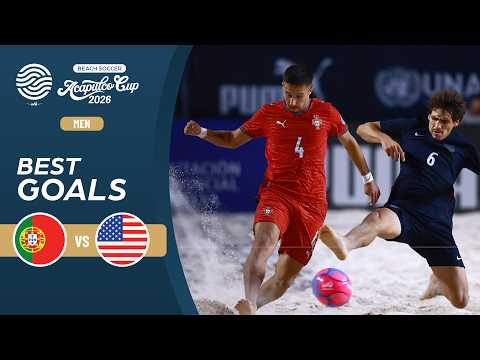
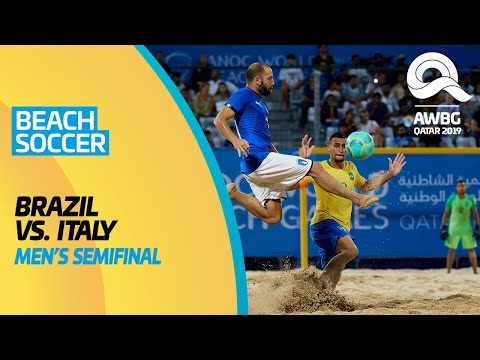
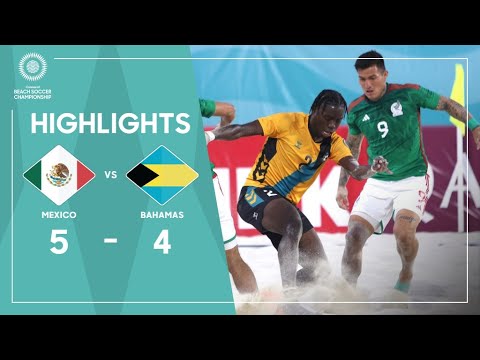
The filter sorts the Review Room embeds and the picture cards above by the keywords in their carried titles (review / analysis / recap and similar, or highlights). It runs entirely in your browser — nothing is sent anywhere.
No hall of fame with a published inductee list is carried for Beach Soccer. Sport on Earth does not invent halls or inductees: where a recognised hall publishes its list in a form this site can carry, the full list will appear here with its source named.
Small-sided football on sand with bicycle kicks.
In the wider goal family of sports — ball flight, bounces and the geometry of space, the game turns on: Control transitions: most goals in invasion games trace back to the seconds after possession changes — organise fastest in those seconds.; Protect the middle: defences concede the wings and guard the direct lane to goal, because central attacks finish closest.; Numbers around the ball: attacks create local overloads — one more player than the defence near the ball — rather than attacking evenly everywhere.; Rest defence: even while attacking, keep enough players behind the ball that one lost pass is not a goal against.; Set pieces are rehearsed goals: a large share of goals at every level come from restarts, so corners and free kicks are trained as set plays, not interruptions.; Width stretches, depth threatens: attacks hold width to stretch a defence horizontally and runners in behind to stretch it vertically — a defence can only fully guard one..
Sport on Earth carries no team or player directory for this sport, because no structured public feed publishes a verifiable one. What is carried is the documented record on this page — history, rules, honours and the calendar — each with its source named.
The Beach Soccer record book is still thin: beyond the standings, rules and calendar layers on this page, no verified winners roll or honours list is carried yet. The desk adds record material only when a published source can be named for it — never from memory or invention.
More from the desk: the expert guide to Beach Soccer · the site-wide Writing Desk · every sport on Earth.
📖 The Beach Soccer Playbook — every entry, plus the arcade strategy, at the foot of this page.
An arcade take on Beach Soccer: set the angle, set the power, and land the ball in the goal mouth. Five attempts; the closer to the middle, the more it scores. Arcade distances and a training arc — a game in the spirit of the sport, not a simulation of it.
This page’s own game is the arcade above. Everything else on the site that fits this sport is listed here — and anything borrowed from a similar sport is labelled as that sport’s game, never passed off as this one’s.
1 verified documentaries, films and series about this sport are listed in the site's screen guide: Sport on Screen — Beach Soccer.
The tools on this site that honestly run on Beach Soccer — its own record first, then the site-wide general tools that apply. The full Beach Soccer toolkit prints the ones that do not apply, with the data reason why.
Site-wide tools, not built for Beach Soccer alone: Tournament Planner · My Notebook · The Labs · Design Studio · The Makers’ Bench · Match Day Desk · Play It Near You · Myth-Check Desk · Governing Bodies · Heat & Safety Calculator (WBGT) · Hydration Calculator · Training-Load Planner · Game Clock & Timer · Custom Rulebook Generator · Scout Notes Parser.
The Playbook · set plays, systems & situations
the small-sided and variant codes’ own set pieces and patterns — the parent game’s ideas, rebuilt for smaller pitches, fewer players and, in beach soccer, sand and acrobatic finishing.
10 entries, plus the arcade strategy below. All wording is original coaching-vocabulary prose; nothing is copied from any proprietary playbook.
In small-sided codes the ball is back in play in seconds, so the set piece is taken before the defence sets — a played ball to a runner already moving beats any rehearsed routine.
When it’s used: At every free kick and restart: the first look is always ’can we go now?’
The sequence
Four players in a square rotate positions constantly — the futsal and small-sided game’s core pattern — so markers are passed between defenders until one is free.
When it’s used: The foundation of futsal attacking: movement off the ball creates the spare man.
The sequence
The target forward pins his defender with his back to goal, holds the low pass, and lays it off or rolls his man — the small court makes the pivot the most valuable player on it.
When it’s used: When the press is beaten and the ball reaches the pivot’s feet with the defence retreating.
The sequence
Modern · the five-man endgame
Trailing late, the goalkeeper is replaced by an extra outfield player — five attackers against four, accepting an empty net as the price of the overload.
When it’s used: Futsal’s famous endgame, used in beach and small-sided codes too: only when chasing the game.
The sequence
On sand, the ball is flicked up by a team-mate’s foot or a deliberate bounce so the finisher can strike it overhead — the beach game’s signature finish is a two-man play, not a solo trick.
When it’s used: Whenever a loose ball sits up in front of goal: sand kills dribbles, so the flick-and-finish replaces them.
The sequence
The oldest small-sided pattern: pass into a team-mate and run past your marker to take the return in stride — the ’wall’ is the team-mate, the marker is beaten by the run.
When it’s used: Everywhere in the small-sided game, where tight spaces make the one-two the basic way through.
The sequence
At a kick-in or throw-in, the taker shapes to play short and instead drives it long over the squeezed-up defence — small-sided restarts punish teams that crowd the ball.
When it’s used: When the opposition presses the restart with three players near the ball.
The sequence
Small goals and fast courts make far-post finishes the percentage play: the ball is driven across the face for the runner arriving where the keeper cannot reach.
When it’s used: The small-sided game’s cutback: build wide, finish far.
The sequence
In futsal and small-sided codes, pressing is personal: each player locks onto one opponent and the goalkeeper’s distribution is attacked the moment it is released.
When it’s used: Against sides that build patiently; the press turns their goalkeeper into their playmaker, which is the trap.
The sequence
Defending on sand means never dwelling: the first touch lifts the ball out of the divots, and clearances are played up and out in one movement before the pitch’s surface steals the ball.
When it’s used: Beach soccer defending: the surface is the extra opponent.
The sequence
The arcade cell · strategy
This page’s arcade cell: launch the ball at the goal mouth from the penalty spot · 46 m (arcade scale). Angle, power, launch — five attempts, and the cell keeps your best.
When it’s used: On this page, in the Play section — and its strategy is the same craft as the book above it, miniaturised.
The sequence
Part of the Sport on Earth Playbooks — a book for every sport and every game on the site.
Behind the Play · From the carried record
Small-sided football on sand with bicycle kicks.
Behind the Play takes the decisive actions of Beach Soccer apart: how the scoring play is built, which patterns the players are really running, and which rules remade the play into its modern shape.
Source basis: this sport’s carried record on this page (verified record, rule-changes dossier, history datasets) and the play patterns of its family as written in the site’s guides. Nothing here is invented.