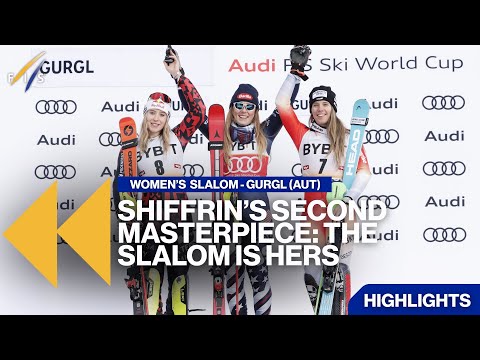
Episode 1 — Colturi makes history for Albania and Haugan completes the comeback in Gurgl
Ep. 1 — the week of Monday, November 23, 2026 · 0:58
Pages
On this page
Sport on Earth › Sports
Sport on Earth · Sport
Downhill racing on the FIS World Cup circuit.
Sport on Earth’s daily and weekly video shows for Alpine Skiing — every episode, newest first.
Ep. 1 — the week of Monday, November 23, 2026 · 0:58
Every embed below was verified playable before listing — the network’s standing rule.
YouTube · Ski & Snowboard World Cup
YouTube · Ski & Snowboard World Cup
YouTube · Ski & Snowboard World Cup
YouTube · Speed Kings
YouTube · Paralympic Games
YouTube · Speed Kings
Pages
On this page
No game on this site is made specifically for Alpine Skiing yet. The games below are the site's all-sport games, which honestly cover every sport — nothing from another sport has been dressed up as this sport's game.
A new set of questions every day, across every sport this site covers.
Real-athlete Top Sport on Earth decks built from the site’s verified board data.
Alpine Skiing's lab is the Physics Lab section on this page — the applied physics of its sport family, with a computed interactive where one honestly fits.
Physics Arena — the general biomechanics & physics teaching sandbox, shared by every sport.
The homepage sport explorer also carries a general Lab tab of small interactive experiments.
Calendar data not yet carried for Alpine Skiing — this site does not yet hold schedule data for it, so no dates are shown rather than invented.
Which section of this page should we expand first?
Votes are counted on the Sport on Earth server and the totals shown are every reader’s votes; your own choice is remembered in this browser.
How this game is played, gathered from the record Sport on Earth already carries for Alpine Skiing, with the positions taken from the sourced chart cited in that section.
Sport on Earth carries no separate rules list for Alpine Skiing; the governing framework its record carries is this:
Alpine skiing is governed by the FIS under technical regulations per discipline (gate-setting, course and equipment specs, points systems) revised on cycles; the memorable format changes in the snow sports (parallel formats, the combined’s repeated redesigns) are Olympic program and event-format decisions rather than changes to the racing laws carried here. No major documented rule change is carried for this dossier.
Alpine Skiing has no fixed positions — its format designates no positional roles.
Format as carried in hidden_files/batchB-nov1/batchb_data.json: "Downhill racing on the FIS World Cup circuit." The format carries no designated positional roles. (Source: Sport on Earth carried sport record.)
That is the whole of the how-to-play material Sport on Earth currently carries for Alpine Skiing — a fuller How to Play Alpine Skiing is not yet written, and this section says so rather than padding the gap.
How this sport's equipment actually changed, entry by entry, from the sources named under each one. Dates a source gives only approximately are printed as c. or as an era, with the reason stated — never sharpened into a precision the record does not support.
This is the skiing family’s equipment story, carried on the Alpine Skiing page — the census keeps the skiing disciplines as separate sports, and their early equipment history is shared.
Among the oldest wooden skis found are Norwegian examples dated c. 3200 BCE (Russian finds are older still, c. 6300–5000 BCE in the Wikipedia account); early skis were single hardwood planks with strap bindings, for travel and hunting, not sport.
Why it changed: Survival transport; dates are archaeological estimates, hence c.
Dating note: Approximate: sources give a range or differ on the exact year; see source.
Source: Wikipedia, ’Ski’ (search result) — https://en.m.wikipedia.org/wiki/Skis
Telemark artisans invented the cambered ski around 1850, arching under the binding to distribute weight; Sondre Norheim is credited with the first binding with a heel strap and the telemark ski form.
Why it changed: Technique-driven: camber and a held heel made turning possible.
Source: REI Co-op Journal, ’An Abbreviated History of Modern Ski Technology’ (search result) — https://www.rei.com/blog/snowsports/an-abbreviated-history-of-modern-ski-technology
From 1891 Norwegian makers laminated two or more layers of wood, making lighter skis as quality single planks grew scarce; multi-laminated high-performance skis followed in the mid-1930s.
Why it changed: Materials supply + strength-to-weight.
Source: Wikipedia, ’Ski’ (search result) — https://en.m.wikipedia.org/wiki/Skis
Rudolf Lettner developed the first metal edges (1926 in the REI account; steel edges are dated 1928 in Austria in the Wikipedia account); Guido Reuge’s spring-loaded Kandahar cable binding (1928) locked the heel down for descents — but did not release in a fall, hence ’bear trap’; Hjalmar Hvam patented the first quick-release binding a decade later after breaking his leg.
Why it changed: Control on hard snow (edges) and safety (the release problem the cable binding created).
Source: REI Co-op Journal, ’An Abbreviated History of Modern Ski Technology’ (search result) — https://www.rei.com/blog/snowsports/an-abbreviated-history-of-modern-ski-technology
Aircraft engineer Howard Head built the first commercially viable aluminium-laminate ski, the Head Standard, in 1947 (some accounts date its introduction to 1950); wooden skis were set aside at the top level, before fibreglass took over in the 1960s.
Why it changed: Materials: consistency and durability wood could not give.
Source: REI Co-op Journal, ’An Abbreviated History of Modern Ski Technology’ (search result) — https://www.rei.com/blog/snowsports/an-abbreviated-history-of-modern-ski-technology
Companion tool: the Equipment Size Visualiser draws today's balls for eight sports at true relative scale — this section is how they got that way.
Sport on Earth's own analytics: every figure in this panel is computed at build time from the record this site itself carries, with the source named. No outside data is used, and no betting figures of any kind.
Hall of Fame record carried: 28 inductees across 1 hall(s); inductions span 1958–2016; the largest induction decade is the 2010s (6 inductees).
Source: the site's carried hall-of-fame record (historical-players.json).
Venues carried: 23 in 10 countries.
Source: the site's global venue record (venues-global.json); a capacity is printed only where the record carries a verified one.
Census arithmetic: Alpine Skiing sits in the winter sports family — 35 census sports, of which 1 carry a qualifying champions roll in the site's record.
Sport on Earth does not yet hold verified dated events for Alpine Skiing, and its carried record does not state the season's timing in words — so no calendar is shown rather than an invented one. What the site does carry for this sport is on this page: its verified record, its rules record and its history.
Winter sports exist because ice and snow offer the lowest-friction surfaces in everyday life: a steel blade on ice can have a friction coefficient around 0.003–0.01 (a thin pressure/friction-melted water layer lubricates it), a waxed ski on snow typically more. The calculator below turns that into stopping distances — pick a friction coefficient and a speed, and see how far the slide runs: v²/(2μg). Assumptions printed: flat surface, constant μ, no air resistance.
Turning is controlled friction: an edged ski or skate bites to create a centripetal force, and carving keeps that force smooth where skidding wastes it as heat and spray. Waxing, base structure and edge tuning are applied tribology — the science of friction — practised the night before the race.
From this sport's own record: Downhill racing on the FIS World Cup circuit. The lab above treats the physics of the sport's family; no measurement specific to this sport is printed, because the site's verified record for it carries none — parameters are never invented to fill a lab.
Model: stopping distance d = v²/(2·μ·g), g = 9.81 m/s²; the maximum friction force is μ × the load. Assumptions: flat surface, constant μ, no air resistance, no braking technique — a pure physics floor/ceiling for the slide. Typical published ranges: steel blade on ice ≈ 0.003–0.01; waxed ski on snow ≈ 0.03–0.1; road tyre on dry asphalt ≈ 0.7–1.0. Explore the range; do not read a single value as a measurement of any real surface.
The general teaching sandbox for every sport is the Physics Arena on the Games page — the same printed models, with a defender added.
The hands-on lab for Alpine Skiing, built entirely from the record this site carries for it — its documented rolls, its halls, its venues, its calendar and its census family. Every figure below is computed from that carried record at build time; nothing is estimated and nothing is pulled live. The companion Physics Lab on this page works the family's physics; this lab works the record.
Alpine Skiing carries 1 hall in the site’s record — U.S. Ski and Snowboard Hall of Fame — with 28 inductees carried, 0 of them with a full verified profile on this site.
Inductions by decade (computed from the carried induction years):
Basis: the Hall of Fame record carried on this site — the same rolls and verified profiles the Hall of Fame books print. Inductees a hall lists but the site has not verified stay list-only, exactly as the books state.
The carried global venue dataset holds 23 venues for Alpine Skiing across 10 countries.
Basis: the global venue dataset carried on this site (6,438 venues with coordinates; the venue explorer on the sports index and the stadium sun table work the same data). Countries beyond the 25 largest are counted in the totals above but not listed here.
Computed from the site census: the Winter sports family holds 35 entries on this site. Across the family, the carried record includes documented rolls for 0 of them, Hall of Fame data for 4, venue sets for 14, and dated calendars for 0.
Every other entry in the family: Arm Pull · Bandy · Biathlon · Blanket Toss · Bobsleigh · Broomball · Cross-Country Skiing · Ear Pull · Figure Skating · Freeride Skiing · Freestyle Skiing · Grass Skiing · Ice Climbing · Ice Cross Downhill · Ice Stock Sport · Ice Yachting · Indian Stick Pull · Kneeling Jump · Knuckle Hop · Luge · Nordic Combined · One-Foot High Kick · Sandboarding · Short Track Speed Skating · Skeleton · Ski Jumping · Ski Mountaineering · Snow Snake · Snowboarding · Speed Skating · Telemark Skiing · Two-Foot High Kick · Yuki Gassen · Yukigassen
Basis: the Sport on Earth census itself — the same 460-entry register the census page prints.
The desk has not verified a sponsorship record for Alpine Skiing from published sources, so none is printed. Sponsorship history is added only when a real published source supports it — sponsor by sponsor, deal by deal. Current sponsorship deals across sport are tracked on the Money Desk sponsorship page.
How the laws of Alpine Skiing are governed today — the documented record, stated plainly.
Alpine skiing is governed by the FIS under technical regulations per discipline (gate-setting, course and equipment specs, points systems) revised on cycles; the memorable format changes in the snow sports (parallel formats, the combined’s repeated redesigns) are Olympic program and event-format decisions rather than changes to the racing laws carried here. No major documented rule change is carried for this dossier.
That framework summary is the whole documented record Sport on Earth can verify for this sport — no major dated rule changes are carried, rather than invent any.
Source basis: The governing body’s published framework as summarised in this section (see the framework text).
Sport on Earth carries no results feed for Alpine Skiing: no scores or fixtures are published here, rather than inventing them. The sport's documented record is in its history page and the History & Records section of this page.
The historical record for Alpine Skiing — past standings, champions, title history and all-time leaders, as deep as verifiable public records go.
Season-by-season standings, historical player statistics and title rolls are not carried for Alpine Skiing: no public archive publishes them in a form Sport on Earth can verify, and this site does not invent history. What is carried for this sport is its verified record, its rule-change history and its league history — elsewhere on this page.
The review and analysis videos from Alpine Skiing’s verified video pool — every embed below was identity-checked and probed playable before listing, the site’s standing rule. Nothing here is a show Sport on Earth produces; these are the review, post-game and breakdown videos the pool already carries for this sport.
No verified review-show video is carried for this sport yet.


The filter sorts the Review Room embeds and the picture cards above by the keywords in their carried titles (review / analysis / recap and similar, or highlights). It runs entirely in your browser — nothing is sent anywhere.
Ishpeming, Michigan, United States
28 inductees — every name on the hall's published list, grouped by class year.
1958 — Charles "Minnie" Dole · Roger Langley · Andrea Mead Lawrence
1959 — Alec Bright
1967 — Dave McCoy · Jill Kinmont Boothe
1968 — Sel Hannah
1969 — Nancy Greene · Herman Smith-Johannsen
1974 — Dick Buek
1978 — Tom Corcoran · Joan Hannah · Warren Miller
1979 — Howard Head
1984 — Bob Beattie
1985 — David Bradley
1987 — Ernie Blake
1988 — Tony Wise
2003 — Tommy Moe
2004 — Picabo Street
2006 — Jonny Moseley
2008 — Cary Adgate
2010 — Glen Plake · Shane McConkey · Stein Eriksen · Daron Rahlves
2014 — Scot Schmidt
2016 — Shaun Palmer
Source basis: Wikipedia — "U.S. Ski and Snowboard Hall of Fame" (accessed Nov 1, 2026); parsed mechanically from the article’s published table. Material from Wikipedia is used under CC BY-SA 4.0..
Downhill racing on the FIS World Cup circuit.
In the wider winter family of sports — engineered low friction — and its limits, the game turns on: The edge is the steering wheel: pressure and angle on the edge decide grip, turn and speed — everything else is commentary.; Line before speed: the fast line through gates or terrain is found slowly first, then skied or ridden at pace.; Wax and preparation are performance: friction is managed the night before as much as on the slope or track.; Cold changes everything: snow and ice temperature alter grip daily — elite performers adapt equipment and technique to the day’s surface.; Snow and ice are variables, not constants: the same course skis differently at −2° and at −15°, and wax and preparation answer for it.; Speed is a line problem first: the fastest descent is the shortest distance that keeps the edges gripping — bravado off the line is slower..
Sport on Earth carries no team or player directory for this sport, because no structured public feed publishes a verifiable one. What is carried is the documented record on this page — history, rules, honours and the calendar — each with its source named.
The Alpine Skiing record book, as this site carries it: the U.S. Ski and Snowboard Hall of Fame list carries 28 inductees (classes 1958–2016). Every figure above is computed from the lists and dossiers printed on this page, each with its source basis named beside it.
More from the desk: the expert guide to Alpine Skiing · the site-wide Writing Desk · every sport on Earth.
An arcade take on Alpine Skiing: set the angle, set the power, and land the skier in the landing zone. Five attempts; the closer to the middle, the more it scores. Arcade distances and a training arc — a game in the spirit of the sport, not a simulation of it.
This page’s own game is the arcade above. Everything else on the site that fits this sport is listed here — and anything borrowed from a similar sport is labelled as that sport’s game, never passed off as this one’s.
3 verified documentaries, films and series about this sport are listed in the site's screen guide: Sport on Screen — Alpine Skiing.
The tools on this site that honestly run on Alpine Skiing — its own record first, then the site-wide general tools that apply. The full Alpine Skiing toolkit prints the ones that do not apply, with the data reason why.
Site-wide tools, not built for Alpine Skiing alone: Tournament Planner · My Notebook · The Labs · Design Studio · The Makers’ Bench · Match Day Desk · Play It Near You · Myth-Check Desk · Governing Bodies · Heat & Safety Calculator (WBGT) · Hydration Calculator · Training-Load Planner · Game Clock & Timer · Custom Rulebook Generator · Scout Notes Parser.
Behind the Play · From the carried record
Downhill racing on the FIS World Cup circuit.
Behind the Play takes the decisive actions of Alpine Skiing apart: how the scoring play is built, which patterns the players are really running, and which rules remade the play into its modern shape.
Source basis: this sport’s carried record on this page (verified record, rule-changes dossier, history datasets) and the play patterns of its family as written in the site’s guides. Nothing here is invented.