Episode 1 — Season preview: the World Cup opens at Ruka this Friday
Ep. 1 — the week of Monday, November 23, 2026 · 0:47
Pages
On this page
Sport on Earth › Sports
Sport on Earth · Sport
Distance skiing over rolling terrain.
Sport on Earth’s daily and weekly video shows for Cross-Country Skiing — every episode, newest first.
Ep. 1 — the week of Monday, November 23, 2026 · 0:47
Every embed below was verified playable before listing — the network’s standing rule.
YouTube · Ski & Snowboard World Cup
YouTube · Ski & Snowboard World Cup
Pages
On this page
No game on this site is made specifically for Cross-Country Skiing yet. The games below are the site's all-sport games, which honestly cover every sport — nothing from another sport has been dressed up as this sport's game.
A new set of questions every day, across every sport this site covers.
Real-athlete Top Sport on Earth decks built from the site’s verified board data.
Cross-Country Skiing's lab is the Physics Lab section on this page — the applied physics of its sport family, with a computed interactive where one honestly fits.
Physics Arena — the general biomechanics & physics teaching sandbox, shared by every sport.
The homepage sport explorer also carries a general Lab tab of small interactive experiments.
Calendar data not yet carried for Cross-Country Skiing — this site does not yet hold schedule data for it, so no dates are shown rather than invented.
Which section of this page should we expand first?
Votes are counted on the Sport on Earth server and the totals shown are every reader’s votes; your own choice is remembered in this browser.
Sport on Earth does not yet hold verified dated events for Cross-Country Skiing, and its carried record does not state the season's timing in words — so no calendar is shown rather than an invented one. What the site does carry for this sport is on this page: its verified record, its rules record and its history.
Winter sports exist because ice and snow offer the lowest-friction surfaces in everyday life: a steel blade on ice can have a friction coefficient around 0.003–0.01 (a thin pressure/friction-melted water layer lubricates it), a waxed ski on snow typically more. The calculator below turns that into stopping distances — pick a friction coefficient and a speed, and see how far the slide runs: v²/(2μg). Assumptions printed: flat surface, constant μ, no air resistance.
Turning is controlled friction: an edged ski or skate bites to create a centripetal force, and carving keeps that force smooth where skidding wastes it as heat and spray. Waxing, base structure and edge tuning are applied tribology — the science of friction — practised the night before the race.
From this sport's own record: Distance skiing over rolling terrain. The lab above treats the physics of the sport's family; no measurement specific to this sport is printed, because the site's verified record for it carries none — parameters are never invented to fill a lab.
Model: stopping distance d = v²/(2·μ·g), g = 9.81 m/s²; the maximum friction force is μ × the load. Assumptions: flat surface, constant μ, no air resistance, no braking technique — a pure physics floor/ceiling for the slide. Typical published ranges: steel blade on ice ≈ 0.003–0.01; waxed ski on snow ≈ 0.03–0.1; road tyre on dry asphalt ≈ 0.7–1.0. Explore the range; do not read a single value as a measurement of any real surface.
The general teaching sandbox for every sport is the Physics Arena on the Games page — the same printed models, with a defender added.
The hands-on lab for Cross-Country Skiing, built entirely from the record this site carries for it — its documented rolls, its halls, its venues, its calendar and its census family. Every figure below is computed from that carried record at build time; nothing is estimated and nothing is pulled live. The companion Physics Lab on this page works the family's physics; this lab works the record.
The carried global venue dataset holds 13 venues for Cross-Country Skiing across 9 countries. The largest capacity the dataset records for this sport is 50,000 — Lago di Tesero Cross-Country Ski Stadium, .
Basis: the global venue dataset carried on this site (6,438 venues with coordinates; the venue explorer on the sports index and the stadium sun table work the same data). Countries beyond the 25 largest are counted in the totals above but not listed here.
Computed from the site census: the Winter sports family holds 35 entries on this site. Across the family, the carried record includes documented rolls for 0 of them, Hall of Fame data for 4, venue sets for 14, and dated calendars for 0.
Every other entry in the family: Alpine Skiing · Arm Pull · Bandy · Biathlon · Blanket Toss · Bobsleigh · Broomball · Ear Pull · Figure Skating · Freeride Skiing · Freestyle Skiing · Grass Skiing · Ice Climbing · Ice Cross Downhill · Ice Stock Sport · Ice Yachting · Indian Stick Pull · Kneeling Jump · Knuckle Hop · Luge · Nordic Combined · One-Foot High Kick · Sandboarding · Short Track Speed Skating · Skeleton · Ski Jumping · Ski Mountaineering · Snow Snake · Snowboarding · Speed Skating · Telemark Skiing · Two-Foot High Kick · Yuki Gassen · Yukigassen
Basis: the Sport on Earth census itself — the same 460-entry register the census page prints.
The desk has not verified a sponsorship record for Cross-Country Skiing from published sources, so none is printed. Sponsorship history is added only when a real published source supports it — sponsor by sponsor, deal by deal. Current sponsorship deals across sport are tracked on the Money Desk sponsorship page.
How this game is played, gathered from the record Sport on Earth already carries for Cross-Country Skiing, with the positions taken from the sourced chart cited in that section.
Cross-country skiing’s great modern rule was not about racing at all — it was about what may be smeared on the bottom of the ski.
The current rules, as the site's rule-change dossier records them:
The full dossier — every dated change and named rule, with its source basis — is in this page’s Rule Changes & Named Rules section.
Cross-Country Skiing has no fixed positions — its format designates no positional roles.
Format as carried in hidden_files/batchB-nov1/batchb_data.json: "Distance skiing over rolling terrain." The format carries no designated positional roles. (Source: Sport on Earth carried sport record.)
Its Tactics & Strategy book — its opening entries, the basic plays, are:
The full book carries 7 entries — in this page’s Playbook / Tactics & Strategy section, and at the Playbooks hub.
Sport on Earth's own analytics: every figure in this panel is computed at build time from the record this site itself carries, with the source named. No outside data is used, and no betting figures of any kind.
Venues carried: 13 in 9 countries; the largest carried capacity is 50,000 (Lago di Tesero Cross-Country Ski Stadium).
Source: the site's global venue record (venues-global.json); a capacity is printed only where the record carries a verified one.
Census arithmetic: Cross-Country Skiing sits in the winter sports family — 35 census sports, of which 1 carry a qualifying champions roll in the site's record.
Cross-country skiing’s great modern rule was not about racing at all — it was about what may be smeared on the bottom of the ski.
Before: Fluorinated ski waxes — the fastest glide chemistry ever made — were the open secret of elite skiing: expensive, applied by specialist wax teams (a budget arms race), and, as became undeniable, a source of persistent ’forever chemicals’ (PFAS) shed onto snow and into waterways, with occupational exposure for the technicians breathing the fumes.
The change: The FIS banned fluorocarbon waxes across its disciplines, enforced from the 2023–24 season with trackside fluoride-detection testing and disqualification for positive skis — the first major winter-sport equipment ban written on environmental and health grounds rather than performance grounds.
Why it happened: The ban rode the broader PFAS regulatory wave (the EU’s chemical restrictions) and the sport’s own discomfort: waxing had become both an equity problem (rich federations’ chemistry) and an environmental embarrassment for a sport that markets pristine mountains. Enforcement technology (a handheld fluoro tester) had to be invented alongside the rule.
In practice today: Fluoro-free waxing reset the service-team economy overnight (decades of fluoro stock destroyed, new product lines built), and the ban is the standing precedent whenever a sport’s chemistry set meets environmental law.
Source basis: FIS Council decisions on the fluorocarbon wax ban (announced 2019; full implementation from the 2023–24 season).
Sport on Earth carries no results feed for Cross-Country Skiing: no scores or fixtures are published here, rather than inventing them. The sport's documented record is in its history page and the History & Records section of this page.
The historical record for Cross-Country Skiing — past standings, champions, title history and all-time leaders, as deep as verifiable public records go.
Season-by-season standings, historical player statistics and title rolls are not carried for Cross-Country Skiing: no public archive publishes them in a form Sport on Earth can verify, and this site does not invent history. What is carried for this sport is its verified record, its rule-change history and its league history — elsewhere on this page.
The review and analysis videos from Cross-Country Skiing’s verified video pool — every embed below was identity-checked and probed playable before listing, the site’s standing rule. Nothing here is a show Sport on Earth produces; these are the review, post-game and breakdown videos the pool already carries for this sport.
No verified review-show video is carried for this sport yet.
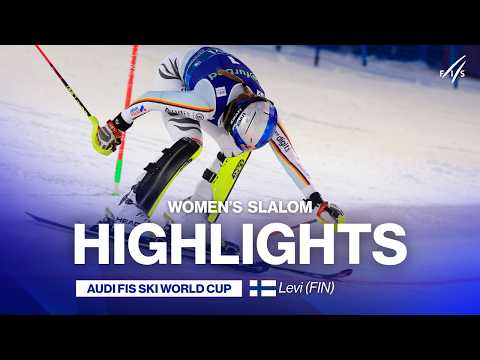
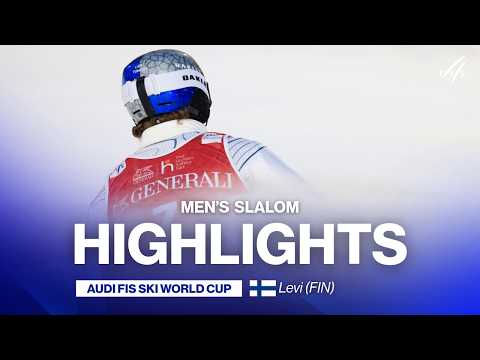
The filter sorts the Review Room embeds and the picture cards above by the keywords in their carried titles (review / analysis / recap and similar, or highlights). It runs entirely in your browser — nothing is sent anywhere.
No hall of fame with a published inductee list is carried for Cross-Country Skiing. Sport on Earth does not invent halls or inductees: where a recognised hall publishes its list in a form this site can carry, the full list will appear here with its source named.
Distance skiing over rolling terrain.
Cross-country skiing’s great modern rule was not about racing at all — it was about what may be smeared on the bottom of the ski.
Sport on Earth carries no team or player directory for this sport, because no structured public feed publishes a verifiable one. What is carried is the documented record on this page — history, rules, honours and the calendar — each with its source named.
The Cross-Country Skiing record book, as this site carries it: its rule-changes dossier records 1 dated changes and named rules. Every figure above is computed from the lists and dossiers printed on this page, each with its source basis named beside it.
More from the desk: the expert guide to Cross-Country Skiing · the site-wide Writing Desk · every sport on Earth.
📖 Cross-Country Skiing — Tactics & Strategy — every entry, plus the arcade strategy, at the foot of this page.
An arcade take on Cross-Country Skiing: set the angle, set the power, and land the skier in the landing zone. Five attempts; the closer to the middle, the more it scores. Arcade distances and a training arc — a game in the spirit of the sport, not a simulation of it.
This page’s own game is the arcade above. Everything else on the site that fits this sport is listed here — and anything borrowed from a similar sport is labelled as that sport’s game, never passed off as this one’s.
The tools on this site that honestly run on Cross-Country Skiing — its own record first, then the site-wide general tools that apply. The full Cross-Country Skiing toolkit prints the ones that do not apply, with the data reason why.
Site-wide tools, not built for Cross-Country Skiing alone: Tournament Planner · My Notebook · The Labs · Design Studio · The Makers’ Bench · Match Day Desk · Play It Near You · Myth-Check Desk · Governing Bodies · Heat & Safety Calculator (WBGT) · Hydration Calculator · Training-Load Planner · Game Clock & Timer · Custom Rulebook Generator · Scout Notes Parser.
Tactics & Strategy — this sport’s book
the Nordic family’s shared book — cross-country’s pacing and wax, ski jumping’s wind accounting, and ski mountaineering’s transitions under the clock.
7 entries, plus the arcade strategy below. All wording is original coaching-vocabulary prose; nothing is copied from any proprietary playbook.
Cross-country races are held in one of two techniques: classic (the diagonal stride in tracks, the kick wax’s grip) and skate (the ice-skater’s push on groomed corduroy). Each has its own pacing, its own climbs and its own equipment war.
When it’s used: A skier’s technique specialisation is a career’s fork; the double-poling era redrew the classic book entirely.
The sequence
Mass-start cross-country races are pack races: the draft is small but real, the narrow tracks make passing a negotiation, and the sprint for the stadium is positioned like a cycling finish.
When it’s used: On skis the pack’s politics are narrower — literally: the track admits one skier’s width of argument.
The sequence
The ski jump is a flight: the takeoff’s impulse, the V-style’s soaring position, and the wind — which is measured, compensated by the scoring (wind points) and the start gate’s adjustments, and still decides days.
When it’s used: The jump is read like a sail: pressure under the skis is altitude gained or lost.
The sequence
The combined athlete jumps, then skis a pursuit start set by the jump’s points (the Gundersen method): the ski race’s tactics are a chase with the start list as the jump’s scoreboard.
When it’s used: The pursuit start converts the morning’s flight into the afternoon’s head starts — no other sport pays its first event’s debts so literally.
The sequence
Ski mountaineering races climb on skins, descend off-piste, and boot-pack ridges: the transitions (skins on, skins off, skis on the pack) are its fourth discipline, and races at the top are decided by seconds fumbled with gloves on.
When it’s used: Skimo’s book is a mountaineering manual raced at heart rate 180.
The sequence
In classic skiing the kick wax is chosen for the track’s temperature and changed by the race’s weather; in all Nordic racing the glide wax is a laboratory science the federations keep trying to fence (the fluor ban) — the wax room is a tactics department with a thermometer.
When it’s used: The fluor wax ban rewrote the book: grip and glide are now won by structure and by hand, as they were a century ago.
The sequence
Biathlon belongs to this family’s winter and to the precision family’s shelf at once: its book (the range’s calm at a sprinter’s heart rate) is filed with the precision sports’ extras on this page’s sport, and the Nordic pages here carry its skiing half.
When it’s used: The biathlete skis like a cross-country racer and shoots like a different athlete entirely — the sport is the seam between this book and the precision book.
The sequence
The arcade cell · strategy
This page’s arcade cell: launch the skier at the landing zone from the K-point line · 50 m (arcade scale). Angle, power, launch — five attempts, and the cell keeps your best.
When it’s used: On this page, in the Play section — and its strategy is the same craft as the book above it, miniaturised.
The sequence
Part of the Sport on Earth Playbooks — a book for every sport and every game on the site.
Behind the Play · Full treatment — from this sport’s own record
Distance skiing over rolling terrain.
Behind the Play takes the decisive actions of Cross-Country Skiing apart: how the scoring play is built, which patterns the players are really running, and which rules remade the play into its modern shape.
Cross-country skiing’s great modern rule was not about racing at all — it was about what may be smeared on the bottom of the ski.
The Fluorocarbon Wax Ban (decided 2019; enforced from 2023–24). The FIS banned fluorocarbon waxes across its disciplines, enforced from the 2023–24 season with trackside fluoride-detection testing and disqualification for positive skis — the first major winter-sport equipment ban written on environmental and health grounds rather than performance grounds.
Fluoro-free waxing reset the service-team economy overnight (decades of fluoro stock destroyed, new product lines built), and the ban is the standing precedent whenever a sport’s chemistry set meets environmental law.
From this page’s Rule Changes & Named Rules dossier, where every entry names its source.
Source basis: this sport’s carried record on this page (verified record, rule-changes dossier, history datasets) and the play patterns of its family as written in the site’s guides. Nothing here is invented.