Epic Skateboarding Clips 2025
YouTube · People Are Awesome
Pages
On this page
Sport on Earth › Sports
Sport on Earth · Sport
Street and park skating, an Olympic sport and X Games staple.
News stories from around the world, gathered and sourced by the Sport on Earth desk.
Skateboarding is carried on the program for Los Angeles 2028 Olympic Games, 14 – 30 July 2028, in Los Angeles, USA. Street and park skating, an Olympic sport and X Games staple. The desk carries the sport’s full record — guide, calendar and history — on its own page.
LA28 / IOC · Nov 2026
Written by Sport on Earth’s journalists — columns, features and interviews from the desk.
No columns or stories filed for this sport yet.
Everything the desk has published for Skateboarding, organised by section.
From the News Desk · all news, every sport →
Every embed below was verified playable before listing — the network’s standing rule.
YouTube · People Are Awesome
YouTube · X Games
YouTube · X Games
YouTube · Olympic Games
YouTube · Skate Or Die
YouTube · Skate Box
YouTube · Skate Or Die
YouTube · X Games
YouTube · 10VSM
YouTube · SLS
YouTube · Skate Or Die
YouTube · Skate Or Die
YouTube · M.K. Skateboarding
YouTube · World Skate SB
YouTube · PSL Skateboarding and Red Bull Skateboarding
YouTube · World Skate SB
YouTube · Skate Or Die
YouTube · Skate Box
YouTube · Guinness World Records
YouTube · Guinness World Records
YouTube · Burnt Cat
YouTube · Echoboom Sports
YouTube · Vans
YouTube · TransWorld SKATEboarding
YouTube · Adam Miller
YouTube · RIDE Channel
YouTube · Santa Cruz Skateboards
YouTube · Red Bull Skateboarding
YouTube · Mike Hathcote - Voice Actor
YouTube · Cracks in the Road
YouTube · Olympic Games
YouTube · Olympics Skateboarding
YouTube · Olympic Games
YouTube · X Games
YouTube · VLSkate
YouTube · YUNG WAVY
YouTube · How To Skateboards
YouTube · Webz
YouTube · JomSkate
YouTube · BrianCantOllie
YouTube · SwitchFlipJones
YouTube · Penny Skateboards
YouTube · KABOB kabob
YouTube · Guinness World Records
YouTube · Rollersnakes
YouTube · WIRED
YouTube · whythetrick
YouTube · Never Stop Improving
Skateboarding is carried on the program for Los Angeles 2028 Olympic Games, 14 – 30 July 2028, in Los Angeles, USA. Street and park skating, an Olympic sport and X Games staple. The desk carries the sport’s full record — guide, calendar and history — on its own page.
LA28 / IOC · Nov 2026
Pages
On this page
No game on this site is made specifically for Skateboarding yet. The games below are the site's all-sport games, which honestly cover every sport — nothing from another sport has been dressed up as this sport's game.
A new set of questions every day, across every sport this site covers.
Real-athlete Top Sport on Earth decks built from the site’s verified board data.
Skateboarding's lab is the Physics Lab section on this page — the applied physics of its sport family, with a computed interactive where one honestly fits.
Physics Arena — the general biomechanics & physics teaching sandbox, shared by every sport.
The homepage sport explorer also carries a general Lab tab of small interactive experiments.
Calendar data not yet carried for Skateboarding — this site does not yet hold schedule data for it, so no dates are shown rather than invented.
Which section of this page should we expand first?
Votes are counted on the Sport on Earth server and the totals shown are every reader’s votes; your own choice is remembered in this browser.
Dated news entries for x105, newest first, dates exactly as carried in the site’s news data.
The flagship competitions on the calendar, with the dates for the current/upcoming cycle. Every date below was verified against the named source on 1 November 2026; dates change, and the source is the authority.
| Event | Dates | Where | Source |
|---|---|---|---|
| Los Angeles 2028 Olympic Games | 14 – 30 July 2028 | Los Angeles, USA | LA28 / IOC — Games dates |
Once airborne, an athlete is a projectile: the centre of mass follows a parabola nothing can change (the calculator below models it — no air resistance, flat landing). Everything else is rotation: angular momentum is fixed at take-off, but tucking pulls mass toward the axis and spins the body faster — the same conservation law that speeds a spinning skater’s pirouette.
Judged aerial sports are therefore a budgeting problem in physics: height buys time, time buys rotation, and the difficulty tariff prices the exchange. Landings convert the fall’s kinetic energy through bent joints and surfaces over time — longer absorption, lower peak force.
From this sport's own record: Street and park skating, an Olympic sport and X Games staple. The lab above treats the physics of the sport's family; no measurement specific to this sport is printed, because the site's verified record for it carries none — parameters are never invented to fill a lab.
Model: R = v²·sin(2θ)/g, flight time T = 2·v·sin(θ)/g, apex H = (v·sin θ)²/(2g), g = 9.81 m/s². Assumptions: no air resistance, no spin, flat ground, launch and landing at the same height. Real balls and shuttles fly shorter and curve — drag and spin are exactly what this model leaves out, so treat the output as the gravity-only ceiling, not a prediction.
The general teaching sandbox for every sport is the Physics Arena on the Games page — the same printed models, with a defender added.
The hands-on lab for Skateboarding, built entirely from the record this site carries for it — its documented rolls, its halls, its venues, its calendar and its census family. Every figure below is computed from that carried record at build time; nothing is estimated and nothing is pulled live. The companion Physics Lab on this page works the family's physics; this lab works the record.
The carried global venue dataset holds 2 venues for Skateboarding across 1 countries.
Basis: the global venue dataset carried on this site (6,438 venues with coordinates; the venue explorer on the sports index and the stadium sun table work the same data). Countries beyond the 25 largest are counted in the totals above but not listed here.
Basis: the dated events this entry’s own record carries, as announced by the bodies named in the record. A sport whose record carries no fixed dated calendar says so on its calendar page rather than inventing one.
Computed from the site census: the Aerial & acrobatic sports family holds 35 entries on this site. Across the family, the carried record includes documented rolls for 0 of them, Hall of Fame data for 3, venue sets for 3, and dated calendars for 3.
Every other entry in the family: BASE Jumping · BMX · Breaking · Chase Tag · Club Swinging · Competitive Cheerleading · DanceSport · Fierljeppen · Fingerboarding · Freestyle Football · Gliding · Guts · Gymnastics · Hang gliding · Indoor Skydiving · Irish Step Dance · Jiving · Jultagi / Tightrope Performance Racing · Line Dance · Mallakhamb · Ondol Jumping / Neouttwigi · Parachuting · Paragliding · Parkour and Freerunning · Roller Derby · Roller Sports · Slackwire · Speed Skamania / High-Speed Grass Boarding · Sport Climbing · Tightrope Walking · Tricking · Ultimate Frisbee · Wingsuit Flying · Yoyoing
Basis: the Sport on Earth census itself — the same 460-entry register the census page prints.
The desk has not verified a sponsorship record for Skateboarding from published sources, so none is printed. Sponsorship history is added only when a real published source supports it — sponsor by sponsor, deal by deal. Current sponsorship deals across sport are tracked on the Money Desk sponsorship page.
How this game is played, gathered from the record Sport on Earth already carries for Skateboarding, with the positions taken from the sourced chart cited in that section.
Skateboarding spent most of its life as an organiser-coded culture; its dated law begins with the Olympics. World Skate’s post-Tokyo rebuild of the street format — new totals, a run that always counts, and a skater’s right to refuse a score — is the sport’s first real rule-change story.
The current rules, as the site's rule-change dossier records them:
The full dossier — every dated change and named rule, with its source basis — is in this page’s Rule Changes & Named Rules section.
Skateboarding has no fixed positions — its format designates no positional roles.
Format as carried in hidden_files/batchB-nov1/batchb_data.json: "Street and park skating, an Olympic sport and X Games staple." The format carries no designated positional roles. (Source: Sport on Earth carried sport record.)
Its Tactics & Strategy book — its opening entries, the basic plays, are:
The full book carries 7 entries — in this page’s Playbook / Tactics & Strategy section, and at the Playbooks hub.
Sport on Earth's own analytics: every figure in this panel is computed at build time from the record this site itself carries, with the source named. No outside data is used, and no betting figures of any kind.
Venues carried: 2 in 1 countries.
Source: the site's global venue record (venues-global.json); a capacity is printed only where the record carries a verified one.
Census arithmetic: Skateboarding sits in the aerial & judged sports family — 35 census sports, of which 0 carry a qualifying champions roll in the site's record.
Skateboarding spent most of its life as an organiser-coded culture; its dated law begins with the Olympics. World Skate’s post-Tokyo rebuild of the street format — new totals, a run that always counts, and a skater’s right to refuse a score — is the sport’s first real rule-change story.
Before: At Tokyo 2020, street skaters took two 45-second runs and five single-trick attempts, each scored out of 10, and their total was the best FOUR scores drawn from any of the seven — the 2/5/4 system. A skater could discard both runs entirely and win on single tricks alone, which is effectively what the men’s gold medallist, Yuto Horigome, did.
The change: World Skate’s format for the Paris cycle, announced for the 2022 season and used at Paris 2024, is 2/5/3: the total is exactly three scores — the best run plus the two best single-trick scores — each now scored out of 100 to two decimal places, a 300.00 maximum, with the highest run score breaking a tie (and the highest single trick breaking a remaining dead heat). A run score always counts.
Why it happened: World Skate states that the format was agreed unanimously after taking forward learnings and feedback from Tokyo, in consultation with its Athlete Commission and International Skateboard Judging Commission; its skateboarding director explained the Tokyo analysis concluded the old format did not sufficiently capture the sport’s full breadth and diversity, because run skating — flow, course use, complete lines — could be mathematically erased by trick specialists.
In practice today: Paris rewarded the complete street skater: one third of the title is now a full run, skated at speed across the whole course. Retrospective scoring of Tokyo under 2/5/3 showed the change was not cosmetic — Kelvin Hoefler, the Tokyo men’s silver medallist, would have taken gold under the new arithmetic.
Before: Once a single-trick attempt was scored, the score stood. Landing a safe version of a trick early in the five attempts cost a skater twice: the mediocre score sat in the set, and going back later to do the trick properly carried the risk of a repetition penalty in the judging.
The change: World Skate’s Paris-cycle rules introduced a Scoring Refusal Procedure: a skateboarder has the right to have a trick’s score scrubbed — signalling immediately to the Course Manager, who notifies the Head Judge to disregard that score — so they can go back and do the trick better later without incurring any repetition penalty. The refused attempt is spent: it counts as one of the five attempts, scoring zero.
Why it happened: World Skate listed the procedure among the headline innovations of the new street format: it protects ambition. A skater who lands a trick below their own standard early is no longer locked into banking it, and the format deliberately builds a risk decision into every trick attempt.
In practice today: Best-trick sections became live risk management — refuse, re-attempt, or bank is a tactical call made in seconds in Olympic street finals — and the all-or-nothing final attempt is now a designed feature of the format rather than an accident of it.
Source basis: World Skate: the official Street Skateboarding Format announcement for all Paris 2024 Olympic qualifier events (the 2/5/3 system and the Scoring Refusal Procedure, released ahead of the 2022 season, World Skate Skateboarding Commission with the Athlete Commission and the International Skateboard Judging Commission); Paris 2024 format reporting (Team GB and Olympedia) comparing the Paris scoring with Tokyo 2020’s.
Sport on Earth carries no results feed for Skateboarding: no scores or fixtures are published here, rather than inventing them. The sport's documented record is in its history page and the History & Records section of this page.
The historical record for Skateboarding — past standings, champions, title history and all-time leaders, as deep as verifiable public records go.
Season-by-season standings, historical player statistics and title rolls are not carried for Skateboarding: no public archive publishes them in a form Sport on Earth can verify, and this site does not invent history. What is carried for this sport is its verified record, its rule-change history and its league history — elsewhere on this page.
The review and analysis videos from Skateboarding’s verified video pool — every embed below was identity-checked and probed playable before listing, the site’s standing rule. Nothing here is a show Sport on Earth produces; these are the review, post-game and breakdown videos the pool already carries for this sport.
No verified review-show video is carried for this sport yet.
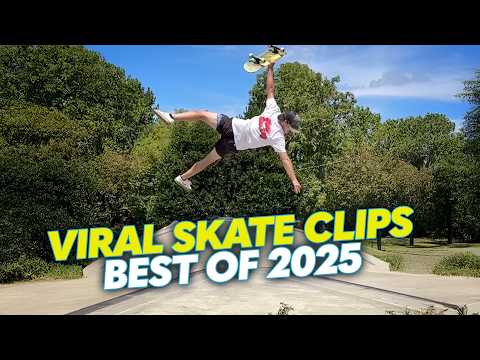
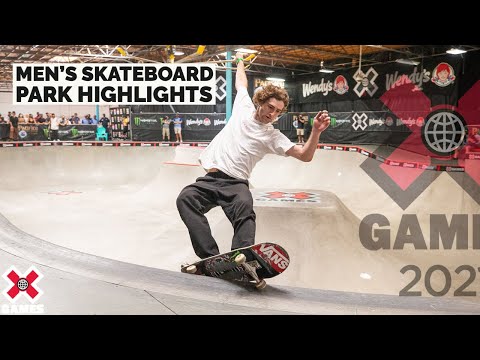
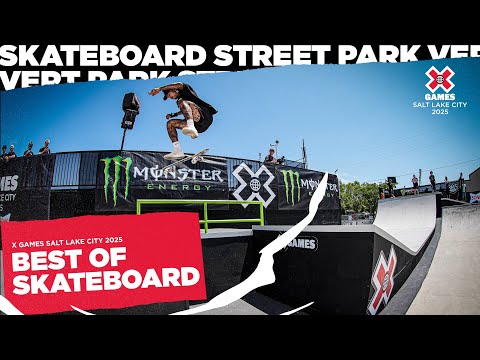
Chart basis: counts from Sport on Earth’s own carried data files at build time — verified videos carried for this sport (the verified pool: sport-videos.json + the desk league pools), news items carried (news.json), and league pages carried (desk.json). No external or estimated figures.
The filter sorts the Review Room embeds and the picture cards above by the keywords in their carried titles (review / analysis / recap and similar, or highlights). It runs entirely in your browser — nothing is sent anywhere.
Also recognised: Skateboarding Hall of Fame (Simi Valley, California, United States). Its published inductee list is not carried here in parsed form — the hall's own published list is the complete record.
Street and park skating, an Olympic sport and X Games staple.
In the wider aerial family of sports — rotation, angular momentum and the projectile body, the game turns on: Progressions, not leaps: every hard move is built from drills that isolate its pieces at low consequence.; Air awareness is trained: athletes learn where they are in rotation from trampoline, pit and harness work before hard landings.; Difficulty is a budget: routines are planned so the hardest elements sit where the athlete is freshest or most consistent.; Landings are a skill: the last second of every move is practised as deliberately as the first.; Form is function: the straight lines and pointed toes are not decoration — tight shapes rotate faster and land safer.; Spotting is a safety system: belts, pits, mats and hands are part of the sport’s technique, present in training and removed only by degrees..
Sport on Earth carries no team or player directory for this sport, because no structured public feed publishes a verifiable one. What is carried is the documented record on this page — history, rules, honours and the calendar — each with its source named.
📖 Skateboarding — Tactics & Strategy — every entry, plus the arcade strategy, at the foot of this page.
An arcade take on Skateboarding: set the angle, set the power, and land the flyer in the landing mat. Five attempts; the closer to the middle, the more it scores. Arcade distances and a training arc — a game in the spirit of the sport, not a simulation of it.
This page’s own game is the arcade above. Everything else on the site that fits this sport is listed here — and anything borrowed from a similar sport is labelled as that sport’s game, never passed off as this one’s.
Click to play — the game loads from the provider only when you press Play (verified to load and play on 2 November 2026). Open a game to play it here, or browse the whole collection in the Sport on Earth Arcade.
3 verified documentaries, films and series about this sport are listed in the site's screen guide: Sport on Screen — Skateboarding.
The tools on this site that honestly run on Skateboarding — its own record first, then the site-wide general tools that apply. The full Skateboarding toolkit prints the ones that do not apply, with the data reason why.
Site-wide tools, not built for Skateboarding alone: Tournament Planner · My Notebook · The Labs · Design Studio · The Makers’ Bench · Match Day Desk · Play It Near You · Myth-Check Desk · Governing Bodies · Heat & Safety Calculator (WBGT) · Hydration Calculator · Training-Load Planner · Game Clock & Timer · Custom Rulebook Generator · Scout Notes Parser.
The directory of the world's notable skate parks and the street spots skating made famous is at Skate Parks & Famous Skate Locations of the World.
Tactics & Strategy — this sport’s book
the action sports’ shared book — judged sports whose ’plays’ are tricks, lines and runs, built like routines and priced by judges rather than clocks.
7 entries, plus the arcade strategy below. All wording is original coaching-vocabulary prose; nothing is copied from any proprietary playbook.
Skateboarding, freestyle BMX, surfing’s heat and snowboarding’s runs share the unit: the run — a timed performance of linked tricks judged on difficulty, execution, variety and flow. The run is built like a gymnastics routine, and its tactics are the same economics.
When it’s used: The run’s construction is the action sports’ universal page: bank the safe score, then spend the risk.
The sequence
In the street and park courses, the line is the run’s argument: the path linking obstacles so tricks flow without a push or a pause — the course is walked and skated in practice until the line is a sentence the rider can say at speed.
When it’s used: The line is chosen like a racing line, for flow rather than distance: speed kept is difficulty bought.
The sequence
Surfing’s heat is a tactics duel: two to four surfers, a wave count that keeps only the best two scores, and priority (the right to the next wave, allocated after each ride) — the game’s chess is wave selection and the priority’s use, including the decoy paddle that burns a rival’s priority.
When it’s used: The ocean deals the playing field wave by wave, and priority is the right to refuse the deal.
The sequence
Parkour’s competitive forms judge speed (a course run against the clock) and style (a judged line) — and chase tag turns the playground game into a 20-second evasion on an obstacle quad, where the chaser’s line-cutting geometry is the whole book.
When it’s used: Chase tag is tag with a stopwatch and a quad full of furniture: the evader’s juke is a route, the chaser’s is a shortcut.
The sequence
Freestyle football (juggling tricks judged in battles) and club swinging (the rhythmic swinging of Indian clubs in patterns, a 19th-century gymnastic art revived as a sport) close the family’s shelf: both are pattern sports, where the vocabulary of moves is named, sequenced and judged — the plays are the patterns themselves.
When it’s used: In the pattern sports the catalogue IS the playbook: the named move, performed clean, is the point.
The sequence
Across the judged action sports, the practice session is a resource: the course is open for limited hours, the body for fewer attempts — the athletes who win the session (learning the line in the fewest runs) win the contest’s hidden first round.
When it’s used: Course knowledge is rationed by the practice clock in every sport on this shelf.
The sequence
Boards, bikes and skates are tuned like instruments in this family — wheel hardness, truck tightness, tyre pressure, the trampoline’s bed: the set-up is a selection made before the run, and its wrongness is confessed in the run’s first seconds.
When it’s used: The athlete’s tools are chosen like a golfer’s clubs, for the course’s specific argument.
The sequence
The arcade cell · strategy
This page’s arcade cell: launch the flyer at the landing mat from the landing mat · 38 m (arcade scale). Angle, power, launch — five attempts, and the cell keeps your best.
When it’s used: On this page, in the Play section — and its strategy is the same craft as the book above it, miniaturised.
The sequence
Part of the Sport on Earth Playbooks — a book for every sport and every game on the site.
Behind the Play · From the carried record
Street and park skating, an Olympic sport and X Games staple.
Behind the Play takes the decisive actions of Skateboarding apart: how the scoring play is built, which patterns the players are really running, and which rules remade the play into its modern shape.
Source basis: this sport’s carried record on this page (verified record, rule-changes dossier, history datasets) and the play patterns of its family as written in the site’s guides. Nothing here is invented.