Skydive Dubai Swoop Festival 2022 | Highlight Reel
YouTube · Skydive Dubai
Pages
On this page
Sport on Earth › Sports
Sport on Earth · Sport
A jumper exits an aircraft, free-falls, then deploys a steerable canopy to fly to a landing area and land.
Every embed below was verified playable before listing — the network’s standing rule.
YouTube · Skydive Dubai
YouTube · Caleb Brown
YouTube · FAI Air Sports Channel
YouTube · iParatrooper 07
YouTube · Britcar TV
YouTube · Skydive Voss
YouTube · EDGEsport
YouTube · FAI Skydiving
YouTube · Swaggerjack Productions
YouTube · Australian Parachute Federation
YouTube · KellySalt222
YouTube · Great Big Story
YouTube · Smithsonian Channel
YouTube · Duane Turner
YouTube · Persistent Systems and Lujan
YouTube · BFBS Sports Show
YouTube · Ash Crick
YouTube · Swaggerjack Productions
YouTube · Skydive Suffolk
YouTube · Caleb Brown
YouTube · Piedmont Skydiving
YouTube · SDC MatriX
YouTube · Skydive Voss
YouTube · Green Dragon CoffeesLLC
YouTube · Eddy
YouTube · Derek Cresto
YouTube · Samuel Hawkes
YouTube · cismchannel
Pages
On this page
No game on this site is made specifically for Parachuting yet. The games below are the site's all-sport games, which honestly cover every sport — nothing from another sport has been dressed up as this sport's game.
A new set of questions every day, across every sport this site covers.
Real-athlete Top Sport on Earth decks built from the site’s verified board data.
Parachuting's lab is the Physics Lab section on this page — the applied physics of its sport family, with a computed interactive where one honestly fits.
Physics Arena — the general biomechanics & physics teaching sandbox, shared by every sport.
The homepage sport explorer also carries a general Lab tab of small interactive experiments.
Calendar data not yet carried for Parachuting — this site does not yet hold schedule data for it, so no dates are shown rather than invented.
Which section of this page should we expand first?
Votes are counted on the Sport on Earth server and the totals shown are every reader’s votes; your own choice is remembered in this browser.
Sport on Earth does not yet hold verified dated events for Parachuting, and its carried record does not state the season's timing in words — so no calendar is shown rather than an invented one. What the site does carry for this sport is on this page: its verified record, its rules record and its history.
Once airborne, an athlete is a projectile: the centre of mass follows a parabola nothing can change (the calculator below models it — no air resistance, flat landing). Everything else is rotation: angular momentum is fixed at take-off, but tucking pulls mass toward the axis and spins the body faster — the same conservation law that speeds a spinning skater’s pirouette.
Judged aerial sports are therefore a budgeting problem in physics: height buys time, time buys rotation, and the difficulty tariff prices the exchange. Landings convert the fall’s kinetic energy through bent joints and surfaces over time — longer absorption, lower peak force.
From this sport's own record: A jumper exits an aircraft, free-falls, then deploys a steerable canopy to fly to a landing area and land. The lab above treats the physics of the sport's family; no measurement specific to this sport is printed, because the site's verified record for it carries none — parameters are never invented to fill a lab.
Model: R = v²·sin(2θ)/g, flight time T = 2·v·sin(θ)/g, apex H = (v·sin θ)²/(2g), g = 9.81 m/s². Assumptions: no air resistance, no spin, flat ground, launch and landing at the same height. Real balls and shuttles fly shorter and curve — drag and spin are exactly what this model leaves out, so treat the output as the gravity-only ceiling, not a prediction.
The general teaching sandbox for every sport is the Physics Arena on the Games page — the same printed models, with a defender added.
The hands-on lab for Parachuting, built entirely from the record this site carries for it — its documented rolls, its halls, its venues, its calendar and its census family. Every figure below is computed from that carried record at build time; nothing is estimated and nothing is pulled live. The companion Physics Lab on this page works the family's physics; this lab works the record.
The honest position: the record this site carries for Parachuting is thin — no documented roll, hall, venue set or dated calendar is carried for it yet — so this entry’s lab is its family lab: the computed census of the family it belongs to. When the record grows, the lab grows with it; nothing here is estimated to fill the space.
Computed from the site census: the Aerial & acrobatic sports family holds 35 entries on this site. Across the family, the carried record includes documented rolls for 0 of them, Hall of Fame data for 3, venue sets for 3, and dated calendars for 3.
Every other entry in the family: BASE Jumping · BMX · Breaking · Chase Tag · Club Swinging · Competitive Cheerleading · DanceSport · Fierljeppen · Fingerboarding · Freestyle Football · Gliding · Guts · Gymnastics · Hang gliding · Indoor Skydiving · Irish Step Dance · Jiving · Jultagi / Tightrope Performance Racing · Line Dance · Mallakhamb · Ondol Jumping / Neouttwigi · Paragliding · Parkour and Freerunning · Roller Derby · Roller Sports · Skateboarding · Slackwire · Speed Skamania / High-Speed Grass Boarding · Sport Climbing · Tightrope Walking · Tricking · Ultimate Frisbee · Wingsuit Flying · Yoyoing
Basis: the Sport on Earth census itself — the same 460-entry register the census page prints.
The desk has not verified a sponsorship record for Parachuting from published sources, so none is printed. Sponsorship history is added only when a real published source supports it — sponsor by sponsor, deal by deal. Current sponsorship deals across sport are tracked on the Money Desk sponsorship page.
How this game is played, gathered from the record Sport on Earth already carries for Parachuting, with the positions taken from the sourced chart cited in that section.
Parachuting is the descent of a person through the atmosphere using a parachute; in sport parachuting a jumper normally exits an aircraft, passes through free fall, deploys a steerable canopy, flies it to a landing area and lands. Skydiving is commonly used as a synonym for sport parachuting, more narrowly referring to controlling the body during freefall before deployment.
Parachuting is used for recreation and competition, military deployment, emergency escape and access to remote areas. Sport parachuting expanded after the Second World War, and the first World Parachuting Championships were held at Bled in 1951, initially centred on landing accuracy.
The rules — the rules as this site's record carries them:
Parachuting has no fixed positions — its format designates no positional roles.
Format as carried in hidden_files/batchB-nov1/batchb_data.json: "A jumper exits an aircraft, free-falls, then deploys a steerable canopy to fly to a landing area and land." The format carries no designated positional roles. (Source: Sport on Earth carried sport record.)
Its Tactics & Strategy book — its opening entries, the basic plays, are:
The full book carries 7 entries — in this page’s Playbook / Tactics & Strategy section, and at the Playbooks hub.
Sport on Earth's own analytics: every figure in this panel is computed at build time from the record this site itself carries, with the source named. No outside data is used, and no betting figures of any kind.
Census arithmetic: Parachuting sits in the aerial & judged sports family — 35 census sports, of which 0 carry a qualifying champions roll in the site's record.
The carried record for Parachuting is too thin for computed panels: no champions roll, hall-of-fame list or venue record is carried for it. This panel therefore prints the census arithmetic only — the honest answer rather than a manufactured figure.
Parachuting is the descent of a person through the atmosphere using a parachute; in sport parachuting a jumper normally exits an aircraft, passes through free fall, deploys a steerable canopy, flies it to a landing area and lands. Skydiving is commonly used as a synonym for sport parachuting, more narrowly referring to controlling the body during freefall before deployment.
Parachuting is used for recreation and competition, military deployment, emergency escape and access to remote areas. Sport parachuting expanded after the Second World War, and the first World Parachuting Championships were held at Bled in 1951, initially centred on landing accuracy.
International competition and record activity is administered by the Skydiving Commission of the Fédération Aéronautique Internationale (FAI).
First World Parachuting Championships held at Bled in 1951, initially centred on landing accuracy, with the FAI recognising records and championships in the same period.
Skydiving appeared in the World Games air-sports program from 1997 through 2022; canopy piloting was included from 2005 through 2022.
On 22 October 1797 André-Jacques Garnerin made the first well documented parachute descent from a balloon over Paris, from about 3,000 ft.
Parachuting has no structured results feed this site can carry, so this page is the verified record only — the FAI Skydiving Commission, its championships and disciplines as verified in November 2026 — with no live results.
Sources, verified November 1, 2026: Parachuting
Material from Wikipedia linked above is used under CC BY-SA 4.0.
How the laws of Parachuting are governed today — the documented record, stated plainly.
Parachuting competition and records are administered by the Skydiving Commission of the Fédération Aéronautique Internationale, with national associations handling training and licensing. Changes to disciplines, equipment and training routes have been refinements of that framework rather than dated landmark replacements of the sport itself. No major dated rule change is carried for parachuting.
That framework summary is the whole documented record Sport on Earth can verify for this sport — no major dated rule changes are carried, rather than invent any.
Source basis: The governing body’s published framework as summarised in this section (see the framework text).
Sport on Earth carries no results feed for Parachuting: no scores or fixtures are published here, rather than inventing them. The sport's documented record is in its history page and the History & Records section of this page.
The historical record for Parachuting — past standings, champions, title history and all-time leaders, as deep as verifiable public records go.
Season-by-season standings, historical player statistics and title rolls are not carried for Parachuting: no public archive publishes them in a form Sport on Earth can verify, and this site does not invent history. What is carried for this sport is its verified record, its rule-change history and its league history — elsewhere on this page.
The review and analysis videos from Parachuting’s verified video pool — every embed below was identity-checked and probed playable before listing, the site’s standing rule. Nothing here is a show Sport on Earth produces; these are the review, post-game and breakdown videos the pool already carries for this sport.
No verified review-show video is carried for this sport yet.
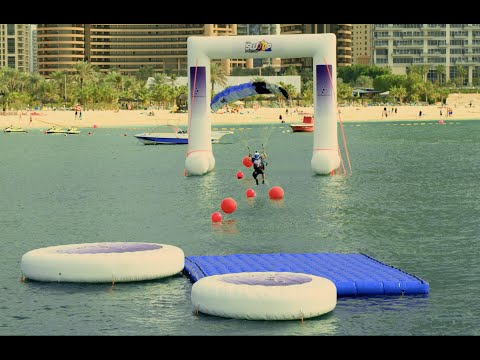
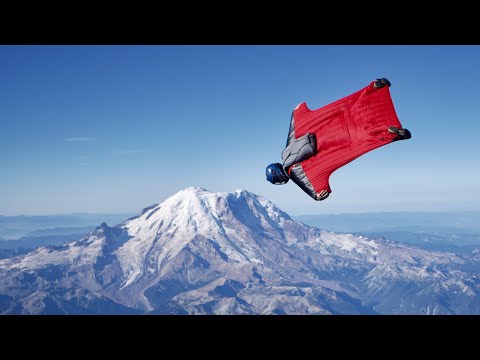
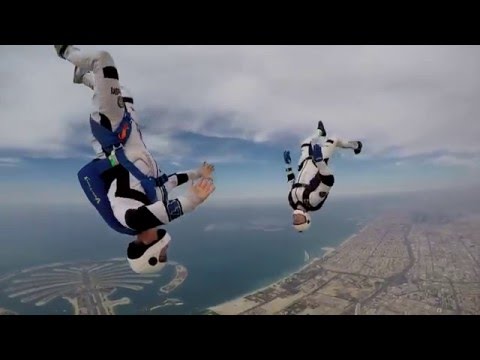
The filter sorts the Review Room embeds and the picture cards above by the keywords in their carried titles (review / analysis / recap and similar, or highlights). It runs entirely in your browser — nothing is sent anywhere.
No hall of fame with a published inductee list is carried for Parachuting. Sport on Earth does not invent halls or inductees: where a recognised hall publishes its list in a form this site can carry, the full list will appear here with its source named.
A jumper exits an aircraft, free-falls, then deploys a steerable canopy to fly to a landing area and land.
The format, from this sport's verified record:
The Parachuting record book is still thin: beyond the standings, rules and calendar layers on this page, no verified winners roll or honours list is carried yet. The desk adds record material only when a published source can be named for it — never from memory or invention.
More from the desk: the expert guide to Parachuting · the site-wide Writing Desk · every sport on Earth.
📖 Parachuting — Tactics & Strategy — every entry, plus the arcade strategy, at the foot of this page.
An arcade take on Parachuting: set the angle, set the power, and land the flyer in the landing mat. Five attempts; the closer to the middle, the more it scores. Arcade distances and a training arc — a game in the spirit of the sport, not a simulation of it.
This page’s own game is the arcade above. Everything else on the site that fits this sport is listed here — and anything borrowed from a similar sport is labelled as that sport’s game, never passed off as this one’s.
The tools on this site that honestly run on Parachuting — its own record first, then the site-wide general tools that apply. The full Parachuting toolkit prints the ones that do not apply, with the data reason why.
No bench tool yet computes from Parachuting’s own carried record — the general tools below are the ones that honestly apply.
Site-wide tools, not built for Parachuting alone: Tournament Planner · My Notebook · The Labs · Design Studio · The Makers’ Bench · Match Day Desk · Play It Near You · Myth-Check Desk · Governing Bodies · Heat & Safety Calculator (WBGT) · Hydration Calculator · Training-Load Planner · Game Clock & Timer · Custom Rulebook Generator · Scout Notes Parser.
Tactics & Strategy — this sport’s book
the flight family’s shared book — gliding’s energy management is its parent craft, and hang gliding, paragliding, parachuting and the air sports read from its pages.
7 entries, plus the arcade strategy below. All wording is original coaching-vocabulary prose; nothing is copied from any proprietary playbook.
Gliding climbs in thermals (rising air) and glides between them: the task (a course around turnpoints) is a budgeting of height, and the speed-to-fly (faster between thermals when the air ahead rises strongly) is its mathematical heart.
When it’s used: The MacCready theory — the optimal speed between thermals — is flight’s first fully solved tactic, and every glider carries its answer on a dial.
The sequence
The foot-launched wings share the thermal book with slower speeds and closer ground: the paraglider’s collapses (the wing’s partial folding in turbulence, recovered by the pilot’s inputs) are its signature emergency, and the ridge’s lift band is its home water.
When it’s used: The slower the wing, the closer the reading of the air must be: these pilots are meteorologists by survival.
The sequence
Sport parachuting is several sports: formation skydiving (teams build set formations against the clock in freefall), accuracy landing (a disc the size of a coin as the target), canopy piloting (swooping a pond at 100 km/h for distance, speed and accuracy) and the wingsuit’s glide ratio racing.
When it’s used: The formation team’s book is a dive plan memorised like a dance, performed at 200 km/h for fifty seconds.
The sequence
Parasailing (towed aloft behind a boat) and parascending are the family’s towed cousins — exhibition rather than competition in most of their life — and ballooning’s competition book (the hare-and-hounds tasks, the marker drops judged to the metre) is a tactics of wind layers: the balloon steers by altitude, choosing among the winds stacked above the field.
When it’s used: The balloon pilot’s only steering is up and down, into different rivers of air: the calmest tactics in sport, and among the deepest.
The sequence
Every flight sport’s tactics are conditional on a forecast: the wind’s strength and direction, the thermal’s promise, the cloud base — the day is read before it is flown, and the reading is a competitive skill with its own literature.
When it’s used: The flight athlete’s first opponent files a forecast, not an entry.
The sequence
Flight sports plan for landing where there is no airfield: the field selection from altitude, the approach over its wires and slopes — the outlanding is a manoeuvre, not an accident, in this family’s books.
When it’s used: The outlanding field is chosen early and revisited often: a pilot with a field is a pilot with a plan.
The sequence
All flight sports share the landing: the approach is flown at the wind’s mercy into a field or a strip, and the landing’s quality is the flight’s last impression — the books all end with it because every flight does.
When it’s used: A flight is judged by its landing the way a dive is judged by its entry.
The sequence
The arcade cell · strategy
This page’s arcade cell: launch the flyer at the landing mat from the landing mat · 38 m (arcade scale). Angle, power, launch — five attempts, and the cell keeps your best.
When it’s used: On this page, in the Play section — and its strategy is the same craft as the book above it, miniaturised.
The sequence
Part of the Sport on Earth Playbooks — a book for every sport and every game on the site.
Behind the Play · Full treatment — from this sport’s own record
A jumper exits an aircraft, free-falls, then deploys a steerable canopy to fly to a landing area and land.
Behind the Play takes the decisive actions of Parachuting apart: how the scoring play is built, which patterns the players are really running, and which rules remade the play into its modern shape.
The format, from this sport's verified record:
Source basis: this sport’s carried record on this page (verified record, rule-changes dossier, history datasets) and the play patterns of its family as written in the site’s guides. Nothing here is invented.