Most Iconic Ultimate Frisbee Plays (2013-2023)
YouTube · UFA Ultimate Frisbee Association
Pages
On this page
Sport on Earth › Sports
Sport on Earth · Sport
Seven-a-side disc game, pro in North America.
Sport on Earth’s daily and weekly video shows for Ultimate Frisbee — every episode, newest first.
The first episode is in production and lands here the morning it is produced — no episode is listed until it exists.
Every embed below was verified playable before listing — the network’s standing rule.
YouTube · UFA Ultimate Frisbee Association
YouTube · UFA Ultimate Frisbee Association
YouTube · Everything Ultimate
YouTube · UFA Ultimate Frisbee Association
YouTube · Ultiworld - Ultimate Frisbee
YouTube · UFA Ultimate Frisbee Association
YouTube · Ultiworld - Ultimate Frisbee
YouTube · UFA Ultimate Frisbee Association
YouTube · UltiVillage
YouTube · ULTI.TV - Ultimate Frisbee
YouTube · UFA Ultimate Frisbee Association
YouTube · UFA Ultimate Frisbee Association
YouTube · UFA Ultimate Frisbee Association
YouTube · Brodie Smith
YouTube · UFA Ultimate Frisbee Association
YouTube · UFA Ultimate Frisbee Association
YouTube · UFA Ultimate Frisbee Association
YouTube · UFA Ultimate Frisbee Association
YouTube · UFA Ultimate Frisbee Association
YouTube · UFA Ultimate Frisbee Association
YouTube · Ultiworld - Ultimate Frisbee
YouTube · Pure Ultimate
YouTube · The Flatballer
YouTube · UFA Ultimate Frisbee Association
YouTube · UFA Ultimate Frisbee Association
YouTube · UFA Ultimate Frisbee Association
YouTube · UFA Ultimate Frisbee Association
YouTube · UFA Ultimate Frisbee Association
YouTube · Doodspacito
YouTube · chrisperkel
YouTube · J.R. Perry
YouTube · Flatball Films
YouTube · Jason Wu
YouTube · The History of
YouTube · Владимир Дрбохлав
YouTube · JRE Clips
YouTube · TODAY
YouTube · ULTI.TV - Ultimate Frisbee
YouTube · Corinn Colford
YouTube · Kelsea Newton
YouTube · Transylvania Ultimate
YouTube · UFA Ultimate Frisbee Association
YouTube · USA Ultimate
YouTube · USA Ultimate
YouTube · UFA Ultimate Frisbee Association
YouTube · High Quality Banter
YouTube · UFA Ultimate Frisbee Association
YouTube · UFA Ultimate Frisbee Association
Pages
On this page
No game on this site is made specifically for Ultimate Frisbee yet. The games below are the site's all-sport games, which honestly cover every sport — nothing from another sport has been dressed up as this sport's game.
A new set of questions every day, across every sport this site covers.
Real-athlete Top Sport on Earth decks built from the site’s verified board data.
Ultimate Frisbee's lab is the Physics Lab section on this page — the applied physics of its sport family, with a computed interactive where one honestly fits.
Physics Arena — the general biomechanics & physics teaching sandbox, shared by every sport.
The homepage sport explorer also carries a general Lab tab of small interactive experiments.
Calendar data not yet carried for Ultimate Frisbee — this site does not yet hold schedule data for it, so no dates are shown rather than invented.
Which section of this page should we expand first?
Votes are counted on the Sport on Earth server and the totals shown are every reader’s votes; your own choice is remembered in this browser.
Sport on Earth does not yet hold verified dated events for Ultimate Frisbee, and its carried record does not state the season's timing in words — so no calendar is shown rather than an invented one. What the site does carry for this sport is on this page: its verified record, its rules record and its history.
Once airborne, an athlete is a projectile: the centre of mass follows a parabola nothing can change (the calculator below models it — no air resistance, flat landing). Everything else is rotation: angular momentum is fixed at take-off, but tucking pulls mass toward the axis and spins the body faster — the same conservation law that speeds a spinning skater’s pirouette.
Judged aerial sports are therefore a budgeting problem in physics: height buys time, time buys rotation, and the difficulty tariff prices the exchange. Landings convert the fall’s kinetic energy through bent joints and surfaces over time — longer absorption, lower peak force.
From this sport's own record: Seven-a-side disc game, pro in North America. The lab above treats the physics of the sport's family; no measurement specific to this sport is printed, because the site's verified record for it carries none — parameters are never invented to fill a lab.
Model: R = v²·sin(2θ)/g, flight time T = 2·v·sin(θ)/g, apex H = (v·sin θ)²/(2g), g = 9.81 m/s². Assumptions: no air resistance, no spin, flat ground, launch and landing at the same height. Real balls and shuttles fly shorter and curve — drag and spin are exactly what this model leaves out, so treat the output as the gravity-only ceiling, not a prediction.
The general teaching sandbox for every sport is the Physics Arena on the Games page — the same printed models, with a defender added.
The hands-on lab for Ultimate Frisbee, built entirely from the record this site carries for it — its documented rolls, its halls, its venues, its calendar and its census family. Every figure below is computed from that carried record at build time; nothing is estimated and nothing is pulled live. The companion Physics Lab on this page works the family's physics; this lab works the record.
The honest position: the record this site carries for Ultimate Frisbee is thin — no documented roll, hall, venue set or dated calendar is carried for it yet — so this entry’s lab is its family lab: the computed census of the family it belongs to. When the record grows, the lab grows with it; nothing here is estimated to fill the space.
Computed from the site census: the Aerial & acrobatic sports family holds 35 entries on this site. Across the family, the carried record includes documented rolls for 0 of them, Hall of Fame data for 3, venue sets for 3, and dated calendars for 3.
Every other entry in the family: BASE Jumping · BMX · Breaking · Chase Tag · Club Swinging · Competitive Cheerleading · DanceSport · Fierljeppen · Fingerboarding · Freestyle Football · Gliding · Guts · Gymnastics · Hang gliding · Indoor Skydiving · Irish Step Dance · Jiving · Jultagi / Tightrope Performance Racing · Line Dance · Mallakhamb · Ondol Jumping / Neouttwigi · Parachuting · Paragliding · Parkour and Freerunning · Roller Derby · Roller Sports · Skateboarding · Slackwire · Speed Skamania / High-Speed Grass Boarding · Sport Climbing · Tightrope Walking · Tricking · Wingsuit Flying · Yoyoing
Basis: the Sport on Earth census itself — the same 460-entry register the census page prints.
The desk has not verified a sponsorship record for Ultimate Frisbee from published sources, so none is printed. Sponsorship history is added only when a real published source supports it — sponsor by sponsor, deal by deal. Current sponsorship deals across sport are tracked on the Money Desk sponsorship page.
How this game is played, gathered from the record Sport on Earth already carries for Ultimate Frisbee, with the positions taken from the sourced chart cited in that section.
Ultimate’s WFDF code is the world’s only major self-officiated one, and its modern rule changes have come in the championship appendix and the four-year rulebooks: a prescribed gender ratio that took tactics out of mixed play, and a 2021 edition that rewrote travelling and continuation for a game that has to referee itself.
The current rules, as the site's rule-change dossier records them:
The full dossier — every dated change and named rule, with its source basis — is in this page’s Rule Changes & Named Rules section.
Ultimate Frisbee has no fixed positions — its format designates no positional roles.
WFDF Rules of Ultimate: the rules designate no playing positions (no goalkeeper or set roles); ’handler’ and ’cutter’ are informal tactical labels teams use, not rule positions. (Source: World Flying Disc Federation (WFDF).)
Its Playbook — its opening entries, the basic plays, are:
The full book carries 10 entries — in this page’s Playbook / Tactics & Strategy section, and at the Playbooks hub.
Sport on Earth's own analytics: every figure in this panel is computed at build time from the record this site itself carries, with the source named. No outside data is used, and no betting figures of any kind.
Census arithmetic: Ultimate Frisbee sits in the aerial & judged sports family — 35 census sports, of which 0 carry a qualifying champions roll in the site's record.
The carried record for Ultimate Frisbee is too thin for computed panels: no champions roll, hall-of-fame list or venue record is carried for it. This panel therefore prints the census arithmetic only — the honest answer rather than a manufactured figure.
Ultimate’s WFDF code is the world’s only major self-officiated one, and its modern rule changes have come in the championship appendix and the four-year rulebooks: a prescribed gender ratio that took tactics out of mixed play, and a 2021 edition that rewrote travelling and continuation for a game that has to referee itself.
Before: In mixed ultimate every point is played with either four men and three women or four women and three men on the line — and WHICH ratio was a tactical decision, taken point by point under the old arrangements. In practice, as contemporary federation correspondence noted, the default was typically four men and three women for every point, with the ratio used as a matchup lever, so male-matching players took roughly 57% of the playing time.
The change: Ratio Rule A, written into the WFDF Rules of Ultimate 2017 Appendix (§A7.2), prescribes the ratio instead of choosing it: after the initial disc flip, a second flip lets the winner select the ratio for the first point; the second and third points are played at the reverse ratio, the fourth and fifth at the first ratio again, alternating every two points (the ABBA pattern) until the end of the game, with half-time having no impact on the pattern. The appendix provided that Ratio Rule A would be used at The World Games 2017 and for all WFDF World Ultimate Championship events for national teams from 2019 onwards.
Why it happened: Equal playing opportunity, in the WFDF’s own words: the federation’s rules accreditation answer explains that the purpose of the prescribed rule is to ensure equal playing opportunities for male and female players in high-level mixed games, rather than leaving the ratio as a tactical choice for one team.
In practice today: Mixed rosters must now be built and conditioned for both ratios, playing time is equalised by law across a game, and ’who picks the ratio’ vanished from mixed ultimate’s tactics — replaced by planning for a pattern both teams know before the first pull.
Before: The travel rules policed the catch strictly: a player who caught the disc while moving had to come to a stop and establish a pivot in the prescribed manner, and a throw released out of the catch’s own momentum — in stride, before the stop was completed — was a travel violation that brought the disc back.
The change: The WFDF Rules of Ultimate 2021–2024 (Rule 18.2.2, in the edition effective 1 January 2021) changed the travel rules to allow a catch and throw on the run: a receiver may release a throw while still moving from the catch, in the same motion, instead of first completing the stop-and-pivot sequence.
Why it happened: The 2021 edition was the WFDF Ultimate Rules Sub-Committee’s modernisation of the code (its other headline items are in the next entry), and the travel change recognised how the elite game was already played: the quick continuation throw straight off a catch is ultimate’s fastest skill, and the old text punished it with the code’s strictest technicality.
In practice today: Give-and-go ultimate at full sprint is legal by design. Defences can no longer count on the catch itself forcing a pause, and travel arguments moved from the catch-and-throw to direction changes and pivot movement, where the genuine advantages are won.
Before: When a foul or violation was called around a throw, whether the play that followed counted turned on fine judgements about the thrower: the old continuation test asked whether the thrower was ’in the throwing action’ when the call came, and the separate principle that a call which did not affect play should not unwind its result applied only to some kinds of stoppage.
The change: The 2021–2024 rules simplified both tests. For calls not made by the thrower, continuation now turns on whether the disc was in the air when the call was made (Rule 16.2.3, with ’in the throwing action’ removed), and the ’did not affect play’ rule (Rule 16.3) now applies to all stoppages: if the call plainly changed nothing, the outcome of the play stands.
Why it happened: A self-officiated sport needs tests two opponents can apply to themselves in real time, mid-point, without a referee. The WFDF’s published summary of the 2021 edition lists both continuation changes among its main items — legal precision traded for a standard players can actually agree on.
In practice today: Fewer stoppages unpick completed plays, and continuation arguments now start from two questions both teams can answer — was the disc in the air, and did the call matter? — which is the closest a rulebook can come to refereeing a game that has no referees.
Source basis: World Flying Disc Federation (WFDF): WFDF Rules of Ultimate 2017, Appendix §A7 (Ratio Rule A), with the WFDF Rules Accreditation explanation of the rule’s purpose; WFDF Rules of Ultimate 2021–2024 (official version effective 1 January 2021) and the published summary of its main changes (Rules 16.2.3, 16.3, 18.2.2).
Sport on Earth carries no results feed for Ultimate Frisbee: no scores or fixtures are published here, rather than inventing them. The sport's documented record is in its history page and the History & Records section of this page.
The historical record for Ultimate Frisbee — past standings, champions, title history and all-time leaders, as deep as verifiable public records go.
Season-by-season standings, historical player statistics and title rolls are not carried for Ultimate Frisbee: no public archive publishes them in a form Sport on Earth can verify, and this site does not invent history. What is carried for this sport is its verified record, its rule-change history and its league history — elsewhere on this page.
The review and analysis videos from Ultimate Frisbee’s verified video pool — every embed below was identity-checked and probed playable before listing, the site’s standing rule. Nothing here is a show Sport on Earth produces; these are the review, post-game and breakdown videos the pool already carries for this sport.
YouTube · TODAY
YouTube · TOBU Fitness - Justin Shelby

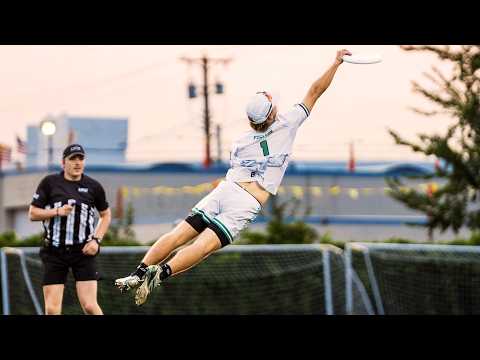
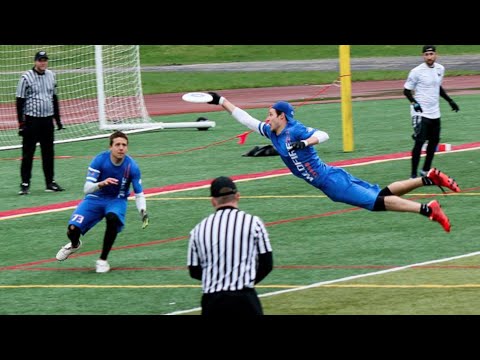
The filter sorts the Review Room embeds and the picture cards above by the keywords in their carried titles (review / analysis / recap and similar, or highlights). It runs entirely in your browser — nothing is sent anywhere.
Also recognised: Ultimate Hall of Fame (Administered by USA Ultimate, Colorado Springs, United States). Its published inductee list is not carried here in parsed form — the hall's own published list is the complete record.
Seven-a-side disc game, pro in North America.
In the wider aerial family of sports — rotation, angular momentum and the projectile body, the game turns on: Progressions, not leaps: every hard move is built from drills that isolate its pieces at low consequence.; Air awareness is trained: athletes learn where they are in rotation from trampoline, pit and harness work before hard landings.; Difficulty is a budget: routines are planned so the hardest elements sit where the athlete is freshest or most consistent.; Landings are a skill: the last second of every move is practised as deliberately as the first.; Form is function: the straight lines and pointed toes are not decoration — tight shapes rotate faster and land safer.; Spotting is a safety system: belts, pits, mats and hands are part of the sport’s technique, present in training and removed only by degrees..
Sport on Earth carries no team or player directory for this sport, because no structured public feed publishes a verifiable one. What is carried is the documented record on this page — history, rules, honours and the calendar — each with its source named.
The Ultimate Frisbee record book is still thin: beyond the standings, rules and calendar layers on this page, no verified winners roll or honours list is carried yet. The desk adds record material only when a published source can be named for it — never from memory or invention.
More from the desk: the expert guide to Ultimate Frisbee · the site-wide Writing Desk · every sport on Earth.
📖 The Ultimate Frisbee Playbook — every entry, plus the arcade strategy, at the foot of this page.
An arcade take on Ultimate Frisbee: set the angle, set the power, and land the flyer in the landing mat. Five attempts; the closer to the middle, the more it scores. Arcade distances and a training arc — a game in the spirit of the sport, not a simulation of it.
This page’s own game is the arcade above. Everything else on the site that fits this sport is listed here — and anything borrowed from a similar sport is labelled as that sport’s game, never passed off as this one’s.
3 verified documentaries, films and series about this sport are listed in the site's screen guide: Sport on Screen — Ultimate Frisbee.
The tools on this site that honestly run on Ultimate Frisbee — its own record first, then the site-wide general tools that apply. The full Ultimate Frisbee toolkit prints the ones that do not apply, with the data reason why.
No bench tool yet computes from Ultimate Frisbee’s own carried record — the general tools below are the ones that honestly apply.
Site-wide tools, not built for Ultimate Frisbee alone: Tournament Planner · My Notebook · The Labs · Design Studio · The Makers’ Bench · Match Day Desk · Play It Near You · Myth-Check Desk · Governing Bodies · Heat & Safety Calculator (WBGT) · Hydration Calculator · Training-Load Planner · Game Clock & Timer · Custom Rulebook Generator · Scout Notes Parser.
The Playbook · set plays, systems & situations
ultimate’s documented systems — the vertical and horizontal stacks, the force and the cup: a self-officiated game with a serious playbook.
10 entries, plus the arcade strategy below. All wording is original coaching-vocabulary prose; nothing is copied from any proprietary playbook.
The offence stands in a line downfield from the thrower; cutters peel off the front of the stack in sequence, each cut clearing space for the next — the stack is a queue of threats.
When it’s used: Ultimate’s default formation: it trades width for a conveyor of deep and under cuts.
The sequence
Cutters spread in a line across the field, isolating each defender in a lane: the offence’s width makes the defence’s help impossible and the under cut a one-on-one race.
When it’s used: The modern default at elite level: space is manufactured horizontally.
The sequence
The mark forces the thrower to throw one prescribed side only, and the downfield defence plays the other side as if the disc cannot go there — the force is ultimate’s fundamental defensive play.
When it’s used: Every defence in the game is this idea with variations: choose the thrower’s poison for him.
The sequence
Three defenders form a cup around the thrower, a middle layer guards the lanes, and the deep takes the long throws — the zone that answers wind and inexperience with patience.
When it’s used: Against the cup, the disc must be thrown through small windows many times; zones bet it won’t be.
The sequence
When the stall count climbs, the thrower dumps the disc backward to a handler, who immediately swings it to the field’s other side — the reset that turns a dying possession into a new attack on the break side.
When it’s used: The dump-swing is ultimate’s safety valve and its ambush in one motion.
The sequence
The long throw is called, not improvised: a deep cutter is isolated, the thrower steps out, and the disc is put to space with the cutter’s speed as the play’s second half.
When it’s used: Elite offences huck on schedule — after a swing, off a timeout, against a tired mark.
The sequence
Inside ten yards of the goal, the stack compresses and one cutter is isolated in the ’iso’ — the whole offence becomes his cut and the thrower’s window.
When it’s used: End-zone plays are ultimate’s goal-line series: small field, called plays.
The sequence
The pull — ultimate’s kickoff — is received and the offence’s first play is called in the huddle: a handler weave or an immediate huck look, run against a defence still sprinting to its marks.
When it’s used: The pull’s hang time is the defence’s head start; the called first play is the offence’s answer.
The sequence
Ultimate is self-officiated at most levels: fouls are called by the fouled, contests send the disc back, and the playbook includes the negotiation — a tactic of the game’s unique ethics.
When it’s used: A playbook entry no other sport needs: the call is part of the game, and playing it well is a skill.
The sequence
The handlers pass among themselves in a moving weave up the field’s middle, each throw followed by a sprint past the next handler — small gains that drag the cup and the marks out of shape.
When it’s used: Against zones, the weave is the patient solvent: twenty small passes beat one heroic one.
The sequence
The arcade cell · strategy
This page’s arcade cell: launch the flyer at the landing mat from the landing mat · 38 m (arcade scale). Angle, power, launch — five attempts, and the cell keeps your best.
When it’s used: On this page, in the Play section — and its strategy is the same craft as the book above it, miniaturised.
The sequence
Part of the Sport on Earth Playbooks — a book for every sport and every game on the site.
Behind the Play · From the carried record
Seven-a-side disc game, pro in North America.
Behind the Play takes the decisive actions of Ultimate Frisbee apart: how the scoring play is built, which patterns the players are really running, and which rules remade the play into its modern shape.
Source basis: this sport’s carried record on this page (verified record, rule-changes dossier, history datasets) and the play patterns of its family as written in the site’s guides. Nothing here is invented.