Alireza Yousefi is the Strongest Man in Weightlifting! +110kg Worlds 2026
YouTube · Weightlifting House
Pages
On this page
Sport on Earth › Sports
Sport on Earth · Sport
The snatch and the clean and jerk for the heaviest total.
News stories from around the world, gathered and sourced by the Sport on Earth desk.
Weightlifting is carried on the program for Los Angeles 2028 Olympic Games, 14 – 30 July 2028, in Los Angeles, USA. The snatch and the clean and jerk for the heaviest total. The desk carries the sport’s full record — guide, calendar and history — on its own page.
LA28 / IOC · Nov 2026
Written by Sport on Earth’s journalists — columns, features and interviews from the desk.
No columns or stories filed for this sport yet.
Everything the desk has published for Weightlifting, organised by section.
From the News Desk · all news, every sport →
Every embed below was verified playable before listing — the network’s standing rule.
YouTube · Weightlifting House
YouTube · Weightlifting House
YouTube · Sleepy Lifts
YouTube · Sky Sport NZ
YouTube · BroSport
Weightlifting is carried on the program for Los Angeles 2028 Olympic Games, 14 – 30 July 2028, in Los Angeles, USA. The snatch and the clean and jerk for the heaviest total. The desk carries the sport’s full record — guide, calendar and history — on its own page.
LA28 / IOC · Nov 2026
Pages
On this page
No game on this site is made specifically for Weightlifting yet. The games below are the site's all-sport games, which honestly cover every sport — nothing from another sport has been dressed up as this sport's game.
A new set of questions every day, across every sport this site covers.
Real-athlete Top Sport on Earth decks built from the site’s verified board data.
Weightlifting's lab is the Physics Lab section on this page — the applied physics of its sport family, with a computed interactive where one honestly fits.
Physics Arena — the general biomechanics & physics teaching sandbox, shared by every sport.
The homepage sport explorer also carries a general Lab tab of small interactive experiments.
Calendar data not yet carried for Weightlifting — this site does not yet hold schedule data for it, so no dates are shown rather than invented.
Which section of this page should we expand first?
Votes are counted on the Sport on Earth server and the totals shown are every reader’s votes; your own choice is remembered in this browser.
Dated news entries for x165, newest first, dates exactly as carried in the site’s news data.
The flagship competitions on the calendar, with the dates for the current/upcoming cycle. Every date below was verified against the named source on 1 November 2026; dates change, and the source is the authority.
| Event | Dates | Where | Source |
|---|---|---|---|
| Los Angeles 2028 Olympic Games | 14 – 30 July 2028 | Los Angeles, USA | LA28 / IOC — Games dates |
A lift is a lever problem: the bar’s load creates a turning effect (torque = load × horizontal distance from the joint) that the muscles must beat, and the lift is hardest where that distance peaks — the sticking point. The calculator below computes the torque for a load at a chosen moment arm, and the mechanical work of raising it through a chosen height (work = m·g·h), with assumptions printed.
Bar path is the visible record of those torques: elite lifters keep the bar close to the body’s joints to shrink moment arms, which is the whole physics of ’technique’ in strength sport.
From this sport's own record: The snatch and the clean and jerk for the heaviest total. The lab above treats the physics of the sport's family; no measurement specific to this sport is printed, because the site's verified record for it carries none — parameters are never invented to fill a lab.
Model: torque τ = m·g·(moment arm); mechanical work W = m·g·h, g = 9.81 m/s². Assumptions: static load, horizontal moment arm — a real lift's moment arm changes through the movement, which is exactly why lifts have sticking points.
The general teaching sandbox for every sport is the Physics Arena on the Games page — the same printed models, with a defender added.
The hands-on lab for Weightlifting, built entirely from the record this site carries for it — its documented rolls, its halls, its venues, its calendar and its census family. Every figure below is computed from that carried record at build time; nothing is estimated and nothing is pulled live. The companion Physics Lab on this page works the family's physics; this lab works the record.
The carried global venue dataset holds 5 venues for Weightlifting across 3 countries. The largest capacity the dataset records for this sport is 80,000 — Panathenaic Stadium, .
Basis: the global venue dataset carried on this site (6,438 venues with coordinates; the venue explorer on the sports index and the stadium sun table work the same data). Countries beyond the 25 largest are counted in the totals above but not listed here.
Basis: the dated events this entry’s own record carries, as announced by the bodies named in the record. A sport whose record carries no fixed dated calendar says so on its calendar page rather than inventing one.
Computed from the site census: the Strength sports family holds 17 entries on this site. Across the family, the carried record includes documented rolls for 2 of them, Hall of Fame data for 1, venue sets for 1, and dated calendars for 1.
Every other entry in the family: Armwrestling · Arranca Mandioca · Bodybuilding · Gaffelhangen / Pitchfork Hanging · Hay Toss · Herri Kirolak · Highland Games · Insuknawr · Kettlebell lifting · Mas-Wrestling · Palo Encebado · Strongman and Powerlifting · The Tactical Games · Timbersports · Tug of War · Zurkhaneh
Basis: the Sport on Earth census itself — the same 460-entry register the census page prints.
The desk has not verified a sponsorship record for Weightlifting from published sources, so none is printed. Sponsorship history is added only when a real published source supports it — sponsor by sponsor, deal by deal. Current sponsorship deals across sport are tracked on the Money Desk sponsorship page.
How this game is played, gathered from the record Sport on Earth already carries for Weightlifting, with the positions taken from the sourced chart cited in that section.
Olympic weightlifting is the purest strength contest in sport: two lifts — the snatch and the clean and jerk — each attempted three times, and the heaviest successful total wins. It is a different sport from the powerlifting and strongman events carried elsewhere on this site.
Weightlifting has been contested at the Olympics since 1896 and in its modern two-lift form since 1972.
How a weightlifting contest works — the rules as this site's record carries them:
Weightlifting has no fixed positions — its format designates no positional roles.
Format as carried in hidden_files/batchB-nov1/batchb_data.json: "The snatch and the clean and jerk for the heaviest total." The format carries no designated positional roles. (Source: Sport on Earth carried sport record.)
Its Tactics & Strategy book — its opening entries, the basic plays, are:
The full book carries 9 entries — in this page’s Playbook / Tactics & Strategy section, and at the Playbooks hub.
How the core actions of Weightlifting are performed, and how to improve them — the layer between this page's How to Play section (the rules) and its training and physics sections.
The snatch takes the bar from the platform to overhead in one continuous motion — the rulebook’s definition, and the technique’s whole problem. Set up with a wide grip, feet hip-width, shoulders slightly ahead of the bar, back flat and tight. First pull: floor to just past the knees, hips and shoulders rising together so the back angle holds. Second pull: from the knees the bar accelerates violently through full triple extension (hips, knees, ankles) with the bar kept close to the body. Then the lifter pulls themselves UNDER the bar — the third pull — receiving it locked out overhead in a deep squat, arms straight, before standing up to complete the lift.
Two lifts in one. The clean repeats the snatch’s pull pattern with a narrower grip, but the bar is received on the shoulders — the front rack: bar resting across the front of the shoulders and clavicles, elbows high, caught in a squat and stood up fully (elbows must not touch the knees or thighs in the recovery). After a clear pause standing still, the jerk: a shallow, straight-down dip with the torso vertical, then an aggressive leg drive that launches the bar upward while the lifter splits the feet (front foot forward, back foot back) and punches under it into a locked overhead position. Feet are recovered in line, the lifter stands motionless, and only then is the lift complete.
Safety: Maximal barbell lifting is learned under qualified coaching with progressive loading. This material explains technique; it is not a training prescription or medical advice.
Mechanics sources consulted: Open Source Sports — Weightlifting (IWF) Rules Explained (IWF Technical and Competition Rules); Olympic Weightlifting Technique coaching framework (phase breakdown; SKILL.md).
Sport on Earth's own analytics: every figure in this panel is computed at build time from the record this site itself carries, with the source named. No outside data is used, and no betting figures of any kind.
Venues carried: 5 in 3 countries; the largest carried capacity is 80,000 (Panathenaic Stadium).
Source: the site's global venue record (venues-global.json); a capacity is printed only where the record carries a verified one.
Census arithmetic: Weightlifting sits in the strength sports family — 17 census sports, of which 2 carry a qualifying champions roll in the site's record.
Olympic weightlifting is the purest strength contest in sport: two lifts — the snatch and the clean and jerk — each attempted three times, and the heaviest successful total wins. It is a different sport from the powerlifting and strongman events carried elsewhere on this site.
Weightlifting has been contested at the Olympics since 1896 and in its modern two-lift form since 1972.
The International Weightlifting Federation (IWF) was founded in 1905 and runs the annual World Championships (first held, in early forms, in 1891).
Weight classes were redrawn repeatedly over the sport’s history; the current Olympic program has five men’s and five women’s categories for Los Angeles 2028.
China is the sport’s most successful modern nation; Georgia’s Lasha Talakhadze set world records beyond 492 kg in total at super-heavyweight.
Sport on Earth carries no weightlifting results feed — no results are published here; this page is the verified record of the sport.
Sources, verified November 1, 2026: International Weightlifting Federation · Olympics.com — Weightlifting
Weightlifting’s modern rules are shaped by two forces: precision (a kilogram used to be a negotiation) and the sport’s doping reckoning, which reset its very categories.
Before: Barbell loads increased in 2.5 kg steps, and tied lifters were separated first by bodyweight (lighter man wins) — so totals jumped in coarse increments and ’winning on bodyweight’ decided championships unsatisfyingly often.
The change: From 2005, increments of 1 kg became standard (multiple athletes may attempt the same weight in sequence), and the tiebreak of bodyweight was later abolished entirely (2016: the lifter who achieved the total FIRST wins ties). Records could now creep by a kilo at a time.
Why it happened: The IWF wanted finer drama (record attempts in 1 kg bites) and fairer ties; the first-to-the-total rule that followed completed the philosophy — the bar, not the scale, separates lifters.
In practice today: Kilogram-by-kilogram record chases are now the sport’s signature endgame; bodyweight tiebreaks are gone from the senior game, and ’he lifted it first’ is a phrase every weightlifting fan understands.
Before: The bodyweight categories had been stable since 1998 — and their record books were heavily populated by lifters from doping eras, some records effectively unreachable clean and a standing advertisement of the sport’s past.
The change: The IWF rewrote the categories wholesale (new boundaries for men and women, approved 2018 and used from that year’s World Championships), wiping the record slate clean: all world records in the new classes started fresh.
Why it happened: The reset followed weightlifting’s Olympic near-death experience — the IOC had threatened the sport’s place over its doping history, and categories full of tainted records were exhibit A. New numbers gave the clean era its own books (a precedent the sport had used before, in 1993 and 1998).
In practice today: The 2018 classes (adjusted again for the Paris cycle) frame the modern sport; their records are the clean era’s property, and the reset remains the boldest available answer when a record book itself becomes the problem.
Source basis: IWF records: the 2005 1 kg rule; the 2018 bodyweight category revision.
Sport on Earth carries no results feed for Weightlifting: no scores or fixtures are published here, rather than inventing them. The sport's documented record is in its history page and the History & Records section of this page.
The historical record for Weightlifting — past standings, champions, title history and all-time leaders, as deep as verifiable public records go.
Season-by-season standings, historical player statistics and title rolls are not carried for Weightlifting: no public archive publishes them in a form Sport on Earth can verify, and this site does not invent history. What is carried for this sport is its verified record, its rule-change history and its league history — elsewhere on this page.
The review and analysis videos from Weightlifting’s verified video pool — every embed below was identity-checked and probed playable before listing, the site’s standing rule. Nothing here is a show Sport on Earth produces; these are the review, post-game and breakdown videos the pool already carries for this sport.
YouTube · Sleepy Lifts
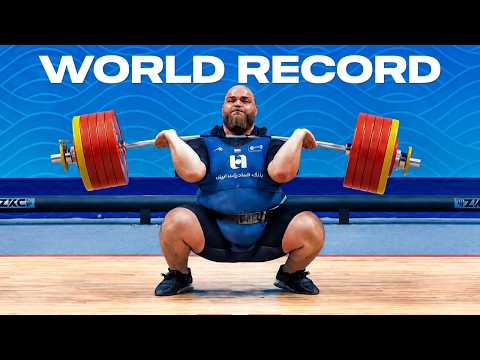

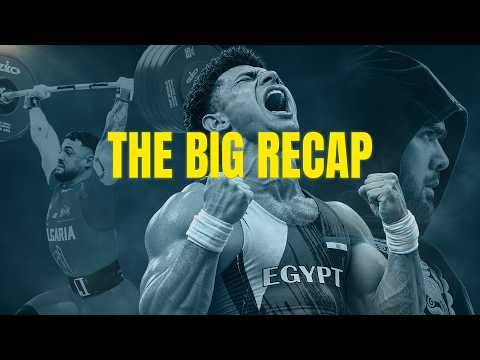
Chart basis: counts from Sport on Earth’s own carried data files at build time — verified videos carried for this sport (the verified pool: sport-videos.json + the desk league pools), news items carried (news.json), and league pages carried (desk.json). No external or estimated figures.
The filter sorts the Review Room embeds and the picture cards above by the keywords in their carried titles (review / analysis / recap and similar, or highlights). It runs entirely in your browser — nothing is sent anywhere.
No hall of fame with a published inductee list is carried for Weightlifting. Sport on Earth does not invent halls or inductees: where a recognised hall publishes its list in a form this site can carry, the full list will appear here with its source named.
The snatch and the clean and jerk for the heaviest total.
The format, from this sport's verified record:
📖 Weightlifting — Tactics & Strategy — every entry, plus the arcade strategy, at the foot of this page.
An arcade take on Weightlifting: set the angle, set the power, and land the shot in the sector. Five attempts; the closer to the middle, the more it scores. Arcade distances and a training arc — a game in the spirit of the sport, not a simulation of it.
This page’s own game is the arcade above. Everything else on the site that fits this sport is listed here — and anything borrowed from a similar sport is labelled as that sport’s game, never passed off as this one’s.
2 verified documentaries, films and series about this sport are listed in the site's screen guide: Sport on Screen — Weightlifting.
The tools on this site that honestly run on Weightlifting — its own record first, then the site-wide general tools that apply. The full Weightlifting toolkit prints the ones that do not apply, with the data reason why.
Site-wide tools, not built for Weightlifting alone: Tournament Planner · My Notebook · The Labs · Design Studio · The Makers’ Bench · Match Day Desk · Play It Near You · Myth-Check Desk · Governing Bodies · Heat & Safety Calculator (WBGT) · Hydration Calculator · Training-Load Planner · Game Clock & Timer · Custom Rulebook Generator · Scout Notes Parser.
Tactics & Strategy — this sport’s book
the strength family’s shared book — maximal force is the skill, and the tactics are attempt selection, position and the management of a body asked for everything it has, once.
9 entries, plus the arcade strategy below. All wording is original coaching-vocabulary prose; nothing is copied from any proprietary playbook.
In the lifting sports, attempts are a three-act play: the opener you cannot miss, the second that builds the total, the third that is the gamble the standings price. The sheet is signed before the adrenaline votes.
When it’s used: Attempt selection is the strength sports’ play-calling, made in public and in ink.
The sequence
Every maximal lift is preceded by a set-up ritual — the feet, the grip, the breath, the brace — whose fidelity decides the attempt before the bar moves: the set-up is the lift’s first rep.
When it’s used: Power leaks through an improvised set-up like water through a cracked dam.
The sequence
Every lift has its sticking point — the angle where leverage is worst — and training is organised around it: partial lifts, pauses and speed work aimed at the lift’s known graveyard.
When it’s used: The sticking point is a diagnosis with an address; the book’s exercises live there.
The sequence
In weightlifting’s two-lift total and powerlifting’s three, the zero is the catastrophe: bomb out (no successful lift in a discipline) and the day ends regardless of the other lifts — attempt one of each is therefore sacred.
When it’s used: The bomb-out is the strength sports’ relegation: the whole book bends around avoiding it.
The sequence
Strongman is a series of events — stones, logs, yokes, trucks — each with its own technique book, and the all-round strongman’s craft is the transitions: no rest is the event between the events.
When it’s used: Every object is a separate sport sharing one pair of legs.
The sequence
Bodybuilding is judged presentation: the mandatory poses, the transitions, the tan and the lighting are the sport’s tactics — the physique is built in a year and sold in ninety seconds of posing craft.
When it’s used: The stage is a courtroom: the poses are the argument, made in the order the judges’ eyes travel.
The sequence
Tug of war is the strength family’s team play: eight pullers heaving in unison on the coach’s call, the rope’s stretch stored and spent in waves — synchronisation is its technique, the anchor its closer.
When it’s used: The heave is a set play repeated: lean, hold, heave, on the call.
The sequence
The timbersports events — the springboard, the standing block chop, the hot saw — are technique events at strength’s address: the axe’s angle and the saw’s stroke are worth more than the arms that swing them.
When it’s used: Chopping is a geometry of cuts: the ’V’ is drawn before it is chopped.
The sequence
Weightlifting’s two lifts have opposed souls: the snatch is one motion’s speed and precision, the clean & jerk two motions’ power and patience — attempt selection treats them as two different competitions sharing a total.
When it’s used: The snatch forgives nothing; the jerk forgives everything except a soft lockout.
The sequence
The arcade cell · strategy
This page’s arcade cell: launch the shot at the sector from the throwing sector · 38 m (arcade scale). Angle, power, launch — five attempts, and the cell keeps your best.
When it’s used: On this page, in the Play section — and its strategy is the same craft as the book above it, miniaturised.
The sequence
Part of the Sport on Earth Playbooks — a book for every sport and every game on the site.
The desk’s writing and training subjects for weightlifting, organised by the sixteen IWF bodyweight classes in force: Weightlifting Writing by Category.
Behind the Play · Full treatment — from this sport’s own record
The snatch and the clean and jerk for the heaviest total.
Behind the Play takes the decisive actions of Weightlifting apart: how the scoring play is built, which patterns the players are really running, and which rules remade the play into its modern shape.
The format, from this sport's verified record:
The 1 Kilogram Rule (2005). From 2005, increments of 1 kg became standard (multiple athletes may attempt the same weight in sequence), and the tiebreak of bodyweight was later abolished entirely (2016: the lifter who achieved the total FIRST wins ties). Records could now creep by a kilo at a time.
Kilogram-by-kilogram record chases are now the sport’s signature endgame; bodyweight tiebreaks are gone from the senior game, and ’he lifted it first’ is a phrase every weightlifting fan understands.
The 2018 Category Reset (2018 (new bodyweight categories)). The IWF rewrote the categories wholesale (new boundaries for men and women, approved 2018 and used from that year’s World Championships), wiping the record slate clean: all world records in the new classes started fresh.
The 2018 classes (adjusted again for the Paris cycle) frame the modern sport; their records are the clean era’s property, and the reset remains the boldest available answer when a record book itself becomes the problem.
From this page’s Rule Changes & Named Rules dossier, where every entry names its source.
Source basis: this sport’s carried record on this page (verified record, rule-changes dossier, history datasets) and the play patterns of its family as written in the site’s guides. Nothing here is invented.