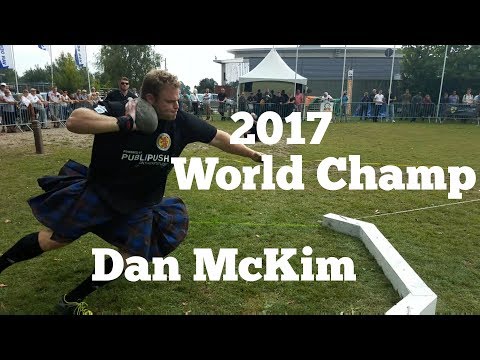
Highland Games 2017
YouTube · New Zealand Rural Games
Pages
On this page
Sport on Earth › Sports
Sport on Earth · Sport
Scottish heavy athletics — caber toss, stone put and hammer throw — at spring and summer gatherings celebrating Highland culture.
Sport on Earth’s daily and weekly video shows for Highland Games — every episode, newest first.
The first episode is in production and lands here the morning it is produced — no episode is listed until it exists.
Every embed below was verified playable before listing — the network’s standing rule.
YouTube · New Zealand Rural Games
YouTube · VisitScotland
YouTube · HG Live
YouTube · NorthWoodsVideo
YouTube · NorthWoodsVideo
YouTube · USA Kilts & Celtic Traditions
YouTube · Rogue Fitness
YouTube · Rick Steves’ Europe
YouTube · Smoky Mountain Scottish Festival & Games
YouTube · Scotland’s Wildlife Channel
YouTube · Stirling Highland Games
YouTube · Glengarry Highland Games
YouTube · Braemar Media
YouTube · McDAGOS
YouTube · Wisq
YouTube · Braemar Media
YouTube · Professional moochers
YouTube · Braemar Media
YouTube · Perth Highland Games
YouTube · DW Cultures
YouTube · Perth Highland Games
YouTube · Eddie Hall The Beast
YouTube · Alex Scotventure
YouTube · Larry Satchwell
YouTube · JRE Clips
YouTube · George Brock Scott, Video Editor
YouTube · Tradition: A Story From Glengarry
YouTube · Scotland History Tours
YouTube · Edinboro Now
YouTube · Absolute History
YouTube · Iron Herd Apparel
YouTube · British Pathé
YouTube · Carl’s Lingo Kingdom
YouTube · Rick Steves’ Europe
YouTube · British Pathé
YouTube · Scotland History Tours
YouTube · SPFL
YouTube · DHShields
YouTube · NorthWoodsVideo
YouTube · Laura Clark
YouTube · Blood and Iron HEMA
YouTube · Derrick Pearcy
YouTube · Strength Empire Gym | Justin Blatnik
YouTube · Couple of Kilts
YouTube · VisitScotland
YouTube · Perth Highland Games
YouTube · The Utility Kilt
YouTube · Ninh Ly
Pages
On this page
No game on this site is made specifically for Highland Games yet. The games below are the site's all-sport games, which honestly cover every sport — nothing from another sport has been dressed up as this sport's game.
A new set of questions every day, across every sport this site covers.
Real-athlete Top Sport on Earth decks built from the site’s verified board data.
Highland Games's lab is the Physics Lab section on this page — the applied physics of its sport family, with a computed interactive where one honestly fits.
Physics Arena — the general biomechanics & physics teaching sandbox, shared by every sport.
The homepage sport explorer also carries a general Lab tab of small interactive experiments.
Calendar data not yet carried for Highland Games — this site does not yet hold schedule data for it, so no dates are shown rather than invented.
Which section of this page should we expand first?
Votes are counted on the Sport on Earth server and the totals shown are every reader’s votes; your own choice is remembered in this browser.
Sport on Earth does not yet hold verified dated events for Highland Games, and its carried record does not state the season's timing in words — so no calendar is shown rather than an invented one. What the site does carry for this sport is on this page: its verified record, its rules record and its history.
A lift is a lever problem: the bar’s load creates a turning effect (torque = load × horizontal distance from the joint) that the muscles must beat, and the lift is hardest where that distance peaks — the sticking point. The calculator below computes the torque for a load at a chosen moment arm, and the mechanical work of raising it through a chosen height (work = m·g·h), with assumptions printed.
Bar path is the visible record of those torques: elite lifters keep the bar close to the body’s joints to shrink moment arms, which is the whole physics of ’technique’ in strength sport.
From this sport's own record: Scottish heavy athletics — caber toss, stone put and hammer throw — at spring and summer gatherings celebrating Highland culture. The lab above treats the physics of the sport's family; no measurement specific to this sport is printed, because the site's verified record for it carries none — parameters are never invented to fill a lab.
Model: torque τ = m·g·(moment arm); mechanical work W = m·g·h, g = 9.81 m/s². Assumptions: static load, horizontal moment arm — a real lift's moment arm changes through the movement, which is exactly why lifts have sticking points.
The general teaching sandbox for every sport is the Physics Arena on the Games page — the same printed models, with a defender added.
The hands-on lab for Highland Games, built entirely from the record this site carries for it — its documented rolls, its halls, its venues, its calendar and its census family. Every figure below is computed from that carried record at build time; nothing is estimated and nothing is pulled live. The companion Physics Lab on this page works the family's physics; this lab works the record.
The honest position: the record this site carries for Highland Games is thin — no documented roll, hall, venue set or dated calendar is carried for it yet — so this entry’s lab is its family lab: the computed census of the family it belongs to. When the record grows, the lab grows with it; nothing here is estimated to fill the space.
Computed from the site census: the Strength sports family holds 17 entries on this site. Across the family, the carried record includes documented rolls for 2 of them, Hall of Fame data for 1, venue sets for 1, and dated calendars for 1.
Every other entry in the family: Armwrestling · Arranca Mandioca · Bodybuilding · Gaffelhangen / Pitchfork Hanging · Hay Toss · Herri Kirolak · Insuknawr · Kettlebell lifting · Mas-Wrestling · Palo Encebado · Strongman and Powerlifting · The Tactical Games · Timbersports · Tug of War · Weightlifting · Zurkhaneh
Basis: the Sport on Earth census itself — the same 460-entry register the census page prints.
The desk has not verified a sponsorship record for Highland Games from published sources, so none is printed. Sponsorship history is added only when a real published source supports it — sponsor by sponsor, deal by deal. Current sponsorship deals across sport are tracked on the Money Desk sponsorship page.
How this game is played, gathered from the record Sport on Earth already carries for Highland Games, with the positions taken from the sourced chart cited in that section.
Highland games is a competitive strength sport with events held in spring and summer in Scotland and several other countries with a large Scottish diaspora, celebrating Scottish and Celtic culture, especially that of the Scottish Highlands. Its emblematic features include bagpipes, the kilt and the heavy events, especially the stone put, Scottish hammer throw, weight throw, weight over bar, caber toss, keg toss and sheaf toss, centred on piping and drumming, dancing and Scottish heavy athletics.
The modern Highland games are largely a 19th-century development, following the Jacobite rebellions and the subsequent ban on Highland dress. By the mid-20th century annual games modelled on Scottish events had been established in the United States, Canada, Australia, New Zealand and South Africa, and there were at least 260 annual Highland games events worldwide as of 2000.
The rules — the rules as this site's record carries them:
Highland Games has no fixed positions — its format designates no positional roles.
Format as carried in hidden_files/batchB-nov1/batchb_data.json: "Scottish heavy athletics — caber toss, stone put and hammer throw — at spring and summer gatherings celebrating Highland culture." The format carries no designated positional roles. (Source: Sport on Earth carried sport record.)
Its Tactics & Strategy book — its opening entries, the basic plays, are:
The full book carries 10 entries — in this page’s Playbook / Tactics & Strategy section, and at the Playbooks hub.
Sport on Earth's own analytics: every figure in this panel is computed at build time from the record this site itself carries, with the source named. No outside data is used, and no betting figures of any kind.
Census arithmetic: Highland Games sits in the strength sports family — 17 census sports, of which 2 carry a qualifying champions roll in the site's record.
The carried record for Highland Games is too thin for computed panels: no champions roll, hall-of-fame list or venue record is carried for it. This panel therefore prints the census arithmetic only — the honest answer rather than a manufactured figure.
Highland games is a competitive strength sport with events held in spring and summer in Scotland and several other countries with a large Scottish diaspora, celebrating Scottish and Celtic culture, especially that of the Scottish Highlands. Its emblematic features include bagpipes, the kilt and the heavy events, especially the stone put, Scottish hammer throw, weight throw, weight over bar, caber toss, keg toss and sheaf toss, centred on piping and drumming, dancing and Scottish heavy athletics.
The modern Highland games are largely a 19th-century development, following the Jacobite rebellions and the subsequent ban on Highland dress. By the mid-20th century annual games modelled on Scottish events had been established in the United States, Canada, Australia, New Zealand and South Africa, and there were at least 260 annual Highland games events worldwide as of 2000.
The Cowal Highland Gathering, the Cowal Games, is held in Dunoon, Scotland, every August; it is the largest Highland games in Scotland, attracting around 3,500 competitors and about 23,000 spectators.
The Scottish Highland Gathering and Games in Pleasanton, California, the largest in the Northern Hemisphere, has taken place every year since 1866 and is held on Labor Day weekend.
The New Hampshire Highland Games & Festival attracts over 35,000 annually, and Grandfather Mountain in North Carolina an estimated 30,000, as stated on the page.
The first historical reference was in the time of King Malcolm III, who summoned men to race up Craig Choinnich overlooking Braemar to find the fastest runner to be his royal messenger.
Highland games has no structured results feed this site can carry, so this page is the verified record only — its heavy events, gatherings and rules as verified in November 2026 — with no live results.
Sources, verified November 1, 2026: Highland games
Material from Wikipedia linked above is used under CC BY-SA 4.0.
How the laws of Highland Games are governed today — the documented record, stated plainly.
Highland games are staged by local gatherings under the tradition described on the page, with the Scottish Highland Games Association cited for the number of events in Scotland. Changes to heavy-event weights, techniques and gathering formats have been refinements of that tradition rather than dated landmark replacements of a single code. No major dated rule change is carried for highland games.
That framework summary is the whole documented record Sport on Earth can verify for this sport — no major dated rule changes are carried, rather than invent any.
Source basis: The governing body’s published framework as summarised in this section (see the framework text).
Sport on Earth carries no results feed for Highland Games: no scores or fixtures are published here, rather than inventing them. The sport's documented record is in its history page and the History & Records section of this page.
The historical record for Highland Games — past standings, champions, title history and all-time leaders, as deep as verifiable public records go.
Season-by-season standings, historical player statistics and title rolls are not carried for Highland Games: no public archive publishes them in a form Sport on Earth can verify, and this site does not invent history. What is carried for this sport is its verified record, its rule-change history and its league history — elsewhere on this page.
The review and analysis videos from Highland Games’s verified video pool — every embed below was identity-checked and probed playable before listing, the site’s standing rule. Nothing here is a show Sport on Earth produces; these are the review, post-game and breakdown videos the pool already carries for this sport.
No verified review-show video is carried for this sport yet.
The filter sorts the Review Room embeds and the picture cards above by the keywords in their carried titles (review / analysis / recap and similar, or highlights). It runs entirely in your browser — nothing is sent anywhere.
No hall of fame with a published inductee list is carried for Highland Games. Sport on Earth does not invent halls or inductees: where a recognised hall publishes its list in a form this site can carry, the full list will appear here with its source named.
Scottish heavy athletics — caber toss, stone put and hammer throw — at spring and summer gatherings celebrating Highland culture.
The format, from this sport's verified record:
The Highland Games record book is still thin: beyond the standings, rules and calendar layers on this page, no verified winners roll or honours list is carried yet. The desk adds record material only when a published source can be named for it — never from memory or invention.
More from the desk: the expert guide to Highland Games · the site-wide Writing Desk · every sport on Earth.
📖 Highland Games — Tactics & Strategy — every entry, plus the arcade strategy, at the foot of this page.
An arcade take on Highland Games: set the angle, set the power, and land the shot in the sector. Five attempts; the closer to the middle, the more it scores. Arcade distances and a training arc — a game in the spirit of the sport, not a simulation of it.
This page’s own game is the arcade above. Everything else on the site that fits this sport is listed here — and anything borrowed from a similar sport is labelled as that sport’s game, never passed off as this one’s.
The tools on this site that honestly run on Highland Games — its own record first, then the site-wide general tools that apply. The full Highland Games toolkit prints the ones that do not apply, with the data reason why.
No bench tool yet computes from Highland Games’s own carried record — the general tools below are the ones that honestly apply.
Site-wide tools, not built for Highland Games alone: Tournament Planner · My Notebook · The Labs · Design Studio · The Makers’ Bench · Match Day Desk · Play It Near You · Myth-Check Desk · Governing Bodies · Heat & Safety Calculator (WBGT) · Hydration Calculator · Training-Load Planner · Game Clock & Timer · Custom Rulebook Generator · Scout Notes Parser.
Tactics & Strategy — this sport’s book
the strength family’s shared book — maximal force is the skill, and the tactics are attempt selection, position and the management of a body asked for everything it has, once.
10 entries, plus the arcade strategy below. All wording is original coaching-vocabulary prose; nothing is copied from any proprietary playbook.
In the lifting sports, attempts are a three-act play: the opener you cannot miss, the second that builds the total, the third that is the gamble the standings price. The sheet is signed before the adrenaline votes.
When it’s used: Attempt selection is the strength sports’ play-calling, made in public and in ink.
The sequence
Every maximal lift is preceded by a set-up ritual — the feet, the grip, the breath, the brace — whose fidelity decides the attempt before the bar moves: the set-up is the lift’s first rep.
When it’s used: Power leaks through an improvised set-up like water through a cracked dam.
The sequence
Every lift has its sticking point — the angle where leverage is worst — and training is organised around it: partial lifts, pauses and speed work aimed at the lift’s known graveyard.
When it’s used: The sticking point is a diagnosis with an address; the book’s exercises live there.
The sequence
In weightlifting’s two-lift total and powerlifting’s three, the zero is the catastrophe: bomb out (no successful lift in a discipline) and the day ends regardless of the other lifts — attempt one of each is therefore sacred.
When it’s used: The bomb-out is the strength sports’ relegation: the whole book bends around avoiding it.
The sequence
Strongman is a series of events — stones, logs, yokes, trucks — each with its own technique book, and the all-round strongman’s craft is the transitions: no rest is the event between the events.
When it’s used: Every object is a separate sport sharing one pair of legs.
The sequence
Bodybuilding is judged presentation: the mandatory poses, the transitions, the tan and the lighting are the sport’s tactics — the physique is built in a year and sold in ninety seconds of posing craft.
When it’s used: The stage is a courtroom: the poses are the argument, made in the order the judges’ eyes travel.
The sequence
Tug of war is the strength family’s team play: eight pullers heaving in unison on the coach’s call, the rope’s stretch stored and spent in waves — synchronisation is its technique, the anchor its closer.
When it’s used: The heave is a set play repeated: lean, hold, heave, on the call.
The sequence
The timbersports events — the springboard, the standing block chop, the hot saw — are technique events at strength’s address: the axe’s angle and the saw’s stroke are worth more than the arms that swing them.
When it’s used: Chopping is a geometry of cuts: the ’V’ is drawn before it is chopped.
The sequence
The caber toss is judged not by distance but by the turn: the great tapered log must flip end over end and land pointing at twelve o’clock — the perfect toss is a direction, and its craft is the run, the plant and the pull in one motion.
When it’s used: The only event in sport scored by a clock face’s imagination.
The sequence
The Highland throws — the open stone (shot-style), the weights for distance and height, the Scottish hammer with its fixed feet — are the shot put’s ancestral forms, each with a technique the modern event borrowed or refused.
When it’s used: The Games are athletics’ folk memory, still competing.
The sequence
The arcade cell · strategy
This page’s arcade cell: launch the shot at the sector from the throwing sector · 38 m (arcade scale). Angle, power, launch — five attempts, and the cell keeps your best.
When it’s used: On this page, in the Play section — and its strategy is the same craft as the book above it, miniaturised.
The sequence
Part of the Sport on Earth Playbooks — a book for every sport and every game on the site.
Behind the Play · Full treatment — from this sport’s own record
Scottish heavy athletics — caber toss, stone put and hammer throw — at spring and summer gatherings celebrating Highland culture.
Behind the Play takes the decisive actions of Highland Games apart: how the scoring play is built, which patterns the players are really running, and which rules remade the play into its modern shape.
The format, from this sport's verified record:
Source basis: this sport’s carried record on this page (verified record, rule-changes dossier, history datasets) and the play patterns of its family as written in the site’s guides. Nothing here is invented.