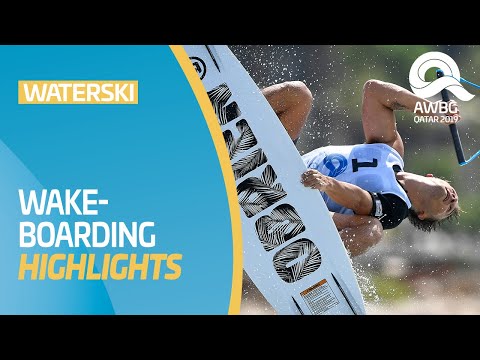
Waterskiing - Men’s & Women’s Wakeboarding Final Highlights | ANOC World Beach Games Qatar 2019 |
YouTube · ANOC World Beach Games
Pages
On this page
Sport on Earth › Sports
Sport on Earth · Sport
Slalom, tricks and jumping behind a boat; cable parks for wakeboarding.
Every embed below was verified playable before listing — the network’s standing rule.
YouTube · ANOC World Beach Games
YouTube · Diving Info
YouTube · ANOC World Beach Games
YouTube · Matty Muncey
YouTube · Jake Pelot
YouTube · Nada Marie | Photo + Film
YouTube · Learn WaterSports
YouTube · Learn WaterSports
YouTube · Echoboom Sports
YouTube · Shaun Murray
YouTube · Learn WaterSports
YouTube · IWWF
YouTube · Learn WaterSports
YouTube · Red Bull
YouTube · thewakeboardsite.
YouTube · GoPro
YouTube · EDGEsport
YouTube · Trent Stuckey
YouTube · British Water Ski & Wakeboard
YouTube · devinsupertramp
YouTube · Ryan Shimabukuro
YouTube · teamtelevas
YouTube · Landen Ehlers
YouTube · Motion Sickness
YouTube · JB ONeill
YouTube · JB ONeill
YouTube · JB ONeill
YouTube · Hayden Bradley
YouTube · GoPro
YouTube · Donny Searle
YouTube · AEmultimania
YouTube · Dominik Gührs
YouTube · David OC
YouTube · AEmultimania
YouTube · Lake City Historical Society
YouTube · The Waterski Broadcasting Company
YouTube · nathocky
YouTube · The Waterski Broadcasting Company
YouTube · Akros TV
YouTube · Echoboom Sports
YouTube · BusyBassProductions
YouTube · Alan Ferguson
YouTube · Jake Snider Films and World Barefoot Center
YouTube · The Waterski Broadcasting Company
YouTube · The Waterski Broadcasting Company
YouTube · SurferToday
YouTube · TonysTipsAndTricks
YouTube · Learn WaterSports
Pages
On this page
No game on this site is made specifically for Waterskiing and Wakeboarding yet. The games below are the site's all-sport games, which honestly cover every sport — nothing from another sport has been dressed up as this sport's game.
A new set of questions every day, across every sport this site covers.
Real-athlete Top Sport on Earth decks built from the site’s verified board data.
Waterskiing and Wakeboarding's lab is the Physics Lab section on this page — the applied physics of its sport family, with a computed interactive where one honestly fits.
Physics Arena — the general biomechanics & physics teaching sandbox, shared by every sport.
The homepage sport explorer also carries a general Lab tab of small interactive experiments.
Calendar data not yet carried for Waterskiing and Wakeboarding — this site does not yet hold schedule data for it, so no dates are shown rather than invented.
Which section of this page should we expand first?
Votes are counted on the Sport on Earth server and the totals shown are every reader’s votes; your own choice is remembered in this browser.
Sport on Earth does not yet hold verified dated events for Waterskiing and Wakeboarding, and its carried record does not state the season's timing in words — so no calendar is shown rather than an invented one. What the site does carry for this sport is on this page: its verified record, its rules record and its history.
Water’s density (about 1,000 kg/m³ against air’s 1.225) makes every physics effect enormous: drag grows with the square of speed, so small gains in streamlining beat large gains in strength. The calculator below runs the drag model with water as the default medium and assumptions printed.
Propulsion is the mirror image: the hand, blade or hull pushes water backward, and the reaction pushes the athlete forward (Newton’s third law) — efficient strokes maximise the water ’held’ per stroke (a firm catch) rather than the water slipped. Waves add a second ceiling for displacement craft: a hull’s practical top speed relates to its waterline length, because it must climb its own bow wave.
From this sport's own record: Slalom, tricks and jumping behind a boat; cable parks for wakeboarding. The lab above treats the physics of the sport's family; no measurement specific to this sport is printed, because the site's verified record for it carries none — parameters are never invented to fill a lab.
Model: drag force F = ½·ρ·CdA·v²; power against drag P = F·v. Assumptions: constant drag area, no waves, no rolling or internal resistance — drag only. CdA is the athlete-and-equipment drag area: a tucked cyclist is roughly 0.2–0.3 m²; treat other values as exploration, not measurement.
The general teaching sandbox for every sport is the Physics Arena on the Games page — the same printed models, with a defender added.
The hands-on lab for Waterskiing and Wakeboarding, built entirely from the record this site carries for it — its documented rolls, its halls, its venues, its calendar and its census family. Every figure below is computed from that carried record at build time; nothing is estimated and nothing is pulled live. The companion Physics Lab on this page works the family's physics; this lab works the record.
The honest position: the record this site carries for Waterskiing and Wakeboarding is thin — no documented roll, hall, venue set or dated calendar is carried for it yet — so this entry’s lab is its family lab: the computed census of the family it belongs to. When the record grows, the lab grows with it; nothing here is estimated to fill the space.
Computed from the site census: the Water sports family holds 29 entries on this site. Across the family, the carried record includes documented rolls for 0 of them, Hall of Fame data for 6, venue sets for 7, and dated calendars for 9.
Every other entry in the family: Artistic Swimming · Bodyboarding · Bog Snorkelling · Canoe Polo · Canoeing and Kayaking · Cliff Diving · Diving · Dragon Boat Racing · Finswimming · Freediving · Kiteboarding · Log Rolling · Ocean Rowing · Outrigger Canoeing · Plunge for Distance · Rowing · Sailing · Spearfishing · Sport Diving · Sport Fishing · Surf Lifesaving · Surfing · Swimming · Underwater Hockey · Underwater Rugby · Water Jousting · Water Polo · Waterball / Water Fights
Basis: the Sport on Earth census itself — the same 460-entry register the census page prints.
The desk has not verified a sponsorship record for Waterskiing and Wakeboarding from published sources, so none is printed. Sponsorship history is added only when a real published source supports it — sponsor by sponsor, deal by deal. Current sponsorship deals across sport are tracked on the Money Desk sponsorship page.
How this game is played, gathered from the record Sport on Earth already carries for Waterskiing and Wakeboarding, with the positions taken from the sourced chart cited in that section.
Tournament waterskiing tests three skills behind a boat — slalom (carving around buoys on one ski), tricks (a points routine of flips and spins) and jumping (a ramp, for distance) — while wakeboarding takes the same boat’s wake into judged aerial tricks, and cable parks run their own world circuit.
Both sports are World Games fixtures and governed worldwide by the IWWF.
How the events work — the rules as this site's record carries them:
Waterskiing and Wakeboarding has no fixed positions — its format designates no positional roles.
Format as carried in hidden_files/batchB-nov1/batchb_data.json: "Slalom, tricks and jumping behind a boat; cable parks for wakeboarding." The format carries no designated positional roles. (Source: Sport on Earth carried sport record.)
Its Tactics & Strategy book — its opening entries, the basic plays, are:
The full book carries 8 entries — in this page’s Playbook / Tactics & Strategy section, and at the Playbooks hub.
Sport on Earth's own analytics: every figure in this panel is computed at build time from the record this site itself carries, with the source named. No outside data is used, and no betting figures of any kind.
Census arithmetic: Waterskiing and Wakeboarding sits in the water sports family — 29 census sports, of which 0 carry a qualifying champions roll in the site's record.
The carried record for Waterskiing and Wakeboarding is too thin for computed panels: no champions roll, hall-of-fame list or venue record is carried for it. This panel therefore prints the census arithmetic only — the honest answer rather than a manufactured figure.
Tournament waterskiing tests three skills behind a boat — slalom (carving around buoys on one ski), tricks (a points routine of flips and spins) and jumping (a ramp, for distance) — while wakeboarding takes the same boat’s wake into judged aerial tricks, and cable parks run their own world circuit.
Both sports are World Games fixtures and governed worldwide by the IWWF.
The International Waterski & Wakeboard Federation (IWWF) was founded in 1949 (as the IWSF) and runs biennial world championships in waterskiing and wakeboarding plus the professional Waterski Pro Tour.
The United States is the historic leading nation; Canada, Belarus, Australia and France have all produced overall world champions.
Regina Jacquess (USA) and Freddie Winter (Great Britain) are among the defining slalom skiers of the modern era; slalom world records sit beyond 2 buoys at 10.25-metre line.
Sport on Earth carries no waterski or wakeboard results feed — this page is the verified record; no results are invented.
Sources, verified November 1, 2026: IWWF — Waterski & Wakeboard · World Games — Waterskiing & Wakeboarding
How the laws of Waterskiing and Wakeboarding are governed today — the documented record, stated plainly.
Waterskiing and wakeboarding are governed by the IWWF (waterski: slalom, tricks, jump with boat-speed and rope-length progressions as the sport’s scoring law; wakeboard: boat and cable judged formats) under technical rules revised by cycle. The slalom shortening-the-rope scoring ladder is the sport’s enduring framework. No landmark dated change is carried for waterskiing and wakeboarding.
That framework summary is the whole documented record Sport on Earth can verify for this sport — no major dated rule changes are carried, rather than invent any.
Source basis: The governing body’s published framework as summarised in this section (see the framework text).
Sport on Earth carries no results feed for Waterskiing and Wakeboarding: no scores or fixtures are published here, rather than inventing them. The sport's documented record is in its history page and the History & Records section of this page.
The historical record for Waterskiing and Wakeboarding — past standings, champions, title history and all-time leaders, as deep as verifiable public records go.
Season-by-season standings, historical player statistics and title rolls are not carried for Waterskiing and Wakeboarding: no public archive publishes them in a form Sport on Earth can verify, and this site does not invent history. What is carried for this sport is its verified record, its rule-change history and its league history — elsewhere on this page.
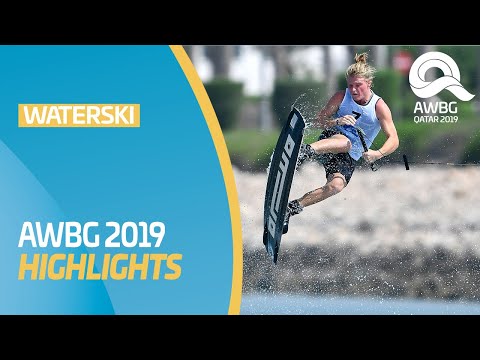
The review and analysis videos from Waterskiing and Wakeboarding’s verified video pool — every embed below was identity-checked and probed playable before listing, the site’s standing rule. Nothing here is a show Sport on Earth produces; these are the review, post-game and breakdown videos the pool already carries for this sport.
YouTube · Waterskiers World
The filter sorts the Review Room embeds and the picture cards above by the keywords in their carried titles (review / analysis / recap and similar, or highlights). It runs entirely in your browser — nothing is sent anywhere.
No hall of fame with a published inductee list is carried for Waterskiing and Wakeboarding. Sport on Earth does not invent halls or inductees: where a recognised hall publishes its list in a form this site can carry, the full list will appear here with its source named.
Slalom, tricks and jumping behind a boat; cable parks for wakeboarding.
The format, from this sport's verified record:
The Waterskiing and Wakeboarding record book is still thin: beyond the standings, rules and calendar layers on this page, no verified winners roll or honours list is carried yet. The desk adds record material only when a published source can be named for it — never from memory or invention.
More from the desk: the expert guide to Waterskiing and Wakeboarding · the site-wide Writing Desk · every sport on Earth.
📖 Waterskiing and Wakeboarding — Tactics & Strategy — every entry, plus the arcade strategy, at the foot of this page.
An arcade take on Waterskiing and Wakeboarding: set the angle, set the power, and land the diver in a clean entry. Five attempts; the closer to the middle, the more it scores. Arcade distances and a training arc — a game in the spirit of the sport, not a simulation of it.
This page’s own game is the arcade above. Everything else on the site that fits this sport is listed here — and anything borrowed from a similar sport is labelled as that sport’s game, never passed off as this one’s.
The tools on this site that honestly run on Waterskiing and Wakeboarding — its own record first, then the site-wide general tools that apply. The full Waterskiing and Wakeboarding toolkit prints the ones that do not apply, with the data reason why.
No bench tool yet computes from Waterskiing and Wakeboarding’s own carried record — the general tools below are the ones that honestly apply.
Site-wide tools, not built for Waterskiing and Wakeboarding alone: Tournament Planner · My Notebook · The Labs · Design Studio · The Makers’ Bench · Match Day Desk · Play It Near You · Myth-Check Desk · Governing Bodies · Heat & Safety Calculator (WBGT) · Hydration Calculator · Training-Load Planner · Game Clock & Timer · Custom Rulebook Generator · Scout Notes Parser.
Tactics & Strategy — this sport’s book
surfing’s book — the heat’s priority game lives in the family action book; these are the surfing-specific pages: the wave, the manoeuvre vocabulary and the craft of the line-up.
8 entries, plus the arcade strategy below. All wording is original coaching-vocabulary prose; nothing is copied from any proprietary playbook.
Before a wave is ridden it is read: the swell’s direction, the tide’s effect on the bank, the peak’s shape — the surfer’s first skill is an oceanography practised from the beach and refined from the line-up.
When it’s used: The line-up is the surfers’ formation: an informal parliament arranged by local knowledge.
The sequence
The ride begins in two seconds: the paddle’s acceleration matched to the wave’s steepening, then the pop-up (prone to standing in one motion) as the board begins to fall down the face — a late take-off is a wipeout with a view.
When it’s used: The take-off is surfing’s snap count and its first hit combined.
The sequence
Every manoeuvre is bought with a bottom turn: the drive off the wave’s base converts the fall’s speed into the next section’s options — the cutback, the floater, the barrel are all spent from the bottom turn’s account.
When it’s used: Judges read the bottom turn the way gym judges read a first element: it declares the ride’s budget.
The sequence
The barrel is surfing’s cathedral: the surfer stalls (dragging a hand or shifting weight back) to let the lip throw over him, then drives through the tube’s changing geometry, exiting before the wave closes out.
When it’s used: The stall is the barrel’s entry fee: speed surrendered deliberately, in the sport’s boldest transaction.
The sequence
The aerial (launching off the lip, rotating, landing on the moving face) rewrote competitive surfing’s scoring: the air’s height, rotation and landing are judged as one element, and the wind’s direction (offshore holds the face up) is its weather.
When it’s used: The air reverse is the modern sentence: the wave’s lip is a ramp that rebuilds itself every seven seconds.
The sequence
At the big-wave breaks, the book changes scale: the long ’gun’ boards for paddling into mountains, the tow-in (a jet ski slings the surfer into waves too fast to paddle for), the inflatable vest and the safety ski’s rescue — big-wave surfing is an expedition with a wave in it.
When it’s used: The wipeout at size is a held-down of minutes: the breath training is the sport’s real first page.
The sequence
Longboarding keeps surfing’s first book: the cross-step to the nose, the nose ride (five or ten toes over the nose), the drop-knee turn — judged on style and the board’s trim rather than the air’s violence.
When it’s used: The nose ride is surfing’s held note: ten seconds of poise priced by the wave’s patience.
The sequence
Waterski slalom is a rhythm of cuts: the skier crosses the boat’s wake to round six buoys at ever-shortening rope, the cut loading the rope like a spring whose release is the turn — wakeboarding moves the same craft to a ramp of wake, judged on tricks the boat’s wake launches.
When it’s used: The slalom’s rope is shortened until the skier cannot reach the buoy: the event is a negotiation between a rope and an athlete, refereed by physics.
The sequence
The arcade cell · strategy
This page’s arcade cell: launch the diver at a clean entry from off the board · 36 m (arcade scale). Angle, power, launch — five attempts, and the cell keeps your best.
When it’s used: On this page, in the Play section — and its strategy is the same craft as the book above it, miniaturised.
The sequence
Part of the Sport on Earth Playbooks — a book for every sport and every game on the site.
Behind the Play · Full treatment — from this sport’s own record
Slalom, tricks and jumping behind a boat; cable parks for wakeboarding.
Behind the Play takes the decisive actions of Waterskiing and Wakeboarding apart: how the scoring play is built, which patterns the players are really running, and which rules remade the play into its modern shape.
The format, from this sport's verified record:
Source basis: this sport’s carried record on this page (verified record, rule-changes dossier, history datasets) and the play patterns of its family as written in the site’s guides. Nothing here is invented.