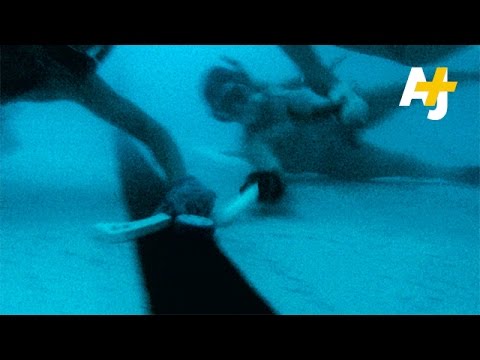
Underwater Hockey Will Take Your Breath Away
YouTube · AJ+
Pages
On this page
Sport on Earth › Sports
Sport on Earth · Sport
Push a puck along a pool bottom with short sticks.
Every embed below was verified playable before listing — the network’s standing rule.
YouTube · AJ+
Pages
On this page
No game on this site is made specifically for Underwater Hockey yet. The games below are the site's all-sport games, which honestly cover every sport — nothing from another sport has been dressed up as this sport's game.
A new set of questions every day, across every sport this site covers.
Real-athlete Top Sport on Earth decks built from the site’s verified board data.
Underwater Hockey's lab is the Physics Lab section on this page — the applied physics of its sport family, with a computed interactive where one honestly fits.
Physics Arena — the general biomechanics & physics teaching sandbox, shared by every sport.
The homepage sport explorer also carries a general Lab tab of small interactive experiments.
Calendar data not yet carried for Underwater Hockey — this site does not yet hold schedule data for it, so no dates are shown rather than invented.
Which section of this page should we expand first?
Votes are counted on the Sport on Earth server and the totals shown are every reader’s votes; your own choice is remembered in this browser.
Sport on Earth does not yet hold verified dated events for Underwater Hockey, and its carried record does not state the season's timing in words — so no calendar is shown rather than an invented one. What the site does carry for this sport is on this page: its verified record, its rules record and its history.
Water’s density (about 1,000 kg/m³ against air’s 1.225) makes every physics effect enormous: drag grows with the square of speed, so small gains in streamlining beat large gains in strength. The calculator below runs the drag model with water as the default medium and assumptions printed.
Propulsion is the mirror image: the hand, blade or hull pushes water backward, and the reaction pushes the athlete forward (Newton’s third law) — efficient strokes maximise the water ’held’ per stroke (a firm catch) rather than the water slipped. Waves add a second ceiling for displacement craft: a hull’s practical top speed relates to its waterline length, because it must climb its own bow wave.
From this sport's own record: Push a puck along a pool bottom with short sticks. The lab above treats the physics of the sport's family; no measurement specific to this sport is printed, because the site's verified record for it carries none — parameters are never invented to fill a lab.
Model: drag force F = ½·ρ·CdA·v²; power against drag P = F·v. Assumptions: constant drag area, no waves, no rolling or internal resistance — drag only. CdA is the athlete-and-equipment drag area: a tucked cyclist is roughly 0.2–0.3 m²; treat other values as exploration, not measurement.
The general teaching sandbox for every sport is the Physics Arena on the Games page — the same printed models, with a defender added.
The hands-on lab for Underwater Hockey, built entirely from the record this site carries for it — its documented rolls, its halls, its venues, its calendar and its census family. Every figure below is computed from that carried record at build time; nothing is estimated and nothing is pulled live. The companion Physics Lab on this page works the family's physics; this lab works the record.
The honest position: the record this site carries for Underwater Hockey is thin — no documented roll, hall, venue set or dated calendar is carried for it yet — so this entry’s lab is its family lab: the computed census of the family it belongs to. When the record grows, the lab grows with it; nothing here is estimated to fill the space.
Computed from the site census: the Water sports family holds 29 entries on this site. Across the family, the carried record includes documented rolls for 0 of them, Hall of Fame data for 6, venue sets for 7, and dated calendars for 9.
Every other entry in the family: Artistic Swimming · Bodyboarding · Bog Snorkelling · Canoe Polo · Canoeing and Kayaking · Cliff Diving · Diving · Dragon Boat Racing · Finswimming · Freediving · Kiteboarding · Log Rolling · Ocean Rowing · Outrigger Canoeing · Plunge for Distance · Rowing · Sailing · Spearfishing · Sport Diving · Sport Fishing · Surf Lifesaving · Surfing · Swimming · Underwater Rugby · Water Jousting · Water Polo · Waterball / Water Fights · Waterskiing and Wakeboarding
Basis: the Sport on Earth census itself — the same 460-entry register the census page prints.
The desk has not verified a sponsorship record for Underwater Hockey from published sources, so none is printed. Sponsorship history is added only when a real published source supports it — sponsor by sponsor, deal by deal. Current sponsorship deals across sport are tracked on the Money Desk sponsorship page.
How this game is played, gathered from the record Sport on Earth already carries for Underwater Hockey, with the positions taken from the sourced chart cited in that section.
Sport on Earth carries no separate rules list for Underwater Hockey; the governing framework its record carries is this:
Underwater hockey is governed by the CMAS under a code written for the pool floor (short sticks, a weighted puck, free-diving play with snorkels) codified in its modern form in the 1970s–80s and stable since. No major documented rule change is carried for underwater hockey.
The positions for Underwater Hockey, as carried from the source cited below:
Positions source: CMAS (World Underwater Federation) — Underwater hockey is played six-a-side with no designated goalkeeper in the CMAS rules; the positions listed are the standard formation roles (common formations 3-3 and 2-3-1 combine forwards, wings, a centre and a full back).
Its Playbook — its opening entries, the basic plays, are:
The full book carries 7 entries — in this page’s Playbook / Tactics & Strategy section, and at the Playbooks hub.
Sport on Earth's own analytics: every figure in this panel is computed at build time from the record this site itself carries, with the source named. No outside data is used, and no betting figures of any kind.
Census arithmetic: Underwater Hockey sits in the water sports family — 29 census sports, of which 0 carry a qualifying champions roll in the site's record.
The carried record for Underwater Hockey is too thin for computed panels: no champions roll, hall-of-fame list or venue record is carried for it. This panel therefore prints the census arithmetic only — the honest answer rather than a manufactured figure.
How the laws of Underwater Hockey are governed today — the documented record, stated plainly.
Underwater hockey is governed by the CMAS under a code written for the pool floor (short sticks, a weighted puck, free-diving play with snorkels) codified in its modern form in the 1970s–80s and stable since. No major documented rule change is carried for underwater hockey.
That framework summary is the whole documented record Sport on Earth can verify for this sport — no major dated rule changes are carried, rather than invent any.
Source basis: The governing body’s published framework as summarised in this section (see the framework text).
Sport on Earth carries no results feed for Underwater Hockey: no scores or fixtures are published here, rather than inventing them. The sport's documented record is in its history page and the History & Records section of this page.
The historical record for Underwater Hockey — past standings, champions, title history and all-time leaders, as deep as verifiable public records go.
Season-by-season standings, historical player statistics and title rolls are not carried for Underwater Hockey: no public archive publishes them in a form Sport on Earth can verify, and this site does not invent history. What is carried for this sport is its verified record, its rule-change history and its league history — elsewhere on this page.
The review and analysis videos from Underwater Hockey’s verified video pool — every embed below was identity-checked and probed playable before listing, the site’s standing rule. Nothing here is a show Sport on Earth produces; these are the review, post-game and breakdown videos the pool already carries for this sport.
No verified review-show video is carried for this sport yet.
The filter sorts the Review Room embeds and the picture cards above by the keywords in their carried titles (review / analysis / recap and similar, or highlights). It runs entirely in your browser — nothing is sent anywhere.
No hall of fame with a published inductee list is carried for Underwater Hockey. Sport on Earth does not invent halls or inductees: where a recognised hall publishes its list in a form this site can carry, the full list will appear here with its source named.
Push a puck along a pool bottom with short sticks.
In the wider water family of sports — propulsion in a medium 800 times denser than air, the game turns on: Speed = stroke length × stroke rate: raise one without collapsing the other.; Hold the water: propulsion comes from anchoring the hand or blade and moving the body past it, not from slipping it backward.; Draft where legal: the wash of another athlete or craft is free speed — know your code’s rules on it.; Conditions are tactics: wind, current and chop change the fastest line; read the water before the start.; Starts and turns are free speed: in pool racing the underwater phases and turns are where lengths are won without swimming faster.; The field spreads on the water: in sailing and open-water racing, position relative to wind shifts and rivals matters as much as raw speed..
Sport on Earth carries no team or player directory for this sport, because no structured public feed publishes a verifiable one. What is carried is the documented record on this page — history, rules, honours and the calendar — each with its source named.
The Underwater Hockey record book is still thin: beyond the standings, rules and calendar layers on this page, no verified winners roll or honours list is carried yet. The desk adds record material only when a published source can be named for it — never from memory or invention.
More from the desk: the expert guide to Underwater Hockey · the site-wide Writing Desk · every sport on Earth.
📖 The Underwater Hockey Playbook — every entry, plus the arcade strategy, at the foot of this page.
An arcade take on Underwater Hockey: set the angle, set the power, and land the puck in the goal. Five attempts; the closer to the middle, the more it scores. Arcade distances and a training arc — a game in the spirit of the sport, not a simulation of it.
This page’s own game is the arcade above. Everything else on the site that fits this sport is listed here — and anything borrowed from a similar sport is labelled as that sport’s game, never passed off as this one’s.
The tools on this site that honestly run on Underwater Hockey — its own record first, then the site-wide general tools that apply. The full Underwater Hockey toolkit prints the ones that do not apply, with the data reason why.
No bench tool yet computes from Underwater Hockey’s own carried record — the general tools below are the ones that honestly apply.
Site-wide tools, not built for Underwater Hockey alone: Tournament Planner · My Notebook · The Labs · Design Studio · The Makers’ Bench · Match Day Desk · Play It Near You · Myth-Check Desk · Governing Bodies · Heat & Safety Calculator (WBGT) · Hydration Calculator · Training-Load Planner · Game Clock & Timer · Custom Rulebook Generator · Scout Notes Parser.
The Playbook · set plays, systems & situations
the underwater family’s shared book — hockey and rugby played on the pool floor, freediving and sport diving’s discipline, and spearfishing’s stalk: each is a sport whose tactics are rationed by breath.
7 entries, plus the arcade strategy below. All wording is original coaching-vocabulary prose; nothing is copied from any proprietary playbook.
Underwater hockey is played on the pool bottom with a lead puck and short sticks: the flick pass, the curl around a defender, and the constant rotation to the surface for air make it a game of relays played in breaths.
When it’s used: The breath is the substitution clock: teams rotate by lung, not by whistle.
The sequence
Underwater rugby’s ball is filled with salt water so it sinks: the game is played in 3D around two baskets on the pool floor, with tackling of the ball carrier only — a water polo played in a volume, not on a surface.
When it’s used: The only team ball game played in true three dimensions, and its tactics know it.
The sequence
Freediving’s disciplines (constant weight, free immersion, the sled’s no-limits) share one economy: oxygen spent is depth bought, and the dive’s plan — the turn depth, the ascent’s patience — is written on the surface before the duck dive.
When it’s used: The dive plan is the sport’s whole tactics: it is executed in the dark, alone, on one breath.
The sequence
In the pool, freediving becomes static apnea (time, floating) and dynamic (distance underwater): the tactics are relaxation and the mammalian dive reflex, managed like a power budget.
When it’s used: Stillness is the static event’s technique — a paradox the whole field trains for.
The sequence
Sport diving (the CMAS discipline) races with scuba on set underwater courses — obstacle courses, orienteering with a compass and distance reel, and the rescue tow: speed under the burden of equipment and navigation.
When it’s used: Orienteering underwater with a tank is navigation stripped of landmarks — compass, reel and counted kicks.
The sequence
Spearfishing’s classic technique is the aspetto — the ambush: the diver descends, lies still on the bottom, and waits for the fish’s curiosity, because in this hunting the prey approaches the patient.
When it’s used: The stalk inverts hunting: stillness is the weapon, and the breath is its fuse.
The sequence
Across the whole underwater family, the safety formation is the same: one up, one down — a surface watcher for every diver, a rescue plan for every depth. The family’s books all end with this chapter.
When it’s used: The rule that makes the rest of the book survivable.
The sequence
The arcade cell · strategy
This page’s arcade cell: launch the puck at the goal from off the board · 36 m (arcade scale). Angle, power, launch — five attempts, and the cell keeps your best.
When it’s used: On this page, in the Play section — and its strategy is the same craft as the book above it, miniaturised.
The sequence
Part of the Sport on Earth Playbooks — a book for every sport and every game on the site.
Behind the Play · From the carried record
Push a puck along a pool bottom with short sticks.
Behind the Play takes the decisive actions of Underwater Hockey apart: how the scoring play is built, which patterns the players are really running, and which rules remade the play into its modern shape.
Source basis: this sport’s carried record on this page (verified record, rule-changes dossier, history datasets) and the play patterns of its family as written in the site’s guides. Nothing here is invented.