The World Tiddlywinks Championships -
YouTube · Britclip
Pages
On this page
Sport on Earth › Sports
Sport on Earth · Sport
The flick-and-pot table game played for world titles on a challenge basis, governed by IFTwA.
Every embed below was verified playable before listing — the network’s standing rule.
YouTube · Britclip
YouTube · Britclip
YouTube · British Movietone
YouTube · Britclip
YouTube · DialedDescent
YouTube · Britclip
YouTube · Britclip
YouTube · Config
YouTube · Tom Scott
YouTube · DialedDescent
YouTube · British Movietone
YouTube · FUNC
YouTube · madsquopper
YouTube · Bower’s Game Corner
YouTube · The World of Killadrix
YouTube · erichaines1
YouTube · British Movietone
YouTube · eugenecheese
YouTube · MonkeysAteMyPants
YouTube · madsquopper
YouTube · BMOC
YouTube · Johnny Westside
YouTube · TomChair
YouTube · InceptionMoments
YouTube · House of Marbles
YouTube · WinksAmerica
YouTube · MIT Alumni Association
YouTube · MIT Alumni Association
YouTube · Ross Davidson
YouTube · madsquopper
YouTube · Let’s Flix And Chill
YouTube · Imperial College London
YouTube · The Manic Painter
YouTube · HUTC Archive
YouTube · Adam Gillard
YouTube · Adam Gillard
YouTube · Adam Gillard
YouTube · WinksAmerica
YouTube · Mary Fedoroff
YouTube · Cambridge University Tiddlywinks Club
YouTube · Bower’s Game Corner
YouTube · Kevin Baker
YouTube · Kristen Tauer
YouTube · Duane Scott Cerny
YouTube · Trickshotparker
YouTube · JoshsGames
YouTube · Matt Hickman
YouTube · Gupple Pie
Pages
On this page
No game on this site is made specifically for Tiddlywinks yet. The games below are the site's all-sport games, which honestly cover every sport — nothing from another sport has been dressed up as this sport's game.
A new set of questions every day, across every sport this site covers.
Real-athlete Top Sport on Earth decks built from the site’s verified board data.
Tiddlywinks's lab is the Physics Lab section on this page — the applied physics of its sport family, with a computed interactive where one honestly fits.
Physics Arena — the general biomechanics & physics teaching sandbox, shared by every sport.
The homepage sport explorer also carries a general Lab tab of small interactive experiments.
Calendar data not yet carried for Tiddlywinks — this site does not yet hold schedule data for it, so no dates are shown rather than invented.
Which section of this page should we expand first?
Votes are counted on the Sport on Earth server and the totals shown are every reader’s votes; your own choice is remembered in this browser.
Sport on Earth does not yet hold verified dated events for Tiddlywinks, and its carried record does not state the season's timing in words — so no calendar is shown rather than an invented one. What the site does carry for this sport is on this page: its verified record, its rules record and its history.
Every target sport is the same problem restated: deliver a projectile (or judge its pace) so that a repeatable physical action produces a repeatable outcome. For thrown and shot projectiles the flight model below applies — no air resistance, no spin, flat ground — and the spread of your groupings is the visible signature of tiny variations in release speed and angle.
In the judged-pace games (bowls, curling, petanque family) the physics is friction and the biased or swept path: a curling stone curls because of asymmetric friction under its running band, and sweeping momentarily lowers that friction to extend and straighten the path. In cue sports, collisions are near-elastic momentum transfers — the calculator’s companion model in the Physics Arena covers impact maths.
From this sport's own record: The flick-and-pot table game played for world titles on a challenge basis, governed by IFTwA. The lab above treats the physics of the sport's family; no measurement specific to this sport is printed, because the site's verified record for it carries none — parameters are never invented to fill a lab.
Model: R = v²·sin(2θ)/g, flight time T = 2·v·sin(θ)/g, apex H = (v·sin θ)²/(2g), g = 9.81 m/s². Assumptions: no air resistance, no spin, flat ground, launch and landing at the same height. Real balls and shuttles fly shorter and curve — drag and spin are exactly what this model leaves out, so treat the output as the gravity-only ceiling, not a prediction.
The general teaching sandbox for every sport is the Physics Arena on the Games page — the same printed models, with a defender added.
The hands-on lab for Tiddlywinks, built entirely from the record this site carries for it — its documented rolls, its halls, its venues, its calendar and its census family. Every figure below is computed from that carried record at build time; nothing is estimated and nothing is pulled live. The companion Physics Lab on this page works the family's physics; this lab works the record.
The honest position: the record this site carries for Tiddlywinks is thin — no documented roll, hall, venue set or dated calendar is carried for it yet — so this entry’s lab is its family lab: the computed census of the family it belongs to. When the record grows, the lab grows with it; nothing here is estimated to fill the space.
Computed from the site census: the Target & precision sports family holds 53 entries on this site. Across the family, the carried record includes documented rolls for 5 of them, Hall of Fame data for 6, venue sets for 8, and dated calendars for 6.
Every other entry in the family: Air Hockey · Airsoft · Archery · Asyk · Axe Throwing · Battle of the Oranges · Bocce · Boccia · Boomerang Throwing · Calva · Carom Billiards · Carrom · Chunkey · Cornhole · Crokinole · Croquet · Crud · Curling · Darts · Disc Golf · FlingGolf · Footgolf · Gateball · Golf · Gorodki · Horseshoes · Jukskei · Klootschieten · Kolf · Kubb · Kyudo · Kyykkä · Lagori · Lawn Bowls · Marbles · Mölkky · Novuss · Paintball · Pool · Pétanque · Road Bowling · Roque · Shooting · Shuffleboard · Skully / Skelly · Snookball · Snooker · Sport stacking · Stone Skimming · Tejo · Ten-pin Bowling · Woodball
Basis: the Sport on Earth census itself — the same 460-entry register the census page prints.
The desk has not verified a sponsorship record for Tiddlywinks from published sources, so none is printed. Sponsorship history is added only when a real published source supports it — sponsor by sponsor, deal by deal. Current sponsorship deals across sport are tracked on the Money Desk sponsorship page.
How this game is played, gathered from the record Sport on Earth already carries for Tiddlywinks, with the positions taken from the sourced chart cited in that section.
Tiddlywinks, the game of flicking small discs (’winks’) into a pot with a larger disc (’squidger’), became a serious competitive sport at Cambridge in the 1950s — the first club was founded there in 1955. Its international governing body is IFTwA, the International Federation of Tiddlywinks Associations; the accredited national associations are ETwA (England) and NATwA (North America), and around 120 players hold world ratings.
The world titles work like boxing’s old challenge system: the World Singles, Pairs and Team championships are decided on a challenge basis, and only a national singles champion may challenge the singles holder, in a match of seven games.
The competitive game — the rules as this site's record carries them:
Tiddlywinks has no fixed positions — its format designates no positional roles.
Format as carried in hidden_files/batchB-nov1/batchb_data.json: "The flick-and-pot table game played for world titles on a challenge basis, governed by IFTwA." The format carries no designated positional roles. (Source: Sport on Earth carried sport record.)
Its Tactics & Strategy book — its opening entries, the basic plays, are:
The full book carries 10 entries — in this page’s Playbook / Tactics & Strategy section, and at the Playbooks hub.
Sport on Earth's own analytics: every figure in this panel is computed at build time from the record this site itself carries, with the source named. No outside data is used, and no betting figures of any kind.
Census arithmetic: Tiddlywinks sits in the target sports family — 53 census sports, of which 5 carry a qualifying champions roll in the site's record.
The carried record for Tiddlywinks is too thin for computed panels: no champions roll, hall-of-fame list or venue record is carried for it. This panel therefore prints the census arithmetic only — the honest answer rather than a manufactured figure.
Tiddlywinks, the game of flicking small discs (’winks’) into a pot with a larger disc (’squidger’), became a serious competitive sport at Cambridge in the 1950s — the first club was founded there in 1955. Its international governing body is IFTwA, the International Federation of Tiddlywinks Associations; the accredited national associations are ETwA (England) and NATwA (North America), and around 120 players hold world ratings.
The world titles work like boxing’s old challenge system: the World Singles, Pairs and Team championships are decided on a challenge basis, and only a national singles champion may challenge the singles holder, in a match of seven games.
Larry Kahn of the United States holds the record with 21 World Singles titles, won between 1983 and 2011.
The current World Singles champion is Patrick Barrie, who won the 77th playing of the title in March 2025 (beating Matthew Rose 27–8) and the 78th in October 2026 (beating Dave Lockwood 26–23), both at the Castle Inn in Cambridge.
World titles are not staged on a fixed calendar: a challenge is issued, accepted, and played — which is why the numbering (WS77, WS78) runs across decades rather than seasons.
Tiddlywinks has no structured results feed this site can carry, so this page is the verified record only — the challenge system’s history and champions as verified in November 2026 — with no live results or player statistics.
Sources, verified November 1, 2026: IFTwA — International Federation of Tiddlywinks Associations · ETwA — English Tiddlywinks Association results · Guinness World Records — most World Singles titles
How the laws of Tiddlywinks are governed today — the documented record, stated plainly.
Tiddlywinks is governed by IFTwA under laws descended from the competitive game codified at Cambridge in the 1950s — potting, subbing and the challenge system for world titles. The laws have been refined under IFTwA, ETwA and NATwA administration rather than replaced at dated landmarks. No major dated rule change is carried for tiddlywinks.
That framework summary is the whole documented record Sport on Earth can verify for this sport — no major dated rule changes are carried, rather than invent any.
Source basis: The governing body’s published framework as summarised in this section (see the framework text).
Sport on Earth carries no results feed for Tiddlywinks: no scores or fixtures are published here, rather than inventing them. The sport's documented record is in its history page and the History & Records section of this page.
The historical record for Tiddlywinks — past standings, champions, title history and all-time leaders, as deep as verifiable public records go.
Season-by-season standings, historical player statistics and title rolls are not carried for Tiddlywinks: no public archive publishes them in a form Sport on Earth can verify, and this site does not invent history. What is carried for this sport is its verified record, its rule-change history and its league history — elsewhere on this page.
The review and analysis videos from Tiddlywinks’s verified video pool — every embed below was identity-checked and probed playable before listing, the site’s standing rule. Nothing here is a show Sport on Earth produces; these are the review, post-game and breakdown videos the pool already carries for this sport.
No verified review-show video is carried for this sport yet.
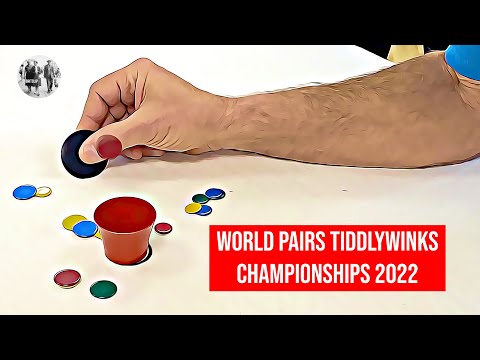
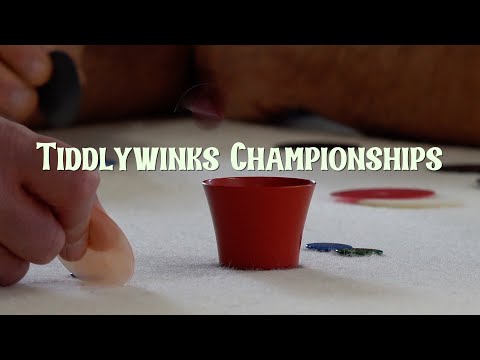
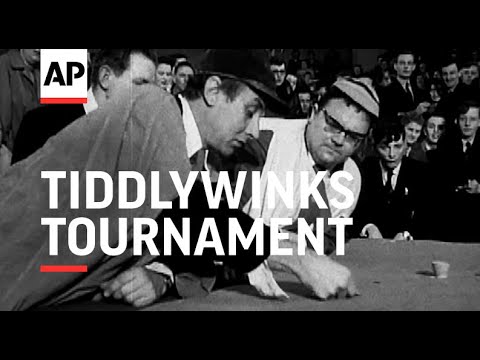
The filter sorts the Review Room embeds and the picture cards above by the keywords in their carried titles (review / analysis / recap and similar, or highlights). It runs entirely in your browser — nothing is sent anywhere.
No hall of fame with a published inductee list is carried for Tiddlywinks. Sport on Earth does not invent halls or inductees: where a recognised hall publishes its list in a form this site can carry, the full list will appear here with its source named.
The flick-and-pot table game played for world titles on a challenge basis, governed by IFTwA.
The format, from this sport's verified record:
The Tiddlywinks record book is still thin: beyond the standings, rules and calendar layers on this page, no verified winners roll or honours list is carried yet. The desk adds record material only when a published source can be named for it — never from memory or invention.
More from the desk: the expert guide to Tiddlywinks · the site-wide Writing Desk · every sport on Earth.
📖 Tiddlywinks — Tactics & Strategy — every entry, plus the arcade strategy, at the foot of this page.
An arcade take on Tiddlywinks: set the angle, set the power, and land the ball in the green. Five attempts; the closer to the middle, the more it scores. Arcade distances and a training arc — a game in the spirit of the sport, not a simulation of it.
This page’s own game is the arcade above. Everything else on the site that fits this sport is listed here — and anything borrowed from a similar sport is labelled as that sport’s game, never passed off as this one’s.
The tools on this site that honestly run on Tiddlywinks — its own record first, then the site-wide general tools that apply. The full Tiddlywinks toolkit prints the ones that do not apply, with the data reason why.
No bench tool yet computes from Tiddlywinks’s own carried record — the general tools below are the ones that honestly apply.
Site-wide tools, not built for Tiddlywinks alone: Tournament Planner · My Notebook · The Labs · Design Studio · The Makers’ Bench · Match Day Desk · Play It Near You · Myth-Check Desk · Governing Bodies · Heat & Safety Calculator (WBGT) · Hydration Calculator · Training-Load Planner · Game Clock & Timer · Custom Rulebook Generator · Scout Notes Parser.
Tactics & Strategy — this sport’s book
the precision family’s shared tactics book — archery, shooting, throws and place-games whose contest is the repeatable delivery under rising pressure: the routine is their common play.
10 entries, plus the arcade strategy below. All wording is original coaching-vocabulary prose; nothing is copied from any proprietary playbook.
Every precision sport converges on the same play: a fixed pre-delivery routine — breath, stance, visual target picture, release cue — repeated until the delivery is the routine’s output, not the moment’s invention.
When it’s used: The routine is the only play in these sports that is called on every single attempt.
The sequence
Outdoors, the wind is read off grass, flags, mirage and the last shot’s error: the craft is a running estimate, updated by every attempt and never finally known.
When it’s used: From archery’s field to the shooter’s range, the wind is the defence every competitor shares.
The sequence
Precision is calibrated, not wished: the group (the pattern of shots) is moved by the sights, and the group’s size is the honest measure of the day — the craft is reading a group like a sentence.
When it’s used: A tight group in the wrong place is good news wearing a disguise; a loose group centred is the opposite.
The sequence
Series are budgeted: time per shot, breaths per end, the deliberate slowness that keeps the last attempt identical to the first — fatigue in precision sport is a tremor that arrives by schedule.
When it’s used: The last shot of the final is lost in the first shots’ haste more often than in its own moment.
The sequence
Reads & counters
Finals are built to end on one delivery: the last attempt’s craft is the routine unchanged, the target picture accepted as imperfect, and the refusal to steer the shot in — the steering is how finals are lost.
When it’s used: The last attempt is the routine’s examination; nothing new is admitted to the exam room.
The sequence
Where the rules offer target choices — distances, zones, bonus rings — the competitor climbs a ladder priced by the standing: bank the safe score, spend risk only where the table pays for it.
When it’s used: From axe throwing’s clutch to archery’s field rounds, the ladder is the tactics layer over the technique.
The sequence
The thrown-placement branch of the family plays for ground, not targets: kubb’s baton throws knock down the opponent’s kubbs before the king may be attempted; horseshoes score by proximity and ringers; cornhole’s bags slide, block and airmail; marbles are won by shooting the opponent’s out of the ring.
When it’s used: Placement games are the bowls family’s wilder children: the ground is won, not the bullseye.
The sequence
Earth, clay, sand and boards each give the thrown object a different last metre: the precision family’s ground games are scouted like greens — where the bounce dies, where the slide runs, where the roll breaks.
When it’s used: The surface is the placement game’s silent partner, and it plays for the home side.
The sequence
To squop is to land your wink on top of an opponent’s, imprisoning it: the pile that results is the game’s territory, and the craft of shooting into piles (and ’boondocking’ free) is tiddlywinks’ entire tactics in one word.
When it’s used: Subbuteo’s serious cousin has a serious vocabulary, and the squop is its first word.
The sequence
A wink potted ends the game at once, so the pile game is played under sudden death: positions are priced by their distance from a pot as much as by their squops.
When it’s used: Tiddlywinks’ endgame is permanent: any wink may end it, so every shot is a match shot.
The sequence
The arcade cell · strategy
This page’s arcade cell: launch the ball at the green from the putting green · 40 m (arcade scale). Angle, power, launch — five attempts, and the cell keeps your best.
When it’s used: On this page, in the Play section — and its strategy is the same craft as the book above it, miniaturised.
The sequence
Part of the Sport on Earth Playbooks — a book for every sport and every game on the site.
Behind the Play · Full treatment — from this sport’s own record
The flick-and-pot table game played for world titles on a challenge basis, governed by IFTwA.
Behind the Play takes the decisive actions of Tiddlywinks apart: how the scoring play is built, which patterns the players are really running, and which rules remade the play into its modern shape.
The format, from this sport's verified record:
Source basis: this sport’s carried record on this page (verified record, rule-changes dossier, history datasets) and the play patterns of its family as written in the site’s guides. Nothing here is invented.