Archery World Records
YouTube · Dude Perfect
Pages
On this page
Sport on Earth › Sports
Sport on Earth · Sport
Target shooting with bows, an Olympic sport.
News stories from around the world, gathered and sourced by the Sport on Earth desk.
Archery is carried on the program for Los Angeles 2028 Olympic Games, 14 – 30 July 2028, in Los Angeles, USA. Target shooting with bows, an Olympic sport. The desk carries the sport’s full record — guide, calendar and history — on its own page.
LA28 / IOC · Nov 2026
Written by Sport on Earth’s journalists — columns, features and interviews from the desk.
No columns or stories filed for this sport yet.
Everything the desk has published for Archery, organised by section.
From the News Desk · all news, every sport →
Every embed below was verified playable before listing — the network’s standing rule.
YouTube · Dude Perfect
YouTube · Archery Tag®
YouTube · VANEGUARD
YouTube · Insider
Archery is carried on the program for Los Angeles 2028 Olympic Games, 14 – 30 July 2028, in Los Angeles, USA. Target shooting with bows, an Olympic sport. The desk carries the sport’s full record — guide, calendar and history — on its own page.
LA28 / IOC · Nov 2026
Pages
On this page
No game on this site is made specifically for Archery yet. The games below are the site's all-sport games, which honestly cover every sport — nothing from another sport has been dressed up as this sport's game.
A new set of questions every day, across every sport this site covers.
Real-athlete Top Sport on Earth decks built from the site’s verified board data.
Archery's lab is the Physics Lab section on this page — the applied physics of its sport family, with a computed interactive where one honestly fits.
Physics Arena — the general biomechanics & physics teaching sandbox, shared by every sport.
The homepage sport explorer also carries a general Lab tab of small interactive experiments.
Calendar data not yet carried for Archery — this site does not yet hold schedule data for it, so no dates are shown rather than invented.
Which section of this page should we expand first?
Votes are counted on the Sport on Earth server and the totals shown are every reader’s votes; your own choice is remembered in this browser.
Dated news entries for x61, newest first, dates exactly as carried in the site’s news data.
The flagship competitions on the calendar, with the dates for the current/upcoming cycle. Every date below was verified against the named source on 1 November 2026; dates change, and the source is the authority.
| Event | Dates | Where | Source |
|---|---|---|---|
| Los Angeles 2028 Olympic Games | 14 – 30 July 2028 | Los Angeles, USA | LA28 / IOC — Games dates |
Every target sport is the same problem restated: deliver a projectile (or judge its pace) so that a repeatable physical action produces a repeatable outcome. For thrown and shot projectiles the flight model below applies — no air resistance, no spin, flat ground — and the spread of your groupings is the visible signature of tiny variations in release speed and angle.
In the judged-pace games (bowls, curling, petanque family) the physics is friction and the biased or swept path: a curling stone curls because of asymmetric friction under its running band, and sweeping momentarily lowers that friction to extend and straighten the path. In cue sports, collisions are near-elastic momentum transfers — the calculator’s companion model in the Physics Arena covers impact maths.
From this sport's own record: Target shooting with bows, an Olympic sport. The lab above treats the physics of the sport's family; no measurement specific to this sport is printed, because the site's verified record for it carries none — parameters are never invented to fill a lab.
Model: R = v²·sin(2θ)/g, flight time T = 2·v·sin(θ)/g, apex H = (v·sin θ)²/(2g), g = 9.81 m/s². Assumptions: no air resistance, no spin, flat ground, launch and landing at the same height. Real balls and shuttles fly shorter and curve — drag and spin are exactly what this model leaves out, so treat the output as the gravity-only ceiling, not a prediction.
The general teaching sandbox for every sport is the Physics Arena on the Games page — the same printed models, with a defender added.
The hands-on lab for Archery, built entirely from the record this site carries for it — its documented rolls, its halls, its venues, its calendar and its census family. Every figure below is computed from that carried record at build time; nothing is estimated and nothing is pulled live. The companion Physics Lab on this page works the family's physics; this lab works the record.
The carried global venue dataset holds 5 venues for Archery across 4 countries. The largest capacity the dataset records for this sport is 80,000 — Panathenaic Stadium, .
Basis: the global venue dataset carried on this site (6,438 venues with coordinates; the venue explorer on the sports index and the stadium sun table work the same data). Countries beyond the 25 largest are counted in the totals above but not listed here.
Basis: the dated events this entry’s own record carries, as announced by the bodies named in the record. A sport whose record carries no fixed dated calendar says so on its calendar page rather than inventing one.
Computed from the site census: the Target & precision sports family holds 53 entries on this site. Across the family, the carried record includes documented rolls for 5 of them, Hall of Fame data for 6, venue sets for 8, and dated calendars for 6.
Every other entry in the family: Air Hockey · Airsoft · Asyk · Axe Throwing · Battle of the Oranges · Bocce · Boccia · Boomerang Throwing · Calva · Carom Billiards · Carrom · Chunkey · Cornhole · Crokinole · Croquet · Crud · Curling · Darts · Disc Golf · FlingGolf · Footgolf · Gateball · Golf · Gorodki · Horseshoes · Jukskei · Klootschieten · Kolf · Kubb · Kyudo · Kyykkä · Lagori · Lawn Bowls · Marbles · Mölkky · Novuss · Paintball · Pool · Pétanque · Road Bowling · Roque · Shooting · Shuffleboard · Skully / Skelly · Snookball · Snooker · Sport stacking · Stone Skimming · Tejo · Ten-pin Bowling · Tiddlywinks · Woodball
Basis: the Sport on Earth census itself — the same 460-entry register the census page prints.
The desk has not verified a sponsorship record for Archery from published sources, so none is printed. Sponsorship history is added only when a real published source supports it — sponsor by sponsor, deal by deal. Current sponsorship deals across sport are tracked on the Money Desk sponsorship page.
How this game is played, gathered from the record Sport on Earth already carries for Archery, with the positions taken from the sourced chart cited in that section.
Archery rebuilt its head-to-head format for the Olympic television window: from a war of attrition to a tennis-style sets duel.
The current rules, as the site's rule-change dossier records them:
The full dossier — every dated change and named rule, with its source basis — is in this page’s Rule Changes & Named Rules section.
Archery has no fixed positions — its format designates no positional roles.
Format as carried in hidden_files/batchB-nov1/batchb_data.json: "Target shooting with bows, an Olympic sport." The format carries no designated positional roles. (Source: Sport on Earth carried sport record.)
Its Tactics & Strategy book — its opening entries, the basic plays, are:
The full book carries 8 entries — in this page’s Playbook / Tactics & Strategy section, and at the Playbooks hub.
How the core actions of Archery are performed, and how to improve them — the layer between this page's How to Play section (the rules) and its training and physics sections.
Target archery is one repeated action performed identically, and elite coaching (KiSik Lee’s National Training System, used by USA Archery) formalises it as a 13-step shot cycle: stance; nocking; hooking and gripping; set position and mindset; setup; drawing; loading; anchoring; transfer; holding; expansion and aiming; release and follow-through; feedback. The first half of the cycle is about never disturbing what was set: the stance and posture are established BEFORE the draw — weight even on both feet, shoulders low, spine tall — and the draw is made with the back muscles (the drawing shoulder blade moving toward the spine), not the arm, bringing the string to a fixed anchor on the face. If the preparation is right, full draw is a position the archer arrives in, not one they assemble under load.
At full draw the load transfers into the back (’transfer’ and ’holding’ in the NTS cycle), and the shot is finished by continuing to expand — a small, ongoing increase of back tension, the drawing elbow continuing its arc — until the release happens as a relaxation of the string fingers, not a pluck or a punch. Because the archer is still expanding when the string leaves, the follow-through is a consequence rather than a pose: the string hand slides back along the jaw, the bow arm stays up toward the target, and the bow itself is allowed to fall against its sling rather than being grabbed. World Archery’s Level 1 coaching divides the same action into three phases — preparatory movements, force production, and release & follow-through — with checkpoints at set, set-up, full-draw anchor and the end of the shot.
Mechanics sources consulted: USA Archery — Archery (Human Kinetics): the shot cycle / National Training System (KiSik Lee); World Archery coaching material — shot cycle phases and the Beginners Manual (Gold Feather curriculum).
How this sport's equipment actually changed, entry by entry, from the sources named under each one. Dates a source gives only approximately are printed as c. or as an era, with the reason stated — never sharpened into a precision the record does not support.
The oldest known bows, found in the Holmegaard swamp in Denmark, date to c. 8000 BCE; early bows were single pieces of wood with sinew strings and stone/bone/flint-tipped arrows.
Why it changed: Archaeological dating, hence c.; hunting and warfare equipment.
Dating note: Approximate: sources give a range or differ on the exact year; see source.
Source: ’Bow and Arrow History Timeline’ (Jackson, MS municipal archive PDF; search result) — https://ww2.jacksonms.gov/Resources/wmtcho/8OK154/bow__and_arrow_history_timeline.pdf
Composite bows of wood, horn and sinew emerged around 2000 BCE in the timeline source, storing far more power in a short bow suited to horseback archers (Hittite, Persian and Mongol use).
Why it changed: Materials: three materials doing what no single wood could.
Dating note: Approximate: sources give a range or differ on the exact year; see source.
Source: ’Bow and Arrow History Timeline’ (Jackson, MS municipal archive PDF; search result) — https://ww2.jacksonms.gov/Resources/wmtcho/8OK154/bow__and_arrow_history_timeline.pdf
The English/Welsh longbow — a tall single stave, typically yew — was the dominant European war bow of the period (Crécy 1346, Agincourt 1415); its sporting descendants kept the one-piece wooden form.
Why it changed: Military dominance, then sporting preservation.
Source: ’Bow and Arrow History Timeline’ (Jackson, MS municipal archive PDF; search result) — https://ww2.jacksonms.gov/Resources/wmtcho/8OK154/bow__and_arrow_history_timeline.pdf
Archery entered the modern Olympics in 1900; through the 20th century engineers, from the 1920s, commercialised the modern recurve form, and Olympic archery settled on the recurve bow at 70 m — compound bows are excluded from the Olympics to this day.
Why it changed: Rule-driven: the Olympic discipline froze one bow type as its standard.
Source: Wikipedia, ’Archery’ (search result, incl. compound-bow patent dates) — https://en.wikipedia.org/wiki/Archery?oldid=752997540
Holless Wilbur Allen filed his compound-bow patent on 23 June 1966 (granted 1969): pulleys/cams at the limb tips give ’let-off’ at full draw (typically 65–80% in modern bows), letting the archer aim with far less holding weight. Compounds dominate North American archery and World Archery compound competition, but not the Olympics.
Why it changed: Materials/mechanics: the biggest equipment change in the sport’s modern history.
Source: Wikipedia, ’Archery’ (search result, incl. compound-bow patent dates) — https://en.wikipedia.org/wiki/Archery?oldid=752997540
Companion tool: the Equipment Size Visualiser draws today's balls for eight sports at true relative scale — this section is how they got that way.
Sport on Earth's own analytics: every figure in this panel is computed at build time from the record this site itself carries, with the source named. No outside data is used, and no betting figures of any kind.
Venues carried: 5 in 4 countries; the largest carried capacity is 80,000 (Panathenaic Stadium).
Source: the site's global venue record (venues-global.json); a capacity is printed only where the record carries a verified one.
Census arithmetic: Archery sits in the target sports family — 53 census sports, of which 5 carry a qualifying champions roll in the site's record.
Archery rebuilt its head-to-head format for the Olympic television window: from a war of attrition to a tennis-style sets duel.
Before: Elimination matches were decided on cumulative score over 12 or 18 arrows: a bad early end buried an archer hopelessly, and matches drifted to foregone conclusions over long afternoons.
The change: Matches became sets: ends of three arrows form a set, the set winner takes two points (one each for a tie), first to six set points wins; level at 5–5, a one-arrow shoot-off (closest to the centre) decides it. Compound adopted its own cumulative-with-shoot-off variant.
Why it happened: World Archery’s television logic mirrors tennis: contained sub-contests, frequent crisis points, a possible comeback in every set. The 2010 debut at World Cup level and its Olympic adoption at London 2012 completed the reform within two years.
In practice today: Set play is now the grammar of televised archery — every match reaches shoot-off-adjacent drama regularly, and the single-arrow shoot-off has produced some of the Olympic program’s purest pressure moments.
Source basis: World Archery records of the set system (introduced 2010, standard by the London 2012 cycle).
Sport on Earth carries no results feed for Archery: no scores or fixtures are published here, rather than inventing them. The sport's documented record is in its history page and the History & Records section of this page.
The historical record for Archery — past standings, champions, title history and all-time leaders, as deep as verifiable public records go.
Season-by-season standings, historical player statistics and title rolls are not carried for Archery: no public archive publishes them in a form Sport on Earth can verify, and this site does not invent history. What is carried for this sport is its verified record, its rule-change history and its league history — elsewhere on this page.
The review and analysis videos from Archery’s verified video pool — every embed below was identity-checked and probed playable before listing, the site’s standing rule. Nothing here is a show Sport on Earth produces; these are the review, post-game and breakdown videos the pool already carries for this sport.
YouTube · Insider

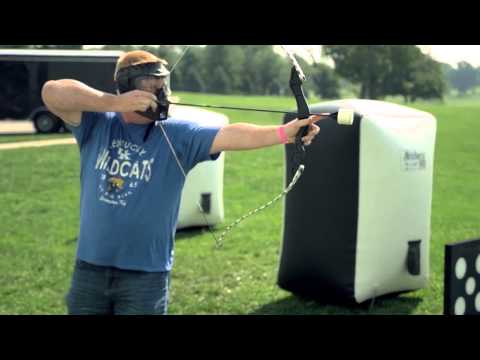
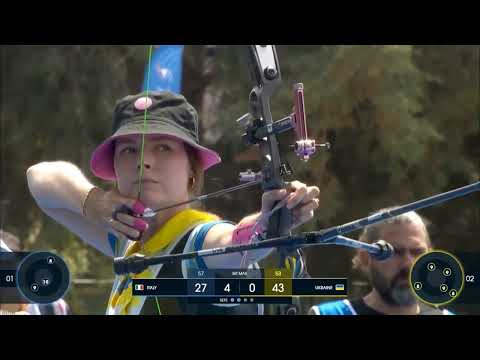
Chart basis: counts from Sport on Earth’s own carried data files at build time — verified videos carried for this sport (the verified pool: sport-videos.json + the desk league pools), news items carried (news.json), and league pages carried (desk.json). No external or estimated figures.
The filter sorts the Review Room embeds and the picture cards above by the keywords in their carried titles (review / analysis / recap and similar, or highlights). It runs entirely in your browser — nothing is sent anywhere.
Also recognised: Archery Hall of Fame. Its published inductee list is not carried here in parsed form — the hall's own published list is the complete record.
Target shooting with bows, an Olympic sport.
Archery rebuilt its head-to-head format for the Olympic television window: from a war of attrition to a tennis-style sets duel.
Sport on Earth carries no team or player directory for this sport, because no structured public feed publishes a verifiable one. What is carried is the documented record on this page — history, rules, honours and the calendar — each with its source named.
📖 Archery — Tactics & Strategy — every entry, plus the arcade strategy, at the foot of this page.
An arcade take on Archery: set the angle, set the power, and land the arrow in the gold. Five attempts; the closer to the middle, the more it scores. Arcade distances and a training arc — a game in the spirit of the sport, not a simulation of it.
This page’s own game is the arcade above. Everything else on the site that fits this sport is listed here — and anything borrowed from a similar sport is labelled as that sport’s game, never passed off as this one’s.
Click to play — the game loads from the provider only when you press Play (verified to load and play on 2 November 2026). Open a game to play it here, or browse the whole collection in the Sport on Earth Arcade.
2 verified documentaries, films and series about this sport are listed in the site's screen guide: Sport on Screen — Archery.
The tools on this site that honestly run on Archery — its own record first, then the site-wide general tools that apply. The full Archery toolkit prints the ones that do not apply, with the data reason why.
Site-wide tools, not built for Archery alone: Tournament Planner · My Notebook · The Labs · Design Studio · The Makers’ Bench · Match Day Desk · Play It Near You · Myth-Check Desk · Governing Bodies · Heat & Safety Calculator (WBGT) · Hydration Calculator · Training-Load Planner · Game Clock & Timer · Custom Rulebook Generator · Scout Notes Parser.
Tactics & Strategy — this sport’s book
the precision family’s shared tactics book — archery, shooting, throws and place-games whose contest is the repeatable delivery under rising pressure: the routine is their common play.
8 entries, plus the arcade strategy below. All wording is original coaching-vocabulary prose; nothing is copied from any proprietary playbook.
Every precision sport converges on the same play: a fixed pre-delivery routine — breath, stance, visual target picture, release cue — repeated until the delivery is the routine’s output, not the moment’s invention.
When it’s used: The routine is the only play in these sports that is called on every single attempt.
The sequence
Outdoors, the wind is read off grass, flags, mirage and the last shot’s error: the craft is a running estimate, updated by every attempt and never finally known.
When it’s used: From archery’s field to the shooter’s range, the wind is the defence every competitor shares.
The sequence
Precision is calibrated, not wished: the group (the pattern of shots) is moved by the sights, and the group’s size is the honest measure of the day — the craft is reading a group like a sentence.
When it’s used: A tight group in the wrong place is good news wearing a disguise; a loose group centred is the opposite.
The sequence
Series are budgeted: time per shot, breaths per end, the deliberate slowness that keeps the last attempt identical to the first — fatigue in precision sport is a tremor that arrives by schedule.
When it’s used: The last shot of the final is lost in the first shots’ haste more often than in its own moment.
The sequence
Reads & counters
Finals are built to end on one delivery: the last attempt’s craft is the routine unchanged, the target picture accepted as imperfect, and the refusal to steer the shot in — the steering is how finals are lost.
When it’s used: The last attempt is the routine’s examination; nothing new is admitted to the exam room.
The sequence
Where the rules offer target choices — distances, zones, bonus rings — the competitor climbs a ladder priced by the standing: bank the safe score, spend risk only where the table pays for it.
When it’s used: From axe throwing’s clutch to archery’s field rounds, the ladder is the tactics layer over the technique.
The sequence
The thrown-placement branch of the family plays for ground, not targets: kubb’s baton throws knock down the opponent’s kubbs before the king may be attempted; horseshoes score by proximity and ringers; cornhole’s bags slide, block and airmail; marbles are won by shooting the opponent’s out of the ring.
When it’s used: Placement games are the bowls family’s wilder children: the ground is won, not the bullseye.
The sequence
Earth, clay, sand and boards each give the thrown object a different last metre: the precision family’s ground games are scouted like greens — where the bounce dies, where the slide runs, where the roll breaks.
When it’s used: The surface is the placement game’s silent partner, and it plays for the home side.
The sequence
The arcade cell · strategy
This page’s arcade cell: launch the arrow at the gold from the putting green · 40 m (arcade scale). Angle, power, launch — five attempts, and the cell keeps your best.
When it’s used: On this page, in the Play section — and its strategy is the same craft as the book above it, miniaturised.
The sequence
Part of the Sport on Earth Playbooks — a book for every sport and every game on the site.
Behind the Play · Full treatment — from this sport’s own record
Target shooting with bows, an Olympic sport.
Behind the Play takes the decisive actions of Archery apart: how the scoring play is built, which patterns the players are really running, and which rules remade the play into its modern shape.
Archery rebuilt its head-to-head format for the Olympic television window: from a war of attrition to a tennis-style sets duel.
The Set System (introduced 2010; Olympic standard from London 2012). Matches became sets: ends of three arrows form a set, the set winner takes two points (one each for a tie), first to six set points wins; level at 5–5, a one-arrow shoot-off (closest to the centre) decides it. Compound adopted its own cumulative-with-shoot-off variant.
Set play is now the grammar of televised archery — every match reaches shoot-off-adjacent drama regularly, and the single-arrow shoot-off has produced some of the Olympic program’s purest pressure moments.
From this page’s Rule Changes & Named Rules dossier, where every entry names its source.
Source basis: this sport’s carried record on this page (verified record, rule-changes dossier, history datasets) and the play patterns of its family as written in the site’s guides. Nothing here is invented.