2023 Colorado FlingGolf Open Recap
YouTube · FlingGolf by New Swarm
Pages
On this page
Sport on Earth › Sports
Sport on Earth · Sport
Golf using a single stick to fling the ball.
Every embed below was verified playable before listing — the network’s standing rule.
YouTube · FlingGolf by New Swarm
YouTube · kenzo_flings
YouTube · iFling Golf w/Sonny
YouTube · Lucky Thrives
Pages
On this page
No game on this site is made specifically for FlingGolf yet. The games below are the site's all-sport games, which honestly cover every sport — nothing from another sport has been dressed up as this sport's game.
A new set of questions every day, across every sport this site covers.
Real-athlete Top Sport on Earth decks built from the site’s verified board data.
FlingGolf's lab is the Physics Lab section on this page — the applied physics of its sport family, with a computed interactive where one honestly fits.
Physics Arena — the general biomechanics & physics teaching sandbox, shared by every sport.
The homepage sport explorer also carries a general Lab tab of small interactive experiments.
Calendar data not yet carried for FlingGolf — this site does not yet hold schedule data for it, so no dates are shown rather than invented.
Which section of this page should we expand first?
Votes are counted on the Sport on Earth server and the totals shown are every reader’s votes; your own choice is remembered in this browser.
Sport on Earth does not yet hold verified dated events for FlingGolf, and its carried record does not state the season's timing in words — so no calendar is shown rather than an invented one. What the site does carry for this sport is on this page: its verified record, its rules record and its history.
Every target sport is the same problem restated: deliver a projectile (or judge its pace) so that a repeatable physical action produces a repeatable outcome. For thrown and shot projectiles the flight model below applies — no air resistance, no spin, flat ground — and the spread of your groupings is the visible signature of tiny variations in release speed and angle.
In the judged-pace games (bowls, curling, petanque family) the physics is friction and the biased or swept path: a curling stone curls because of asymmetric friction under its running band, and sweeping momentarily lowers that friction to extend and straighten the path. In cue sports, collisions are near-elastic momentum transfers — the calculator’s companion model in the Physics Arena covers impact maths.
From this sport's own record: Golf using a single stick to fling the ball. The lab above treats the physics of the sport's family; no measurement specific to this sport is printed, because the site's verified record for it carries none — parameters are never invented to fill a lab.
Model: R = v²·sin(2θ)/g, flight time T = 2·v·sin(θ)/g, apex H = (v·sin θ)²/(2g), g = 9.81 m/s². Assumptions: no air resistance, no spin, flat ground, launch and landing at the same height. Real balls and shuttles fly shorter and curve — drag and spin are exactly what this model leaves out, so treat the output as the gravity-only ceiling, not a prediction.
The general teaching sandbox for every sport is the Physics Arena on the Games page — the same printed models, with a defender added.
The hands-on lab for FlingGolf, built entirely from the record this site carries for it — its documented rolls, its halls, its venues, its calendar and its census family. Every figure below is computed from that carried record at build time; nothing is estimated and nothing is pulled live. The companion Physics Lab on this page works the family's physics; this lab works the record.
The honest position: the record this site carries for FlingGolf is thin — no documented roll, hall, venue set or dated calendar is carried for it yet — so this entry’s lab is its family lab: the computed census of the family it belongs to. When the record grows, the lab grows with it; nothing here is estimated to fill the space.
Computed from the site census: the Target & precision sports family holds 53 entries on this site. Across the family, the carried record includes documented rolls for 5 of them, Hall of Fame data for 6, venue sets for 8, and dated calendars for 6.
Every other entry in the family: Air Hockey · Airsoft · Archery · Asyk · Axe Throwing · Battle of the Oranges · Bocce · Boccia · Boomerang Throwing · Calva · Carom Billiards · Carrom · Chunkey · Cornhole · Crokinole · Croquet · Crud · Curling · Darts · Disc Golf · Footgolf · Gateball · Golf · Gorodki · Horseshoes · Jukskei · Klootschieten · Kolf · Kubb · Kyudo · Kyykkä · Lagori · Lawn Bowls · Marbles · Mölkky · Novuss · Paintball · Pool · Pétanque · Road Bowling · Roque · Shooting · Shuffleboard · Skully / Skelly · Snookball · Snooker · Sport stacking · Stone Skimming · Tejo · Ten-pin Bowling · Tiddlywinks · Woodball
Basis: the Sport on Earth census itself — the same 460-entry register the census page prints.
The desk has not verified a sponsorship record for FlingGolf from published sources, so none is printed. Sponsorship history is added only when a real published source supports it — sponsor by sponsor, deal by deal. Current sponsorship deals across sport are tracked on the Money Desk sponsorship page.
How this game is played, gathered from the record Sport on Earth already carries for FlingGolf, with the positions taken from the sourced chart cited in that section.
Sport on Earth carries no separate rules list for FlingGolf; the governing framework its record carries is this:
FlingGolf is an authored American code (launched 2014): golf played with a single FlingStick launching the ball, with putting by pushing — a rulebook written by its inventor’s organisation for adoption by golf courses. Young and authored; no law-change history exists to carry.
FlingGolf has no fixed positions — its format designates no positional roles.
Format as carried in hidden_files/batchB-nov1/batchb_data.json: "Golf using a single stick to fling the ball." The format carries no designated positional roles. (Source: Sport on Earth carried sport record.)
Its Tactics & Strategy book — its opening entries, the basic plays, are:
The full book carries 10 entries — in this page’s Playbook / Tactics & Strategy section, and at the Playbooks hub.
Sport on Earth's own analytics: every figure in this panel is computed at build time from the record this site itself carries, with the source named. No outside data is used, and no betting figures of any kind.
Census arithmetic: FlingGolf sits in the target sports family — 53 census sports, of which 5 carry a qualifying champions roll in the site's record.
The carried record for FlingGolf is too thin for computed panels: no champions roll, hall-of-fame list or venue record is carried for it. This panel therefore prints the census arithmetic only — the honest answer rather than a manufactured figure.
How the laws of FlingGolf are governed today — the documented record, stated plainly.
FlingGolf is an authored American code (launched 2014): golf played with a single FlingStick launching the ball, with putting by pushing — a rulebook written by its inventor’s organisation for adoption by golf courses. Young and authored; no law-change history exists to carry.
That framework summary is the whole documented record Sport on Earth can verify for this sport — no major dated rule changes are carried, rather than invent any.
Source basis: The governing body’s published framework as summarised in this section (see the framework text).
Sport on Earth carries no results feed for FlingGolf: no scores or fixtures are published here, rather than inventing them. The sport's documented record is in its history page and the History & Records section of this page.
The historical record for FlingGolf — past standings, champions, title history and all-time leaders, as deep as verifiable public records go.
Season-by-season standings, historical player statistics and title rolls are not carried for FlingGolf: no public archive publishes them in a form Sport on Earth can verify, and this site does not invent history. What is carried for this sport is its verified record, its rule-change history and its league history — elsewhere on this page.
The review and analysis videos from FlingGolf’s verified video pool — every embed below was identity-checked and probed playable before listing, the site’s standing rule. Nothing here is a show Sport on Earth produces; these are the review, post-game and breakdown videos the pool already carries for this sport.
YouTube · FlingGolf by New Swarm
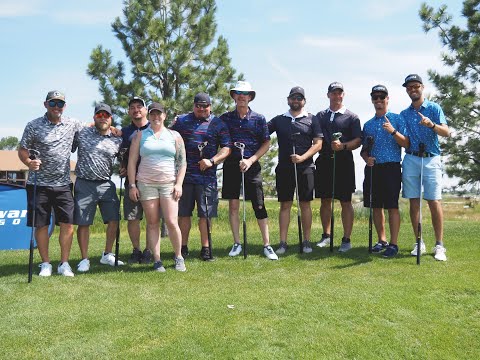
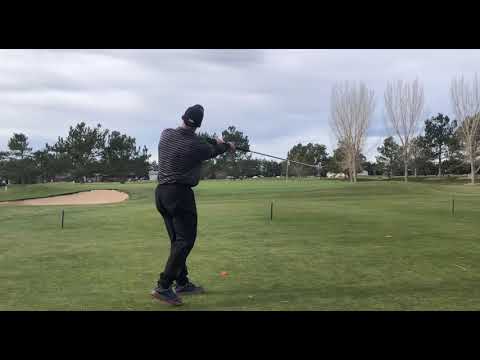
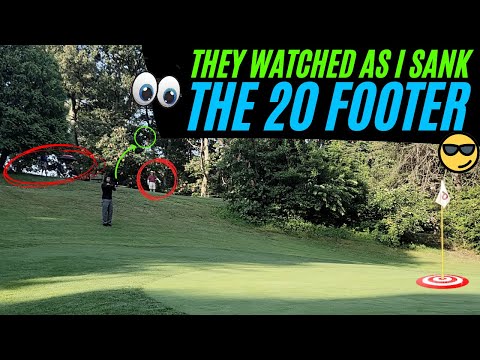
The filter sorts the Review Room embeds and the picture cards above by the keywords in their carried titles (review / analysis / recap and similar, or highlights). It runs entirely in your browser — nothing is sent anywhere.
No hall of fame with a published inductee list is carried for FlingGolf. Sport on Earth does not invent halls or inductees: where a recognised hall publishes its list in a form this site can carry, the full list will appear here with its source named.
Golf using a single stick to fling the ball.
In the wider target family of sports — precision is applied physics repeated perfectly, the game turns on: Process over outcome: a repeatable routine — stance, aim, release, follow-through — because results follow process with a lag.; Read before you play: line, pace and conditions are decided before the delivery starts; changing mid-action is where errors live.; Grouping before centring: tighten the pattern of attempts first; then move the whole pattern onto the target.; One-ball-at-a-time scoring: target games punish carrying the last miss into the next attempt more than any single bad throw.; The shot routine is the skill: a repeatable pre-shot sequence holds technique together when the score starts to matter.; Conditions separate fields: wind, light and surface change the same delivery’s result — reading them is a scoring skill, not local knowledge..
Sport on Earth carries no team or player directory for this sport, because no structured public feed publishes a verifiable one. What is carried is the documented record on this page — history, rules, honours and the calendar — each with its source named.
The FlingGolf record book is still thin: beyond the standings, rules and calendar layers on this page, no verified winners roll or honours list is carried yet. The desk adds record material only when a published source can be named for it — never from memory or invention.
More from the desk: the expert guide to FlingGolf · the site-wide Writing Desk · every sport on Earth.
📖 FlingGolf — Tactics & Strategy — every entry, plus the arcade strategy, at the foot of this page.
An arcade take on FlingGolf: set the angle, set the power, and land the ball in the green. Five attempts; the closer to the middle, the more it scores. Arcade distances and a training arc — a game in the spirit of the sport, not a simulation of it.
This page’s own game is the arcade above. Everything else on the site that fits this sport is listed here — and anything borrowed from a similar sport is labelled as that sport’s game, never passed off as this one’s.
The tools on this site that honestly run on FlingGolf — its own record first, then the site-wide general tools that apply. The full FlingGolf toolkit prints the ones that do not apply, with the data reason why.
No bench tool yet computes from FlingGolf’s own carried record — the general tools below are the ones that honestly apply.
Site-wide tools, not built for FlingGolf alone: Tournament Planner · My Notebook · The Labs · Design Studio · The Makers’ Bench · Match Day Desk · Play It Near You · Myth-Check Desk · Governing Bodies · Heat & Safety Calculator (WBGT) · Hydration Calculator · Training-Load Planner · Game Clock & Timer · Custom Rulebook Generator · Scout Notes Parser.
Tactics & Strategy — this sport’s book
golf’s book is course management — the strategy of choosing targets by dispersion rather than by hope, played one unrepeatable shot at a time.
10 entries, plus the arcade strategy below. All wording is original coaching-vocabulary prose; nothing is copied from any proprietary playbook.
Your shots land in an ellipse, not on a point: course management aims the ellipse so its bad half is safe — the flag is the target only when the whole pattern survives the green’s hazards.
When it’s used: The foundational idea of modern golf strategy, proven by strokes-gained data.
The sequence
On the long hole, the second shot is played to a number — the full wedge distance you trust — rather than at a green the percentages forbid: the lay-up is the brave play wearing patience’s clothes.
When it’s used: Par fives are won by thirds: the lay-up is the middle third played honestly.
The sequence
From the trees, the play is position: punch out to the fairway with the low, running shot, conceding the green and saving the score — the recovery is a play with its own technique, not an apology.
When it’s used: Bogey is the recovery’s par; the hero shot from the trees is how doubles are born.
The sequence
On the green, holing is a speed problem wearing a line problem’s clothes: the read chooses the line for a chosen pace, and the pace (dying at the hole) is the putt’s true target.
When it’s used: Most putts are missed by speed before they are missed by read.
The sequence
On firm ground, the chip is played as a putt with a lofted start: land it a third of the way, let it run two-thirds — the links game’s oldest short-game answer to wind and tight lies.
When it’s used: The running chip removes the air, and the air is where chips go wrong.
The sequence
Match play is played against a man; stroke play against a field: the same hole is two different problems — the match player attacks a conceded putt’s worth of risk, the medal player declines it.
When it’s used: Format rewrites the strategy book’s risk tables, hole by hole.
The sequence
Holes are shaped; tee shots are hit to the side the shape rewards — the draw into the dogleg, the fade held against it — and the side of the fairway chosen sets up the approach’s own angle at the flag.
When it’s used: The approach begins at the tee: angles are inherited.
The sequence
Team golf has its own book: in fourball, one partner plays safe while the other attacks (the ’hammer and anvil’); in foursomes (alternate shot), pairings are chosen by who leaves whom the better next shot.
When it’s used: Partner golf is two players playing one ball’s future or two balls’ insurance.
The sequence
Wind is priced in clubs, not adjectives: a two-club wind changes every number, and the shot is hit with a lower flight and a bigger allowance — the links player’s library of knock-downs and holds.
When it’s used: The weather is a player in every round; the book includes its scouting report.
The sequence
Rounds are managed in zones: the first holes for rhythm, the course’s hard stretch for par’s dignity, the closing holes for the attack the scoreboard permits — the player who spends his aggression by the map beats the one who spends it by mood.
When it’s used: A tactics of tempo over four hours: the card is a campaign, not eighteen arguments.
The sequence
The arcade cell · strategy
This page’s arcade cell: launch the ball at the green from the putting green · 40 m (arcade scale). Angle, power, launch — five attempts, and the cell keeps your best.
When it’s used: On this page, in the Play section — and its strategy is the same craft as the book above it, miniaturised.
The sequence
Part of the Sport on Earth Playbooks — a book for every sport and every game on the site.
Behind the Play · From the carried record
Golf using a single stick to fling the ball.
Behind the Play takes the decisive actions of FlingGolf apart: how the scoring play is built, which patterns the players are really running, and which rules remade the play into its modern shape.
Source basis: this sport’s carried record on this page (verified record, rule-changes dossier, history datasets) and the play patterns of its family as written in the site’s guides. Nothing here is invented.