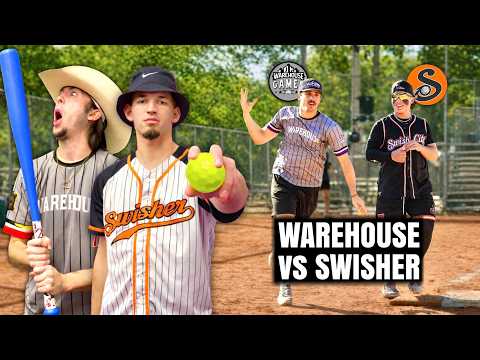
The real plastic-ball backyard game: Aaron Kim’s hole-free ball, the COMO and National Blitzball leagues, and Jomboy Media’s Warehouse Games.
The Sport on Earth desk has not reached this sport yet — its guide and history above are what is live for now. No desk stories, videos or news are published for it until the desk covers it.
No game on this site is made specifically for Blitzball yet. The games below are the site's all-sport games, which honestly cover every sport — nothing from another sport has been dressed up as this sport's game.
Real-athlete Top Sport on Earth decks built from the site’s verified board data.
The Lab
Blitzball's lab is the Physics Lab section on this page — the applied physics of its sport family, with a computed interactive where one honestly fits.
Physics Arena — the general biomechanics & physics teaching sandbox, shared by every sport.
The homepage sport explorer also carries a general Lab tab of small interactive experiments.
Season calendar
Calendar data not yet carried for Blitzball — this site does not yet hold schedule data for it, so no dates are shown rather than invented.
Story extras
Fan poll
Which section of this page should we expand first?
Votes are counted on the Sport on Earth server and the totals shown are every reader’s votes; your own choice is remembered in this browser.
How to Play Blitzball
How this game is played, gathered from the record Sport on Earth already carries for Blitzball, with the positions taken from the sourced chart cited in that section.
The game in brief
Blitzball is an original American backyard game, not an adaptation of a parent code: a wiffle-ball descendant built around its own ball.
Its organised life runs through the brand’s national circuit — the Blitzball World Series, the National Blitzball League and the 1v1 Championship — and through Jomboy Media’s Warehouse Games.
Core rules
Blitzball — how the game is played — the rules as this site's record carries them:
The ball: a hole-free plastic ball whose flat, hexagon-shaped panels create the pressure imbalance a Wiffle ball gets from its slots — it curves and rides, and travels faster and farther. It weighs just under an ounce and is made in the USA.
No single rulebook: leagues publish their own codes over a shared skeleton — a physical strike-zone target behind the batter (a pitch that hits it is a strike), a pitching distance of about 50 feet, and a walk on five or six balls depending on the league.
COMO Blitzball’s World Series format: four innings, 4 against 4, the mound at 52 feet, 60-foot bases, a 100-foot home-run line, real base running, and pegging (throwing the ball at a runner) allowed.
The warehouse game (Blitzball Battle): two-player squads, two-inning games, five balls to a walk, no base running; balls live off the walls, the floor and the roof beam players call the devastator are in play.
The 1v1 game: one or two innings, ghost runners, the result judged by where the ball lands, and an 80 mph speed cap in the championship.
Positions & basic plays
Positions for Blitzball are not yet sourced on Sport on Earth: no verified positions chart has been carried for this sport yet, so none is shown here rather than an invented one. That says nothing about whether the sport has positions — only that they have not been sourced for this page yet.
Analytics — Blitzball
Sport on Earth's own analytics: every figure in this panel is computed at build time from the record this site itself carries, with the source named. No outside data is used, and no betting figures of any kind.
Census arithmetic: Blitzball sits in the bat-and-ball sports family — 29 census sports, of which 3 carry a qualifying champions roll in the site's record.
The carried record for Blitzball is too thin for computed panels: no champions roll, hall-of-fame list or venue record is carried for it. This panel therefore prints the census arithmetic only — the honest answer rather than a manufactured figure.
Season Calendar
The season in words
The Warehouse Games tape in seasonal blocks through the year. The brand’s national calendar runs the Blitzball World Series and a National Blitzball League season through the year, closing with the 1v1 Championship in the autumn; COMO Blitzball plays a league season that builds to its World Series in the autumn.
The Physics Lab
The fastest duel in sport: delivery versus reaction
A delivery in bat-and-ball sports is a projectile with a twist: it may bounce (cricket-family) or fly flat (baseball-family), and in both families it can curve — swing and seam in cricket, breaking balls in baseball — because a spinning or asymmetrically rough ball deflects in moving air (the Magnus effect and boundary-layer behaviour). The calculator below runs the core flight model with its assumptions printed: no air resistance, no spin, flat ground.
The batter’s problem is time: elite deliveries allow roughly four-tenths of a second from release to arrival, less than a full decision-and-swing cycle — which is why batters predict from the deliverer’s action rather than reacting to the ball. Pitch/shot speed, release height and bounce all trade against that reaction window.
From this sport's own record: The real plastic-ball backyard game: Aaron Kim’s hole-free ball, the COMO and National Blitzball leagues, and Jomboy Media’s Warehouse Games. The lab above treats the physics of the sport's family; no measurement specific to this sport is printed, because the site's verified record for it carries none — parameters are never invented to fill a lab.
Try it: projectile flight calculator
Model: R = v²·sin(2θ)/g, flight time T = 2·v·sin(θ)/g, apex H = (v·sin θ)²/(2g), g = 9.81 m/s². Assumptions: no air resistance, no spin, flat ground, launch and landing at the same height. Real balls and shuttles fly shorter and curve — drag and spin are exactly what this model leaves out, so treat the output as the gravity-only ceiling, not a prediction.
The general teaching sandbox for every sport is the Physics Arena on the Games page — the same printed models, with a defender added.
The Record Lab
The hands-on lab for Blitzball, built entirely from the record this site carries for it — its documented rolls, its halls, its venues, its calendar and its census family. Every figure below is computed from that carried record at build time; nothing is estimated and nothing is pulled live. The companion Physics Lab on this page works the family's physics; this lab works the record.
The family lab — Bat-and-ball games
The honest position: the record this site carries for Blitzball is thin — no documented roll, hall, venue set or dated calendar is carried for it yet — so this entry’s lab is its family lab: the computed census of the family it belongs to. When the record grows, the lab grows with it; nothing here is estimated to fill the space.
Computed from the site census: the Bat-and-ball games family holds 29 entries on this site. Across the family, the carried record includes documented rolls for 2 of them, Hall of Fame data for 3, venue sets for 4, and dated calendars for 3.
Basis: the Sport on Earth census itself — the same 460-entry register the census page prints.
Sponsorship History
The desk has not verified a sponsorship record for Blitzball from published sources, so none is printed. Sponsorship history is added only when a real published source supports it — sponsor by sponsor, deal by deal. Current sponsorship deals across sport are tracked on the Money Desk sponsorship page.
Blitzball — the real game
Blitzball is an original American backyard game, not an adaptation of a parent code: a wiffle-ball descendant built around its own ball.
Its organised life runs through the brand’s national circuit — the Blitzball World Series, the National Blitzball League and the 1v1 Championship — and through Jomboy Media’s Warehouse Games.
The league: National Blitzball League
The Blitzball brand’s own league, run through blitzball.com alongside the Blitzball World Series and the 1v1 Championship.
The 2026 NBL season ran to a championship game on 6 November 2026; the league names an MVP, a Cy Young and a Silver Slugger each season.
The 1v1 Championship is a one-on-one duel — ghost runners, no base running, an 80 mph pitching cap; Trent Severino won it back to back in 2024 and 2025.
COMO Blitzball (Columbia, Missouri, since 2016) is the game’s flagship independent league: eight teams, real base running, its own World Series.
The teams
Blitzball — how the game is played
The ball: a hole-free plastic ball whose flat, hexagon-shaped panels create the pressure imbalance a Wiffle ball gets from its slots — it curves and rides, and travels faster and farther. It weighs just under an ounce and is made in the USA.
No single rulebook: leagues publish their own codes over a shared skeleton — a physical strike-zone target behind the batter (a pitch that hits it is a strike), a pitching distance of about 50 feet, and a walk on five or six balls depending on the league.
COMO Blitzball’s World Series format: four innings, 4 against 4, the mound at 52 feet, 60-foot bases, a 100-foot home-run line, real base running, and pegging (throwing the ball at a runner) allowed.
The warehouse game (Blitzball Battle): two-player squads, two-inning games, five balls to a walk, no base running; balls live off the walls, the floor and the roof beam players call the devastator are in play.
The 1v1 game: one or two innings, ghost runners, the result judged by where the ball lands, and an 80 mph speed cap in the championship.
Blitzball has no federation, no college game and no school pathway to record: the brand, its leagues and the warehouse are the whole organised game, and this page carries only what those sources publish.
How the laws of Blitzball are governed today — the documented record, stated plainly.
Blitzball is an authored American backyard format (a wiffle-ball descendant with its own ball design, popularised by tournament series such as Blitzball Battle) under codes written by its promoters — strike zones, pitch rules and formats set per event. A young authored code. No documented law-change history is carried for blitzball.
That framework summary is the whole documented record Sport on Earth can verify for this sport — no major dated rule changes are carried, rather than invent any.
Source basis: The governing body’s published framework as summarised in this section (see the framework text).
Results & Fixtures
Sport on Earth carries no results feed for Blitzball: no scores or fixtures are published here, rather than inventing them. The sport's documented record is in its history page and the History & Records section of this page.
History & Records
The historical record for Blitzball — past standings, champions, title history and all-time leaders, as deep as verifiable public records go.
Season-by-season standings, historical player statistics and title rolls are not carried for Blitzball: no public archive publishes them in a form Sport on Earth can verify, and this site does not invent history. What is carried for this sport is its verified record, its rule-change history and its league history — elsewhere on this page.
Review Room — in-game and post-game review & analysis
The review and analysis videos from Blitzball’s verified video pool — every embed below was identity-checked and probed playable before listing, the site’s standing rule. Nothing here is a show Sport on Earth produces; these are the review, post-game and breakdown videos the pool already carries for this sport.
No verified review-show video is carried for this sport yet.
Blitzball in pictures & numbers
The filter sorts the Review Room embeds and the picture cards above by the keywords in their carried titles (review / analysis / recap and similar, or highlights). It runs entirely in your browser — nothing is sent anywhere.
Hall of Fame
No hall of fame with a published inductee list is carried for Blitzball. Sport on Earth does not invent halls or inductees: where a recognised hall publishes its list in a form this site can carry, the full list will appear here with its source named.
The Sport in Depth
How it’s played
The real plastic-ball backyard game: Aaron Kim’s hole-free ball, the COMO and National Blitzball leagues, and Jomboy Media’s Warehouse Games.
The format, from this sport's verified record:
The ball: a hole-free plastic ball whose flat, hexagon-shaped panels create the pressure imbalance a Wiffle ball gets from its slots — it curves and rides, and travels faster and farther. It weighs just under an ounce and is made in the USA.
No single rulebook: leagues publish their own codes over a shared skeleton — a physical strike-zone target behind the batter (a pitch that hits it is a strike), a pitching distance of about 50 feet, and a walk on five or six balls depending on the league.
COMO Blitzball’s World Series format: four innings, 4 against 4, the mound at 52 feet, 60-foot bases, a 100-foot home-run line, real base running, and pegging (throwing the ball at a runner) allowed.
The warehouse game (Blitzball Battle): two-player squads, two-inning games, five balls to a walk, no base running; balls live off the walls, the floor and the roof beam players call the devastator are in play.
The 1v1 game: one or two innings, ghost runners, the result judged by where the ball lands, and an 80 mph speed cap in the championship.
The pro scene
The Blitzball brand’s own league, run through blitzball.com alongside the Blitzball World Series and the 1v1 Championship.
The 2026 NBL season ran to a championship game on 6 November 2026; the league names an MVP, a Cy Young and a Silver Slugger each season.
The 1v1 Championship is a one-on-one duel — ghost runners, no base running, an 80 mph pitching cap; Trent Severino won it back to back in 2024 and 2025.
COMO Blitzball (Columbia, Missouri, since 2016) is the game’s flagship independent league: eight teams, real base running, its own World Series.
From the record book
The Blitzball record book is still thin: beyond the standings, rules and calendar layers on this page, no verified winners roll or honours list is carried yet. The desk adds record material only when a published source can be named for it — never from memory or invention.
An arcade take on Blitzball: set the angle, set the power, and land the ball in the boundary rope. Five attempts; the closer to the middle, the more it scores. Arcade distances and a training arc — a game in the spirit of the sport, not a simulation of it.
More ways to play Blitzball
This page’s own game is the arcade above. Everything else on the site that fits this sport is listed here — and anything borrowed from a similar sport is labelled as that sport’s game, never passed off as this one’s.
Top Sport on Earth — Blitzball is one of the 455 sport cards in the SPORTS deck: play Top Sport on Earth.
Everything else the site runs lives on the Games hub.
Stories from the Record
2 stories are carried for Blitzball — computed from its documented rolls and hall, its rule stories and its desk features. Read the Blitzball stories.
The leagues — Blitzball covered as a sport
On the owner's order of 17 November 2026, Blitzball is filed on Sport on Earth as a sport in its own right — entered in the census as x512 on the owner's order of 17 November 2026, with its full league coverage below and its long-form feature at /blitzball/. (Not the fictional namesake: the underwater Blitzball of Final Fantasy X is a separate census entry, Blitzball (Final Fantasy X), at /sports/x151/.) Its league scene, verified against the leagues' own sites and reputable reporting on 17 November 2026:
Blitzball Battle — The Warehouse Games (Jomboy Media)
Organiser: Jomboy Media — Jimmy O’Brien (Jomboy) and Jake Storiale. The first warehouse video was posted in February 2022.
Format: The flagship of the Warehouse Games: two-player squads, two-inning games, five balls to a walk, no base running, and outcomes decided by how the ball comes off the walls, floor and the roof beam players call the devastator. The series reached Battle 7 in late 2025, with Battle 8 promoted for 2026; the 2024 Warehouse Games slate carried a Bally Sports television deal.
Where played: A converted warehouse in Jersey City, New Jersey; published on YouTube and the Warehouse Games channel.
Organiser: The COMO Blitzball league channel, running since 2016.
Format: Its World Series format plays four innings, 4 against 4, with the mound at 52 feet, 60-foot bases, a 100-foot home-run line, real base running and pegging (throwing the ball at a runner) allowed.
Where played: Missouri (COMO = Columbia, Missouri); published on YouTube.
National Blitzball circuit (the Blitzball brand)
Organiser: The Blitzball brand itself — the ball was created by Aaron Kim, founder of College Hill Games (blitzball.com).
Format: The brand runs the National Blitzball World Series (Swisher entered 2026 as defending champion), the National Blitzball League and the 1v1 Championship — a one-against-one duel of one or two innings with ghost runners and an 80 mph pitching speed cap.
Where played: United States, organised through blitzball.com.
News desk
Blitzball has no wire service; its news is the leagues' own publishing — Jomboy Media's Warehouse Games announcements, COMO Blitzball's season posts and the brand's National Blitzball circuit news at blitzball.com, linked from the league cards above.
Warehouse vs Defending Champions — 2026 Blitzball World Series
Opening Game of the 2026 Blitzball World Series — Warehouse vs Como
Team Baggage vs Del Caribe — Blitzball Battle 7, Game 5 (The Warehouse Games)
Every video here was checked playable through YouTube's oEmbed endpoint on 16 November 2026 (the doc-47 verification, re-used); each is a click-to-play facade, so nothing loads until you press play.
Tools for Blitzball
The tools on this site that honestly run on Blitzball — its own record first, then the site-wide general tools that apply. The full Blitzball toolkit prints the ones that do not apply, with the data reason why.
No bench tool yet computes from Blitzball’s own carried record — the general tools below are the ones that honestly apply.
Behind the Play · Full treatment — from this sport’s own record
The real plastic-ball backyard game: Aaron Kim’s hole-free ball, the COMO and National Blitzball leagues, and Jomboy Media’s Warehouse Games.
Behind the Play takes the decisive actions of Blitzball apart: how the scoring play is built, which patterns the players are really running, and which rules remade the play into its modern shape.
The shape of the play
The format, from this sport's verified record:
The ball: a hole-free plastic ball whose flat, hexagon-shaped panels create the pressure imbalance a Wiffle ball gets from its slots — it curves and rides, and travels faster and farther. It weighs just under an ounce and is made in the USA.
No single rulebook: leagues publish their own codes over a shared skeleton — a physical strike-zone target behind the batter (a pitch that hits it is a strike), a pitching distance of about 50 feet, and a walk on five or six balls depending on the league.
COMO Blitzball’s World Series format: four innings, 4 against 4, the mound at 52 feet, 60-foot bases, a 100-foot home-run line, real base running, and pegging (throwing the ball at a runner) allowed.
The warehouse game (Blitzball Battle): two-player squads, two-inning games, five balls to a walk, no base running; balls live off the walls, the floor and the roof beam players call the devastator are in play.
The 1v1 game: one or two innings, ghost runners, the result judged by where the ball lands, and an 80 mph speed cap in the championship.
The patterns behind the play
Time is the resource: the batting side trades its limited outs or overs for runs; every decision prices one against the other.
Pitch/shot selection: the batter’s edge comes from attacking deliverable balls in their scoring zones and leaving the rest.
Field settings are arguments: the fielding captain moves fielders to dare the batter into the shot the trap is set for.
Running between the wickets/bases is a skill with its own calls, judging and backing-up — cheap runs live there.
Matchups drive the day: captains and managers spend the game engineering the deliverer-against-batter pairings the numbers favour.
The new ball / fresh delivery: the condition of the ball changes what it does — early overs and innings are a different contest from late ones.
The moves in the book
Innings / innings turn
The batting side’s turn to score. Its structure differs by code — a fixed number of outs in baseball-family games, overs and wickets in cricket-family games.
Batting order
The fixed sequence in which batters come in; set before the game and managed tactically in most codes.
Delivery
The ball sent to the batter — bowled in cricket-family games, pitched in baseball-family games.
Run
The unit of scoring, earned by completing the code’s circuit (between wickets, or around the bases and home).
Dismissal / out
The ways a batter’s turn ends — caught, bowled, thrown out and their code-specific equivalents.
Source basis: this sport’s carried record on this page (verified record, rule-changes dossier, history datasets) and the play patterns of its family as written in the site’s guides. Nothing here is invented.