Sport on Earth › Sports
Sport on Earth · Sport
Wrestling
How it’s played
Pin your opponent or score points through takedowns and holds. Styles include freestyle and Greco-Roman.
History
One of the oldest sports; in the first modern Olympics in 1896. Traditional forms include Senegal’s laamb and Japanese sumo.
The pro scene
Professional: Olympics, World Championships, and traditional leagues like sumo tournaments in Japan.
College and school: NCAA wrestling and high school wrestling in the US are major pipelines.
Grassroots and other: Clubs, youth programs, and local traditional wrestling.
Season calendar
World Championships annually; sumo holds six major tournaments a year.
Dates above are recurring patterns, not confirmed fixtures.
League histories
- United World Wrestling — founded 1912. The international governing body for amateur wrestling, overseeing Olympic freestyle and Greco-Roman.
Leagues
United World Wrestling Desk
United World Wrestling
26 team views · 11 pieces · 12 videos
News Desk
News stories from around the world, gathered and sourced by the Sport on Earth desk.
Wrestling on the program for Los Angeles 2028 Olympic Games
Wrestling is carried on the program for Los Angeles 2028 Olympic Games, 14 – 30 July 2028, in Los Angeles, USA. Pin your opponent or score points through takedowns and holds. Styles include freestyle and Greco-Roman. The desk carries the sport’s full record — guide, calendar and history — on its own page.
LA28 / IOC · Nov 2026
Columns & Stories
Written by Sport on Earth’s journalists — columns, features and interviews from the desk.
United World Wrestling Desk · Column
Institutions Outlive Seasons: A Column on the United World Wrestling
A column about a league should begin where the league began: Federation traces its formation to 1912, with the first wrestling-only international body formed at the Stockholm Olympics; renamed United World Wrestling in September 2014.. The United World Wrestling — The international governing body for amateur wrestling, overseeing Olympic freestyle and Greco-Roman. — has since been many things, but it has never stopped being that founding decision, renewed every season.
November 2, 2026
United World Wrestling Desk · Column
The United World Wrestling Notebook: A League in Its Own Image
Every league desk keeps a notebook that is not really about results. This is ours for the United World Wrestling. The census record this site carries describes its sport in one line — Pin your opponent or score points through takedowns and holds. Styles include freestyle and Greco-Roman. — and files it under Combat, in the combat family of sports. One line is a discipline: before the desk argues about a league, it has to say what the league is.
November 2, 2026
United World Wrestling Desk · Column
What the United World Wrestling Record Asks of Its Next Season
A new season of the United World Wrestling makes three quiet demands, and the record — not the hype — names them. It asks about the institution’s next chapter: a league founded in 1912 that has already survived every previous version of this argument.
November 2, 2026
United World Wrestling Desk · Column
The Whole File: A Column on Wrestling
A column about an entire sport, which is an immodest assignment, so begin with the file: this desk covers Wrestling through 1 league desks, 7 news items and the rolls, halls and histories this site carries for it. The file is the column’s subject — what a sport looks like when you keep all of it in one place.
November 2, 2026
United World Wrestling Desk · Feature
Counting from 1912: The United World Wrestling at 114
The United World Wrestling file this site carries opens with a single line: Federation traces its formation to 1912, with the first wrestling-only international body formed at the Stockholm Olympics; renamed United World Wrestling in September 2014. In 2026 that founding sits 114 years back — 114 years of seasons, champions and arguments, all of them interest on one decision.
November 7, 2026
United World Wrestling Desk · Feature
From the Rule Book: Same-Day Weigh-Ins and Two-Day Formats (Wrestling)
The rule-change dossiers this site carries for Wrestling run to 2 entries. The one filed as “Same-Day Weigh-Ins and Two-Day Formats” is dated 2018 and credited to UWW — and it is the rare rule change whose before and after describe two different sports.
November 15, 2026
United World Wrestling Desk · Feature
From the Rule Book: The 2013 Rescue Rewrite (Wrestling)
The rule-change dossiers this site carries for Wrestling run to 2 entries. The one filed as “The 2013 Rescue Rewrite” is dated May 2013 and credited to UWW (then FILA) — and it is the rare rule change whose before and after describe two different sports.
November 22, 2026
United World Wrestling Desk · Interview — the Sport on Earth desk, in its own words
Five Questions With the United World Wrestling Desk
The Sport on Earth United World Wrestling desk takes questions on the Astana brackets. The desk answers in its own words — no player is quoted, and nothing here is presented as anyone else’s statement.
United World Wrestling Desk · Interview — the Sport on Earth desk, in its own words
Five Questions With the United World Wrestling Desk: The United World Wrestling File
The Sport on Earth United World Wrestling Desk takes questions on the United World Wrestling file. The desk answers in its own words — no player, coach or official is quoted, and nothing here is presented as anyone else’s statement. The answers draw on the league history this site carries.
United World Wrestling Desk · Interview — the Sport on Earth desk, in its own words
Five Questions With the United World Wrestling Desk: The United World Wrestling Briefing
The Sport on Earth United World Wrestling Desk takes questions on the United World Wrestling. The desk answers in its own words — no player, coach or official is quoted, and nothing here is presented as anyone else’s statement. A standing briefing, refreshed from the files this site carries.
United World Wrestling Desk · Interview — the Sport on Earth desk, in its own words
Five Questions With the United World Wrestling Desk: United World Wrestling by the Numbers
The Sport on Earth United World Wrestling Desk takes questions on the United World Wrestling in numbers. The desk answers in its own words — no player, coach or official is quoted, and nothing here is presented as anyone else’s statement. Every answer below is a count taken from the site’s own files.
Writing Desk
Everything the desk has published for Wrestling, organised by section.
News
From the News Desk · all news, every sport →
Stories
- Counting from 1912: The United World Wrestling at 114 United World Wrestling Desk · November 7, 2026
- From the Rule Book: Same-Day Weigh-Ins and Two-Day Formats (Wrestling) United World Wrestling Desk · November 15, 2026
- From the Rule Book: The 2013 Rescue Rewrite (Wrestling) United World Wrestling Desk · November 22, 2026
All stories across every sport →
Columns
- Institutions Outlive Seasons: A Column on the United World Wrestling United World Wrestling Desk · November 2, 2026
- The United World Wrestling Notebook: A League in Its Own Image United World Wrestling Desk · November 2, 2026
- What the United World Wrestling Record Asks of Its Next Season United World Wrestling Desk · November 2, 2026
- The Whole File: A Column on Wrestling United World Wrestling Desk · November 2, 2026
All columns across every sport →
Interviews
- Five Questions With the United World Wrestling Desk United World Wrestling Desk
- Five Questions With the United World Wrestling Desk: The United World Wrestling File United World Wrestling Desk
- Five Questions With the United World Wrestling Desk: The United World Wrestling Briefing United World Wrestling Desk
- Five Questions With the United World Wrestling Desk: United World Wrestling by the Numbers United World Wrestling Desk
Shows
Sport on Earth’s daily and weekly video shows for Wrestling — every episode, newest first.
Wrestling Weekly Weekly show
Episode 1 — Iowa reclaim the Cy-Hawk dual 21-12 as Oklahoma State sweep a top-15 road trip
Ep. 1 — the week of Wednesday, November 25, 2026 · 2:38
Videos
Every embed below was verified playable before listing — the network’s standing rule.
Trent Hidlay
Trent Hidlay(NCST) Highlights 🔥🤼🇺🇸
#1 on the board · 92kg Freestyle · United States
Kyle Snyder
Kyle Snyder’s Pure Power - Ultimate Freestyle Highlights
#2 on the board · 97kg Freestyle · United States
Chongsong Han
Darian Toi CRUZ (PUR) vs. Chongsong HAN (PRK). WORLD WRESTLING CHAMPIONSHIPS 2025. FS 57 Kg.
#3 on the board · 57kg Freestyle · North Korea
Zavur Uguev
ZAVUR UGUEV (RUS) HIGHLIGHTS |WRESTLING
#4 on the board · 61kg Freestyle · Russia
Rahman Amouzad
The most unstoppable underhook in wrestling | Rahman Amouzad | Ultimate Highlight
#5 on the board · 65kg Freestyle · Iran
View all videos (15)Show fewer videos
Tulga Tumur Ochir
Gold Medal • FS 65Kg • Nicholas Boone LEE (USA) vs. Tulga TUMUR OCHIR (MGL)
#6 on the board · 70kg Freestyle · Mongolia
Taimuraz Salkazanov
The most clutch wrestler ever? | Taimuraz Salkazanov | Ultimate Highlight
#7 on the board · 74kg Freestyle · Slovakia
Ekaterina Verbina
Tatiana DEBIEN (FRA) vs. Ekaterina VERBINA (UWW) | EUROPEAN CHAMPIONSHIPS 2025 | WW 55Kg FINALS
#8 on the board · 55kg Women’s Freestyle · Russia
Mustafa Ali SNAPS and DESTROYS Frankie Kazarian | TNA Destination X 2026 Highlights
YouTube · TNA Wrestling
TJP RETURNS as Ultimate X SURPRISE | TNA Destination X 2026 Highlights
YouTube · TNA Wrestling
Leon Slater vs. Trey Miguel for the TNA World Title | TNA Destination X 2026 Highlights
YouTube · TNA Wrestling
EVERY Huge Freestyle Wrestling Move - 2024
YouTube · United World Wrestling
Highlights: Nebraska vs. Oklahoma State Wrestling (2026)
YouTube · Stilly Boys
Roman Bravo Young (RBY) OFFICIAL HIGHLIGHT VIDEO
YouTube · Wrestling SZN
Masanosuke Ono vs. Isaiah Powe (133LBs) FULL MATCH | 2026-27 Big 12 Wrestling
YouTube · Big 12 Conference
Everything for Wrestling
Pages
Leagues
On this page
- How it’s played
- History
- The pro scene
- Season calendar
- League histories
- Leagues
- News Desk
- Columns & Stories
- Writing Desk
- Videos
- Reader comments
- Games, Lab & Calendar
- Story extras
- Season Calendar
- The Physics Lab
- The Record Lab
- Sponsorship History
- How to Play Wrestling
- Analytics — Wrestling
- Rule Changes & Named Rules
- Results & Fixtures
- History & Records
- Review Room — in-game and post-game review & analysis
- Wrestling in pictures & numbers
- Hall of Fame
- Stories from the Record
- On screen
- Tools for Wrestling
- Wrestling — Tactics & Strategy
- Behind the Play
Games, Lab & Calendar
Games for this sport
No game on this site is made specifically for Wrestling yet. The games below are the site's all-sport games, which honestly cover every sport — nothing from another sport has been dressed up as this sport's game.
Daily Trivia
A new set of questions every day, across every sport this site covers.
Top Sport on Earth
Real-athlete Top Sport on Earth decks built from the site’s verified board data.
The Lab
Wrestling's lab is the Physics Lab section on this page — the applied physics of its sport family, with a computed interactive where one honestly fits.
Physics Arena — the general biomechanics & physics teaching sandbox, shared by every sport.
The homepage sport explorer also carries a general Lab tab of small interactive experiments.
Season calendar
Calendar data not yet carried for Wrestling — this site does not yet hold schedule data for it, so no dates are shown rather than invented.
Story extras
Fan poll
Which desk story should we follow up?
Votes are counted on the Sport on Earth server and the totals shown are every reader’s votes; your own choice is remembered in this browser.
Key numbers — Counting from 1912: The United World Wrestling at 114
In 2026 that founding sits 114 years back — 114 years of seasons, champions and arguments, all of them interest on one decision.In 2026 that founding
Figures exactly as carried in the desk's summary data for this piece.
How this story developed
Dated news entries for Wrestling, newest first, dates exactly as carried in the site’s news data.
- Nov 2026 — Wrestling on the program for Los Angeles 2028 Olympic Games (LA28 / IOC)
Season Calendar
Flagship dates — verified
The flagship competitions on the calendar, with the dates for the current/upcoming cycle. Every date below was verified against the named source on 1 November 2026; dates change, and the source is the authority.
| Event | Dates | Where | Source |
|---|---|---|---|
| Los Angeles 2028 Olympic Games | 14 – 30 July 2028 | Los Angeles, USA | LA28 / IOC — Games dates |
The season in words
World Championships annually; sumo holds six major tournaments a year.
The Physics Lab
Momentum, impulse and rotation
A strike’s effect is impulse: force applied over contact time, changing momentum (mass × velocity). The calculator below computes momentum and kinetic energy for a moving mass at a chosen speed — the two numbers behind every conversation about power. Real strikes add the effective mass of the body behind the limb, which is why technique (putting body mass into the blow) out-punches arm speed alone.
Throws and takedowns are rotation: a small force applied far from the opponent’s centre of mass produces a large turning effect (torque), which is why grips at the sleeve, collar or leg unbalance opponents who are stronger in a straight line. Grappling defence is the reverse — widen the base, lower the centre of mass, deny the lever.
From this sport's own record: Pin your opponent or score points through takedowns and holds. Styles include freestyle and Greco-Roman. The lab above treats the physics of the sport's family; no measurement specific to this sport is printed, because the site's verified record for it carries none — parameters are never invented to fill a lab.
Try it: momentum & energy calculator
Model: momentum p = m·v; kinetic energy KE = ½·m·v². Assumptions: a single rigid mass at one speed — a real strike or throw involves an effective mass larger than the limb alone (the body behind it) and a contact time that decides the peak force. The numbers show the scaling: energy grows with the square of speed, only linearly with mass.
The general teaching sandbox for every sport is the Physics Arena on the Games page — the same printed models, with a defender added.
The Record Lab
The hands-on lab for Wrestling, built entirely from the record this site carries for it — its documented rolls, its halls, its venues, its calendar and its census family. Every figure below is computed from that carried record at build time; nothing is estimated and nothing is pulled live. The companion Physics Lab on this page works the family's physics; this lab works the record.
Venue explorer
The carried global venue dataset holds 10 venues for Wrestling across 4 countries. The largest capacity the dataset records for this sport is 80,000 — Panathenaic Stadium, .
Basis: the global venue dataset carried on this site (6,438 venues with coordinates; the venue explorer on the sports index and the stadium sun table work the same data). Countries beyond the 25 largest are counted in the totals above but not listed here.
The carried calendar
- Los Angeles 2028 Olympic Games — 14 – 30 July 2028, Los Angeles, USA
Basis: the dated events this entry’s own record carries, as announced by the bodies named in the record. A sport whose record carries no fixed dated calendar says so on its calendar page rather than inventing one.
The family lab — Combat sports
Computed from the site census: the Combat sports family holds 49 entries on this site. Across the family, the carried record includes documented rolls for 0 of them, Hall of Fame data for 4, venue sets for 10, and dated calendars for 5.
Every other entry in the family: Alysh · Ashirma · Boxing · Brazilian Jiu-Jitsu · Canne de Combat · Capoeira · Chess Boxing · Chidaoba · Donga · Evala · Fencing · Glima · HEMA · Historical Medieval Battle · Inbuan · Ju-Jitsu · Judo · Karate · Karate Combat · Kendo · Khapkagay · Khuresh · Kickboxing · Kokoowa · Kurash · Kureash · Lethwei · Lotta Sardesca · Lucha Canaria · Lucha de Tolete · Lucha del Garrote · Mbor · Mixed Martial Arts · Moraingy · Muay Thai · Pencak Silat · Power Slap · Sambo · Savate · Schwingen · Sport Kobudo · Ssireum · Sumo · Taekkyeon · Taekwondo · Tahtib · Tarung Derajat · Wushu
Basis: the Sport on Earth census itself — the same 460-entry register the census page prints.
Sponsorship History
The desk has not verified a sponsorship record for Wrestling from published sources, so none is printed. Sponsorship history is added only when a real published source supports it — sponsor by sponsor, deal by deal. Current sponsorship deals across sport are tracked on the Money Desk sponsorship page.
How to Play Wrestling
How this game is played, gathered from the record Sport on Earth already carries for Wrestling, with the positions taken from the sourced chart cited in that section.
The game in brief
Pin your opponent or score points through takedowns and holds. Styles include freestyle and Greco-Roman.
Core rules
Olympic wrestling faced extinction in 2013 and rewrote itself in a single year to survive — the most dramatic rules rescue in modern sport.
The current rules, as the site's rule-change dossier records them:
- The 2013 Rescue Rewrite (UWW (then FILA), May 2013): FILA (under new president Nenad Lalović, elected at an emergency congress in May 2013) rewrote the sport in months: cumulative scoring across two three-minute periods replaced the best-of-periods format; takedowns were revalued to reward action (the freestyle takedown to two points, grand-amplitude throws up to five); passivity became a shot-clock (30 seconds to score or concede a point). In September 2013 the IOC voted wrestling back onto the program.
- Same-Day Weigh-Ins and Two-Day Formats (UWW, 2018): UWW moved tournaments to a two-day-per-weight-class format with weigh-ins on the MORNING of each day’s competition (2018), so a cut must be survived twice, two days running, at fighting weight — structurally discouraging extreme dehydration.
The full dossier — every dated change and named rule, with its source basis — is in this page’s Rule Changes & Named Rules section.
Positions & basic plays
Wrestling has no fixed positions — its format designates no positional roles.
Format as carried in hidden_files/batchB-nov1/batchb_data.json: "Pin your opponent or score points through takedowns and holds. Styles include freestyle and Greco-Roman." The format carries no designated positional roles. (Source: Sport on Earth carried sport record.)
Its Tactics & Strategy book — its opening entries, the basic plays, are:
- Grip Fighting (the First Battle) — Every grappling exchange begins with the grips: the hands fight for the collar, the sleeve, the belt or the tie-up that makes the throw possible — the throw is decided before it is attempted, in the grip fight’s small print. When it’s used: Grips are the grappling family’s formations: they declare what may happen next.
- Kuzushi (Off-Balancing) — Judo named it: every throw begins by breaking the opponent’s balance in the direction of the throw — the eight directions of kuzushi are the family’s shared physics, whatever the art’s costume. When it’s used: The throw is the third act: kuzushi first, entry second, the throw is the fall’s receipt.
- The Level Change and the Shot (Wrestling’s Entry) — Wrestling’s takedowns begin below: the level change drops the hips, the penetration step enters the opponent’s space, and the finish drives through — the shot is a sprint’s first three steps, rehearsed like one. When it’s used: The shot is grappling’s jab: everything in wrestling is built behind it.
- The Guard and Its Passing (BJJ’s World) — On the ground, the guard — legs around the opponent — is Brazilian jiu-jitsu’s invention of a fighting position from underneath, and passing it is the top game’s central problem: the guard is a fortress with submissions for gates. When it’s used: The guard inverted a thousand years of top-is-good doctrine; the pass is its long answer.
The full book carries 12 entries — in this page’s Playbook / Tactics & Strategy section, and at the Playbooks hub.
Analytics — Wrestling
Sport on Earth's own analytics: every figure in this panel is computed at build time from the record this site itself carries, with the source named. No outside data is used, and no betting figures of any kind.
Venues carried: 10 in 4 countries; the largest carried capacity is 80,000 (Panathenaic Stadium).
Source: the site's global venue record (venues-global.json); a capacity is printed only where the record carries a verified one.
Census arithmetic: Wrestling sits in the combat sports family — 49 census sports, of which 0 carry a qualifying champions roll in the site's record.
Rule Changes & Named Rules
Olympic wrestling faced extinction in 2013 and rewrote itself in a single year to survive — the most dramatic rules rescue in modern sport.
The 2013 Rescue Rewrite
Before: Wrestling’s rules had drifted into clinch lotteries and period formats casual audiences couldn’t parse; worse, in February 2013 the IOC Executive Board voted wrestling OFF the Olympic core program from 2020 — the founding sport of the Games, present since 1896, expelled for governance and spectacle failings.
The change: FILA (under new president Nenad Lalović, elected at an emergency congress in May 2013) rewrote the sport in months: cumulative scoring across two three-minute periods replaced the best-of-periods format; takedowns were revalued to reward action (the freestyle takedown to two points, grand-amplitude throws up to five); passivity became a shot-clock (30 seconds to score or concede a point). In September 2013 the IOC voted wrestling back onto the program.
Why it happened: The rewrite was openly a survival document — every change addressed an IOC complaint (incomprehensibility, passivity, governance). The commonly told story compresses it into ’wrestling changed its rules and saved itself,’ which is, unusually, exactly what the record shows.
In practice today: The 2013 architecture — cumulative scoring, rewarded amplitude, enforced action — still governs; wrestling kept its Olympic place through Paris 2024 and beyond, and the episode is the textbook case that even ancient sports hold their place conditionally.
Same-Day Weigh-Ins and Two-Day Formats
Before: Wrestlers weighed in the evening before competition and cut savagely, then wrestled a whole weight class heavier — the weight-cutting culture wrestling shares with all combat sports at its most extreme, with documented health tolls.
The change: UWW moved tournaments to a two-day-per-weight-class format with weigh-ins on the MORNING of each day’s competition (2018), so a cut must be survived twice, two days running, at fighting weight — structurally discouraging extreme dehydration.
Why it happened: The reform came from UWW’s medical and athletes’ commissions amid combat sports’ broader weight-cut reckoning (MMA’s early-weigh-in movement is its cousin). Perfect compliance is impossible, but the incentive gradient was deliberately reversed.
In practice today: Extreme cuts persist but are capped by the second morning’s scale; the two-day format also changed tournament drama (finals on day two, fresher) — a health rule with a spectacle dividend.
Source basis: United World Wrestling (FILA) 2013 rule reforms; IOC Executive Board decision records (February–September 2013).
Results & Fixtures
Sport on Earth carries no results feed for Wrestling: no scores or fixtures are published here, rather than inventing them. The sport's documented record is in its history page and the History & Records section of this page.
History & Records
The historical record for Wrestling — past standings, champions, title history and all-time leaders, as deep as verifiable public records go.
Season-by-season standings, historical player statistics and title rolls are not carried for Wrestling: no public archive publishes them in a form Sport on Earth can verify, and this site does not invent history. What is carried for this sport is its verified record, its rule-change history and its league history — elsewhere on this page.
Review Room — in-game and post-game review & analysis
The review and analysis videos from Wrestling’s verified video pool — every embed below was identity-checked and probed playable before listing, the site’s standing rule. Nothing here is a show Sport on Earth produces; these are the review, post-game and breakdown videos the pool already carries for this sport.
No verified review-show video is carried for this sport yet.
Wrestling in pictures & numbers
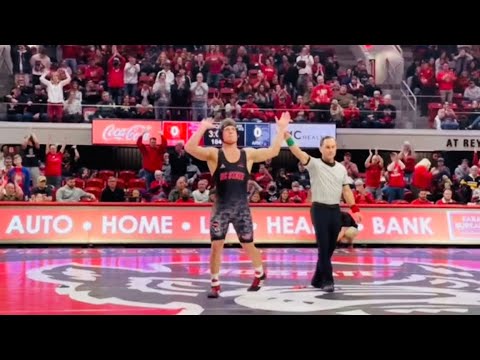
Trent Hidlay(NCST) Highlights 🔥🤼🇺🇸
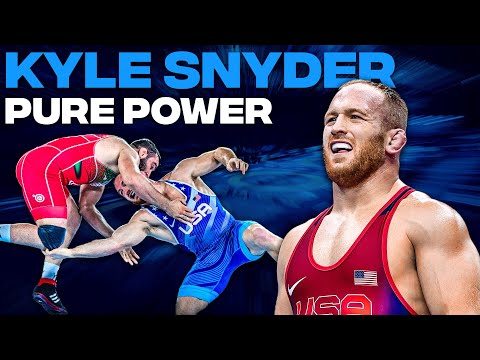
Kyle Snyder’s Pure Power - Ultimate Freestyle Highlights
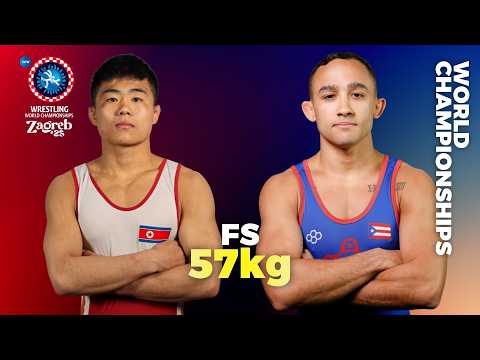
Darian Toi CRUZ (PUR) vs. Chongsong HAN (PRK). WORLD WRESTLING CHAMPIONSHIPS 2025. FS 57 Kg.
Chart basis: counts from Sport on Earth’s own carried data files at build time — verified videos carried for this sport (the verified pool: sport-videos.json + the desk league pools), news items carried (news.json), and league pages carried (desk.json). No external or estimated figures.
The filter sorts the Review Room embeds and the picture cards above by the keywords in their carried titles (review / analysis / recap and similar, or highlights). It runs entirely in your browser — nothing is sent anywhere.
Hall of Fame
Also recognised: National Wrestling Hall of Fame and Museum (Stillwater, Oklahoma, United States). Its published inductee list is not carried here in parsed form — the hall's own published list is the complete record.
📖 Wrestling — Tactics & Strategy — every entry, plus the arcade strategy, at the foot of this page.
Wrestling Arcade — Strike Range
An arcade take on Wrestling: set the angle, set the power, and land the strike in the pad. Five attempts; the closer to the middle, the more it scores. Arcade distances and a training arc — a game in the spirit of the sport, not a simulation of it.
More ways to play Wrestling
This page’s own game is the arcade above. Everything else on the site that fits this sport is listed here — and anything borrowed from a similar sport is labelled as that sport’s game, never passed off as this one’s.
- Top Sport on Earth — Wrestling is one of the 455 sport cards in the SPORTS deck: play Top Sport on Earth.
- More in this family — Mixed Martial Arts Arcade — Strike Range: the game of Mixed Martial Arts, a similar sport in Wrestling’s family.
- Everything else the site runs lives on the Games hub.
On screen
3 verified documentaries, films and series about this sport are listed in the site's screen guide: Sport on Screen — Wrestling.
Tools for Wrestling
The tools on this site that honestly run on Wrestling — its own record first, then the site-wide general tools that apply. The full Wrestling toolkit prints the ones that do not apply, with the data reason why.
Tools that run on Wrestling’s own record
- You Are the Referee — Branching decision trees built from this sport’s own rule-changes dossier, each ruling cited to its rule.
- Signals in the Record — The officials’ signals extracted from the rule dossiers, this sport’s included where its dossier documents them.
- Venue Profiles — The venue directories the site carries name 10 venues for this sport, with the flagship grounds documented from the structured record.
General tools that also apply
Site-wide tools, not built for Wrestling alone: Tournament Planner · My Notebook · The Labs · Design Studio · The Makers’ Bench · Match Day Desk · Play It Near You · Myth-Check Desk · Governing Bodies · Heat & Safety Calculator (WBGT) · Hydration Calculator · Training-Load Planner · Game Clock & Timer · Custom Rulebook Generator · Scout Notes Parser.
Wrestling — Tactics & Strategy
Tactics & Strategy — this sport’s book
the grappling family’s shared book — wrestling, judo, Brazilian jiu-jitsu, sambo, kurash, alysh and the folk wrestlings: grip fighting, throws and the ground’s ladder, with each art’s signature entries following on its page.
12 entries, plus the arcade strategy below. All wording is original coaching-vocabulary prose; nothing is copied from any proprietary playbook.
Grip Fighting (the First Battle)
Every grappling exchange begins with the grips: the hands fight for the collar, the sleeve, the belt or the tie-up that makes the throw possible — the throw is decided before it is attempted, in the grip fight’s small print.
When it’s used: Grips are the grappling family’s formations: they declare what may happen next.
The sequence
- The dominant grip is the one that controls the opponent’s posture, not merely his cloth.
- Breaking a grip is a technique with its own drills, not a tug of war.
- A throw attempted from a lost grip fight is a donation; the books all agree on this if on nothing else.
Kuzushi (Off-Balancing)
Judo named it: every throw begins by breaking the opponent’s balance in the direction of the throw — the eight directions of kuzushi are the family’s shared physics, whatever the art’s costume.
When it’s used: The throw is the third act: kuzushi first, entry second, the throw is the fall’s receipt.
The sequence
- Kuzushi is taken on the opponent’s step, when his weight is already travelling.
- The hands pull and push in the throw’s direction together; a one-handed kuzushi is a rumour.
- Great throwers feel the kuzushi arrive through their grips like a change in the weather.
The Level Change and the Shot (Wrestling’s Entry)
Wrestling’s takedowns begin below: the level change drops the hips, the penetration step enters the opponent’s space, and the finish drives through — the shot is a sprint’s first three steps, rehearsed like one.
When it’s used: The shot is grappling’s jab: everything in wrestling is built behind it.
The sequence
- The level change sells nothing: it arrives under the opponent’s hands, not through them.
- The finish is chosen by the defence’s sprawl — single to double, double to the lift.
- A shot without a chain is a tackle attempted once; the re-shot is the system.
The Guard and Its Passing (BJJ’s World)
On the ground, the guard — legs around the opponent — is Brazilian jiu-jitsu’s invention of a fighting position from underneath, and passing it is the top game’s central problem: the guard is a fortress with submissions for gates.
When it’s used: The guard inverted a thousand years of top-is-good doctrine; the pass is its long answer.
The sequence
- The passer controls the hips first: a guard whose hips are pinned is a mat, not a fortress.
- The guard player’s attacks come in threes — sweep, submission, back take — chained so each defence feeds the next.
- Standing to pass and kneeling to pass are two churches; both agree the posture war comes first.
The Belt Games (Kurash, Alysh and the Folk Styles)
Central Asia’s wrestling family plays by the belt: kurash wins by throws alone (groundwork is forbidden), alysh grips the belt with both hands throughout — the belt is a handle the rules make sacred, and its grip fight is the whole preamble.
When it’s used: Where the grip is fixed by law, posture and footwork become the entire argument.
The sequence
- In kurash, the throw must be clean and big — the scoring rewards amplitude, so entries are sold completely.
- Alysh’s fixed belt grips turn the match into a dance of angles: the throw comes from the step, not the hands.
- The folk styles’ festivals are their championships: the book’s calendar is written by harvests and holidays.
The Throw’s Scoring (Amplitude vs Control)
The arts price throws differently — judo’s ippon for the perfect throw, wrestling’s grand amplitude points, kurash’s grades of completeness — and the tactics bend to the price list: the same entry is three different decisions in three codes.
When it’s used: A grappler changing codes must re-learn what a throw is worth before he re-learns how to throw it.
The sequence
- Amplitude codes reward the lift and the arc: entries are finished upward.
- Control codes reward the landing’s authority: the throw ends with the thrower on top and staying.
- The perfect-throw codes make defence conservative near the edge, where ippon hides in the counter.
The Edge (Boundary Craft)
Every grappling mat has an edge, and every code prices it: the push-out, the step-out, the throw that must land inside. Edge craft — herding, circling, the counter at the line — is a chapter in every member’s book.
When it’s used: The boundary is a defender who never tires; use him or be used by him.
The sequence
- The herded opponent’s defence narrows as the edge nears: his throws need room he no longer has.
- The edge counter is thrown as the pusher’s weight arrives — his momentum is the kuzushi, gift-wrapped.
- Mats are scouted like pitches: the edge’s distance is paced off in the warm-up.
Groundwork’s Clock (Pins and Escapes)
Where pins score (wrestling, judo’s osaekomi), the ground is a clock: hold for the count and win; the bottom game’s escapes are timed against it — bridge, turn, shrimp, each drilled to the count’s rhythm.
When it’s used: The pin is the ground’s goal line, and its clock is audible pressure.
The sequence
- The pinner’s weight is placed on the diaphragm and the near shoulder — the pin is a position, not a pile.
- Escapes are chained to the count’s last safe second, not attempted at its first.
- In sambo and BJJ the pin’s value differs (points, or nothing but position) — the clock changes, the escapes remain.
The Weigh-In and the Bracket (Tournament Craft)
Grappling tournaments are single-elimination ladders wrestled in a day: the book includes the bracket’s management — the first match’s caution, the repechage’s second life, the final’s legs.
When it’s used: A tournament is a campaign of five fights wearing one day’s clothes.
The sequence
- The first match is wrestled at 80% by doctrine: the bracket punishes the early war.
- Repechage turns a loss to the finalist into a bronze campaign — the book prices which losses still pay.
- Weight is made once and fought all day on it: the day’s eating is a plan, not an appetite.
The Stand-Up Reset (Stalling and the Call)
Referees return inactive grapplers to their feet or penalise passivity: the reset is a tactic — the losing grappler stalls for it, the winning one hunts inside its deadline.
When it’s used: Passivity rules make inaction a play with a price and a clock.
The sequence
- The bottom player who wants the reset defends in the shape the referee reads as honest effort.
- The top player’s urgency is scheduled by the referee’s first warning, not by his own impatience.
- Championship grapplers know each referee’s passivity clock the way strikers know a count.
The Takedown Families (Single, Double, and the Snap)
Wrestling’s shots divide by their targets: the single leg (one leg, a hundred finishes), the double (both, and the lift), and the snap-down family that scores from the opponent’s own pressure — each with a defence (the sprawl, the whizzer) that is itself an attack.
When it’s used: The families are the wrestling book’s chapters; every wrestler owns a page in each.
The sequence
- The single leg is finished by the shelf, the trip or the run-the-pipe — chosen by the defender’s balance, mid-finish.
- The double’s lift is its punctuation: grand amplitude is scored because it is undeniable.
- The sprawl is the defence that scores: hips down, then the go-behind or the front headlock’s family.
Top and Bottom (the Mat Game)
After the takedown, wrestling splits into the ride (top) and the escape/reversal (bottom): the ride’s breakdowns and tilts against the bottom’s stand-up and rolls — a second sport that begins where the first one lands.
When it’s used: Championships are decided on the mat as often as on the feet.
The sequence
- The ride’s first rule is the breakdown: flatten the base before hunting the turn.
- The stand-up is the bottom’s first word: to the feet, hand control, and out — drilled as a single motion.
- Tilts and turns score in bunches; the top wrestler who hunts them changes a decision into a fall’s neighbourhood.
Playing the Game
Playing the Game — Strike Range
The arcade cell · strategy
This page’s arcade cell: launch the strike at the pad from at striking range · 30 m (arcade scale). Angle, power, launch — five attempts, and the cell keeps your best.
When it’s used: On this page, in the Play section — and its strategy is the same craft as the book above it, miniaturised.
The sequence
- Set the angle first. The target is the pad, at striking range · 30 m (arcade scale) — the angle is chosen for where the strike must finish, not where it starts.
- Set the power second, on the sweeping meter: the scoring zone is a band, not a point, so aim for the middle of the band you can repeat, not the edge you can imagine.
- Launch, and read the result like a rangefinder: every attempt tells you the cell’s wind — there is none, so a miss is a measurement error, and it is yours to correct on the next attempt.
- You have 5 attempts. Feint with the angle, strike with the power: show one launch and take another.
- The cell’s own honesty line applies: arcade distances; a game, not a simulation.
Part of the Sport on Earth Playbooks — a book for every sport and every game on the site.
Behind the Play
Behind the Play · Full treatment — from this sport’s own record
Pin your opponent or score points through takedowns and holds. Styles include freestyle and Greco-Roman.
Behind the Play takes the decisive actions of Wrestling apart: how the scoring play is built, which patterns the players are really running, and which rules remade the play into its modern shape.
The shape of the play
Olympic wrestling faced extinction in 2013 and rewrote itself in a single year to survive — the most dramatic rules rescue in modern sport.
The patterns behind the play
- Distance is the first defence: the athlete who chooses the range usually chooses the exchanges.
- Feints buy information: a reaction shown once will be there again — test cheaply before committing.
- Defence in layers: movement first, then guard, then counters — never rely on a single layer.
- Conditioning is a weapon: late rounds belong to the athlete whose output drops least.
- Styles make fights: a pressure fighter, a counter-puncher and an outside striker each make the others look different — matchups are tactical before they are physical.
- The corner is a second brain: between rounds, fights are re-planned from what the corner saw that the fighter, inside it, could not.
Rules that remade the play
The 2013 Rescue Rewrite (May 2013). FILA (under new president Nenad Lalović, elected at an emergency congress in May 2013) rewrote the sport in months: cumulative scoring across two three-minute periods replaced the best-of-periods format; takedowns were revalued to reward action (the freestyle takedown to two points, grand-amplitude throws up to five); passivity became a shot-clock (30 seconds to score or concede a point). In September 2013 the IOC…
The 2013 architecture — cumulative scoring, rewarded amplitude, enforced action — still governs; wrestling kept its Olympic place through Paris 2024 and beyond, and the episode is the textbook case that even ancient sports hold their place conditionally.
Same-Day Weigh-Ins and Two-Day Formats (2018). UWW moved tournaments to a two-day-per-weight-class format with weigh-ins on the MORNING of each day’s competition (2018), so a cut must be survived twice, two days running, at fighting weight — structurally discouraging extreme dehydration.
Extreme cuts persist but are capped by the second morning’s scale; the two-day format also changed tournament drama (finals on day two, fresher) — a health rule with a spectacle dividend.
From this page’s Rule Changes & Named Rules dossier, where every entry names its source.
The moves in the book
- Stance
- The base position from which all attacks and defences launch — balanced, mobile and hard to knock off line.
- Guard
- The defensive position of hands, arms or weapon that protects the target areas while staying ready to attack.
- Feint
- A false attack or movement that draws a reaction and opens the real target.
- Counter
- An attack launched into the opponent’s attack, timed off their commitment.
- Range
- The distance between combatants; fights are won by the athlete who controls which range the fight happens at.
Source basis: this sport’s carried record on this page (verified record, rule-changes dossier, history datasets) and the play patterns of its family as written in the site’s guides. Nothing here is invented.