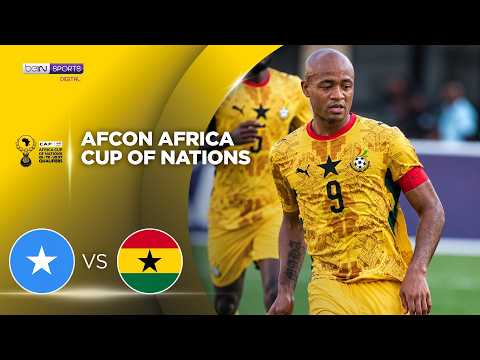
Somalia vs Ghana | HIGHLIGHTS Africa Cup Of Nations Qualifiers 2027 | 11/16/2026 | beIN SPORTS USA
YouTube · beIN SPORTS USA
Pages
On this page
Sport on Earth › Sports
Sport on Earth · Sport
Azerbaijani belt wrestling: grip the belt and throw him over — the name itself means ’overturn’.
Every embed below was verified playable before listing — the network’s standing rule.
YouTube · beIN SPORTS USA
YouTube · Prince Highlights
YouTube · The Highlight Hub
YouTube · ACC Digital Network
YouTube · Issa Sport and Hicko
YouTube · ESPN College Football
YouTube · Big 12 Conference
YouTube · ESPN College Football
Pages
On this page
No game on this site is made specifically for Ashirma yet. The games below are the site's all-sport games, which honestly cover every sport — nothing from another sport has been dressed up as this sport's game.
A new set of questions every day, across every sport this site covers.
Real-athlete Top Sport on Earth decks built from the site’s verified board data.
Ashirma's lab is the Physics Lab section on this page — the applied physics of its sport family, with a computed interactive where one honestly fits.
Physics Arena — the general biomechanics & physics teaching sandbox, shared by every sport.
The homepage sport explorer also carries a general Lab tab of small interactive experiments.
Calendar data not yet carried for Ashirma — this site does not yet hold schedule data for it, so no dates are shown rather than invented.
Which section of this page should we expand first?
Votes are counted on the Sport on Earth server and the totals shown are every reader’s votes; your own choice is remembered in this browser.
How this game is played, gathered from the record Sport on Earth already carries for Ashirma, with the positions taken from the sourced chart cited in that section.
Ashirma — in its own language Aşırma güləşi — is a traditional belt wrestling of the Azerbaijani people, practiced for centuries in Azerbaijan and in the northwestern provinces of Iran, where the city of Khoy in West Azerbaijan province is its documented home. The name carries the sport inside it: it comes from the Azerbaijani verb aşırmaq, ’to throw over, to overturn, to topple’ — and overturning the other man is exactly how a bout is won.
Matches are historically held in the open air during public festivals and local celebrations. Wrestlers warm up to the rhythmic beat of large traditional drums while spectators gather in a circle around the ground, and the wrestling itself is a throwing art: each man grips the other’s thick leather belt and works to launch him over the hip, the back or the torso until he lands on his back. The style’s history is traced in its home record back to the era of the Safavid Empire, and it is carried today as intangible heritage of the Azerbaijani people.
How Ashirma is wrestled (2018 rules) — the rules as this site's record carries them:
Ashirma has no fixed positions — its format designates no positional roles.
Format as carried in hidden_files/batchB-nov1/batchb_data.json: "Azerbaijani belt wrestling: grip the belt and throw him over — the name itself means ’overturn’." The format carries no designated positional roles. (Source: Sport on Earth carried sport record.)
Sport on Earth's own analytics: every figure in this panel is computed at build time from the record this site itself carries, with the source named. No outside data is used, and no betting figures of any kind.
Census arithmetic: Ashirma sits in the combat sports family — 49 census sports, of which 0 carry a qualifying champions roll in the site's record.
The carried record for Ashirma is too thin for computed panels: no champions roll, hall-of-fame list or venue record is carried for it. This panel therefore prints the census arithmetic only — the honest answer rather than a manufactured figure.
Sport on Earth does not yet hold verified dated events for Ashirma, and its carried record does not state the season's timing in words — so no calendar is shown rather than an invented one. What the site does carry for this sport is on this page: its verified record, its rules record and its history.
A strike’s effect is impulse: force applied over contact time, changing momentum (mass × velocity). The calculator below computes momentum and kinetic energy for a moving mass at a chosen speed — the two numbers behind every conversation about power. Real strikes add the effective mass of the body behind the limb, which is why technique (putting body mass into the blow) out-punches arm speed alone.
Throws and takedowns are rotation: a small force applied far from the opponent’s centre of mass produces a large turning effect (torque), which is why grips at the sleeve, collar or leg unbalance opponents who are stronger in a straight line. Grappling defence is the reverse — widen the base, lower the centre of mass, deny the lever.
From this sport's own record: Azerbaijani belt wrestling: grip the belt and throw him over — the name itself means ’overturn’. The lab above treats the physics of the sport's family; no measurement specific to this sport is printed, because the site's verified record for it carries none — parameters are never invented to fill a lab.
Model: momentum p = m·v; kinetic energy KE = ½·m·v². Assumptions: a single rigid mass at one speed — a real strike or throw involves an effective mass larger than the limb alone (the body behind it) and a contact time that decides the peak force. The numbers show the scaling: energy grows with the square of speed, only linearly with mass.
The general teaching sandbox for every sport is the Physics Arena on the Games page — the same printed models, with a defender added.
The hands-on lab for Ashirma, built entirely from the record this site carries for it — its documented rolls, its halls, its venues, its calendar and its census family. Every figure below is computed from that carried record at build time; nothing is estimated and nothing is pulled live. The companion Physics Lab on this page works the family's physics; this lab works the record.
The honest position: the record this site carries for Ashirma is thin — no documented roll, hall, venue set or dated calendar is carried for it yet — so this entry’s lab is its family lab: the computed census of the family it belongs to. When the record grows, the lab grows with it; nothing here is estimated to fill the space.
Computed from the site census: the Combat sports family holds 49 entries on this site. Across the family, the carried record includes documented rolls for 0 of them, Hall of Fame data for 4, venue sets for 10, and dated calendars for 5.
Every other entry in the family: Alysh · Boxing · Brazilian Jiu-Jitsu · Canne de Combat · Capoeira · Chess Boxing · Chidaoba · Donga · Evala · Fencing · Glima · HEMA · Historical Medieval Battle · Inbuan · Ju-Jitsu · Judo · Karate · Karate Combat · Kendo · Khapkagay · Khuresh · Kickboxing · Kokoowa · Kurash · Kureash · Lethwei · Lotta Sardesca · Lucha Canaria · Lucha de Tolete · Lucha del Garrote · Mbor · Mixed Martial Arts · Moraingy · Muay Thai · Pencak Silat · Power Slap · Sambo · Savate · Schwingen · Sport Kobudo · Ssireum · Sumo · Taekkyeon · Taekwondo · Tahtib · Tarung Derajat · Wrestling · Wushu
Basis: the Sport on Earth census itself — the same 460-entry register the census page prints.
The desk has not verified a sponsorship record for Ashirma from published sources, so none is printed. Sponsorship history is added only when a real published source supports it — sponsor by sponsor, deal by deal. Current sponsorship deals across sport are tracked on the Money Desk sponsorship page.
Ashirma — in its own language Aşırma güləşi — is a traditional belt wrestling of the Azerbaijani people, practiced for centuries in Azerbaijan and in the northwestern provinces of Iran, where the city of Khoy in West Azerbaijan province is its documented home. The name carries the sport inside it: it comes from the Azerbaijani verb aşırmaq, ’to throw over, to overturn, to topple’ — and overturning the other man is exactly how a bout is won.
Matches are historically held in the open air during public festivals and local celebrations. Wrestlers warm up to the rhythmic beat of large traditional drums while spectators gather in a circle around the ground, and the wrestling itself is a throwing art: each man grips the other’s thick leather belt and works to launch him over the hip, the back or the torso until he lands on his back. The style’s history is traced in its home record back to the era of the Safavid Empire, and it is carried today as intangible heritage of the Azerbaijani people.
Ashirma belongs to the great belt-wrestling family of the steppe and the Caucasus — the same family as Alysh, carried elsewhere in this census — but it has its own codified form: Iran’s Rural Sport & Local Games Federation published rules for it in 2018, and tournaments are now held systematically, drawing competitors from across Iran and guests from Turkey and the Republic of Azerbaijan. A close cognate survives across the Turkish border in Gaziantep’s Aşırtmalı Aba wrestling, built on the same overthrowing hold and wrestled at weddings and harvest festivals.
Native name: Aşırma güləşi; from the Azerbaijani verb aşırmaq — to throw over, to overturn, to topple.
Documented home: Khoy, West Azerbaijan province, Iran; the tradition is Azerbaijani and reaches back to the Safavid era.
Tournaments are now held systematically, with competitors from across Iran and guests from Turkey and the Republic of Azerbaijan.
A cognate style, Aşırtmalı Aba wrestling, is practiced in Gaziantep, Adana and Osmaniye in Turkey under the traditional sport branches federation.
Carried from the user’s supplied research of November 2, 2026 — the meaning ’overturn’, the Azerbaijan and northwest-Iran home, the open-air festival matches, the drum warm-ups and the belt-grip throws over hip, back and torso — corroborated against the sources below. No champions or dated results are carried, because none are published in the sources this site could check.
Sources, verified November 1, 2026: Traditional Sports — Ashirma (Azerbaijan, Iran) · Turkish Journal of Sport and Exercise — Şahin, Aşırtmalı Aba Wrestling in Turkish sports history and culture (2013) (PDF)
How the laws of Ashirma are governed today — the documented record, stated plainly.
Ashirma’s verified code is carried: the Rules of Ashirma Wrestling (Rural Sport & Local Games Federation of Iran, 2018) — a thick leather belt, the right-hand grip over the back that cannot be released, two three-minute periods, and the −66/−74/−84/−96/+100 kg classes. No dated change to that 2018 code is recorded.
That framework summary is the whole documented record Sport on Earth can verify for this sport — no major dated rule changes are carried, rather than invent any.
Source basis: The governing body’s published framework as summarised in this section (see the framework text).
Sport on Earth carries no results feed for Ashirma: no scores or fixtures are published here, rather than inventing them. The sport's documented record is in its history page and the History & Records section of this page.
The historical record for Ashirma — past standings, champions, title history and all-time leaders, as deep as verifiable public records go.
Season-by-season standings, historical player statistics and title rolls are not carried for Ashirma: no public archive publishes them in a form Sport on Earth can verify, and this site does not invent history. What is carried for this sport is its verified record, its rule-change history and its league history — elsewhere on this page.
The review and analysis videos from Ashirma’s verified video pool — every embed below was identity-checked and probed playable before listing, the site’s standing rule. Nothing here is a show Sport on Earth produces; these are the review, post-game and breakdown videos the pool already carries for this sport.
No verified review-show video is carried for this sport yet.

The filter sorts the Review Room embeds and the picture cards above by the keywords in their carried titles (review / analysis / recap and similar, or highlights). It runs entirely in your browser — nothing is sent anywhere.
No hall of fame with a published inductee list is carried for Ashirma. Sport on Earth does not invent halls or inductees: where a recognised hall publishes its list in a form this site can carry, the full list will appear here with its source named.
Azerbaijani belt wrestling: grip the belt and throw him over — the name itself means ’overturn’.
The format, from this sport's verified record:
The Ashirma record book is still thin: beyond the standings, rules and calendar layers on this page, no verified winners roll or honours list is carried yet. The desk adds record material only when a published source can be named for it — never from memory or invention.
More from the desk: the expert guide to Ashirma · the site-wide Writing Desk · every sport on Earth.
An arcade take on Ashirma: set the angle, set the power, and land the strike in the pad. Five attempts; the closer to the middle, the more it scores. Arcade distances and a training arc — a game in the spirit of the sport, not a simulation of it.
This page’s own game is the arcade above. Everything else on the site that fits this sport is listed here — and anything borrowed from a similar sport is labelled as that sport’s game, never passed off as this one’s.
The tools on this site that honestly run on Ashirma — its own record first, then the site-wide general tools that apply. The full Ashirma toolkit prints the ones that do not apply, with the data reason why.
No bench tool yet computes from Ashirma’s own carried record — the general tools below are the ones that honestly apply.
Site-wide tools, not built for Ashirma alone: Tournament Planner · My Notebook · The Labs · Design Studio · The Makers’ Bench · Match Day Desk · Play It Near You · Myth-Check Desk · Governing Bodies · Heat & Safety Calculator (WBGT) · Hydration Calculator · Training-Load Planner · Game Clock & Timer · Custom Rulebook Generator · Scout Notes Parser.
Behind the Play · Full treatment — from this sport’s own record
Azerbaijani belt wrestling: grip the belt and throw him over — the name itself means ’overturn’.
Behind the Play takes the decisive actions of Ashirma apart: how the scoring play is built, which patterns the players are really running, and which rules remade the play into its modern shape.
The format, from this sport's verified record:
Source basis: this sport’s carried record on this page (verified record, rule-changes dossier, history datasets) and the play patterns of its family as written in the site’s guides. Nothing here is invented.