MODERN TAHTIB Egypt Soul - UNIVERSAL RESPECT
YouTube · Modern Tahtib
Pages
On this page
Sport on Earth › Sports
Sport on Earth · Sport
Egypt’s ancient staff art: fighters duel with heavy wooden staves to drum and mizmar, part combat, part festival honour.
Every embed below was verified playable before listing — the network’s standing rule.
YouTube · Modern Tahtib
YouTube · Modern Tahtib
YouTube · cheryldancediva
YouTube · Martin Faulks
YouTube · Modern Tahtib
Pages
On this page
No game on this site is made specifically for Tahtib yet. The games below are the site's all-sport games, which honestly cover every sport — nothing from another sport has been dressed up as this sport's game.
A new set of questions every day, across every sport this site covers.
Real-athlete Top Sport on Earth decks built from the site’s verified board data.
Tahtib's lab is the Physics Lab section on this page — the applied physics of its sport family, with a computed interactive where one honestly fits.
Physics Arena — the general biomechanics & physics teaching sandbox, shared by every sport.
The homepage sport explorer also carries a general Lab tab of small interactive experiments.
Calendar data not yet carried for Tahtib — this site does not yet hold schedule data for it, so no dates are shown rather than invented.
Which section of this page should we expand first?
Votes are counted on the Sport on Earth server and the totals shown are every reader’s votes; your own choice is remembered in this browser.
How this game is played, gathered from the record Sport on Earth already carries for Tahtib, with the positions taken from the sourced chart cited in that section.
Tahtib is the Egyptian martial art of the staff, depicted in art from ancient Egypt and practised today in Upper Egypt as both a combat system and a festive performance. Fighters wield a heavy wooden stave (the asaya), exchanging strikes, parries and redirections inside a circle, traditionally to the drums and mizmar of a wedding or festival procession, where the dance-like duel displays skill and honour before the community.
UNESCO inscribed tahtib in 2016 on its Representative List of the Intangible Cultural Heritage of Humanity. Modern Egyptian bodies organise it as a sport with refereed bouts, preserving the music, the circle and the code of sportsmanship that governs the traditional game.
The rules — the rules as this site's record carries them:
Tahtib has no fixed positions — its format designates no positional roles.
Format as carried in hidden_files/batchB-nov1/batchb_data.json: "Egypt’s ancient staff art: fighters duel with heavy wooden staves to drum and mizmar, part combat, part festival honour." The format carries no designated positional roles. (Source: Sport on Earth carried sport record.)
Sport on Earth's own analytics: every figure in this panel is computed at build time from the record this site itself carries, with the source named. No outside data is used, and no betting figures of any kind.
Census arithmetic: Tahtib sits in the combat sports family — 49 census sports, of which 0 carry a qualifying champions roll in the site's record.
The carried record for Tahtib is too thin for computed panels: no champions roll, hall-of-fame list or venue record is carried for it. This panel therefore prints the census arithmetic only — the honest answer rather than a manufactured figure.
Sport on Earth does not yet hold verified dated events for Tahtib, and its carried record does not state the season's timing in words — so no calendar is shown rather than an invented one. What the site does carry for this sport is on this page: its verified record, its rules record and its history.
A strike’s effect is impulse: force applied over contact time, changing momentum (mass × velocity). The calculator below computes momentum and kinetic energy for a moving mass at a chosen speed — the two numbers behind every conversation about power. Real strikes add the effective mass of the body behind the limb, which is why technique (putting body mass into the blow) out-punches arm speed alone.
Throws and takedowns are rotation: a small force applied far from the opponent’s centre of mass produces a large turning effect (torque), which is why grips at the sleeve, collar or leg unbalance opponents who are stronger in a straight line. Grappling defence is the reverse — widen the base, lower the centre of mass, deny the lever.
From this sport's own record: Egypt’s ancient staff art: fighters duel with heavy wooden staves to drum and mizmar, part combat, part festival honour. The lab above treats the physics of the sport's family; no measurement specific to this sport is printed, because the site's verified record for it carries none — parameters are never invented to fill a lab.
Model: momentum p = m·v; kinetic energy KE = ½·m·v². Assumptions: a single rigid mass at one speed — a real strike or throw involves an effective mass larger than the limb alone (the body behind it) and a contact time that decides the peak force. The numbers show the scaling: energy grows with the square of speed, only linearly with mass.
The general teaching sandbox for every sport is the Physics Arena on the Games page — the same printed models, with a defender added.
The hands-on lab for Tahtib, built entirely from the record this site carries for it — its documented rolls, its halls, its venues, its calendar and its census family. Every figure below is computed from that carried record at build time; nothing is estimated and nothing is pulled live. The companion Physics Lab on this page works the family's physics; this lab works the record.
The honest position: the record this site carries for Tahtib is thin — no documented roll, hall, venue set or dated calendar is carried for it yet — so this entry’s lab is its family lab: the computed census of the family it belongs to. When the record grows, the lab grows with it; nothing here is estimated to fill the space.
Computed from the site census: the Combat sports family holds 49 entries on this site. Across the family, the carried record includes documented rolls for 0 of them, Hall of Fame data for 4, venue sets for 10, and dated calendars for 5.
Every other entry in the family: Alysh · Ashirma · Boxing · Brazilian Jiu-Jitsu · Canne de Combat · Capoeira · Chess Boxing · Chidaoba · Donga · Evala · Fencing · Glima · HEMA · Historical Medieval Battle · Inbuan · Ju-Jitsu · Judo · Karate · Karate Combat · Kendo · Khapkagay · Khuresh · Kickboxing · Kokoowa · Kurash · Kureash · Lethwei · Lotta Sardesca · Lucha Canaria · Lucha de Tolete · Lucha del Garrote · Mbor · Mixed Martial Arts · Moraingy · Muay Thai · Pencak Silat · Power Slap · Sambo · Savate · Schwingen · Sport Kobudo · Ssireum · Sumo · Taekkyeon · Taekwondo · Tarung Derajat · Wrestling · Wushu
Basis: the Sport on Earth census itself — the same 460-entry register the census page prints.
The desk has not verified a sponsorship record for Tahtib from published sources, so none is printed. Sponsorship history is added only when a real published source supports it — sponsor by sponsor, deal by deal. Current sponsorship deals across sport are tracked on the Money Desk sponsorship page.
Tahtib is the Egyptian martial art of the staff, depicted in art from ancient Egypt and practised today in Upper Egypt as both a combat system and a festive performance. Fighters wield a heavy wooden stave (the asaya), exchanging strikes, parries and redirections inside a circle, traditionally to the drums and mizmar of a wedding or festival procession, where the dance-like duel displays skill and honour before the community.
UNESCO inscribed tahtib in 2016 on its Representative List of the Intangible Cultural Heritage of Humanity. Modern Egyptian bodies organise it as a sport with refereed bouts, preserving the music, the circle and the code of sportsmanship that governs the traditional game.
UNESCO’s nomination decision (under the spelling ’Tahteeb’) is precise about what the modern game is and is not: a brief, non-violent interchange between two adversaries, each wielding a long stick while traditional music plays, in which complete control must be exercised because no striking is allowed. Its players are men young and old, mostly from the Saeedy populations of Upper Egypt, where the tahteeb stick has been part of daily life and a sign of manhood.
Transmission runs through families and neighborhoods, and competitive ’tahteeb evenings’ between different governorates can last almost a week. The stick itself carries ancient evidence: reliefs in the Pyramid of Sahure at Abusir (about 2500 BC) show soldiers drilling with staves alongside archery and wrestling, and a painted limestone ostracon from Deir el-Medina, now in the Louvre, shows two men whirling their canes in the art.
In ancient Egypt tahteeb was a form of martial arts; over the centuries its role changed to that of a festive game, but the symbolism and values of the practice remain, and it has been practiced continuously through every era of Egyptian history to the present day.
An Egyptian staff art with ancient roots, inscribed by UNESCO in 2016 as Intangible Cultural Heritage.
Fought with the asaya, a heavy wooden stave, traditionally to drums and mizmar at festivals.
Modern sport formats run refereed bouts under Egyptian traditional-sports bodies.
Tahteeb was inventoried in 2013 by the Association of Upper Egypt for Education and Development with the Egyptian National Commission for UNESCO
A Train the Trainers program, led by a local NGO and validated by Egypt’s Ministries of Sports and Culture, began in 2016 to form new tahteeb trainers and players
The game is played at fun fairs and religious feasts as well as at private celebrations and weddings
Tahtib has no structured results feed this site can carry, so this page is the verified record only — the art, its staff and its UNESCO-listed tradition as verified in November 2026 — with no live results.
Sources, verified November 1, 2026: Tahtib · UNESCO Intangible Cultural Heritage · Egypt Museum
Material from Wikipedia linked above is used under CC BY-SA 4.0.
How the laws of Tahtib are governed today — the documented record, stated plainly.
Tahtib is governed in its modern sport form by Egyptian traditional-sports bodies; its practice is framed by the UNESCO-recognised tradition and its code of honour. No major dated rule change is carried for tahtib.
That framework summary is the whole documented record Sport on Earth can verify for this sport — no major dated rule changes are carried, rather than invent any.
Source basis: The governing body’s published framework as summarised in this section (see the framework text).
Sport on Earth carries no results feed for Tahtib: no scores or fixtures are published here, rather than inventing them. The sport's documented record is in its history page and the History & Records section of this page.
The historical record for Tahtib — past standings, champions, title history and all-time leaders, as deep as verifiable public records go.
Season-by-season standings, historical player statistics and title rolls are not carried for Tahtib: no public archive publishes them in a form Sport on Earth can verify, and this site does not invent history. What is carried for this sport is its verified record, its rule-change history and its league history — elsewhere on this page.
The review and analysis videos from Tahtib’s verified video pool — every embed below was identity-checked and probed playable before listing, the site’s standing rule. Nothing here is a show Sport on Earth produces; these are the review, post-game and breakdown videos the pool already carries for this sport.
No verified review-show video is carried for this sport yet.
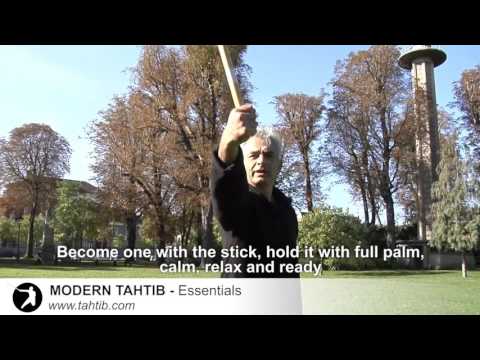
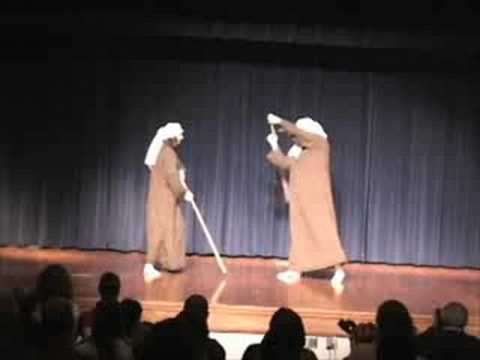
The filter sorts the Review Room embeds and the picture cards above by the keywords in their carried titles (review / analysis / recap and similar, or highlights). It runs entirely in your browser — nothing is sent anywhere.
No hall of fame with a published inductee list is carried for Tahtib. Sport on Earth does not invent halls or inductees: where a recognised hall publishes its list in a form this site can carry, the full list will appear here with its source named.
Egypt’s ancient staff art: fighters duel with heavy wooden staves to drum and mizmar, part combat, part festival honour.
The format, from this sport's verified record:
The Tahtib record book is still thin: beyond the standings, rules and calendar layers on this page, no verified winners roll or honours list is carried yet. The desk adds record material only when a published source can be named for it — never from memory or invention.
More from the desk: the expert guide to Tahtib · the site-wide Writing Desk · every sport on Earth.
An arcade take on Tahtib: set the angle, set the power, and land the strike in the pad. Five attempts; the closer to the middle, the more it scores. Arcade distances and a training arc — a game in the spirit of the sport, not a simulation of it.
This page’s own game is the arcade above. Everything else on the site that fits this sport is listed here — and anything borrowed from a similar sport is labelled as that sport’s game, never passed off as this one’s.
The tools on this site that honestly run on Tahtib — its own record first, then the site-wide general tools that apply. The full Tahtib toolkit prints the ones that do not apply, with the data reason why.
No bench tool yet computes from Tahtib’s own carried record — the general tools below are the ones that honestly apply.
Site-wide tools, not built for Tahtib alone: Tournament Planner · My Notebook · The Labs · Design Studio · The Makers’ Bench · Match Day Desk · Play It Near You · Myth-Check Desk · Governing Bodies · Heat & Safety Calculator (WBGT) · Hydration Calculator · Training-Load Planner · Game Clock & Timer · Custom Rulebook Generator · Scout Notes Parser.
Behind the Play · Full treatment — from this sport’s own record
Egypt’s ancient staff art: fighters duel with heavy wooden staves to drum and mizmar, part combat, part festival honour.
Behind the Play takes the decisive actions of Tahtib apart: how the scoring play is built, which patterns the players are really running, and which rules remade the play into its modern shape.
The format, from this sport's verified record:
Source basis: this sport’s carried record on this page (verified record, rule-changes dossier, history datasets) and the play patterns of its family as written in the site’s guides. Nothing here is invented.