Rio Replay: Equestrian Jumping Team Final
YouTube · Olympic Games
Pages
On this page
Sport on Earth › Sports
Sport on Earth · Sport
Dressage, eventing and jumping — horse and rider as one team.
News stories from around the world, gathered and sourced by the Sport on Earth desk.
Equestrian is carried on the program for Los Angeles 2028 Olympic Games, 14 – 30 July 2028, in Los Angeles, USA. Dressage, eventing and jumping — horse and rider as one team. The desk carries the sport’s full record — guide, calendar and history — on its own page.
LA28 / IOC · Nov 2026
Written by Sport on Earth’s journalists — columns, features and interviews from the desk.
No columns or stories filed for this sport yet.
Everything the desk has published for Equestrian, organised by section.
From the News Desk · all news, every sport →
Sport on Earth’s daily and weekly video shows for Equestrian — every episode, newest first.
The first episode is in production and lands here the morning it is produced — no episode is listed until it exists.
Every embed below was verified playable before listing — the network’s standing rule.
YouTube · Olympic Games
YouTube · Adelaide Equestrian Festival
YouTube · Paralympic Games
YouTube · ClipMyHorseTV International
YouTube · US Equestrian
YouTube · ROLEX
YouTube · ROLEX
YouTube · BaylorAthletics
YouTube · Olympic Games
YouTube · TCG STUDIOZ - Horse Racing and Lifestyle portal
YouTube · Adelaide Equestrian Festival
YouTube · Mis Equestrian
YouTube · Adelaide Equestrian Festival
YouTube · FEI
YouTube · Paralympic Games
YouTube · Olympic Games
YouTube · FEI
YouTube · Wellington International
YouTube · ZL Equestrian
YouTube · ROLEX
YouTube · FEI
YouTube · Peacock
YouTube · Global Champions League
YouTube · Olympic Games
YouTube · FEI
YouTube · Pegasus: Horse Show Software and Gabriela Reutter
YouTube · World Stallions
YouTube · World Stallions
YouTube · FEI
YouTube · Veronika Kochetova EQ🐴
YouTube · Fearless Focus
YouTube · Equestriancontent
YouTube · JioCinema Sports
YouTube · DiscoverTheHorse
YouTube · JioCinema Sports
YouTube · Kerrits Equestrian
YouTube · Sisters Horsing Around
YouTube · Big 12 Conference
YouTube · Olympic Games
YouTube · FEI
YouTube · Longines League of Nations
YouTube · Olympic Games
YouTube · Mis Equestrian
YouTube · Kristina Pinero
YouTube · Moofinsforever
YouTube · Texas A&M Athletics
YouTube · EquestrianUSEF
YouTube · Longines Global Champions Tour
Equestrian is carried on the program for Los Angeles 2028 Olympic Games, 14 – 30 July 2028, in Los Angeles, USA. Dressage, eventing and jumping — horse and rider as one team. The desk carries the sport’s full record — guide, calendar and history — on its own page.
LA28 / IOC · Nov 2026
Pages
On this page
No game on this site is made specifically for Equestrian yet. The games below are the site's all-sport games, which honestly cover every sport — nothing from another sport has been dressed up as this sport's game.
A new set of questions every day, across every sport this site covers.
Real-athlete Top Sport on Earth decks built from the site’s verified board data.
Equestrian's lab is the Physics Lab section on this page — the applied physics of its sport family, with a computed interactive where one honestly fits.
Physics Arena — the general biomechanics & physics teaching sandbox, shared by every sport.
The homepage sport explorer also carries a general Lab tab of small interactive experiments.
Calendar data not yet carried for Equestrian — this site does not yet hold schedule data for it, so no dates are shown rather than invented.
Which section of this page should we expand first?
Votes are counted on the Sport on Earth server and the totals shown are every reader’s votes; your own choice is remembered in this browser.
Dated news entries for x167, newest first, dates exactly as carried in the site’s news data.
The flagship competitions on the calendar, with the dates for the current/upcoming cycle. Every date below was verified against the named source on 1 November 2026; dates change, and the source is the authority.
| Event | Dates | Where | Source |
|---|---|---|---|
| Los Angeles 2028 Olympic Games | 14 – 30 July 2028 | Los Angeles, USA | LA28 / IOC — Games dates |
Animal sports run on quadruped biomechanics: gaits are repeating patterns of footfalls that trade stability for speed, and at the gallop the spine itself flexes and extends as part of the stride. Loads are large and measurable — a horse’s foreleg can carry well over its body’s weight at gallop, which is why conditioning is gradual and surfaces matter.
Jumping efforts are projectile motion for the combined horse-and-rider (or dog) system: take-off speed and angle set the arc, and the bascule — the rounded shape over a fence — is the body arranging itself around that arc. Sport on Earth offers an explainer here rather than a calculator: the honest inputs (take-off speeds, masses) vary by animal and are not carried in this sport’s verified record, so no numbers are printed that the record cannot back.
From this sport's own record: Dressage, eventing and jumping — horse and rider as one team. The lab above treats the physics of the sport's family; no measurement specific to this sport is printed, because the site's verified record for it carries none — parameters are never invented to fill a lab.
No calculator is offered for this sport — honestly, none fits without inventing parameters. The site's general Physics Arena remains the hands-on sandbox, with every formula printed.
The general teaching sandbox for every sport is the Physics Arena on the Games page — the same printed models, with a defender added.
The hands-on lab for Equestrian, built entirely from the record this site carries for it — its documented rolls, its halls, its venues, its calendar and its census family. Every figure below is computed from that carried record at build time; nothing is estimated and nothing is pulled live. The companion Physics Lab on this page works the family's physics; this lab works the record.
The carried global venue dataset holds 10 venues for Equestrian across 6 countries. The largest capacity the dataset records for this sport is 45,757 — Olympic Stadium, .
Basis: the global venue dataset carried on this site (6,438 venues with coordinates; the venue explorer on the sports index and the stadium sun table work the same data). Countries beyond the 25 largest are counted in the totals above but not listed here.
Basis: the dated events this entry’s own record carries, as announced by the bodies named in the record. A sport whose record carries no fixed dated calendar says so on its calendar page rather than inventing one.
Computed from the site census: the Animal sports family holds 23 entries on this site. Across the family, the carried record includes documented rolls for 0 of them, Hall of Fame data for 3, venue sets for 5, and dated calendars for 1.
Every other entry in the family: Audaryspak · Camel Racing · Carrera de Cintas · Charrería · Dog Agility · Flyball · Furusiyya · Greyhound Racing · Horse Racing · Horseball · Kambala · Kok-Boru · Pack Burro Racing · Pato · Pigeon Racing · Polo · Polocrosse · Puppy Bowl · Rodeo and Bull Riding · Sheepdog Trials · Sled Dog Racing · Tent Pegging
Basis: the Sport on Earth census itself — the same 460-entry register the census page prints.
The desk has not verified a sponsorship record for Equestrian from published sources, so none is printed. Sponsorship history is added only when a real published source supports it — sponsor by sponsor, deal by deal. Current sponsorship deals across sport are tracked on the Money Desk sponsorship page.
How this game is played, gathered from the record Sport on Earth already carries for Equestrian, with the positions taken from the sourced chart cited in that section.
Equestrian sport is the only Olympic arena where human and animal compete as one team — and where men and women have always contested the same medals. Its three Olympic disciplines are dressage, eventing and jumping.
Sport on Earth’s animal-sports wing already carries racing, polo and rodeo; this page completes it with the FEI disciplines.
The disciplines — the rules as this site's record carries them:
Equestrian has no fixed positions — its format designates no positional roles.
Format as carried in hidden_files/batchB-nov1/batchb_data.json: "Dressage, eventing and jumping — horse and rider as one team." The format carries no designated positional roles. (Source: Sport on Earth carried sport record.)
Its Tactics & Strategy book — its opening entries, the basic plays, are:
The full book carries 7 entries — in this page’s Playbook / Tactics & Strategy section, and at the Playbooks hub.
Sport on Earth's own analytics: every figure in this panel is computed at build time from the record this site itself carries, with the source named. No outside data is used, and no betting figures of any kind.
Venues carried: 10 in 6 countries; the largest carried capacity is 45,757 (Olympic Stadium).
Source: the site's global venue record (venues-global.json); a capacity is printed only where the record carries a verified one.
Census arithmetic: Equestrian sits in the animal sports family — 23 census sports, of which 1 carry a qualifying champions roll in the site's record.
Equestrian sport is the only Olympic arena where human and animal compete as one team — and where men and women have always contested the same medals. Its three Olympic disciplines are dressage, eventing and jumping.
Sport on Earth’s animal-sports wing already carries racing, polo and rodeo; this page completes it with the FEI disciplines.
The Fédération Équestre Internationale (FEI) was founded in 1921 and governs seven disciplines: dressage, eventing, jumping, driving, endurance, vaulting and reining (plus para-equestrian).
The flagship properties are the Olympic tournament, the FEI World Championships, the Longines Global Champions Tour in jumping and the FEI World Cup finals indoors.
Germany is the most successful Olympic equestrian nation; Isabell Werth is the most decorated rider in history.
Sport on Earth carries no equestrian results feed — this page is the verified record of the sport; no results or rankings are invented.
Sources, verified November 1, 2026: FEI — International Equestrian Federation · Olympics.com — Equestrian
How the laws of Equestrian are governed today — the documented record, stated plainly.
Equestrian sport is governed by the FEI across dressage, jumping and eventing under discipline rulebooks revised on cycles, with horse welfare as the governing frontier (equipment inspections, blood provisions in the jumping rules, and eventing’s frangible-pin and qualification safety systems tightened across the 2010s–2020s by revision rather than landmark law). No single dated law change is carried for equestrian.
That framework summary is the whole documented record Sport on Earth can verify for this sport — no major dated rule changes are carried, rather than invent any.
Source basis: The governing body’s published framework as summarised in this section (see the framework text).
Sport on Earth carries no results feed for Equestrian: no scores or fixtures are published here, rather than inventing them. The sport's documented record is in its history page and the History & Records section of this page.
The historical record for Equestrian — past standings, champions, title history and all-time leaders, as deep as verifiable public records go.
Season-by-season standings, historical player statistics and title rolls are not carried for Equestrian: no public archive publishes them in a form Sport on Earth can verify, and this site does not invent history. What is carried for this sport is its verified record, its rule-change history and its league history — elsewhere on this page.
The review and analysis videos from Equestrian’s verified video pool — every embed below was identity-checked and probed playable before listing, the site’s standing rule. Nothing here is a show Sport on Earth produces; these are the review, post-game and breakdown videos the pool already carries for this sport.
YouTube · Wellington International
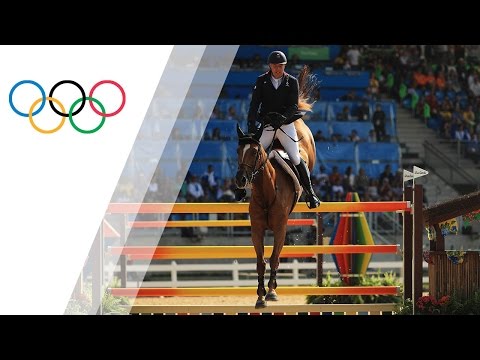

Chart basis: counts from Sport on Earth’s own carried data files at build time — verified videos carried for this sport (the verified pool: sport-videos.json + the desk league pools), news items carried (news.json), and league pages carried (desk.json). No external or estimated figures.
The filter sorts the Review Room embeds and the picture cards above by the keywords in their carried titles (review / analysis / recap and similar, or highlights). It runs entirely in your browser — nothing is sent anywhere.
No hall of fame with a published inductee list is carried for Equestrian. Sport on Earth does not invent halls or inductees: where a recognised hall publishes its list in a form this site can carry, the full list will appear here with its source named.
Dressage, eventing and jumping — horse and rider as one team.
The format, from this sport's verified record:
📖 Equestrian — Tactics & Strategy — every entry, plus the arcade strategy, at the foot of this page.
An arcade take on Equestrian: set the angle, set the power, and land the lasso in the post. Five attempts; the closer to the middle, the more it scores. Arcade distances and a training arc — a game in the spirit of the sport, not a simulation of it.
This page’s own game is the arcade above. Everything else on the site that fits this sport is listed here — and anything borrowed from a similar sport is labelled as that sport’s game, never passed off as this one’s.
3 verified documentaries, films and series about this sport are listed in the site's screen guide: Sport on Screen — Equestrian.
The tools on this site that honestly run on Equestrian — its own record first, then the site-wide general tools that apply. The full Equestrian toolkit prints the ones that do not apply, with the data reason why.
Site-wide tools, not built for Equestrian alone: Tournament Planner · My Notebook · The Labs · Design Studio · The Makers’ Bench · Match Day Desk · Play It Near You · Myth-Check Desk · Governing Bodies · Heat & Safety Calculator (WBGT) · Hydration Calculator · Training-Load Planner · Game Clock & Timer · Custom Rulebook Generator · Scout Notes Parser.
Tactics & Strategy — this sport’s book
the equestrian book — three Olympic disciplines, three tactics: the dressage test’s accuracy, the show jumping course’s striding, and eventing’s three-day campaign.
7 entries, plus the arcade strategy below. All wording is original coaching-vocabulary prose; nothing is copied from any proprietary playbook.
The dressage test is a set book performed in an arena: movements at letters, judged per movement, with the Grand Prix’s piaffe and passage as its summit vocabulary — the tactics are preparation and accuracy, since the test is known a year in advance.
When it’s used: Dressage is the only sport whose playbook is published by the federation and performed verbatim by everyone, judged on the performance alone.
The sequence
The jumping course is walked on foot and measured in strides: the rider counts the distances between fences in his own steps, plans the turns, and rides the related distances at the striding the walk promised.
When it’s used: The course walk is inspection, like the skier’s: a plan written at walking pace, executed at a gallop.
The sequence
Eventing is a triathlon with a horse: dressage’s obedience, cross-country’s gallop over fixed fences, and show jumping on tired legs — the campaign is managed across the days (the horse’s recovery is the team’s sport science) and the cross-country’s optimum time is its pacing law.
When it’s used: The cross-country is the heart: four miles of fences that do not fall down, jumped at a set speed against an optimum time.
The sequence
Equestrian vaulting is gymnastics on a cantering horse (the lunger’s circle is its arena) and combined driving is eventing with a carriage and a team of four horses — the family’s breadth is its own argument.
When it’s used: The vaulting horse’s canter must be a metronome: the lunge line is the vaulters’ floor.
The sequence
The equestrian family’s full shelf adds para-equestrian dressage (ridden in grades by the rider’s profile, on the rider’s own horses at championships) and vaulting’s compulsories — the family’s breadth is a classification science as much as a sport.
When it’s used: Para dressage’s grades are dressage’s weight classes: the test is matched to the profile, and the accuracy standard is identical.
The sequence
Eventing’s and jumping’s rulebooks carry the family’s constitution: the horse’s welfare codes (fitness to compete, the blood rule’s debates, the falls’ eliminations) — the equestrian book is the only one in this hub co-authored by its equipment’s interests, and it knows it.
When it’s used: The horse inspection (the ’jog’) before the jumping phases is the constitution performed in public: presentation as a welfare audit.
The sequence
The show jumping course designer is equestrian sport’s routesetter: the distances are set to ask questions (the related line that rides forward or waiting, the turn that offers the inside track’s risk) — the course walk is a reading of the designer’s intentions, and the great designers have styles like architects.
When it’s used: The designer’s signature is in the questions: a course is an exam whose setter is famous.
The sequence
The arcade cell · strategy
This page’s arcade cell: launch the lasso at the post from at roping range · 36 m (arcade scale). Angle, power, launch — five attempts, and the cell keeps your best.
When it’s used: On this page, in the Play section — and its strategy is the same craft as the book above it, miniaturised.
The sequence
Part of the Sport on Earth Playbooks — a book for every sport and every game on the site.
Behind the Play · Full treatment — from this sport’s own record
Dressage, eventing and jumping — horse and rider as one team.
Behind the Play takes the decisive actions of Equestrian apart: how the scoring play is built, which patterns the players are really running, and which rules remade the play into its modern shape.
The format, from this sport's verified record:
Source basis: this sport’s carried record on this page (verified record, rule-changes dossier, history datasets) and the play patterns of its family as written in the site’s guides. Nothing here is invented.