Episode 1 — Zayed Grand Prize opens at Al Wathba with 219 races and a Golden Sword worth five million dirhams
Ep. 1 — the week ending Tuesday, November 24, 2026 · 1:38
Pages
On this page
Sport on Earth › Sports
Sport on Earth · Sport
The Gulf’s great race day, run in the modern era with robot jockeys.
Sport on Earth’s daily and weekly video shows for Camel Racing — every episode, newest first.
Ep. 1 — the week ending Tuesday, November 24, 2026 · 1:38
Every embed below was verified playable before listing — the network’s standing rule.
YouTube · Dan’s Cool Videos
YouTube · Dragon Fruit Pastime
YouTube · OFF The WALL
YouTube · Turtle Butt
YouTube · ZeeKay Family
YouTube · Sagar tv
Pages
On this page
No game on this site is made specifically for Camel Racing yet. The games below are the site's all-sport games, which honestly cover every sport — nothing from another sport has been dressed up as this sport's game.
A new set of questions every day, across every sport this site covers.
Real-athlete Top Sport on Earth decks built from the site’s verified board data.
Camel Racing's lab is the Physics Lab section on this page — the applied physics of its sport family, with a computed interactive where one honestly fits.
Physics Arena — the general biomechanics & physics teaching sandbox, shared by every sport.
The homepage sport explorer also carries a general Lab tab of small interactive experiments.
Calendar data not yet carried for Camel Racing — this site does not yet hold schedule data for it, so no dates are shown rather than invented.
Which section of this page should we expand first?
Votes are counted on the Sport on Earth server and the totals shown are every reader’s votes; your own choice is remembered in this browser.
How this game is played, gathered from the record Sport on Earth already carries for Camel Racing, with the positions taken from the sourced chart cited in that section.
The pasted catalog (Part A) yoked two traditions in one line. Furusiyya is the classical mounted art of the Arab world — horsemanship, lance, bow and sword from horseback, taught for centuries and preserved in treatises and modern revival. Camel racing is a separate, living sport: camels raced over desert tracks in the Gulf states and beyond, a documented professional tradition whose modern era is famous for replacing child jockeys with small robot jockeys in the 2000s.
The modern Gulf sport’s record is concrete. In the United Arab Emirates, racing runs mainly from October to April, usually on weekends, across about 15 racetracks; Dubai’s Al Marmoom Racetrack is the largest and most popular. A single race may field 15 to 60 camels over 4 to 10 kilometers, morning sessions run about 7:30 to 9:00 a.m., and admission is free. The Emirates Camel Racing Federation sets the sport’s policies, and the Dubai Camel Racing Club — established in 2008, per the club’s published details — runs Al Marmoom, where its 2026–2027 season runs from September 2026 to March 2027 on two main tracks of 4 to 11 kilometers, extendable to 15, with veterinary facilities, doping and DNA laboratories and photo-finish technology.
How it is run — the rules as this site's record carries them:
Camel Racing has no fixed positions — its format designates no positional roles.
Format as carried in hidden_files/batchB-nov1/batchb_data.json: "The Gulf’s great race day, run in the modern era with robot jockeys." The format carries no designated positional roles. (Source: Sport on Earth carried sport record.)
Sport on Earth's own analytics: every figure in this panel is computed at build time from the record this site itself carries, with the source named. No outside data is used, and no betting figures of any kind.
Census arithmetic: Camel Racing sits in the animal sports family — 23 census sports, of which 1 carry a qualifying champions roll in the site's record.
The carried record for Camel Racing is too thin for computed panels: no champions roll, hall-of-fame list or venue record is carried for it. This panel therefore prints the census arithmetic only — the honest answer rather than a manufactured figure.
Sport on Earth does not yet hold verified dated events for Camel Racing, and its carried record does not state the season's timing in words — so no calendar is shown rather than an invented one. What the site does carry for this sport is on this page: its verified record, its rules record and its history.
Animal sports run on quadruped biomechanics: gaits are repeating patterns of footfalls that trade stability for speed, and at the gallop the spine itself flexes and extends as part of the stride. Loads are large and measurable — a horse’s foreleg can carry well over its body’s weight at gallop, which is why conditioning is gradual and surfaces matter.
Jumping efforts are projectile motion for the combined horse-and-rider (or dog) system: take-off speed and angle set the arc, and the bascule — the rounded shape over a fence — is the body arranging itself around that arc. Sport on Earth offers an explainer here rather than a calculator: the honest inputs (take-off speeds, masses) vary by animal and are not carried in this sport’s verified record, so no numbers are printed that the record cannot back.
From this sport's own record: The Gulf’s great race day, run in the modern era with robot jockeys. The lab above treats the physics of the sport's family; no measurement specific to this sport is printed, because the site's verified record for it carries none — parameters are never invented to fill a lab.
No calculator is offered for this sport — honestly, none fits without inventing parameters. The site's general Physics Arena remains the hands-on sandbox, with every formula printed.
The general teaching sandbox for every sport is the Physics Arena on the Games page — the same printed models, with a defender added.
The hands-on lab for Camel Racing, built entirely from the record this site carries for it — its documented rolls, its halls, its venues, its calendar and its census family. Every figure below is computed from that carried record at build time; nothing is estimated and nothing is pulled live. The companion Physics Lab on this page works the family's physics; this lab works the record.
The honest position: the record this site carries for Camel Racing is thin — no documented roll, hall, venue set or dated calendar is carried for it yet — so this entry’s lab is its family lab: the computed census of the family it belongs to. When the record grows, the lab grows with it; nothing here is estimated to fill the space.
Computed from the site census: the Animal sports family holds 23 entries on this site. Across the family, the carried record includes documented rolls for 0 of them, Hall of Fame data for 3, venue sets for 5, and dated calendars for 1.
Every other entry in the family: Audaryspak · Carrera de Cintas · Charrería · Dog Agility · Equestrian · Flyball · Furusiyya · Greyhound Racing · Horse Racing · Horseball · Kambala · Kok-Boru · Pack Burro Racing · Pato · Pigeon Racing · Polo · Polocrosse · Puppy Bowl · Rodeo and Bull Riding · Sheepdog Trials · Sled Dog Racing · Tent Pegging
Basis: the Sport on Earth census itself — the same 460-entry register the census page prints.
The desk has not verified a sponsorship record for Camel Racing from published sources, so none is printed. Sponsorship history is added only when a real published source supports it — sponsor by sponsor, deal by deal. Current sponsorship deals across sport are tracked on the Money Desk sponsorship page.
The pasted catalog (Part A) yoked two traditions in one line. Furusiyya is the classical mounted art of the Arab world — horsemanship, lance, bow and sword from horseback, taught for centuries and preserved in treatises and modern revival. Camel racing is a separate, living sport: camels raced over desert tracks in the Gulf states and beyond, a documented professional tradition whose modern era is famous for replacing child jockeys with small robot jockeys in the 2000s.
The modern Gulf sport’s record is concrete. In the United Arab Emirates, racing runs mainly from October to April, usually on weekends, across about 15 racetracks; Dubai’s Al Marmoom Racetrack is the largest and most popular. A single race may field 15 to 60 camels over 4 to 10 kilometers, morning sessions run about 7:30 to 9:00 a.m., and admission is free. The Emirates Camel Racing Federation sets the sport’s policies, and the Dubai Camel Racing Club — established in 2008, per the club’s published details — runs Al Marmoom, where its 2026–2027 season runs from September 2026 to March 2027 on two main tracks of 4 to 11 kilometers, extendable to 15, with veterinary facilities, doping and DNA laboratories and photo-finish technology.
Camel racing grew out of impromptu contests at Bedouin social gatherings; in the late 20th century it became an organized sport across the Middle East, and in the UAE it became a national priority soon after the nation’s union. Its defining modern reform came in 2002, when the UAE first banned underage riders and robot jockeys became the norm. No new verified material was added for the furusiyya half of this paired catalog line in this pass; the deepening above is the camel racing record only.
Camel racing is a professional sport in the United Arab Emirates, Qatar, Saudi Arabia and beyond, raced over tracks of several kilometres.
Robot jockeys replaced child jockeys across the Gulf in the 2000s — the sport’s defining modern change.
In 2002 the UAE became the first country to ban underage riders; robot jockeys are now the norm, remote-controlled by trainers who drive alongside the track in 4x4s.
The UAE counts over 14,000 active racing camels, and winners compete for luxury cars, trophies and cash prizes totaling up to Dh80 million (figures as published in the culture-of-camel-racing record opened for this entry).
Racing is usually limited to dromedaries; females are the preferred track stars and have longer careers than males’ usual two to three racing years.
The Al Marmoom Heritage Festival and the Sheikh Hamdan bin Mohammed bin Rashid Al Maktoum Camel Race Festival (February) are the Dubai season’s flagship festivals.
Camel Racing carries no results feed this site can serve, so this page is the documentary record only — the tradition as its record describes it, verified in November 2026 — with no live results.
Sources, verified November 1, 2026: Camel racing · MiraDuke’s Magnificent Solutions — The Culture of Camel Racing (UAE record) · Dubai Trip Guide — Al Marmoom Camel Race Track (Dubai Camel Racing Club details)
Material from Wikipedia linked above is used under CC BY-SA 4.0.
How the laws of Camel Racing are governed today — the documented record, stated plainly.
Camel racing’s dated modern landmark is the robot jockey: through the 2000s the Gulf states banned child jockeys and mandated remote-controlled riders, the change that defines the sport’s modern record.
That framework summary is the whole documented record Sport on Earth can verify for this sport — no major dated rule changes are carried, rather than invent any.
Source basis: The governing body’s published framework as summarised in this section (see the framework text).
Sport on Earth carries no results feed for Camel Racing: no scores or fixtures are published here, rather than inventing them. The sport's documented record is in its history page and the History & Records section of this page.
The historical record for Camel Racing — past standings, champions, title history and all-time leaders, as deep as verifiable public records go.
Season-by-season standings, historical player statistics and title rolls are not carried for Camel Racing: no public archive publishes them in a form Sport on Earth can verify, and this site does not invent history. What is carried for this sport is its verified record, its rule-change history and its league history — elsewhere on this page.
The review and analysis videos from Camel Racing’s verified video pool — every embed below was identity-checked and probed playable before listing, the site’s standing rule. Nothing here is a show Sport on Earth produces; these are the review, post-game and breakdown videos the pool already carries for this sport.
YouTube · Sagar tv
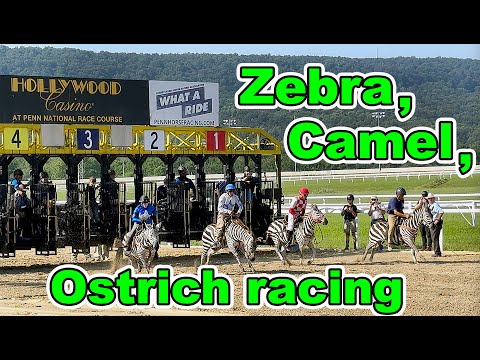
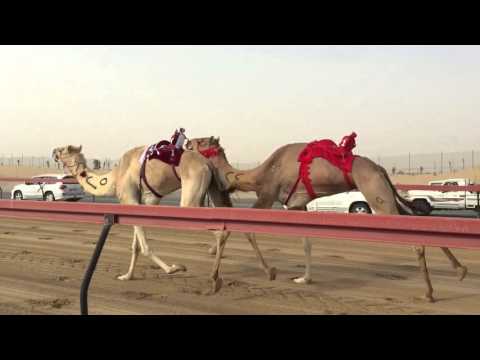
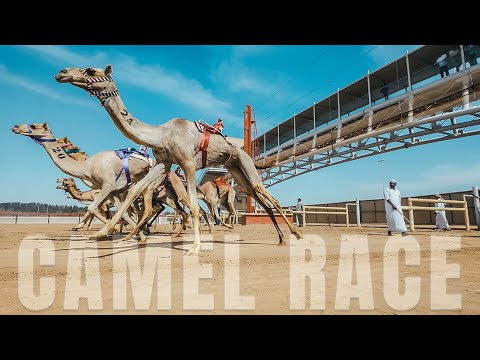
The filter sorts the Review Room embeds and the picture cards above by the keywords in their carried titles (review / analysis / recap and similar, or highlights). It runs entirely in your browser — nothing is sent anywhere.
No hall of fame with a published inductee list is carried for Camel Racing. Sport on Earth does not invent halls or inductees: where a recognised hall publishes its list in a form this site can carry, the full list will appear here with its source named.
The Camel Racing record book is still thin: beyond the standings, rules and calendar layers on this page, no verified winners roll or honours list is carried yet. The desk adds record material only when a published source can be named for it — never from memory or invention.
More from the desk: the expert guide to Camel Racing · the site-wide Writing Desk · every sport on Earth.
An arcade take on Camel Racing: set the angle, set the power, and land the lasso in the post. Five attempts; the closer to the middle, the more it scores. Arcade distances and a training arc — a game in the spirit of the sport, not a simulation of it.
This page’s own game is the arcade above. Everything else on the site that fits this sport is listed here — and anything borrowed from a similar sport is labelled as that sport’s game, never passed off as this one’s.
The tools on this site that honestly run on Camel Racing — its own record first, then the site-wide general tools that apply. The full Camel Racing toolkit prints the ones that do not apply, with the data reason why.
No bench tool yet computes from Camel Racing’s own carried record — the general tools below are the ones that honestly apply.
Site-wide tools, not built for Camel Racing alone: Tournament Planner · My Notebook · The Labs · Design Studio · The Makers’ Bench · Match Day Desk · Play It Near You · Myth-Check Desk · Governing Bodies · Heat & Safety Calculator (WBGT) · Hydration Calculator · Training-Load Planner · Game Clock & Timer · Custom Rulebook Generator · Scout Notes Parser.
Behind the Play · Full treatment — from this sport’s own record
The Gulf’s great race day, run in the modern era with robot jockeys.
Behind the Play takes the decisive actions of Camel Racing apart: how the scoring play is built, which patterns the players are really running, and which rules remade the play into its modern shape.
The format, from this sport's verified record:
Source basis: this sport’s carried record on this page (verified record, rule-changes dossier, history datasets) and the play patterns of its family as written in the site’s guides. Nothing here is invented.