Episode 1 — Twelve teams for the Manas anniversary tournament
Ep. 1 — the week ending Sunday, November 22, 2026 · 0:49
Pages
On this page
Sport on Earth › Sports
Sport on Earth · Sport
Central Asia’s mounted carcass game: riders wrestle a goat carcass at the gallop and throw it into a ring goal — the World Nomad Games’ main event.
Sport on Earth’s daily and weekly video shows for Kok-Boru — every episode, newest first.
Ep. 1 — the week ending Sunday, November 22, 2026 · 0:49
Every embed below was verified playable before listing — the network’s standing rule.
YouTube · Бектурсун Эргешбаев
YouTube · KOKBORU KG
YouTube · Monday Feelings
YouTube · Khaiber Akbarzada
YouTube · Kara and Nate
YouTube · Radio Free Europe/Radio Liberty
YouTube · APT
YouTube · Michele Stara
YouTube · SMash79 | Lost Arenas
YouTube · Ecotourism in kyrgyzstan
YouTube · Buzkashi Tamim
YouTube · Radio Free Europe/Radio Liberty
YouTube · Kalyx Destinations
YouTube · STALCHIK S
YouTube · Global Teacher Adventures
YouTube · History Line
YouTube · Janet Newenham
YouTube · Nurlan Derbishaliev
YouTube · Leno F1
YouTube · Nomads Life.
YouTube · Lifewithmanas
YouTube · Kok Boru extreme
YouTube · Kok Boru extreme
YouTube · Kent Foster
YouTube · UNESCO
YouTube · Kok Boru extreme
YouTube · Nomad world HQ
YouTube · Toby A. Cox
YouTube · Uluttuksport kg
YouTube · Kok Boru extreme
YouTube · Richard Loerzel
YouTube · Kent Foster
YouTube · AKIpress news
YouTube · MIRROR NOW
YouTube · APT Sports and APT
YouTube · Sylviusz Lauterc
YouTube · Talk Bites Sports
YouTube · Pedaling Pictures
YouTube · Radio Free Europe/Radio Liberty
YouTube · Илгиз Шернияз
YouTube · Radio Free Europe/Radio Liberty
YouTube · Jibek Joly TV
YouTube · Mungo McCosh
YouTube · Discovery UK
YouTube · APT
YouTube · NOMAD VOICES
Pages
On this page
No game on this site is made specifically for Kok-Boru yet. The games below are the site's all-sport games, which honestly cover every sport — nothing from another sport has been dressed up as this sport's game.
A new set of questions every day, across every sport this site covers.
Real-athlete Top Sport on Earth decks built from the site’s verified board data.
Kok-Boru's lab is the Physics Lab section on this page — the applied physics of its sport family, with a computed interactive where one honestly fits.
Physics Arena — the general biomechanics & physics teaching sandbox, shared by every sport.
The homepage sport explorer also carries a general Lab tab of small interactive experiments.
Calendar data not yet carried for Kok-Boru — this site does not yet hold schedule data for it, so no dates are shown rather than invented.
Which section of this page should we expand first?
Votes are counted on the Sport on Earth server and the totals shown are every reader’s votes; your own choice is remembered in this browser.
How this game is played, gathered from the record Sport on Earth already carries for Kok-Boru, with the positions taken from the sourced chart cited in that section.
Kok-boru — ’grey wolf’ — is the mounted team game of Kyrgyzstan and its neighbours, called kokpar in Kazakhstan and kupkari in Uzbekistan. Two teams of riders fight for possession of a goat carcass (in modern tournament play, a weighted dummy of the same size and weight) and score by carrying it across the field and throwing it into the opponents’ tai kazan — a great ring or mound goal. Play is full-contact horsemanship at the gallop, with riders wrestling the carcass from each other’s saddles.
Kok-boru is the headline sport of the World Nomad Games and a national institution in Kyrgyzstan, played under federation rules with timed periods, set team sizes and championships across Central Asia. It shares ancestry with Afghanistan’s buzkashi but is its codified, team-and-goal form.
The rules — the rules as this site's record carries them:
Positions for Kok-Boru are not yet sourced on Sport on Earth: no verified positions chart has been carried for this sport yet, so none is shown here rather than an invented one. That says nothing about whether the sport has positions — only that they have not been sourced for this page yet.
Sport on Earth's own analytics: every figure in this panel is computed at build time from the record this site itself carries, with the source named. No outside data is used, and no betting figures of any kind.
Census arithmetic: Kok-Boru sits in the animal sports family — 23 census sports, of which 1 carry a qualifying champions roll in the site's record.
The carried record for Kok-Boru is too thin for computed panels: no champions roll, hall-of-fame list or venue record is carried for it. This panel therefore prints the census arithmetic only — the honest answer rather than a manufactured figure.
Sport on Earth does not yet hold verified dated events for Kok-Boru, and its carried record does not state the season's timing in words — so no calendar is shown rather than an invented one. What the site does carry for this sport is on this page: its verified record, its rules record and its history.
Animal sports run on quadruped biomechanics: gaits are repeating patterns of footfalls that trade stability for speed, and at the gallop the spine itself flexes and extends as part of the stride. Loads are large and measurable — a horse’s foreleg can carry well over its body’s weight at gallop, which is why conditioning is gradual and surfaces matter.
Jumping efforts are projectile motion for the combined horse-and-rider (or dog) system: take-off speed and angle set the arc, and the bascule — the rounded shape over a fence — is the body arranging itself around that arc. Sport on Earth offers an explainer here rather than a calculator: the honest inputs (take-off speeds, masses) vary by animal and are not carried in this sport’s verified record, so no numbers are printed that the record cannot back.
From this sport's own record: Central Asia’s mounted carcass game: riders wrestle a goat carcass at the gallop and throw it into a ring goal — the World Nomad Games’ main event. The lab above treats the physics of the sport's family; no measurement specific to this sport is printed, because the site's verified record for it carries none — parameters are never invented to fill a lab.
No calculator is offered for this sport — honestly, none fits without inventing parameters. The site's general Physics Arena remains the hands-on sandbox, with every formula printed.
The general teaching sandbox for every sport is the Physics Arena on the Games page — the same printed models, with a defender added.
The hands-on lab for Kok-Boru, built entirely from the record this site carries for it — its documented rolls, its halls, its venues, its calendar and its census family. Every figure below is computed from that carried record at build time; nothing is estimated and nothing is pulled live. The companion Physics Lab on this page works the family's physics; this lab works the record.
The honest position: the record this site carries for Kok-Boru is thin — no documented roll, hall, venue set or dated calendar is carried for it yet — so this entry’s lab is its family lab: the computed census of the family it belongs to. When the record grows, the lab grows with it; nothing here is estimated to fill the space.
Computed from the site census: the Animal sports family holds 23 entries on this site. Across the family, the carried record includes documented rolls for 0 of them, Hall of Fame data for 3, venue sets for 5, and dated calendars for 1.
Every other entry in the family: Audaryspak · Camel Racing · Carrera de Cintas · Charrería · Dog Agility · Equestrian · Flyball · Furusiyya · Greyhound Racing · Horse Racing · Horseball · Kambala · Pack Burro Racing · Pato · Pigeon Racing · Polo · Polocrosse · Puppy Bowl · Rodeo and Bull Riding · Sheepdog Trials · Sled Dog Racing · Tent Pegging
Basis: the Sport on Earth census itself — the same 460-entry register the census page prints.
The desk has not verified a sponsorship record for Kok-Boru from published sources, so none is printed. Sponsorship history is added only when a real published source supports it — sponsor by sponsor, deal by deal. Current sponsorship deals across sport are tracked on the Money Desk sponsorship page.
Kok-boru — ’grey wolf’ — is the mounted team game of Kyrgyzstan and its neighbours, called kokpar in Kazakhstan and kupkari in Uzbekistan. Two teams of riders fight for possession of a goat carcass (in modern tournament play, a weighted dummy of the same size and weight) and score by carrying it across the field and throwing it into the opponents’ tai kazan — a great ring or mound goal. Play is full-contact horsemanship at the gallop, with riders wrestling the carcass from each other’s saddles.
Kok-boru is the headline sport of the World Nomad Games and a national institution in Kyrgyzstan, played under federation rules with timed periods, set team sizes and championships across Central Asia. It shares ancestry with Afghanistan’s buzkashi but is its codified, team-and-goal form.
Kok-boru was inscribed on UNESCO’s Representative List of the Intangible Cultural Heritage of Humanity in 2017. Its modern shape is recent and traceable: Kyrgyzstan’s kok-boru rules were first officially defined in 1949, matches moved into stadiums from 1958, and the rules in use today were drawn up in 1996 by the Kyrgyz film director Bolot Shamshiyev, who introduced the tai kazan goals. A national federation followed in 1998 and an international federation in 2001.
The game’s great rivalry is Kyrgyzstan against Kazakhstan, sharpened by the existence of two codes — Kyrgyz kok-boru and Kazakh kokpar — whose federations could not agree on one. At the 5th World Nomad Games in Astana in 2024 both were played, and each host of the argument won one: Kazakhstan took the kokpar final 5-4 in overtime, Kyrgyzstan the kok-boru final 10-4.
Called kok-boru in Kyrgyzstan, kokpar in Kazakhstan and kupkari in Uzbekistan.
Teams score by throwing the carcass (a regulated dummy in modern tournaments) into the tai kazan goal ring.
The headline event of the World Nomad Games, first held in Kyrgyzstan in 2014.
Inscribed on UNESCO’s Representative List of the Intangible Cultural Heritage of Humanity in 2017
Kyrgyzstan founded the first national kok-boru federation in 1998; the international federation followed in 2001
Six nations entered the kok-boru competition at the 5th World Nomad Games in Astana in 2024: Kazakhstan, Kyrgyzstan, Uzbekistan, Türkiye, Russia and the United States
Kok-boru has no structured results feed this site can carry, so this page is the verified record only — the game, its goal and its World Nomad Games stage as verified in November 2026 — with no live results.
Sources, verified November 1, 2026: Kok-boru · Kazinform News Agency · Global Voices · The Times of Central Asia
Material from Wikipedia linked above is used under CC BY-SA 4.0.
How the laws of Kok-Boru are governed today — the documented record, stated plainly.
Kok-boru is governed by the Kyrgyz federation and the World Nomad Games’ rules, which codified team sizes, periods and the regulated dummy for tournament play. No major dated rule change is carried for kok-boru.
That framework summary is the whole documented record Sport on Earth can verify for this sport — no major dated rule changes are carried, rather than invent any.
Source basis: The governing body’s published framework as summarised in this section (see the framework text).
Sport on Earth carries no results feed for Kok-Boru: no scores or fixtures are published here, rather than inventing them. The sport's documented record is in its history page and the History & Records section of this page.
The historical record for Kok-Boru — past standings, champions, title history and all-time leaders, as deep as verifiable public records go.
Season-by-season standings, historical player statistics and title rolls are not carried for Kok-Boru: no public archive publishes them in a form Sport on Earth can verify, and this site does not invent history. What is carried for this sport is its verified record, its rule-change history and its league history — elsewhere on this page.
The review and analysis videos from Kok-Boru’s verified video pool — every embed below was identity-checked and probed playable before listing, the site’s standing rule. Nothing here is a show Sport on Earth produces; these are the review, post-game and breakdown videos the pool already carries for this sport.
No verified review-show video is carried for this sport yet.
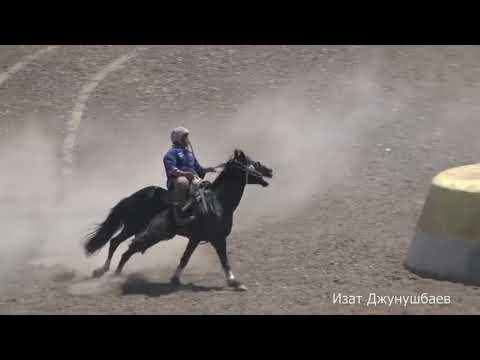
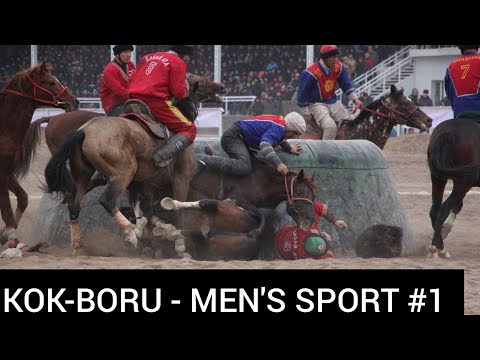
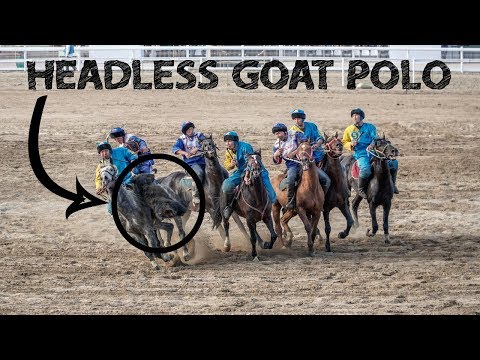
The filter sorts the Review Room embeds and the picture cards above by the keywords in their carried titles (review / analysis / recap and similar, or highlights). It runs entirely in your browser — nothing is sent anywhere.
No hall of fame with a published inductee list is carried for Kok-Boru. Sport on Earth does not invent halls or inductees: where a recognised hall publishes its list in a form this site can carry, the full list will appear here with its source named.
Central Asia’s mounted carcass game: riders wrestle a goat carcass at the gallop and throw it into a ring goal — the World Nomad Games’ main event.
The format, from this sport's verified record:
The Kok-Boru record book is still thin: beyond the standings, rules and calendar layers on this page, no verified winners roll or honours list is carried yet. The desk adds record material only when a published source can be named for it — never from memory or invention.
More from the desk: the expert guide to Kok-Boru · the site-wide Writing Desk · every sport on Earth.
An arcade take on Kok-Boru: set the angle, set the power, and land the lasso in the post. Five attempts; the closer to the middle, the more it scores. Arcade distances and a training arc — a game in the spirit of the sport, not a simulation of it.
This page’s own game is the arcade above. Everything else on the site that fits this sport is listed here — and anything borrowed from a similar sport is labelled as that sport’s game, never passed off as this one’s.
The tools on this site that honestly run on Kok-Boru — its own record first, then the site-wide general tools that apply. The full Kok-Boru toolkit prints the ones that do not apply, with the data reason why.
No bench tool yet computes from Kok-Boru’s own carried record — the general tools below are the ones that honestly apply.
Site-wide tools, not built for Kok-Boru alone: Tournament Planner · My Notebook · The Labs · Design Studio · The Makers’ Bench · Match Day Desk · Play It Near You · Myth-Check Desk · Governing Bodies · Heat & Safety Calculator (WBGT) · Hydration Calculator · Training-Load Planner · Game Clock & Timer · Custom Rulebook Generator · Scout Notes Parser.
Behind the Play · Full treatment — from this sport’s own record
Central Asia’s mounted carcass game: riders wrestle a goat carcass at the gallop and throw it into a ring goal — the World Nomad Games’ main event.
Behind the Play takes the decisive actions of Kok-Boru apart: how the scoring play is built, which patterns the players are really running, and which rules remade the play into its modern shape.
The format, from this sport's verified record:
Source basis: this sport’s carried record on this page (verified record, rule-changes dossier, history datasets) and the play patterns of its family as written in the site’s guides. Nothing here is invented.